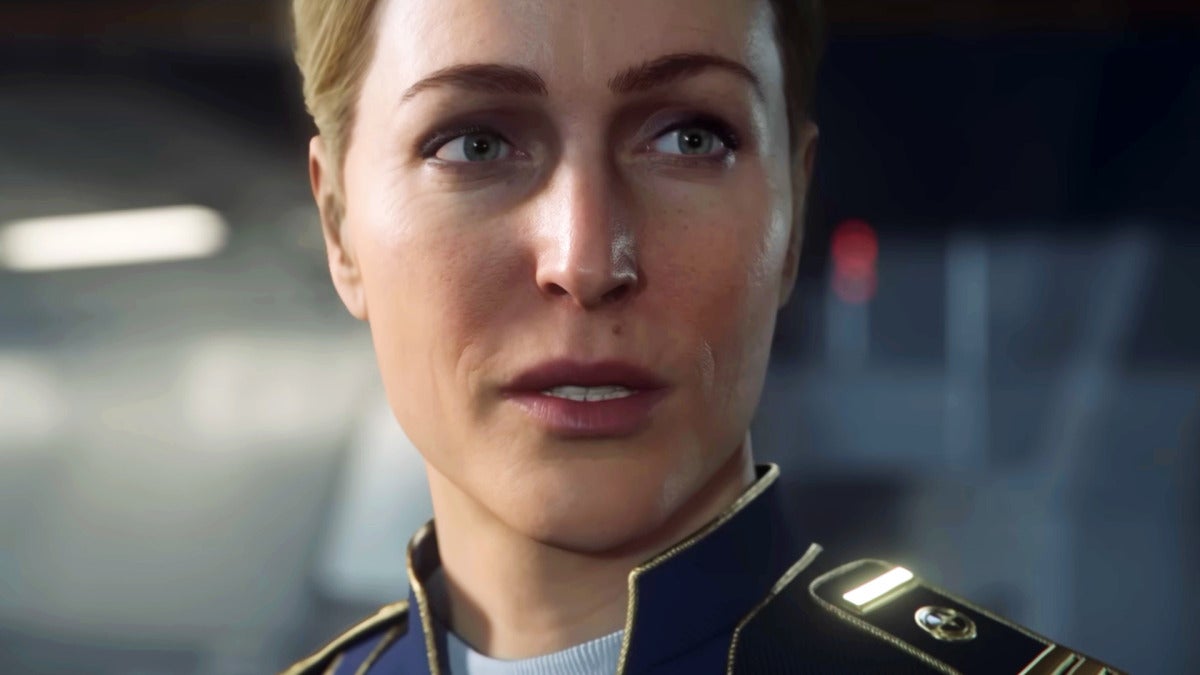
Squadron 42 showed up on Steam today, finally giving Cloud Imperium Games’ long-delayed single-player campaign a home on Valve’s storefront. The new page only lets you wishlist it for now, and it pegs the release window at Q2 2027, not late 2026.

That listing matters because it’s the first clean, official sign of Squadron 42 on the biggest PC store outside Star Citizen‘s own orbit. For now, though, it’s just a store page. No pre-orders. No locked-in launch date. Cloud Imperium Games chairman Chris Roberts has also said the delay was meant to keep the game from landing too close to Grand Theft Auto 6.
For people who’ve bounced off Star Citizen’s sprawling, intimidating online sandbox, this is the easier entry point. Squadron 42 is a standalone, story-heavy game and, according to the Steam page, you play a UEE Navy recruit in 2945. Expect dogfights, on-foot combat, huge battles, exploration, cinematic sequences, plus choices and relationships with your crew that shape how the campaign plays out.
The Hollywood angle is still very much part of the pitch. Mark Hamill, Gary Oldman, Gillian Anderson, Henry Cavill, Andy Serkis, Mark Strong, Ben Mendelsohn, Jonathan Bailey, Jane Perry, John Rhys-Davies, and Alix Wilton Reagan are all listed, and Cloud Imperium Games says those performances run through the whole game, not only the cutscenes.
Squadron 42 began life alongside the 2012 Star Citizen Kickstarter, and Cloud Imperium Games now says it’s in the “closing stages” and playable from beginning to end. With Star Citizen having brought in more than $1 billion from over 6.5 million backers, according to Cloud Imperium Games, it’s easy to see why some fans are treating this Steam page like real progress. Skeptics, meanwhile, are still stuck on the same questions: the long delays, how Steam access will work for backers, and whether a mainstream audience will actually show up once sales open.
You can wishlist Squadron 42 on Steam now.