Elon Musk now says he doesn’t know how to make chips

Elon Musk has revised what he said about chipmaking. In a new post, he admits he has “a tremendous amount to learn” and says he doesn’t know how to make chips. That’s a meaningful change, because only a few weeks ago he told Chinese media that China could get around lithography and chipmaking limits in “two or three years,” even with export controls in place and no access to the best equipment.

CPU-Z Download

He says Terafab, the Texas chip project, would begin with standard tools, then modify those machines to push more throughput, and later move on to building custom equipment. The plan also pulls mask-making, fabrication, packaging, and process work into one operation, rather than relying on the usual supplier setup where those pieces are spread across different companies. Some people have compared the Texas effort to a Tesla-SpaceX-Intel mashup. Reports put the starting cost at about $17 billion. And Musk’s position seems to be that the team can still solve it, even if he’s not a chip industry veteran.

For people who follow semiconductors, the scale of the challenge is pretty clear. By most industry estimates, Taiwan produces more than 60% of the world’s chips and more than 90% of the most advanced ones, while Taiwan Semiconductor Manufacturing Co. (TSMC) still dominates the foundry business. The obstacles aren’t just money. They’re equipment, talent, process complexity, and, above all, getting high yields at volume. That’s why some observers think mass production at strong yields could turn out to be tougher than some of Musk’s aerospace targets. And all of this feeds back into the larger US-China argument over export controls: do they actually slow China down, or do they just give China more reason to build faster toward self-sufficiency?


GPU-Z Download

Data centers are now a 2026 midterm battleground: a surprise issue in tight races

In the 2026 U.S. midterm elections, data centers have turned into a live campaign issue. In some of the country’s closest Senate and House races, candidates from both parties are going after the industry over power costs, water use, pollution, tax breaks, and who gets the final say locally.

A recent survey found that 61% of U.S. adults oppose new local projects: 69% of Democrats, 54% of Republicans, and 53% of independents. The objections are familiar by now. Higher power and water bills. Pollution. Strained infrastructure. And projections that the sector could soon account for 10% to 15% of U.S. electricity use.

In Ohio, Sherrod Brown has branded Jon Husted as “the face of data centers in Ohio.” A National Republican Senatorial Committee memo reportedly described the issue as a “sleeper.” The same pattern is already showing up in Michigan’s 7th Congressional District, Pennsylvania’s 8th Congressional District, and Ohio’s 9th Congressional District.

The industry’s allies have their own numbers ready. They point to a $59.3 billion annual construction rate, to Loudoun County, Virginia, where data centers supply 38% of General Fund revenue, and to roughly 78,000 Virginia jobs in 2023. Critics don’t dispute the headline figures so much as what sits underneath them. They argue that many of the benefits are temporary and propped up by incentives.

For anyone watching competitive races, keep an eye on this. By October 2026, there were more than 500 local restrictions in 46 states. New York had imposed a one-year moratorium. The U.S. House passed the Ratepayer Protection Act by a 417-3 vote. And 46 projects worth $170 billion had already been delayed or canceled. You can already see the fight spilling into campaign ads and policy battles over utility costs, tax breaks, and local control.

Fender rolling can fix tire rub: but it comes with risks

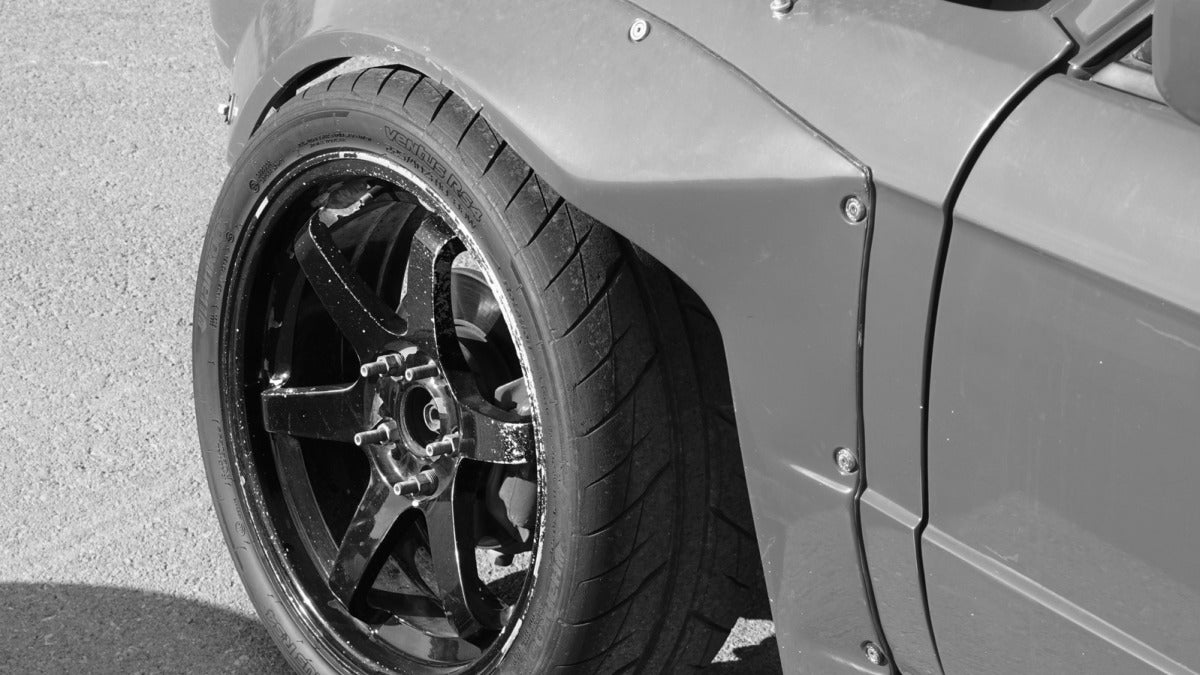
By 2025, fender rolling has become a pretty standard fix for tire rub after a wheel or suspension upgrade. Rub usually shows up when the car hits a bump or when the steering is at full lock. Wider wheels, fatter tires, a lowered car, the wrong offset, worn shocks, sagging springs, or bad alignment can all set it off.

Wheel Size Download

A lot of the time, the tire is catching the inner fender lip, that 90-degree folded edge that can sit right in the tire’s path. When that happens, it can chew into the sidewall and lead to tire wear, body damage, or even a puncture. Rolling that inner lip upward with a hub-mounted roller and a heat gun creates extra clearance. The added space can be a few millimeters, or as much as 3/8 inch in one AutoRestorer test, and from the outside there’s usually little to see.

If the rubbing only happens once in a while, rolling the fenders is often worth a shot. Still, there are real risks. Even if the paint is warmed to around 150 to 170 degrees Fahrenheit, it can still crack. The wheel arch can end up wavy, old body filler can split, and the seam can hold moisture and dirt, which raises the chance of rust.

There are other ways to deal with it too. You can try bump stops or spacers, trim the plastic liners, add camber, switch to a narrower tire, or have a shop correct the offset. And with the aftermarket wheel market hitting $40 billion in 2025, plus EVs getting heavier, rubbing may only become more common.

Tesla files for 13-fold emissions increase at Fremont factory

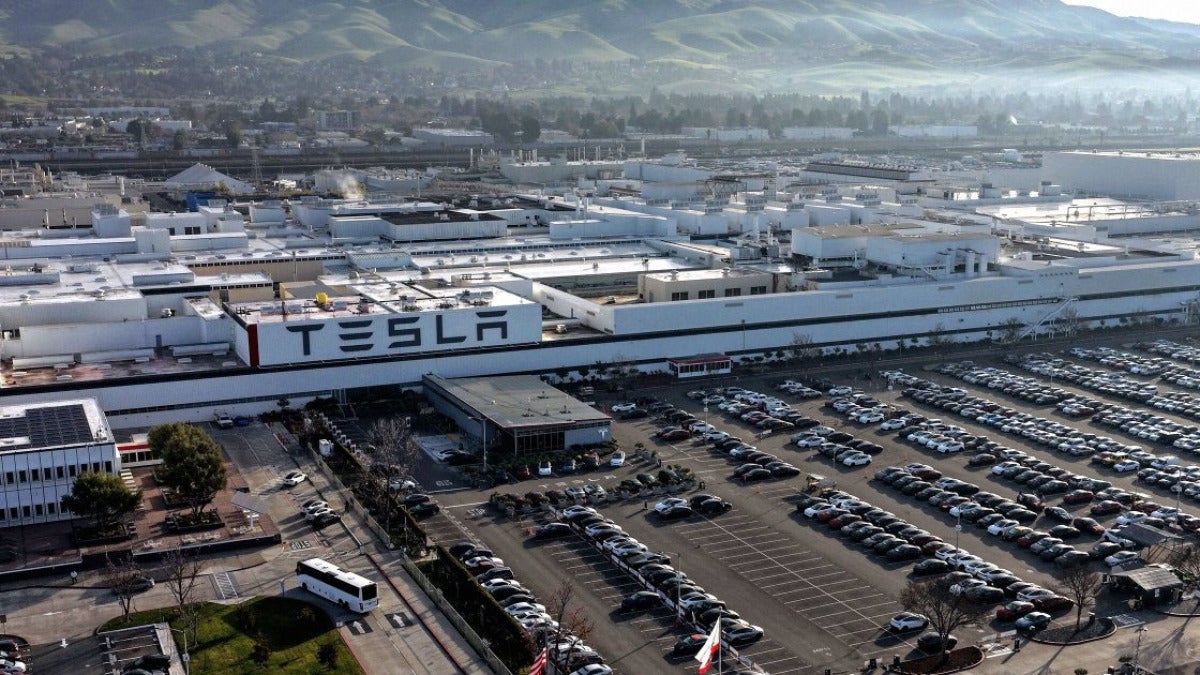
Tesla has filed to change emissions permits at its Fremont factory. The company wants to raise particulate emissions from aluminum melting from about 1.55 tons a year to more than 21 tons, about 13 times as much, according to its filing with the Bay Area Air Quality Management District, for a site that’s less than 1,000 feet from Lila Bringhurst Elementary School and close to a large residential neighborhood.

That has people worried for a reason. Suspended particulates from metal melting can contain arsenic, beryllium, and cadmium, and although BAAQMD says its initial review found the plan would still meet air-quality rules, parts of the agency’s engineering evaluation were blacked out under claims of confidential business information and trade secrets.

Parents say nobody clearly explained how big the increase was. A Fremont Unified School District notice used fuzzy terms like “modify” and “abatement,” several families say they missed the original email, and many only pieced together what was happening through neighborhood chat groups and a Substack post. Now they’re asking for more transparency, a pause, a longer public comment period, and they’re backing a Change.org petition because of the long-term exposure risks for children.

If you live nearby, keep an eye on this. That goes double given 17 violation notices in a single day in June 2026, 45 this year, and 369 over the past five years, plus a separate BAAQMD investigation into allegedly inaccurate emissions reporting from July 2025 through March 2026.

You can track the permit review in BAAQMD filings.