SpaceX has put a little more of its orbital data center plan out in public. Elon Musk is backing the idea of a computing constellation in space, one that FCC filings connect to a possible $28 trillion market and that, in Musk’s telling, could one day grow to 1 million satellites.
The sticking point is cooling. Critics argue that tightly packed chips can’t shed heat in orbit. Musk’s answer is that vacuum doesn’t stop heat rejection, it just changes how you do it: an aluminum radiator aimed away from the Sun could, by his description, dump about 1,300 W/m² into deep space, near 3 K. And if the hardware runs hotter, it radiates faster under the Stefan-Boltzmann law.
So the heat wouldn’t be carried away by fans. It would move off the chips and into big infrared radiators.
If you track SpaceX closely, this update matters for another reason too: it puts the real tradeoff in plain view. The limits are power, mass, and area. Solar panels come in at roughly 250 W/m², so you’d need about five times the radiator area. AI1-style concepts also layer in deployable liquid radiators, probably using ammonia like the ISS, along with all the plumbing, structure, and fault tolerance that make a lot of engineers doubtful.
Sam Altman has gone so far as to call the near-term version “ridiculous,” even if he doesn’t rule it out over a longer horizon.
There’s nothing to download or try yet. So far, the project shows up in FCC filings and in reported manufacturing plans in Texas, while Musk has hinted at launches within a few years. A lot of observers think anything at scale gets pushed into the 2030s, if it happens at all.
And then there are the larger problems still hanging over it: regulation, security, debris, re-entry pollution, collision risk, and the basic question of whether the business case holds up.
MP1st says Bend Studio’s next PlayStation game is on track to be revealed and released in 2027. Per that report, the project is farther along than a lot of people thought. It’s also expected to be a third-person game with co-op and multiplayer elements, though not a live-service title.
The same report says this isn’t Days Gone 2. That’ll sting for anyone still hoping for a sequel, but it lines up with what Bend Studio said back in 2022 about working on a new IP that builds on the open-world systems from Days Gone and adds multiplayer. What still isn’t clear is whether this is a fully new franchise or some older Sony property. Sony and Bend Studio also haven’t confirmed the name, format, or release timing.
So, take it carefully. Bend Studio’s reported AAA live-service project, codenamed Mirror Pond, was canceled in 2025, and the studio was then reportedly hit with layoffs in June 2025 that affected around 30% of the staff. If you’ve been waiting to see what Bend Studio does next, this is one to keep an eye on, but right now it all comes from a single MP1st insider report with only limited outside corroboration.
There’s nothing to download yet, but if MP1st has it right, this would be a PlayStation release landing in 2027.
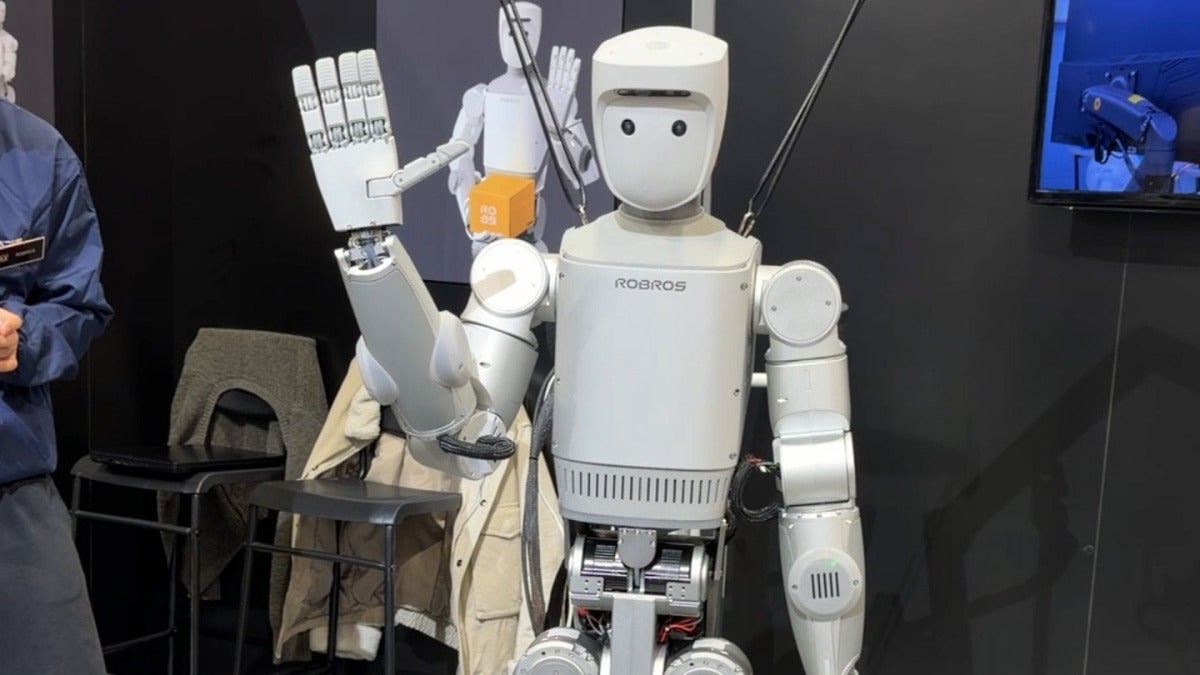
Reports say Meta is working on a humanoid robot for the home. If that happens, Muse would move beyond phones, glasses, and chat and into a physical device meant to handle everyday tasks.
The prototype described in those reports is called Max: 1.5 meters tall, 48 kg, built with Fourier in about three months, and powered by Nvidia’s Jetson Thor chip. Meta is reportedly treating it as a research project, not a product. Even so, Max 2 is said to be in the pipeline with better hands and improved navigation sensors.
The more interesting piece, at least from a business angle, is the software. Perception, speech, task planning, and app integrations could give Meta a way to sell paid Muse features, collect transaction fees, and maybe turn Muse into an Android-like operating layer for robots made by other companies.
If you follow robotics, this is one to watch. Tesla, Figure, Unitree, Agility Robotics, and Boston Dynamics are mostly aiming at factories and logistics. A home robot points in a different direction, toward tidying up, fetching things, or helping keep daily routines on track.
There’s nothing to buy yet. Still, anyone looking at this would have to think about privacy and geopolitics, because a robot in the house could gather sensitive data for personalization, commerce, or ads, and the reported partnership with the Chinese company Fourier shows how global the supply chain still is.
OpenAI said today that it has overhauled its bug bounty program, lifting the top reward to $172,000 for exceptional critical findings affecting ChatGPT, Codex, and the API Platform.
The company says standard payouts for critical flaws in ChatGPT, Codex, and the API Platform now reach $30,000. For especially severe reports that are thoroughly documented, that figure can climb as high as $100,000. It also says average payouts for medium-, high-, and critical-severity bugs have risen by more than four times, with the goal of getting more researchers involved before attackers spot the same weaknesses.
OpenAI also says the new terms apply retroactively in some cases. Researchers can qualify under the updated rules for reports that were already submitted but haven’t been awarded yet, and people who received bounties in the 30 days before the announcement can get the difference if their reports meet the new criteria.
There’s more built into the program than just higher base numbers. OpenAI says proof-of-concept code can qualify for multipliers, and payouts can go higher through a five-tier loyalty system as well as short-term bonus pools tied to new features.
For people who track security programs, the bigger picture matters as much as the headline reward. Higher payouts don’t, by themselves, solve the usual complaints about slow replies, quiet fixes, or disputes over what a report is worth. Whether this lands well will come down to how consistently OpenAI applies the rules.
OpenAI says this should also be read alongside its broader security push, including Defense Factory work, an upcoming sprint with Cathedral Systems, and an earlier Codex-based sprint that involved about 25% of product engineers. The company also points to industry numbers it cited showing 210% more valid reports and 540% more prompt-injection reports.
South of Midnight co-director David Sears said in a MinnMax interview that, if the call had been his, he probably wouldn’t have signed off on Xbox funding South of Midnight. Sears said Microsoft’s older Xbox strategy already looked unsustainable, even as Compulsion Games was benefiting from it. The money felt almost endless, spread across too many projects, including some with no clear commercial upside, and he said he warned people internally that once the “floodgates” shut, the damage to teams and studios could be brutal.
Those comments land differently now, with Microsoft operating in a much tighter climate marked by layoffs, studio closures, and divestments. Brian Fargo, who runs inXile Entertainment, has said projects now need an “investable business case” instead of being covered by broad portfolio spending. If you keep an eye on Xbox’s publishing strategy, that’s the pressure point here: what happens to distinctive mid-sized games in the Game Pass era. South of Midnight passed 1 million players in a month. Even so, that number by itself doesn’t really tell you whether the game produced the kind of return current Xbox leadership is looking for.
Sears still had good things to say about Microsoft. He said the company has been more humane than earlier eras of the games business, and that it let Compulsion Games make South of Midnight the way the studio intended. Even then, that’s a tougher creative risk to defend than something on the scale of Call of Duty. The MinnMax interview is up now, and South of Midnight is available on Xbox and Game Pass.
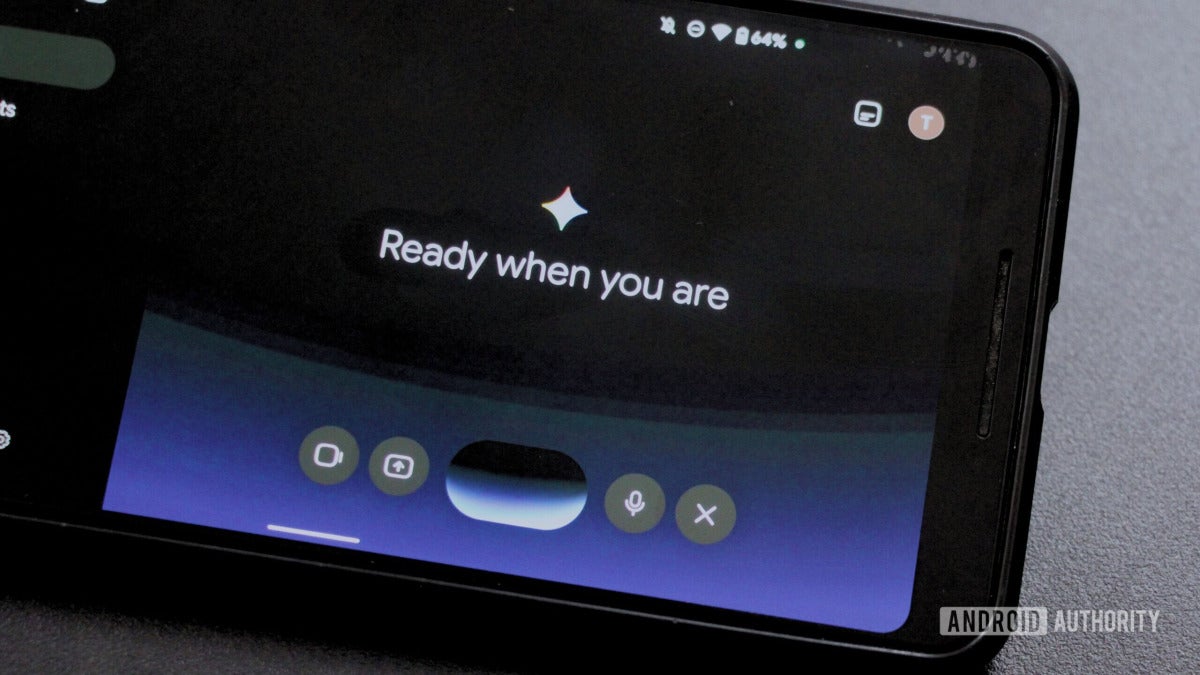
Google Gemini is back under the microscope in November 2026. A reader poll suggests a lot of users think the AI assistant, and the wider Gemini model family, has slipped.
That poll drew more than 1,200 votes, and a little over 60% of respondents said Gemini had declined. Leave out non-users and the figure climbs to just under 65%. People pointed to more misunderstandings, weaker answers, a worse assistant experience overall, and paid tiers that don’t seem to offer much. Still, just under 20% disagreed, and 14.6% said they weren’t sure.
If you use Gemini for search, writing, studying, or routine tasks on your phone, that loss of trust matters.
Reliability has probably fed into it. August brought latency, endless loading screens, and Error 1076 reports. October saw a content-generation outage. In February, a Vertex issue caused API errors for nearly two hours. Then, on October 9, Google introduced automatic thinking-level routing, which can make speed and response quality feel uneven from one prompt to the next.
Google has kept updating Gemini anyway. On October 28, 2026, it launched Gemini 4 Carbon, along with API patches, a reported score of 59 on the Artificial Analysis Intelligence Index, according to Artificial Analysis, and lower per-task costs than some rivals.
Even so, independent analysis pointed to a gap between benchmark scores and everyday use. Reported AA-Omniscience hallucination rates came in at 88% for Gemini 2.5 Pro and 91% for Gemini 3 Flash. Gemini also ranked last in one source-citation comparison, and there’s still limited visibility beyond English-language complaints or into the impact on professional use.
In 1967, The Graduate became the highest-grossing film of the year in the United States, and became a worldwide hit. Anne Bancroft and Dustin Hoffman starred in some of the most legendary sequences in the history of cinema over its 105-minute runtime, it received seven Oscar nominations (including acting nods for its leads) and to this day there are few who can see a shot without breaking into Simon and Garfunkel’s Mrs. Robinson. But, of course, it wasn’t all smooth sailing.
The Graduate gets slapped
Now, Hoffman has recalled the experience of shooting The Graduate as something terrible: “I immediately felt uncomfortable, undeserving of what I was doing. There I was, playing the lead in a Mike Nichols film, the hottest director around, but I felt I had no right to be there. It was a horrible experience making the film that changed my life”. Imagine: the entire shoot thinking Nichols would realize he’d chosen the wrong leading man.
Although his performance went down in history as the insecure Benjamin Braddock, the truth is that it wasn’t so much a performance as real life: “I often felt I was about to be fired. When we shot some of the most famous sequences, I remember thinking I didn’t have a fucking clue what I was doing“. And the worst was still to come.
In particular, there was one scene that could be considered risky… that we didn’t even see: “It was the one where Katharine Ross had to slap me, and he made us repeat it 27 times. Mike kept telling Katharine over and over to hit me, to do it harder. She was afraid of hurting me and I’d tell her, ‘I’m fine, just don’t hit my ear’. Sadly, she did a couple of times. I was dizzy by the end of the day, and Mike didn’t even use the slap in the film”. Who said actors didn’t earn their pay?
Phantom Blade Zero is one of the year’s big successes. With great reviews that have made it one of the highest-rated games of 2026, it’s a game that has taken not only its home country of China, but the whole world, by storm. With a stellar launch on Steam, managing to debut with almost 450,000 concurrent players, it’s one of the year’s most popular games. Its sales back that up: it has managed to sell four million copies in just 72 hours.
This is already one of the year’s big success stories
These are spectacular numbers considering that it has only come out on PlayStation 5 and PC and still doesn’t have a physical release. Having already sold one million copies before its launch, the game has already generated around $43 million in profit. Thus making it a success for its studio, S-Game.
That doesn’t mean it’s the biggest recent success from a Chinese studio. By comparison, Black Myth: Wukong was an even bigger success. In its first three days after launch it managed to sell ten million copies, and has since sold more than thirty million copies. It remains the most successful game in China’s history and the reason a sequel is already in development.
None of that diminishes the enormous success of Phantom Blade Zero. And with a physical version for PlayStation 5 still pending, in addition to having launched in a month packed with releases, it will likely keep selling well over the coming months.
On September 22, 2005, Criminal Minds began, one of those series that has kept police procedural fans hooked for 19 seasons, plus two spin-offs, a Korean adaptation, and several video games. I mean, it seems like the typical endless series… if it weren’t for the fact that Paramount has just killed it off.
Canceled Minds
Criminal Minds really ended in 2020, but two years later it was brought back for a continuation titled Criminal Minds: Evolution, which has lasted 5 seasons of 10 episodes each. We found out in the strangest way possible: AJ Cook, its star, dressed up for Halloween as a tombstone with the name Jennifer Jareau, her character for the last 21 years. Oof.
That said, all the actors have said the same thing: there are more stories to tell, and Criminal Minds has only ended “for now”. “If we can tell these stories somewhere else, it would be incredible”, Kirsten Vangsness has said. For now, the only thing we know for sure is that the series’ second ending will air in 2027, and there are no spin-offs or sequels on the table. For now.
The odd thing is that Criminal Minds isn’t a failure: its latest episode has spent months in Paramount+‘s top 10… But of course, after Warner’s acquisition they have to save money somewhere, and they’ve decided to do it with one of their most iconic franchises. With any luck, they won’t have any problem finding another home. After more than 350 episodes, Criminal Minds, like grandparents, should live forever.
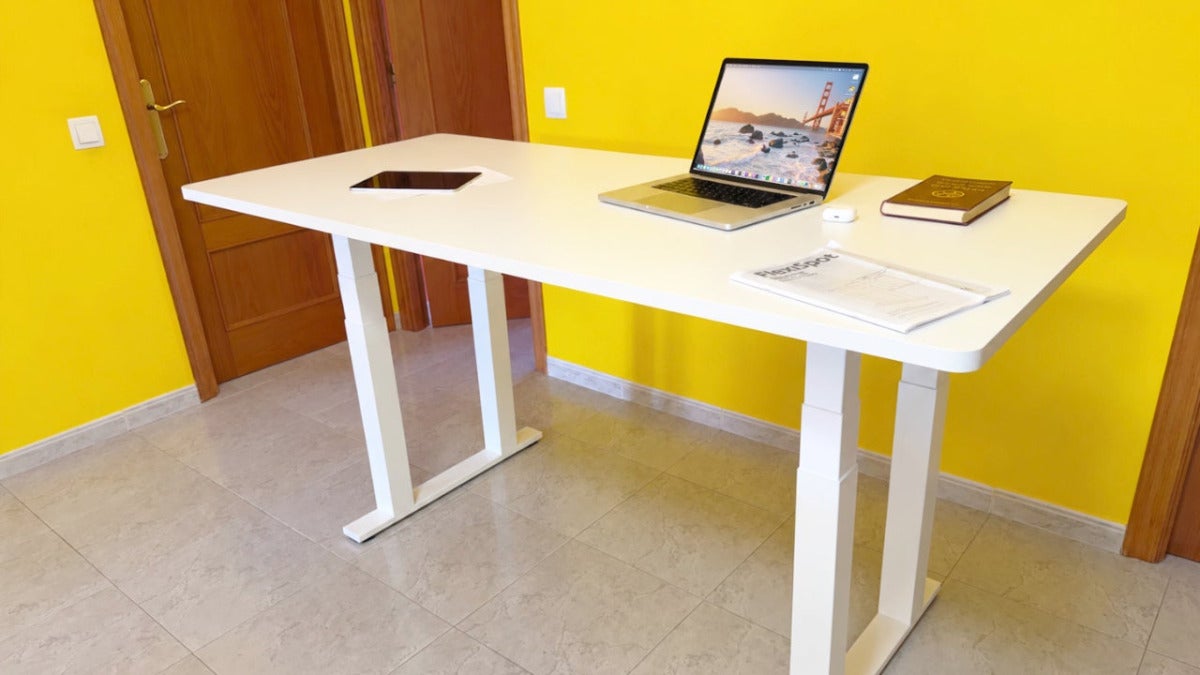
When we spend several hours a day in front of the computer, the comfort of the workspace stops being a bonus and becomes a priority. This is where FlexiSpot presents its E7 Plus, a height-adjustable desk with four legs and the ability to lift up to 200 kg with ease. At Softonic we were able to test it and, from tightening the very first screw, there’s one thing that makes it stand out from many alternatives: its extraordinary stability.
The E7 Plus has that streamlined designer-desk look that fits into any office or space. Beneath this simplicity, however, you can see the care in its construction, its solid structure and a lifting system that is a market leader.
The first thing that catches your eye about the E7 Plus is, precisely, its structure. Compared with the usual two legs on adjustable desks, FlexiSpot has opted for four points of support. Where many desks cut costs by using a single motor and a single mechanism per leg, the E7 Plus chooses stability. Four legs, beyond aesthetics, make it possible to distribute the weight and control wobble much better. The result is a tremendously stable desk even when we raise it to its maximum height, something we were able to verify firsthand even with the largest tops.
The frame is made of carbon steel. If we remember the E7 PRO, which we also reviewed at Softonic, here the load capacity goes from 160 to 200 kg while in motion. At rest, according to the manufacturer, it can hold up to 280 kg. Those numbers are more than enough to sit on it while it goes up and down with several monitors and accessories, with plenty of room to expand our setup in the future.
Special mention should go to its resistance to twisting. In a desk of this type, putting weight over the legs is one thing, but doing it on the edge of the top, in the position where we’d normally work, is something else entirely. On the E7 Plus, the whole structure stays firm, even when we apply pressure on the ends to stand up or sit down, and that is, in large part, thanks to the four-leg configuration.
The adjustment range goes from 66 to 131 cm. With this we have enough to work seated or standing, even on a walking pad if we are between 1.63 and 2 meters tall. During assembly, which we’ll talk about in a moment, we can adjust its width from 99 to 159 cm, so the structure works for tops between 120 and 200 cm long and between 70 and 90 cm deep. The photos in this article correspond to an 80 x 180 cm top.
Assembly: simple, although the legs are quite heavy
The E7 Plus is heavy. Very. The frame comes in two packages weigh around 25 kg each and, when we start taking out the parts, we immediately understand where that solidity we were talking about a few paragraphs ago comes from. The part that requires the most effort is without a doubt moving and placing the legs, but if you clear plenty of space before starting, assembly is much easier than the weight of the box suggests.
As someone who works from home and has already assembled several adjustable desks, I have to say that FlexiSpot takes great care with this section. The instructions are very well illustrated, consist of only 7 steps per side and the whole assembly is designed so that the parts fit only in the correct position. All the screws, fittings and tools needed for the whole operation are included except for a Phillips screwdriver, which we have to provide ourselves.
There’s a small peculiarity in the electrical connections that I want to mention. When we get to the connector for the control system, it may seem like cables are missing. Here the instructions aren’t very clear. It turns out that those positions have to remain free. With this in mind, connecting everything is as easy as matching each cable to its port and plugging it in, nothing more. It will look just like in the photo above this paragraph.
Use: flexibility, stability and quality motors
There are several things to consider when we evaluate an adjustable desk. On the one hand, there’s the speed of movement, which, moreover, is directly related to the noise of the motors. Here we have to consider, above all, how the movement starts and ends, how much it vibrates at those moments and what happens to anything on the desktop. Here the E7 Plus stands out for how smooth and balanced its operation is.
Its two motors let us move the surface at around 25 mm per second, with a noise level below 50 dB according to FlexiSpot. In my tests, the noise reading is a little lower, but the most important thing is the type of noise, not just its volume. The operation of the motors is, obviously, audible, but it can be described as pleasant, with quite a lot of bass and body; it doesn’t seem to strain as it moves. According to FlexiSpot, the mechanism has been tested to withstand more than 30,000 cycles.
We’ve already covered stability, so, having covered speed, noise and stability, it remains to talk about the control. Here we have a touch LED screen that shows the exact height of the desk at all times (not including the top). With its buttons we can raise and lower it and set the four programmable memories. We can save one for seated work, another for working standing and the rest for different people or tasks. With one touch, the desk returns to our favorite position without us having to adjust the height manually.
The control has an anti-collision system, which moves back slightly if it can’t keep going; a position-lock function, very useful if we have kids at home; and also a 20W USB-C port for charging the odd device.
All in all, the FlexiSpot E7 Plus is an excellent option when we’re looking for an adjustable desk that combines design, comfort and very high-quality construction. Its four legs, its ability to lift up to 200 kg and the smoothness of its motors make it feel almost as stable as a conventional desk but with the ability to help make our workday much more comfortable.
Thinking of getting an E7 Plus? FlexiSpot has lots of promotions lined up for November 11. If we buy on November 11 we’ll enjoy up to 13% off sitewide, from 10:00 to 10:59, using the code FSNO13. The sooner we buy, the more we’ll save!