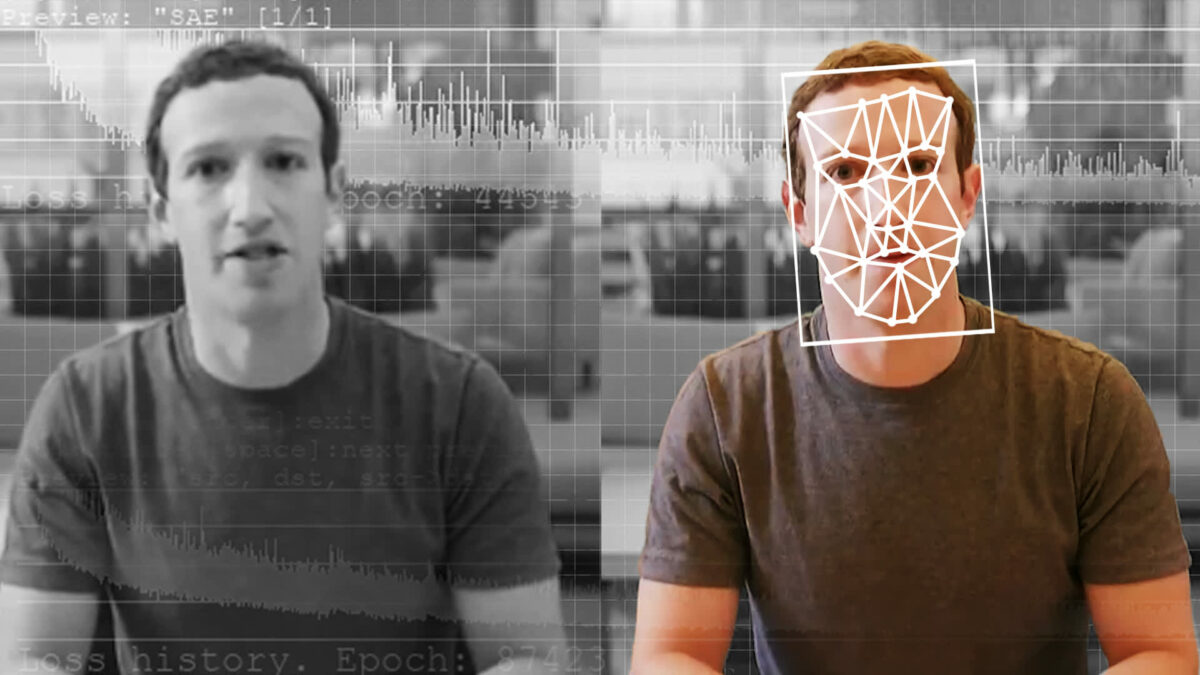
It’s getting really complicated to know what’s true and what’s false. Even for those of us dedicated to the world of technological communication, we have to deal with deepfakes and manipulated photos on a daily basis.

Any image we see online or video that pops up on YouTube can be manipulated in one way or another. And the issue is such that Google has started taking measures before it gets out of hand.
For that reason, we’ve thought about giving you some small tips that help us in our daily lives. They aren’t complicated to apply, and once you integrate them into your mindset, deepfakes will cease to be a real problem for you. However, with the advancement of AI, they’re becoming increasingly harder to unmask.
Tips for detecting a deepfake
The face and the body don’t match
Most AI deepfake tools rely solely on face swapping to achieve desired results.
Therefore, one of the simplest ways to identify a deepfake is to closely examine the face. A digitally patched face onto another person’s body will always appear unnatural and disproportionate compared to the rest of the body.
Another easy way to detect a deepfake is to check for skin irregularities on the face, such as wrinkles, acne, moles, and pores, as most AI algorithms tend to unnaturally smooth out these details.
Facial expressions will also differ from body language, indicating that it’s a deepfake video.
Strange eye movement
AI tools struggle to accurately represent eye movements, so it’s an effective way to differentiate between a deepfake and a real video.
Look for unnatural eye movements or blinks. Deepfake videos often feature subjects who don’t blink. In many cases, the eye movements seem rather robotic.
Without synchronization with skin tones
Subjects in deepfake videos often have faces with a skin tone that doesn’t match the rest of the body. Therefore, try to look for inconsistencies in skin tone between the face and the hands, legs, neck, or any other visible part of the body.
When identifying a deepfake versus a real video, this is one of the most precise methods to do so.
The video duration
This is probably the easiest way to distinguish a deepfake from a real video.
Creating a deepfake requires an AI algorithm to be trained for long hours to generate the desired results. Therefore, most deepfake videos are usually short and derived from social media videos or short press clips.
Inaccurate audio
Even though AI tools are capable of generating songs and lyrics on command, they may struggle with authenticity and other key factors like accent and tone.
Hence, most deepfake videos lack audio in an attempt to conceal these inaccuracies. Be cautious of these inconsistencies when watching a video.
Searching for anomalies in the video
Deepfake AI often doesn’t pay attention to the rest of the scene. In their quest to clone precise faces, algorithms often struggle with lighting, shadows, and overall details.
If you spot an unnatural glow around the face or can’t see any shadow cast by the primary light source, you’re likely dealing with a deepfake.
