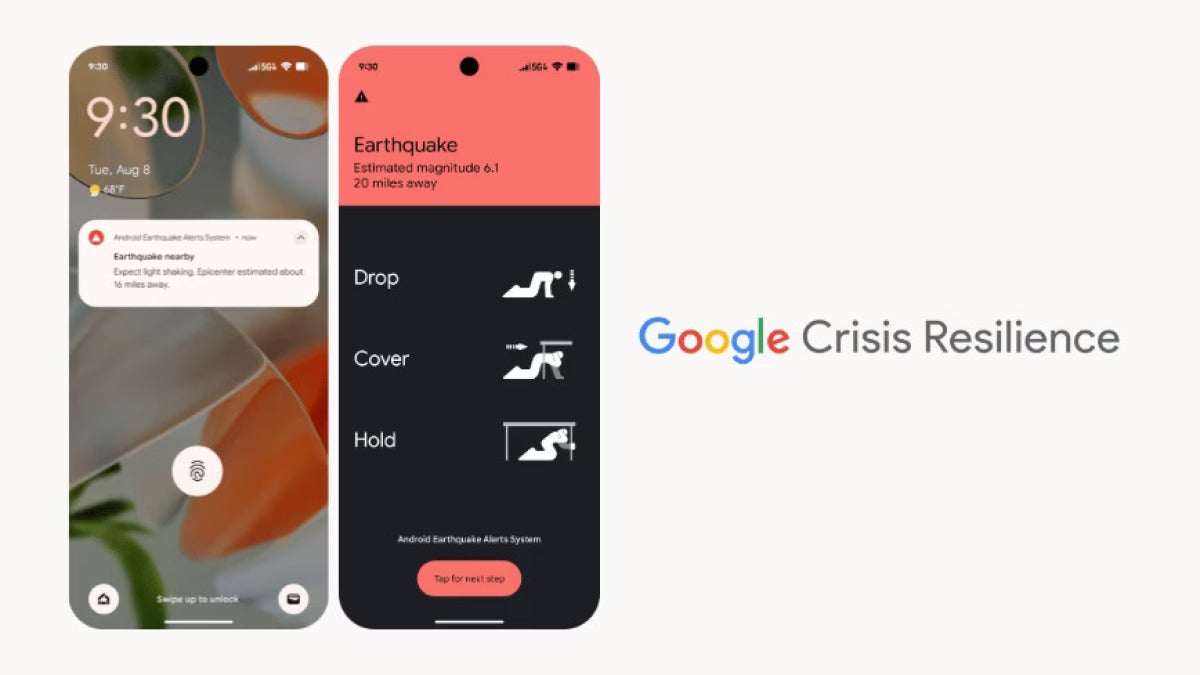
Wednesday’s earthquakes in Venezuela gave Google’s Android Earthquake Alerts network a real-world test. Google says the system warned 11.4 million users before the two powerful quakes hit, and some people had as much as two minutes to take cover, step away from dangerous areas, or get ready for stronger shaking.

Nearly 1.4 million of those alerts were the highest-level “Take Action” warning, Google said. The way it unfolded was fast. Android phone accelerometers detected the first quake’s quicker P-waves in 3 seconds, then sent anonymous data and an approximate location to Google’s servers. The first alerts went out 6 seconds later. A magnitude 7.2 quake was then followed 39 seconds after by a 7.5 event, which the system interpreted as one overlapping shock.
Because the alerts move faster than the stronger S-waves, people farther from the epicenter got the most lead time. People closest to it often felt the shaking before their phones buzzed. Google says it sends these warnings for earthquakes measuring 4.5 and above, with higher alert levels as the risk increases. If you use an Android phone in an earthquake-prone area, this is a feature you’ll probably want to leave on.
Google says Android Earthquake Alerts now works on Android in nearly 100 countries. That’s a big jump from coverage for about 250 million people in 2019 to 2.5 billion today, with a lot of that expansion reaching lower-resource countries. There are limits, though. Coverage can be weaker in sparsely populated areas. iPhone users in places like Venezuela usually don’t get an equivalent warning. And the system isn’t predicting earthquakes before they happen, it’s detecting them after they’ve already started, which means people still need to know how to respond when the shaking begins.
