George R.R. Martin declares war on ChatGPT

The New York Times took the first step. After the New York newspaper updated its terms of use to prevent artificial intelligences from appropriating its content, writers of the caliber of George R.R. Martin and John Grisham have risen up against what they have called a “systematic and massive-scale theft”: ChatGPT would be being fed through copyrighted works without any permission or authorization.

The authors claim that OpenAI would be committing “blatant and dangerous infringements” against copyright rights, so the Authors’ Brotherhood has opted to go to court, led by writers like David Baldacci, Sylvia Day, and Elin Hilderbrand, among others.

One of the most significant statements during these days has been that of Mary Rasenberg, CEO of the Authors’ Brotherhood, directly confronting machine learning and artificial intelligence models as a threat that could destroy an incredibly rich literature, which fuels other major American industries. She has also commented that great books come from authors who invest years, if not their entire lives, in methodically refining and perfecting their works, so in the name of preservation, authors should have control over the uses made of their works by artificial intelligence.

George R.R. Martin in the eye of the storm

One of the authors most affected by this misuse is the author of the “A Song of Ice and Fire” series, George R.R. Martin, as ChatGPT is said to have generated an unofficial and obviously unauthorized prequel to the first book of the series, “Game of Thrones.” This sort of prequel would be called “A Dawn of Direwolves” and would use the same characters that already exist in the “A Song of Ice and Fire” saga.

Meanwhile, OpenAI is trying to defend itself against these accusations by explaining that the company respects the rights and work of the authors, and they are in discussions with multiple authors to find “mutually beneficial” ways to work together.
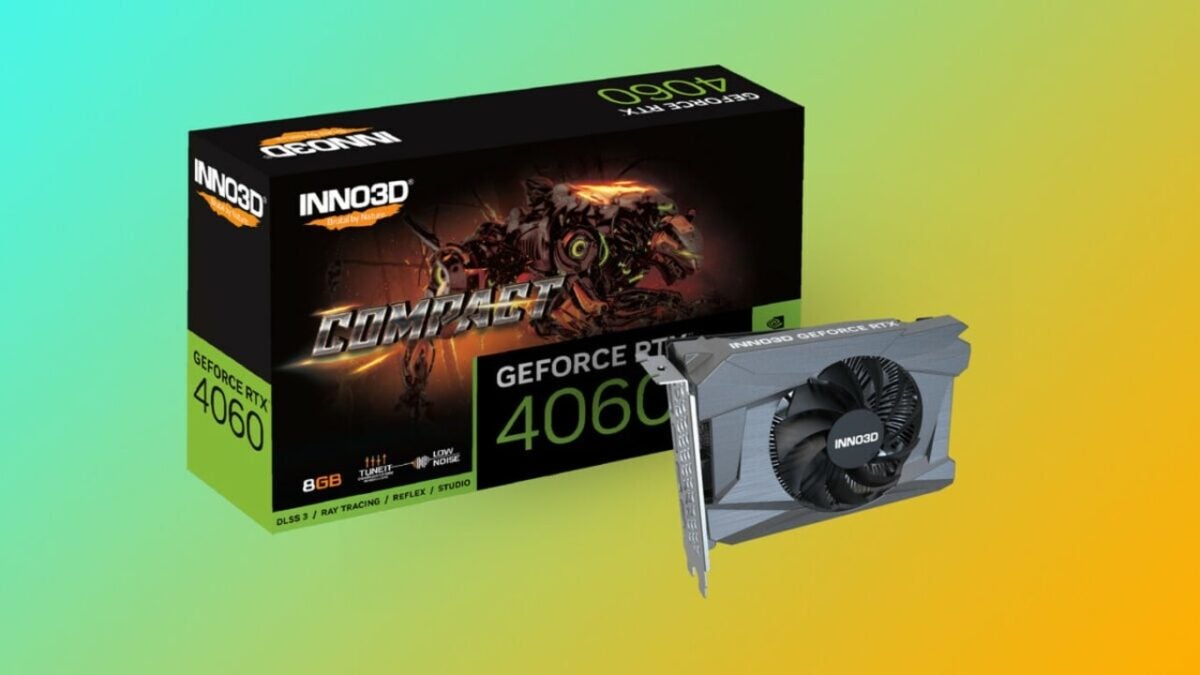

Could the RTX 4060 be the graphics card you need?

We’ve been using the GeForce RTX 4060 for a few months now, and after seeing the performance of the entire 40xx family, it may be time to say it because the RTX 4060 is probably one of the most affordable next-generation graphics cards on the market, but… What about its performance? Can it hold its own in a market dominated by high-end models from this generation and the previous one? The truth is that it’s a very interesting piece of hardware that’s unlikely to leave anyone indifferent.

ASUS Dual GeForce RTX™ 4060 OC Edition 8GB AMAZON

Performance, artificial intelligence, and price

The GeForce RTX 4060 shares many qualities with its older sibling, the 4090. For example, it features the ultra-efficient Ada architecture based on fourth-generation Tensor Core cores, third-generation RT Core cores, and support for DLSS 3 for ultra-fast 3D rendering. It also relies on the eighth generation of NVENC (Nvidia’s encoder), which finally supports AV1.

It’s worth noting that all these improvements translate into a 45% increase in speed for 3D designers when rendering objects in real time, a task that requires a lot of computational power and can be extremely tedious. Similarly, Tensor Cores enhance the AI-based functions of specialized design applications such as DaVinci, Premiere Pro, or Blackmagic Design, saving a lot of time and greatly improving the workflow of 3D designers and other creative professionals. Get Geforce 4060 RTX on Amazon’s choice.

In terms of broadcasting, the new encoder has proven to be 40% more efficient, with a substantial increase in apparent bitrate, especially noticeable when viewing videos on YouTube, recording in OBS, or streaming via Discord, for example.

Not to mention its gaming performance, where it significantly outperforms the already impressive RTX 3060, which made many gamers happy for a long time. But the best part is its price, starting at 335 euros at the official price, making it a very affordable upgrade for any gamer or creative professional in need of a graphics card.

Microsoft will be retiring Exchange Web Services (EWS) for Exchange Online in October 2026

Microsoft is preparing for the future, which has involved the evolution of Microsoft Paint, the creation of Microsoft Copilot, and the renovation of Skype, among many other things. However, with so many new developments, it was expected that some things would start to be phased out. Microsoft has begun a process of letting go, starting with Visual Studio for Mac and later with a significant portion of Exchange Online. However, there is still time to prepare.

This move is not aimed at retiring a service but rather redirecting Exchange Online users to Microsoft Graph. This could have been suspected since 2018 when Microsoft announced that Exchange Web Services (EWS) would no longer receive updates. Five years after that announcement, they have now revealed that the functionality will soon disappear.

Microsoft will continue to provide security updates until the end

Despite no longer updating this service, Microsoft is committed to providing security coverage until the last moment, recognizing the value this can have for users who may be hesitant to switch systems, perhaps aware that this service could tip the scales towards Microsoft Graph. With this in mind and while ensuring security support, Microsoft has already recommended starting the migration process in order to maintain access to the data that users may have in Exchange Online.

However, Microsoft is aware that EWS has functionalities that Graph currently lacks, such as access to email files, file information, and many others that the tech giant is working to incorporate into its new application as soon as possible. In fact, one of EWS’s functionalities, access to public files, is currently being evaluated by the team to be included in the Microsoft Graph application, although they have already admitted that not all functions can be transferred from one application to another.

Elon Musk is looking for volunteers to test his brain-computer system

No matter how much no one understands what he’s doing with Twitter, Elon Musk has demonstrated enormous ambition in all his projects, which, along with his penchant for spectacle, has made him one of the most well-known magnates of our time. Some of his most eccentric ideas have included sending a Tesla into space, the tunnel to alleviate traffic in Las Vegas, or a ring of satellites in Earth’s orbit to provide high-speed internet to individuals anywhere in the world. However, connecting people to a computer might top the list in this competition.

Neuralink already has the permits for the next step

Although there have been a few hiccups along the way, Neuralink has managed to secure the necessary permits from the FDA (Food and Drug Administration) to begin its clinical trials in humans. During this initial development stage, Neuralink’s technology will be studied to assist individuals with paralysis control devices. Therefore, the company is actively seeking volunteers with quadriplegia caused by spinal cord injuries or ALS who are over 22 years old and have a “consistent and reliable” caregiver.

This study is called PRIME (by the way, its acronym doesn’t even fit in English) and aims to test three devices simultaneously: N1 is the brain-computer implant, R1 is the robot that will perform this extremely delicate and highly precise operation, and N1 User App is the software that N1 will rely on to function.

Like many of Musk’s projects, this one has not been without controversy, including some concerning practices carried out by the company. In any case, the study will follow a rigorous procedure, including an 18-month pre-study period for each volunteer and, after the surgery, two hours of daily practice with the user interface for the following five years, with periodic reviews throughout the process.

The exact number of volunteers Neuralink is seeking and the hospital where these procedures will take place have not been disclosed, although it appears they have already found a location to conduct them.

The PUBG developer comments on details of Overdare

Roblox is one of the most widely used gaming platforms in the world, hosting countless games built on it. Although many developers aspire to achieve its level of fame, which they are attempting to do with Overdare, a game designed for the metaverse and developed through artificial intelligence, based on the Unreal Engine 5 graphics engine, believes it could challenge Roblox’s dominance in one way or another. The creator of PUBG, however, seems quite enthusiastic about the proposal.

Overdare used to be called Project Migaloo and is being developed by Naver Z, a South Korean unit specializing in metaverses. Its concept is based on a user-generated content platform in a way very similar to Roblox and The Sandbox, the two leaders in this market.

Krafton will compete against Roblox

The developer of PUBG, the South Korean company Krafton, is collaborating on the development of Naver Z’s new project, Overdare. According to their own statements, Overdare will be based on blockchain and will generate an in-game economy based on “create-to-earn” supported by NFTs (non-fungible tokens). However, aside from these statements, neither the developer nor Naver Z have provided more details about this game, although they have mentioned that they will reveal more information about it around December 2023.

This announced “create-to-earn” game economy system, however, can be a cause for concern. Most games with similar mechanics have ended up functioning as “work-games” where the lack of gameplay mechanics or interest in the game is compensated by the promise of earning income. Over time, as the player base gradually diminishes, fulfilling this promise becomes increasingly difficult. In this way, the game may not be particularly hopeful, but there’s always a chance for a turnaround.

The Python editor from Excel Labs is now available

Microsoft has been striving to improve its applications for quite some time. From generative artificial intelligence that may be introduced into Microsoft Paint to new applications planned for Bing, along with projects like Microsoft Copilot, the tech giant is focused on enhancing the user experience and providing users with more tools to reduce technological burdens. This philosophy has largely led the company to partner with the Python programming language, which can now be experimented with in Excel spreadsheets as an experimental feature.

One of the most useful Excel extensions

Although it’s not an add-on for everyone, Excel Labs, a part of Microsoft, has created a Python editor as an extension to its spreadsheet management tool. According to their blog, the Python Editor will display Python cells in the order of execution, along with the code’s result for each cell, assisting in debugging and understanding the code.

This editor supports a wide range of features typically found in Microsoft Visual Studio for Python development, such as Intellisense, code formatting, automatic code completion, and syntax highlighting. Similarly, the editor allows creators to write Python code and then move it around within the Excel application, enabling them to freely code in the editor and apply it directly within the application when they are satisfied with it.

As mentioned earlier, Excel Labs is an Excel add-in, so it’s not enabled by default in the program that everyone uses. To have it, you must first activate it through the “add-ins” option. Once you’ve done that, it should appear as usual, and you can select the Python editor in the upper right corner.

Microsoft messes up in its latest Windows update

Windows is the quintessential operating system. Its use is so widespread that almost any error within its code is quickly detected by a large number of users, even when they are minor hiccups that don’t pose a real problem. However, the latest update for Microsoft Windows 11 hasn’t just brought a couple of anecdotal complications; it has introduced real performance bottlenecks, including glitches in games and, in more severe cases, the inability to start the computer.

More problematic than it may seem

Since the latest Windows 11 update (KB5030219) was released, a significant number of problems have been reported, both related to gaming and other areas. One of the most common issues is related to network connectivity, which has started to fail on many systems after its installation. In other cases, system performance has significantly decreased, causing the entire system to slow down, and in especially severe cases, the operating system cannot even be launched, rendering the computer non-functional. This is particularly concerning because without starting the computer, there are few (and none particularly pleasant) solutions to address this issue.

However, these are far from all the issues, and problems have been reported on Reddit for several days now. These issues include particularly slow menus, a start menu that doesn’t open in some cases, the desktop interface disappearing entirely, audio performance problems, instances where the update couldn’t even complete its own installation, and, of course, gaming-related issues, particularly affecting Starfield.

The latest commercial success of the Microsoft system has been severely impacted by the latest update, experiencing significant performance problems in its Game Pass for PC version. The most significant issue is TDR (timeout detection and recovery) and various application crashes without apparent cause.

In any case, Microsoft is already working to collect and address as many of these errors as quickly as possible, but it’s essential to send as many legitimate reports as possible to provide the company with as much information as possible.

The 3 keys to the Razer Viper V3 HyperSpeed

As the year comes to a close, major technological advancements are always on the horizon, many of them targeted at the gaming community. From accessories for mobile gaming to additional fans to prevent the PlayStation 5 from overheating, all sorts of hardware innovations are emerging. However, among PC gaming enthusiasts, there’s a special place for mice and keyboards. After Logitech set a high standard with their Lightspeed keyboard and Superlight 2 mouse, Razer is now introducing a mouse ready to make a big impact: it’s called the Viper V3 HyperSpeed.

Balanced equipment

While the Superlight V3 is extremely lightweight, Razer doesn’t necessarily aim to compete with this aspect. However, they have managed to establish an extremely comfortable ergonomics for prolonged use, making the mouse feel much lighter than it is, allowing for easy movement without exerting too much force. Weighing 82 grams, it might be challenging to notice this detail if you’re not used to using it regularly.

With a maximum sensitivity of 30,000 pixels per inch (DPI), the mouse has a maximum speed of 750 inches per second, registering movements very smoothly even in extreme circumstances (to be honest, it’s highly unlikely you’ll move the mouse at a speed of 15 meters per second). However, be cautious when combining these two options because while the Superlight V3 has 6 programmable buttons, it doesn’t have a sniper button, so if you’re not careful, you could easily lose sight of the cursor.

With a battery life of up to 280 hours (though realistically it’s around 80), the mouse uses regular batteries instead of being rechargeable. With prolonged use, this could lead to the battery running out at an inconvenient time.

Nevertheless, considering these factors and its price of around 70 euros, the Razer Viper V3 HyperSpeed appears to be an excellent option for enhancing your setup if you find it necessary.

A death threat has closed Unity’s offices

It seems that the tension generated by Unity’s announcement regarding its pricing policy continues to escalate. After several particularly tense days, it appears to have reached its peak on September 14th when the offices of the company, a favorite among indie developers, remained closed due to a “credible” death threat. In fact, the company’s CEO, John Riccitiello, had to cancel a significant commitment with several employees because of this. However, despite the seriousness with which the threat was taken, its source is still unknown.

An extremely controversial change

This threat comes in an extremely tense context after Unity officially announced a change in its pricing policy for the use of its game engine in general and its Unity Runtime App tool in particular. This new policy is set to take effect starting January 1, 2024, and would charge developers a fee per download beyond a certain number of installations, potentially putting the indie game industry at risk and potentially ending some models supported by freemium or ad-supported games.

As expected, Unity game developers have not taken this news well, and the reactions have been not only very negative but also quite visceral. Many developers fear they won’t be able to continue their projects, quite a few have opted to start learning other game engines and programming languages, and a significant group has chosen to migrate their games to other game engines with more favorable terms or have decided not to work with Unity anymore.

A particular case has been the developers of “Cult of the Lamb,” one of the most popular indie games in recent years, who have already announced that if Unity continues with its intentions, any game they have for sale on that engine will disappear. This includes, as expected, “Cult of the Lamb.”

Steam Deck has a surprise for you, and you’re going to love it

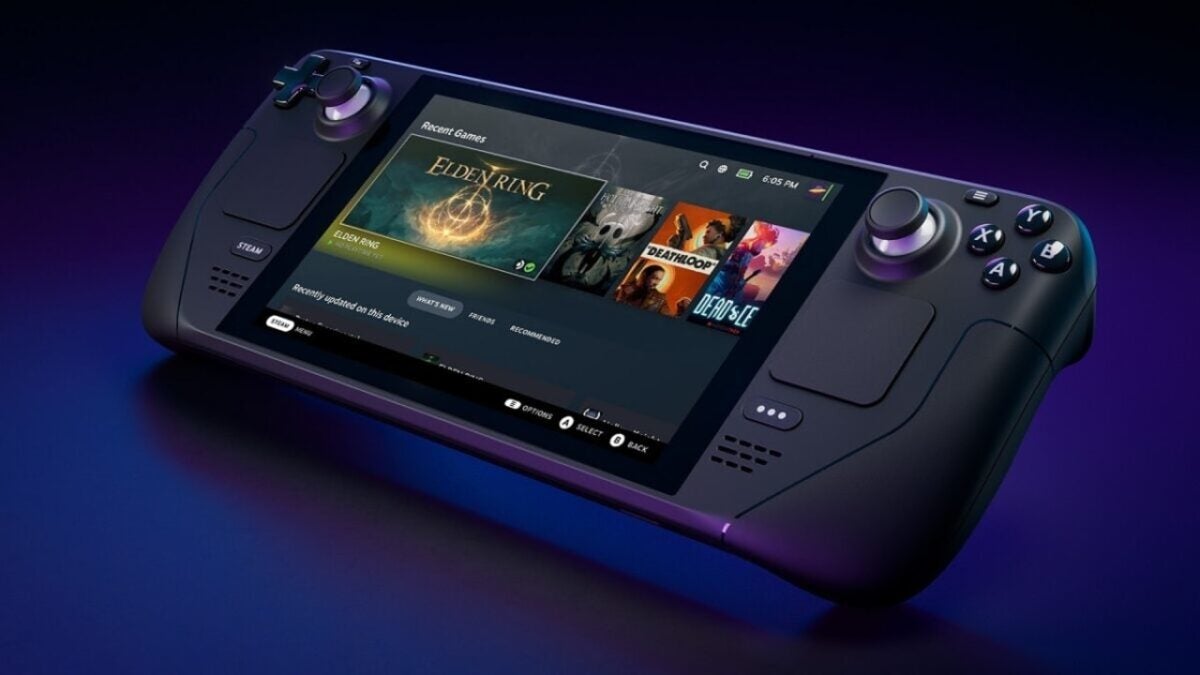
Steam is an extremely pioneering company in the world of video games. From hiring the developers of DOTA (the most popular mod for Warcraft 3) to creating Steam and, most recently, the success of creating the handheld gaming computer through the Steam Deck. This hybrid between a portable console and a gaming PC capable of running games like Elden Ring or The Witcher 3 without much trouble has set a new standard in the gaming world, perhaps not so much in terms of sales numbers but in the wave it has created, with competitors like the ROG Ally from Asus and even rumored devices like the Lenovo Legion.

Steam Deck may not be the most powerful hardware among its competition; in fact, the ROG Ally is exceptionally strong in that regard. However, Valve’s console is still the favorite of many and has managed to make its name synonymous with these handheld gaming PCs. This is not by chance, as its level of optimization is very high for such compact hardware, with its main drawback often being storage space (a problem that is easily solvable). In fact, there are Micro SD cards specifically designed to provide Steam Deck with the file transfer speed it may need.

Besides, it’s on sale

Furthermore, Steam Deck is currently the most budget-friendly solution for acquiring a gaming PC. Its basic version costs less than a PlayStation 5, and its premium version is priced at under 700 euros. However, this price has dropped even further in recent days, as between September 14th and 21st, you can get it with a 20% discount on their website. This makes the basic version only 377 euros and the premium version 543.20 euros. It’s a golden opportunity if you were thinking about getting one.