Everything presented at MWC 2024 so far: Samsung, Xiaomi, OnePlus, Oppo…

In this article today, what we’re going to do is a quick summary of everything important that we’ve been able to see at MWC 2024 during Sunday…

One of the most important technology events in the world is taking place in the Condal City. In this fair, the main technology companies from around the world come together to showcase their main advances to the world.

Disney+ DOWNLOAD

In this article today, what we are going to do is give a quick summary of everything important that we have been able to see during Sunday and yesterday Monday, considered the strongest days of the fair.

Without further ado, let’s get to the main announcements, which are not few or cowardly. On the contrary: a truly powerful 2024 is coming with AI as the protagonist.

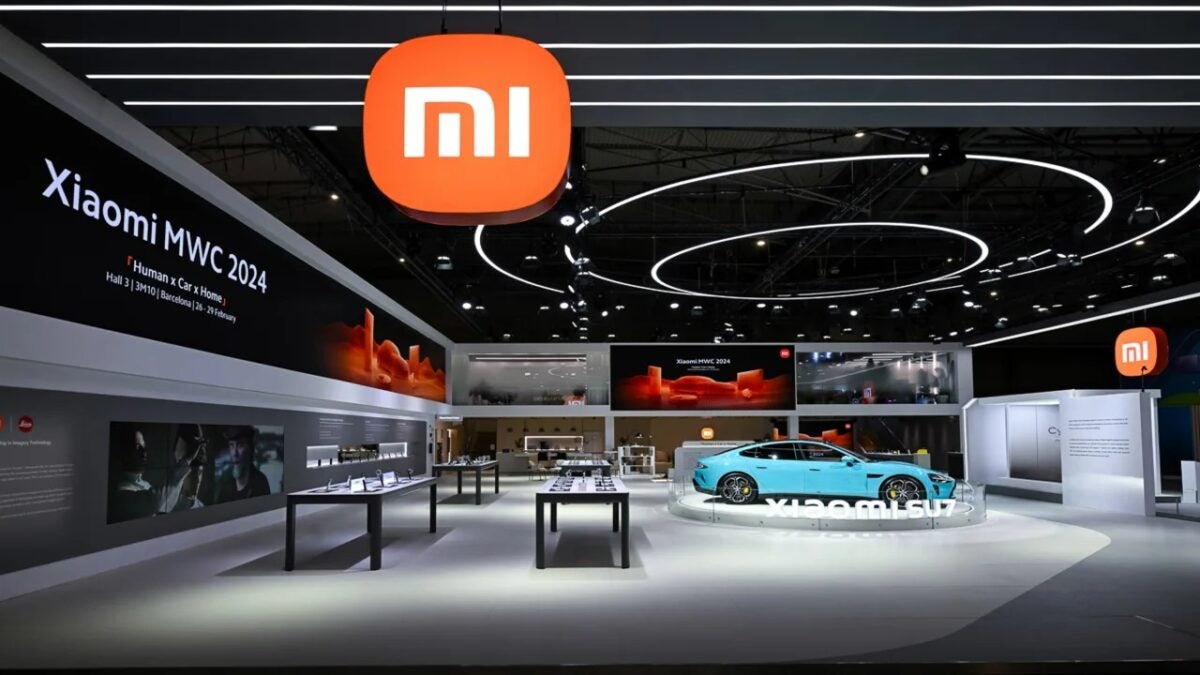
Xiaomi’s first electric car

The first Xiaomi car, the highly anticipated Xiaomi SU7, was announced a few months ago. We know that it is a “high-performance, full-size eco-friendly sedan” that is expected to arrive in China next year.

In addition to the design, Xiaomi has developed the five main technologies of the EV: electric motor, integrated CTB battery, Xiaomi die-casting, Xiaomi Pilot autonomous driving, and intelligent cabin. And, as mentioned before, it will feature the “HyperOS” operating system.

The first Samsung ring: the Galaxy Ring

Dr. Hon Pak, Vice President of Digital Health at Samsung, has not specified what sensors the ring contains, but he has mentioned sleep information based on heart rate, movement, and respiratory indicators.

Dr. Pak claims that Samsung’s collaboration with Natural Cycles (which already tracks menstruation and fertility in their Galaxy Watch series) will also extend to the ring, putting it in direct competition with the Oura ring.

The transparent screen of Lenovo

If you’ve always wanted to look at the back of your desk while you work, Lenovo’s new transparent laptop will undoubtedly give you that joy. If it ever gets manufactured. But seriously, the concept is truly innovative.

It looks like a standard laptop with some exceptions: the screen has a transparent panel, and both the screen and the keyboard area resemble an augmented reality experience, meaning that graphics are superimposed on what is behind. Lenovo has managed to be a protagonist in this fair.

Google presents a lot of new AI

Google has introduced today AI in more services, including a new set of features for phones, cars, and wearables. It is the use of Gemini to create AI-generated messages, captions for images, AI-based text summarization for Android Auto, and access to passes on Wear OS.

In addition, Google Messages will have a feature that will allow you to access Gemini within the app. The feature is currently in beta and only supports English.

Gemini DOWNLOAD

The mobile phone giant is also launching some accessibility-related features. One of them is the Lookout app, which helps people with visual disabilities with things like food labels and documents, and will now generate AI-powered captions for images that lack captions or have inaccurate alternative texts.


Alibaba abandons quantum computing

In the same month that Alibaba has shelved plans to spin off its cloud computing division, the e-commerce company…

A few years ago, it seemed like everything was going to be about quantum computing. No talk about artificial intelligence; it was quantum computers that would change the world. Now we know not all companies are on the same page. For instance, Alibaba, the Chinese giant, seems to have shifted its focus.

iOS 17 DOWNLOAD

In the same month that Alibaba shelved its plans to spin off its cloud computing division (but not its AI division), the e-commerce and cloud computing company closed its quantum computing research lab.

Alibaba shut down its quantum computing research lab as part of its restructuring efforts.

What Alibaba loses with the farewell of quantum computing

The closure of the lab will result in the loss of about 30 jobs, but the equipment will be donated to Zhejiang University in Hangzhou, where the company is headquartered, as reported by a company spokesperson to Bloomberg.

According to reports from Chinese media cited by Bloomberg, Alibaba has had an active presence in the quantum computing market since 2015, with its now-closed Quantum Lab Academy offering an 11-qubit quantum cloud platform to educate both employees and students about the technology.

The company is believed to have invested around $15 billion in emerging technologies like quantum computing.

In simple terms, quantum computers are machines that harness the attributes of quantum physics to store data and perform calculations.

This technology can significantly surpass traditional supercomputers, making it particularly advantageous for specific tasks and use cases such as cybersecurity, pharmaceutical development, financial modeling, climate change analysis, artificial intelligence, solar energy capture, and electronic materials discovery.

Alibaba is reviewing its future plans: not looking good

The news comes less than two weeks after Alibaba scrapped plans to spin off and take its cloud computing unit public, citing “uncertainties” related to recent U.S. controls on chip exports to China.

Had it proceeded, the restructuring plan would have divided the company into six groups, with its cloud computing division going public in May 2024.

Joseph Tsai and Eddie Wu, Chairman and CEO of Alibaba respectively, lead the restructuring in a shake-up of top management that occurred in June. Both are company veterans and apparently close confidants of its founder, Jack Ma.

Following the decision not to move forward with that plan, the company suffered a $20 billion drop in its market value, and stocks fell by 10% in Hong Kong.

Alibaba has reportedly laid off over 30,000 employees across the organization since 2022 due to escalating costs, as reported by Chinese media.

Alibaba Cloud is one of the largest providers of public cloud services in the region, competing with American giants like Amazon Web Services, Google Cloud, and Microsoft Azure. The U.S. restrictions on chips are expected to help American cloud providers outpace their Chinese rivals.

Apart from the Cloud Intelligence Group or the cloud computing unit, the other divisions include Taobao Tmall Commerce Group, Global Digital Commerce Group, Local Services Group, Cainiao Intelligent Logistics Group, and Digital Media and Entertainment Group.

For Alibaba, quantum computing seems like someone else’s game, bidding farewell to striving for supremacy independently. When IBM arrives, as it will, Alibaba may have to buy their technology.

iOS 17 DOWNLOAD

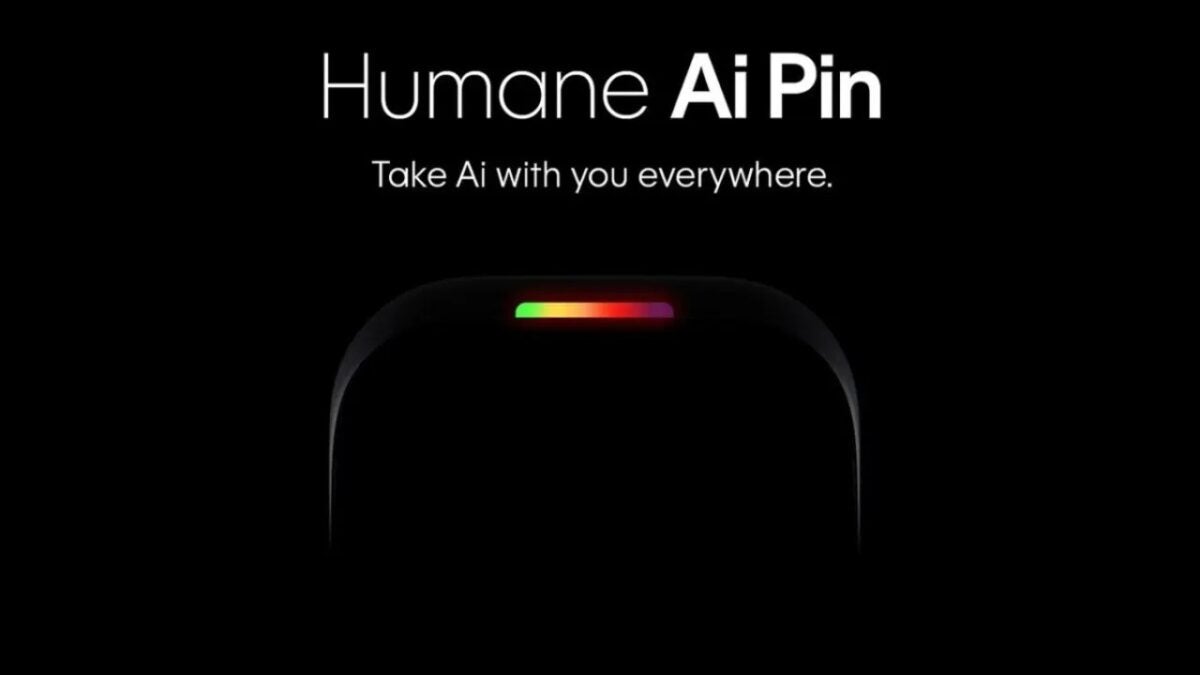
What is AI Pin by Humane? This is the technology that comes after the smartphone

Humane wants the Pin to be considered a fully independent device, rather than an accessory for your smartphone. This is what we know.

Many people wonder: what will come after the smartphone? Apple has been doing it for more than half a decade, hence its total commitment to the Apple Vision Pro, in the future, a substitute for the computer and the mobile phone. But it’s not the only one.

ChatGPT DOWNLOAD

And it’s true that the smartphone was invented in the mid-2000s, and there are many companies that believe the time of the intelligent mobile phone has passed and that we must innovate or die.

The American company Humane has been teasing its first device, the AI Pin, for almost the entire year. Its launch is scheduled for today, Thursday, but The Verge has managed to get ahead of its official presentation. And this is what we know about it.

A very expensive wearable with access to artificial intelligence

Humane, the company that advocates for a world beyond smartphones, is about to launch what amounts to a wearable smartphone priced at $699 without a screen. It comes with a monthly subscription fee of $24 and provides access to AI models from Microsoft and OpenAI.

The AI Pin is a square-shaped device that magnetically attaches to clothing or other surfaces. The clip serves as more than just a magnet—it also functions as a battery, allowing you to swap it out throughout the day to keep the Pin operational.

The exact battery life of a single battery is unknown, but the device comes with two “battery boosters.” It runs on a Qualcomm Snapdragon processor and utilizes a camera, depth sensors, and motion sensors to track and record its surroundings. It features a built-in speaker, referred to by Humane as a “personal speaker,” and can connect to Bluetooth headphones.

Since it doesn’t have a screen, Humane has devised new ways to interact with the Pin. It is primarily designed as a voice-based device but also features the green laser projector we’ve seen in demonstrations, which can project information onto your hand.

Objects can be brought close to the camera, allowing interaction with the Pin through gestures; there is a touch panel somewhere on the device. The Pin isn’t always recording or listening for a wake word; it requires manual activation in some way. It has a “trust light” that blinks when the Pin is recording.

Documents indicate that Humane wants the Pin to be seen as a completely standalone device rather than an accessory for your smartphone.

For $699, you get the Pin, a charger, and the two battery boosters. However, the catch is the $24 monthly subscription to Humane, which includes a phone number and data on Humane’s own branded wireless service operating on the T-Mobile network (in the U.S.).

The Pin’s operating system is called Cosmos, and instead of functioning like a collection of apps, Humane seems to be envisioning a more fluid system that can call upon various AIs and other tools as needed. It sounds a bit like the plugin system of ChatGPT, where new functions or data can be added to the chatbot’s experience.

ChatGPT DOWNLOAD

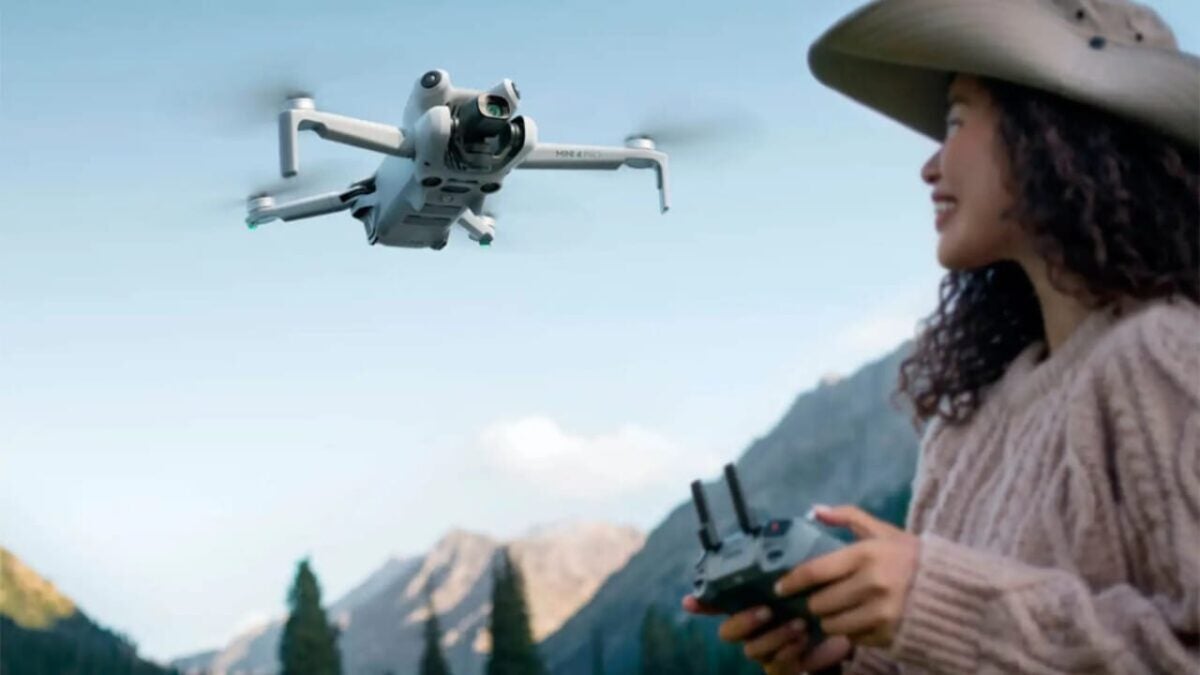
The DJI Mini 4 Pro is the first mini drone with omnidirectional binocular vision

Little by little, DJI, the specialist brand in photography and video accessories, is finding itself alone with its personal use drones. Its biggest rival, Skydio, exited this market to prioritize the enterprise sector in a strategy that is yet to be seen if it succeeds. As a result, DJI has attempted to fill this void with a drone boasting some rather intriguing features: omnidirectional obstacle detection and 4K video recording, making it a remarkable gadget.

The update that the Mini 3 Pro needed

The DJI Mini 3 Pro was one of users’ favorite drones, but it had one drawback that needed to be addressed in everyday use: it could feel extremely comfortable to operate and maneuver with ease, but it was prone to crashing into trees and dense areas. The company has attempted to address this issue through a dual strategy: first, reducing its wingspan size to make accidental propeller collisions less likely, and second, adding an omnidirectional binocular vision system, which could result in a significant improvement if it functions properly.

In terms of technical specifications, the DJI Mini 4 Pro shares significant similarities with the DJI Air 3, improving upon the specifications of the previous version. With a 1/1.3-inch sensor and 48 megapixels at f/1.7, it now competes in a much higher league. It also boasts a flight autonomy of around 40 minutes, which it had previously, but now includes the omnidirectional obstacle avoidance system, 4K video at 100 frames per second, or Full HD at 200 frames per second. Moreover, its Ocusync 4 video transmission distance has reached a maximum of 20 kilometers.

With all these features, the DJI Mini 4 Pro manages to increase its functionality, maximum flight range, and most importantly, enhance the drone’s safety during operation. Undoubtedly, it’s a significant upgrade worth considering if you’re looking to replace your current drone.

Razer brings out the artillery with its new gaming equipment

The end of the year is approaching and with the Christmas campaign just around the corner all the companies are starting to show their latest products for the winter campaign that always boosts sales all year round. While Apple presents its iPhone 15 and Samsung is getting ready for its Galaxy S24, hardware companies are fighting their own battle to become the favorite of the gaming and streaming community. Logitech has been the first to make the big leap, but Razer has not been long in coming and has jumped into the arena with a host of high quality proposals that will soon be available to consumers.

It’s going to be hard to beat these developments

With many new features under its belt, Razer has fully embraced RGB lights for most of its peripherals, but not so for its chairs. With a new line of seats called Fujin, it aims to be the answer to those looking for a real rest for your back, providing great comfort with an elegant touch that moves away from the classic gaming chairs to which we are accustomed.

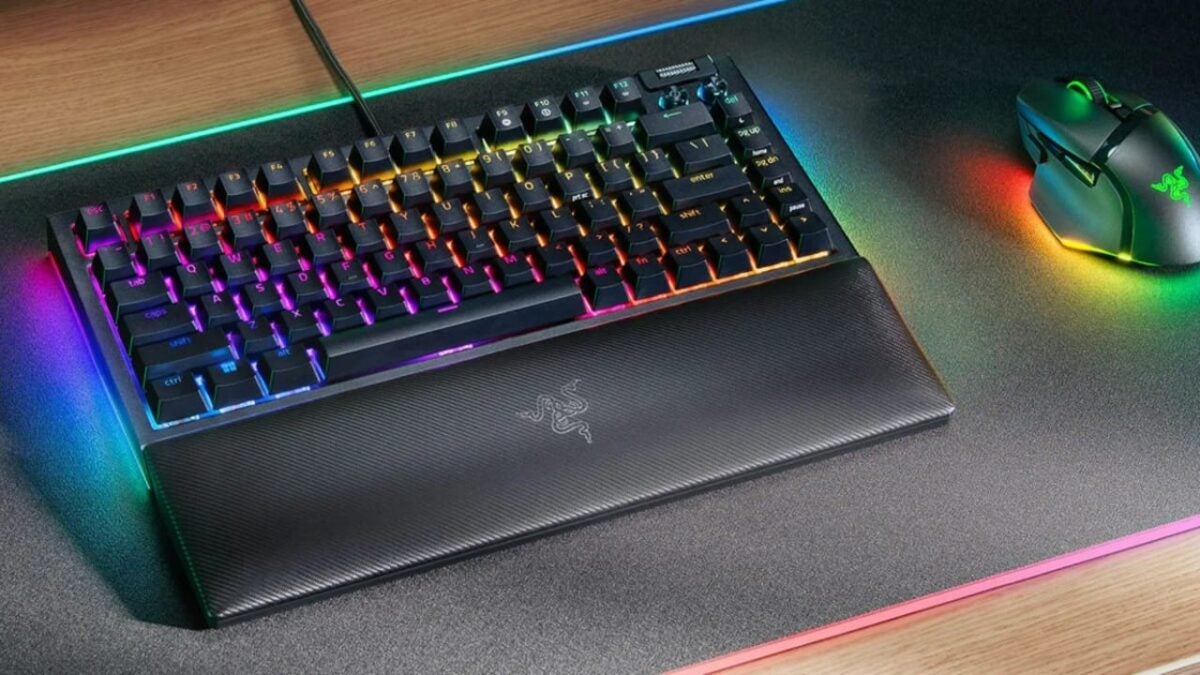
While your chair may not have lights, the new Razer keyboards are full of them. The three models of the Huntsman V3 mechanical keyboard are full of lights and range from the most compact version (V3 Pro Mini) to the 100% model with built-in numeric keypad and strobe. In all three cases the latency rate is between 0.1 and 4 milliseconds and they have a lifetime of up to one million keystrokes on each key, so it looks like a good investment for the future.

Likewise, Razer has also opted to improve its software, adding generative artificial intelligence for its Razer Chroma application so that custom wallpapers can be created through it much more easily. Similarly, the Razer Synapse app is receiving an update that we will soon be able to learn more about.

The 3 keys to the Razer Viper V3 HyperSpeed

As the year comes to a close, major technological advancements are always on the horizon, many of them targeted at the gaming community. From accessories for mobile gaming to additional fans to prevent the PlayStation 5 from overheating, all sorts of hardware innovations are emerging. However, among PC gaming enthusiasts, there’s a special place for mice and keyboards. After Logitech set a high standard with their Lightspeed keyboard and Superlight 2 mouse, Razer is now introducing a mouse ready to make a big impact: it’s called the Viper V3 HyperSpeed.

Balanced equipment

While the Superlight V3 is extremely lightweight, Razer doesn’t necessarily aim to compete with this aspect. However, they have managed to establish an extremely comfortable ergonomics for prolonged use, making the mouse feel much lighter than it is, allowing for easy movement without exerting too much force. Weighing 82 grams, it might be challenging to notice this detail if you’re not used to using it regularly.

With a maximum sensitivity of 30,000 pixels per inch (DPI), the mouse has a maximum speed of 750 inches per second, registering movements very smoothly even in extreme circumstances (to be honest, it’s highly unlikely you’ll move the mouse at a speed of 15 meters per second). However, be cautious when combining these two options because while the Superlight V3 has 6 programmable buttons, it doesn’t have a sniper button, so if you’re not careful, you could easily lose sight of the cursor.

With a battery life of up to 280 hours (though realistically it’s around 80), the mouse uses regular batteries instead of being rechargeable. With prolonged use, this could lead to the battery running out at an inconvenient time.

Nevertheless, considering these factors and its price of around 70 euros, the Razer Viper V3 HyperSpeed appears to be an excellent option for enhancing your setup if you find it necessary.

Death threats force Unity to close its offices in the worst crisis in its history

The person who threatened the company’s offices in Austin and San Francisco certainly did not take half measures.

The problem with feeling indispensable is not realizing that you never are. If Google started charging 50 cents per search, we would all find another place to search, after all. That’s what happened to Unity, which, after announcing its future plan, including charging 20 cents for each program installation, has suffered the worst setback in its history… to dangerous extents.

Unity Reflect DOWNLOAD

Bomb goes!

You know that on the Internet, feelings are magnified, just like in the ‘Big Brother’ house. The problem arises when someone believes it and takes real-life action. In the case of Unity, after receiving several death threats on social media, and in a very unexpected turn of events (for them), the next threat was directed at their personnel.

It may be that an administrative decision is incredibly unpopular, but I assure you that killing someone will not make Unity lower their prices (besides, there are other alternatives that developers are already starting to use en masse). The person who threatened the company’s offices in Austin and San Francisco was certainly not mincing words.

While the company hasn’t disclosed the specific potential threat, they have stated that it is a “credible death threat” so real that the CEO, John Riccitiello, has canceled all his public appearances, at least until today, Friday. “We have taken immediate and proactive measures to ensure the safety of our employees,” they said.

The lesson we can draw from this is not that scaring someone who has done something wrong yields results, but rather that there are always other possibilities, no matter how indispensable something may seem. Well, and that the least expected person can stab you in the back. In the world of technology, a death threat is not going to deter a strategic plan, no matter how unpopular it may be. Let’s remember that.

Unity Reflect DOWNLOAD