OnePlus 16 is official in China: launches October 12

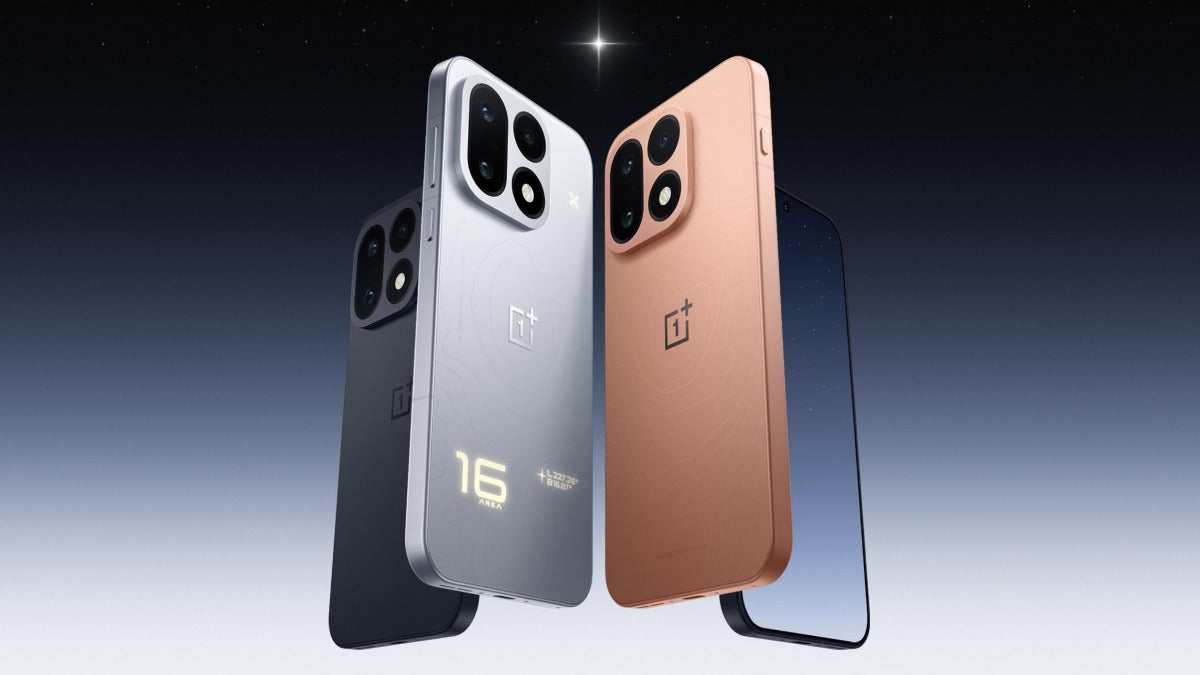
OnePlus has now locked in a launch date for the OnePlus 16 in China: October 12, 2026. The pitch is pretty clear. This phone is being sold on speed first, built around Qualcomm’s Snapdragon 8 Elite Extreme Gen 6.

AnTuTu Benchmark Download

What OnePlus says you’re getting is the higher-end version of that chip, the one with GPU Matrix Cores. Add a 185Hz display, native 185fps support in certain games, and separate touch and Wi-Fi chips meant to cut latency and keep connections steadier. Early benchmark talk has also put the phone above 5 million on AnTuTu, assuming those figures still mean much once the device is in actual hands.

Cameras are part of the sales pitch too. OnePlus is highlighting a triple rear setup: a 200MP 1/1.4-inch main sensor, a 50MP 3x Sony IMX882 telephoto, and a 50MP ultrawide. It also says the phone will include XPAN-style shooting and Master Mode. On top of that, reports have pointed to a 9,000mAh battery with 100W charging, as much as 16GB of LPDDR6 RAM, up to 1TB of storage, and a 50MP front camera, though OnePlus still hasn’t officially confirmed that last part.

If gaming performance matters to you as much as cameras or design, this one has a lot going for it on paper. The catch is availability. So far, OnePlus has only confirmed the OnePlus 16 for China, and there still isn’t any official word on a US or Europe release as the company keeps pulling back in some markets and aligning more closely with Oppo.

Pricing is still missing, so that part will have to wait. Even so, you should expect the OnePlus 16 to come in above the OnePlus 15, and if you’re outside China, importing it may be the only realistic way to get one.


Apple ordered to pay $5.7 billion: Taptic Engine patent verdict

A California federal jury has ordered Apple to pay more than $5.7 billion, finding that the company’s Taptic Engine infringed Taction Technology patents 10,659,885 and 10,820,117.

iTunes Download

Those patents cover vibration modules that apply vibrational forces to skin. Taction says Apple used that idea in the haptics behind clicks, taps, and other interface cues on the Apple Watch, the iPhone, and other product lines, after first debuting the system on the 2014 Apple Watch and the 2015 iPhone 6s and iPhone 6s Plus.

Apple says its system is different and plans to appeal. That leaves room for one of the biggest US patent awards in years to be reduced, overturned, or sent back for another round. The jury also didn’t find willful infringement, which makes any increase in damages, or a tripling of the award, less likely.

If you follow Apple, or haptics more broadly, this case has been around for a while. Court records show it was first filed in 2021 and dismissed in 2023, before the US Court of Appeals for the Federal Circuit brought it back over problems tied to expert testimony and claim interpretation. That could open the door to more IP fights in haptics.

Taction says the verdict vindicates five and a half years of litigation. The company also makes haptic and audio tech, including Transporter Technology in Corsair’s HS60 Haptic headphones, and reports have linked the case to Burford Capital vehicles.

Samsung explains why some Galaxy phones charge slowly: check this setting

Samsung says a simple setting may be behind slow charging on some newer Galaxy phones. Even with the right power brick, charging can drag if fast charging has been switched off.

Ampere Download

On recent Galaxy models, the place to look is Settings > Battery > Charging settings. There, wired fast charging and fast wireless charging are controlled separately. Samsung says both are usually enabled by default, but either one can get turned off by accident or reset after a software update. So a phone might still charge quickly over USB-C but crawl on a wireless pad, or the reverse.

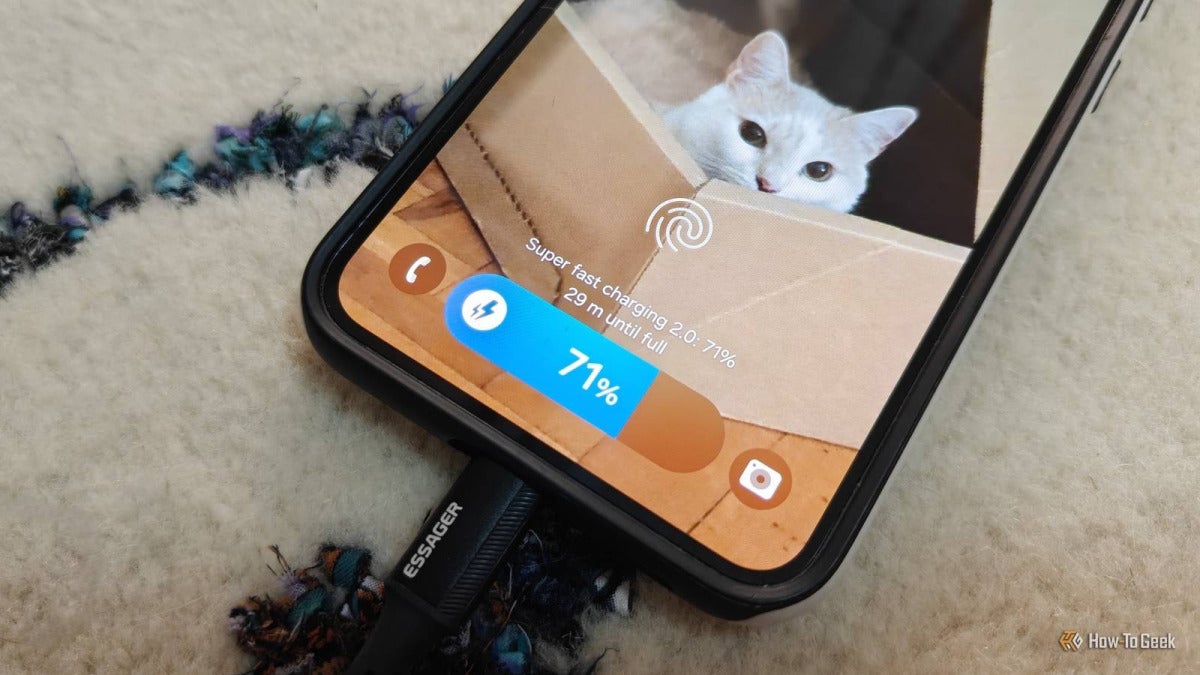
Samsung’s own charging specs add another piece: to reach the highest speeds, you also need a USB Power Delivery charger with PPS and a USB-C cable rated for that power level. Some Galaxy phones top out at 15W Adaptive Fast Charging. Many standard Samsung Galaxy S models go up to 25W Super Fast Charging. Plus and Ultra models can reach 45W Super Fast Charging 2.0. The Samsung Galaxy S26 Ultra now goes higher, with 60W Super Fast Charging 3.0. On the wireless side, supported devices can also hit 25W with compatible Qi2.2 chargers.

If you use fast charging all the time, that setting is an easy one to miss. Still, slower wireless charging isn’t always a bad tradeoff, since it produces less heat and, in commonly cited battery-wear tests, leads to only about 0.3% more battery wear after 500 cycles.

You can also use Samsung One UI 6.1 Battery protection modes from the Galaxy battery settings: Basic, Adaptive, and Maximum. Those include features like an 80% cap and overnight charge management.

AccuBattery Download

Microsoft Copilot gets a major redesign: Home, Code and Autopilot roll out

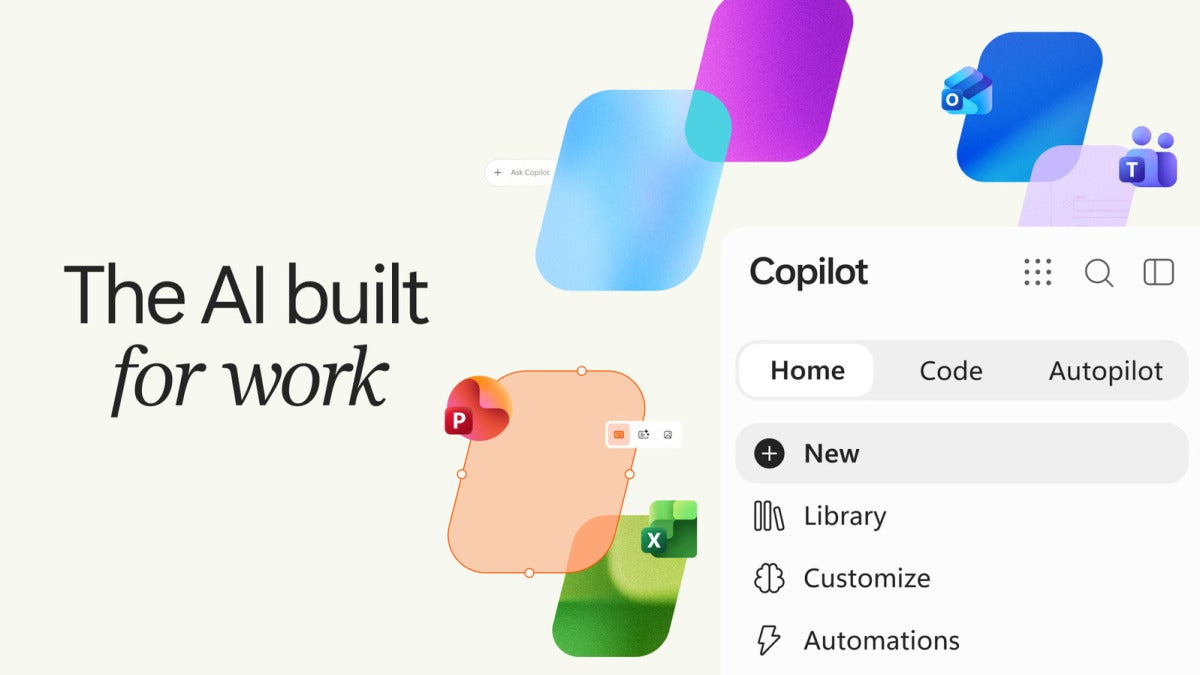
Microsoft is giving Copilot a pretty big overhaul, and the redesign is now rolling out across Microsoft 365. The update adds new Home, Code, and Autopilot tabs, and the whole thing is aimed much more directly at enterprise productivity than before.

Microsoft Copilot Download

Home is now the main landing spot inside Microsoft Copilot. It handles everyday chats, sends more specialized requests where they need to go, and pulls Copilot closer into Word, Excel, and PowerPoint, so you can create, edit, and polish documents, spreadsheets, and presentations without bouncing from app to app. Home is now the main landing spot inside Microsoft Copilot. Code takes a different angle. Microsoft says you can describe a dashboard, tracker, workflow, automation, or lightweight app in plain language, and it will use GitHub Copilot-related technology to build business tools for non-developers and teams that don’t have dedicated engineers.

Autopilot, which used to be called Scout, is meant for recurring work with several steps in it: replying to threads, handling supplier reviews, managing schedules, getting ready for meetings, and taking care of follow-up afterward. Microsoft says it comes with managed identity and permissions, which gives companies tighter control over how it’s used. And Microsoft has the reach to push this aggressively: it says Microsoft 365 Copilot now has more than 30 million paid seats, Microsoft 365 has 450 million commercial paid seats overall, and Azure is set to top $100 billion in fiscal 2026. That said, the more advanced Code and Autopilot features bring usage-based charges, and the usual questions still apply, especially around accuracy, interface quality, cost, and trust.

If you use Microsoft Copilot for work, this is an update you’ll probably want to check out. Microsoft says the redesigned Copilot experience is rolling out through Microsoft 365.

Apple’s iPhone 18 Pro gains ground in India: demand jumps nearly 20%

Apple’s iPhone business in India is picking up speed in 2026. Reports say the iPhone 18 Pro is seeing nearly 20% more demand than the iPhone 17 Pro did at the same point, even with higher prices. Counterpoint Research also expects Apple to reach about a 10% smartphone volume share in India in 2026.

The broader numbers back that up. Counterpoint puts Apple at roughly 10% smartphone volume share in India in 2026, up from 7% in 2024 and 4% in 2022. A softer June quarter was reportedly tied to supply constraints, not weaker demand. On launch day, buyers still traveled for hours to Apple Stores in cities including Mumbai, and some waited in line for as long as 10 hours.

There’s also a bigger shift happening in the market. More buyers are moving up from budget phones to expensive flagships, and the newest iPhone has become a status symbol not just in the major metros but in Tier-2 and Tier-3 cities as well. Meanwhile, several lower-end brands have reportedly posted sharp sales declines since early 2026.

If you’ve been following Apple’s growth in India, the financing angle matters. Even at roughly $1,700, the base iPhone 18 Pro starts to feel more within reach on a 12-month no-cost EMI plan, with the monthly payment coming in at less than a tenth of the full price. That lands especially well with younger buyers.

The latest iPhones are available in India, and local assembly through Foxconn and Pegatron, backed by government incentives, is helping on both cost and supply-chain diversification. Labor and environmental concerns are still there. Even so, higher prices seem to be adding to the iPhone’s premium appeal rather than hurting it.

X gets US backing over EU DSA fine: Washington seeks to join appeal

The US government has moved to join X, Elon Musk’s social media platform, in the company’s appeal of the European Commission’s €120 million fine at the EU General Court in Luxembourg, if the court approves its request to intervene. That filing pulls Washington directly into a major transatlantic fight over the European Union’s Digital Services Act.

Twitter Download

The Justice Department, with backing from the State Department, says the case shows EU digital rules pressing down on US-led innovation through what it calls “regulatory overreach.” In its view, the effects won’t stop with X. Other American platforms, including Meta, Google, and Microsoft, could be hit too.

The roughly $137 million penalty, the first major Digital Services Act sanction since the law fully took effect in February 2024, was tied to three findings from the European Commission: X’s paid blue checks misled users, its ad database was incomplete, and researchers were given too little access to public data. Under the DSA, fines can reach 6% of global turnover.

For anyone who follows US-EU tech policy, this is a case to keep an eye on. X says its February appeal centers on an investigation that was incomplete and superficial, a reading of the DSA that distorts the law, and a process that denied the company the right to defend itself. The implication is bias.

You can track the case in Luxembourg, where this broader US-EU clash now stretches into the Digital Markets Act cases against Apple and Meta as well. Donald Trump has called EU fines “overseas extortion,” and JD Vance has called the DSA’s moderation rules “authoritarian censorship.”

Facebook Download

Microsoft unveils $10 billion Middle East push through 2030

Microsoft says it’ll put more than $10 billion into the Middle East by 2030. The plan covers the UAE, Saudi Arabia, Qatar, and Kuwait, and the company says the money will go toward cloud expansion, cybersecurity, connectivity, resilience, and skills programs.

According to Microsoft, the package will fund cloud and advanced computing infrastructure, business continuity, critical-data protection, and digital sovereignty. More than $400 million is being set aside for subsea and terrestrial cables, alongside Microsoft’s involvement in SeaMeWe-6. Microsoft also says it already operates cloud regions in the UAE, Qatar, and Saudi Arabia, and that a new Saudi data center region is scheduled to come online in November 2026.

That fits the broader push across the Gulf. Governments there are moving fast to build post-oil digital economies through data centers, software platforms, smart cities, and digital public services. For Microsoft, that opens up a bigger market for its enterprise, public-sector, and national infrastructure business. For governments, it helps keep sensitive workloads closer to home.

If you track Gulf tech, this is one to watch. Microsoft says it’ll train more than 4.2 million people by 2030, building on its $1.5 billion investment in G42 and other partnerships across the region. What’s still unclear is how the money will be divided country by country, along with most of the timelines, especially for Kuwait and Qatar. Early on, the rollout will probably lean on Microsoft’s existing Gulf cloud footprint. Saudi Arabia is the only new project the company has given a public date for so far.

Apple updates AirPods with custom EQ: you can finally tune the sound

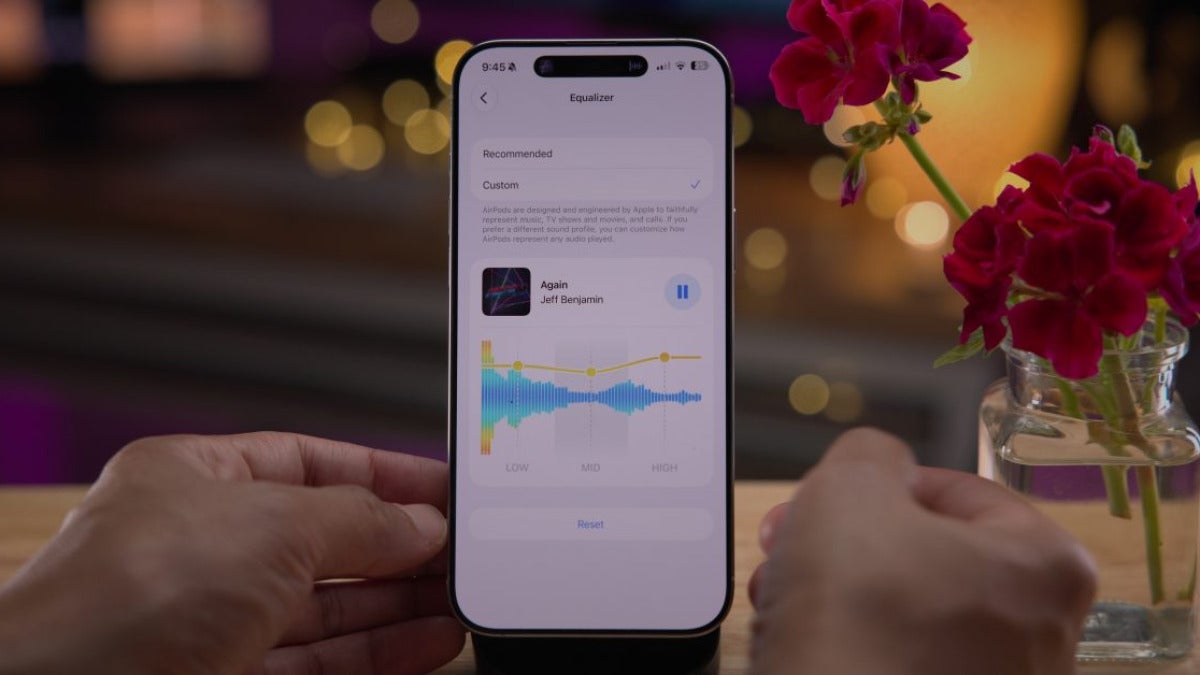
AirPods finally get a feature people have been asking Apple for. With iOS 27, Apple has pushed new AirPods firmware, version 9A350, though some reports list the build as 9A348, and the headline addition is a custom EQ for H2-based models: AirPods Pro 2, AirPods Pro 3, AirPods 4, and AirPods Max 2.

On those H2 models, you can now change bass, mids, and treble right from Settings. The changes play back in real time with Apple Music, so you can hear what you’re doing as you adjust it, rather than bouncing between app presets or digging through accessibility menus to get anything close.

The EQ setting also seems to live on the AirPods themselves, which means it carries over when you switch devices. It’s still a simple three-band EQ, not the more granular tuning Sony, Bose, and other competitors give you, but iOS 27 brings a few other extras too: a redesigned Settings layout, an Adaptive Audio slider, GymKit support on iPhone and AirPods Pro 3, Precision Finding for AirPods Pro 3 through Apple Watch, and Siri AI support if your iPhone supports it.

Anyone who uses AirPods a lot will probably want this update. It finally lets you decide how your music sounds without workarounds. You get it the usual way: the firmware installs automatically while your AirPods are charging and sitting near a Bluetooth-connected, Wi-Fi-enabled iPhone, iPad, or Mac.

Pixel Weather now adds manual refresh: the larger homescreen widget gets a new button

Google has updated Pixel Weather to version 1.1.20260716.x, and the big change is a manual refresh button for the larger “Weather forecast” home screen widget on Pixel phones. Tap the new button in the top-right corner and the widget pulls in the latest forecast right there, with a spinner showing while it reloads. Handy if the widget hasn’t refreshed on its own because battery settings are too aggressive, your connection is spotty, or background activity is just running late. No need to open the full Pixel Weather app just to force an update.

AccuWeather Download

The new button only shows up on the larger Pixel Weather widget. Still, when you refresh that one, any smaller Pixel Weather widgets on your home screens update too, so it helps even if you’ve got different widget sizes scattered across pages. Google also took out the left and right buttons from the Hourly and 10-day forecast cards in the Pixel Weather city feed. Now you move through those sections with a swipe. It does look cleaner. It also gets rid of an obvious visual cue for navigation.

If you use Pixel Weather widgets a lot, this is probably an update you’ll want, even though it doesn’t do anything about complaints over forecast accuracy and doesn’t add new widget styles or customization options. It comes after earlier Pixel Weather tweaks, including more colorful icons and an “Updated” time that stays visible all the time, and it’s already available through the Play Store on Pixel devices.

The Weather Channel Download

Car Carpet Underlay Still Cuts Road Noise: but only so much

Car carpet underlay has become a common way to upgrade a cabin, adding extra padding, more insulation, and a small but noticeable drop in low-frequency vibration noise. It sits beneath the carpet, and that extra layer makes the floor feel softer underfoot while also helping it stay cooler, since it puts a barrier between the cabin and heat coming off the engine bay, exhaust, and transmission tunnel.

It won’t fully shut out tire roar, wind noise, or the sound that comes through the doors, wheel wells, and firewall. Installers usually describe car carpet underlay as something that mainly damps floorpan resonance. That matters, because research has tied long stretches of low-frequency cabin noise to poorer task performance, more fatigue, and a greater chance of feeling sleepy on long drives.

If a quieter cabin is the goal, car carpet underlay is worth buying only as one piece of a layered setup, with butyl mats, acoustic foam, and often mass loaded vinyl placed in the floor, doors, wheel wells, and firewall. In that kind of setup, cuts of roughly 10 to 15 dB are possible. And even a 3 dB drop already means about 50% less sound energy.

You can buy car carpet underlay through aftermarket installers, then combine that passive insulation with active noise cancellation (ANC) systems that use microphones and speakers to cancel out road, tire, and engine noise. That’s part of why electric vehicle makers keep chasing quieter cabins, and Hyundai says its system cuts cabin noise by about 3 dB.