Telegram is back on the App Store after brief CSAM removal: X stays put

Telegram briefly disappeared from Apple’s App Store worldwide in August 2026. Apple pulled it after finding CSAM-related violations, then put it back roughly an hour later once Telegram said it had banned the single offending user and removed the content.

Telegram Download

That quick reversal still drew outsized attention. Telegram says it has more than 1 billion users, and in some countries it plays a real political role, so even a short removal doesn’t pass quietly. The app had already been under pressure before this: Indonesia in 2017, Germany in 2022, a French inquiry in 2024 involving Telegram CEO Pavel Durov, plus an earlier Apple removal in 2018. Telegram also says it has stepped up moderation and, in 2026 alone, removed 337,900 groups and channels linked to CSAM.

Apple’s decision also put the spotlight back on X, the platform formerly known as Twitter. X stayed in the App Store during the 2026 Grok deepfake controversy even after private warnings, a rejected xAI update, a later approved revision, partial safeguards, reported workarounds, and investigations in California and Canada.

If you pay attention to how Apple handles big platforms, this one is worth watching. Critics keep arguing over whether Apple is actually enforcing its June 2026 repeat-violator rules the same way across the board, and that fight now runs from Epic Games CEO Tim Sweeney to 28 advocacy groups to several US senators. Legal scholar Anupam Chander has also pointed to the larger political blowback Apple could face in the US if it tried the same move with X.

Telegram is back on the App Store now, so you can download it again.

NASA funds laser-powered LUX drone for Moon caves: it can reach pits rovers can’t

NASA has awarded Stone Aerospace $175,000 in its latest $3.2 million NASA Innovative Advanced Concepts funding round. The award covers LUX, Stone Aerospace’s concept for a drone built to explore lunar caves.

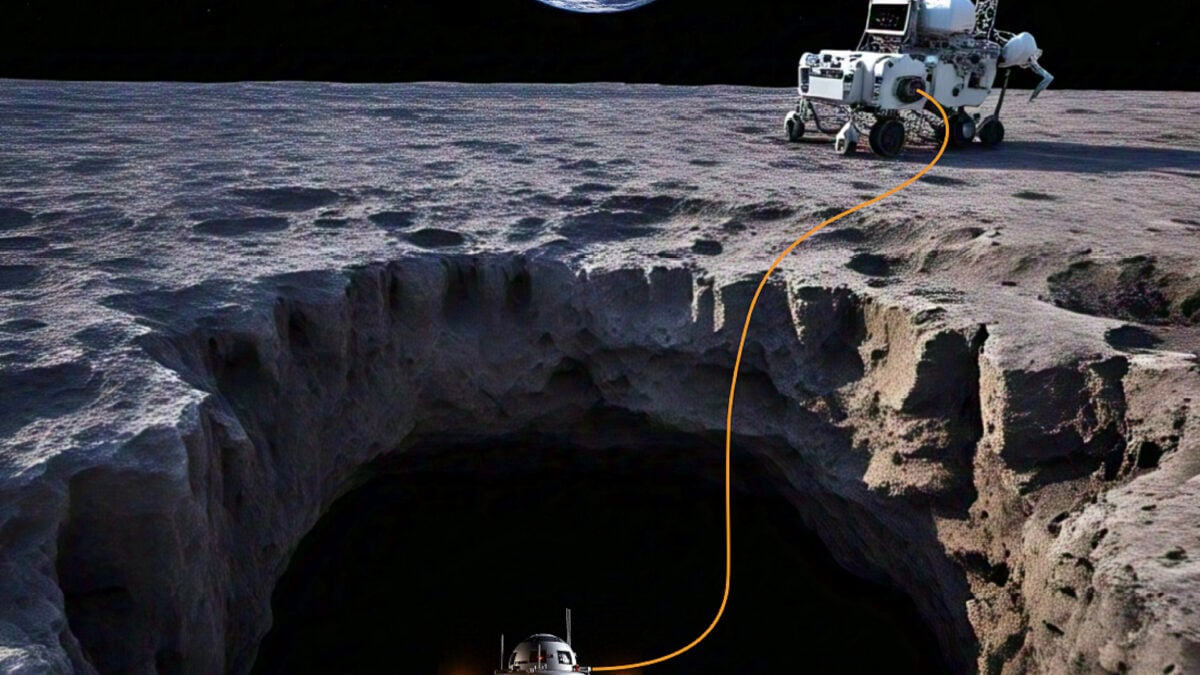
LUX is a tethered flying vehicle meant to hover down into steep lunar pits and lava tubes that rovers simply can’t reach. One example NASA points to is a pit in Mare Tranquillitatis, about 250 miles from the Apollo 11 site. Researchers think it’s roughly 100 meters deep, and it may open into an underground lava tube.

The part that stands out is the tether. NASA says the drone would get power from a surface rover through a laser-powered power-over-fiber line. That same tether would also provide a high-speed connection, sending video, maps, and sensor data back to the rover and then on to Earth. It could even give the vehicle some extra stability in flight.

If you keep an eye on Moon exploration, this is one to watch. Lunar caves could protect astronauts from radiation, micrometeorites, and huge temperature swings. They may also preserve water ice and cleaner geological records. LUX is aimed at the difficult part: flying in total darkness, without GPS, while keeping communications working and preventing a delicate fiber tether from failing in dust and extreme cold.

NASA has published the early-stage NIAC concept, and you can read it through the agency. The European Space Agency is looking into similar pit robots too, including Daedalus.

Shein reveals FTC investigation in Hong Kong IPO filing

Shein has now revealed in its Hong Kong IPO prospectus that the U.S. Federal Trade Commission is investigating the fast-fashion retailer on consumer-protection grounds. That puts a fresh layer of regulatory pressure on the company just as it tries to get its listing over the line.

Reuters reports that this appears to be the first time Shein has disclosed the probe. The company says it’s cooperating with the FTC, but it also says it can’t predict either the timing or the outcome. In the filing, Shein warns that any settlement or other resolution could require significant payments and could materially hurt its finances.

The FTC hasn’t said what it’s examining, exactly, and it hasn’t tied the case to any specific Shein practice. Still, the timing is rough. Shein has already had listing plans in New York and London stall. Reuters also points to a reported Hong Kong target valuation of $40 billion to $50 billion, far below the $100 billion valuation it carried in 2022 and only modestly above the roughly $30 billion level some investors reportedly have in mind. The operating picture has worsened too: a $99 million loss in Q1 2026 after a $395 million profit a year earlier, plus a 14% drop in U.S. revenue to $2 billion after the end of the de minimis exemption. And that’s before you get to the broader scrutiny around dark-pattern-style countdown timers, flash sales, gamified discounts, EU reviews of returns and discounting, a June 2025 complaint from 21 watchdogs alleging fake timers and confirm shaming, along with forced-labor, copyright, and privacy concerns.

If you’re tracking Shein’s IPO, this disclosure matters. You can find it in the prospectus.

Snapchat rolls out Spotify “Now Playing” sharing to Snap Map

Snapchat is adding a Spotify integration to Snap Map that lets people share what they’re listening to in real time through a new Now Playing feature.

Spotify Download

Once you connect your Spotify account in Snapchat, you can choose who gets to see your listening activity. Friends can then see the songs, albums, and artists you’re playing live, not just tracks you shared later.

The update follows Snapchat’s Sounds feature from 2020 and Spotify’s Share Track Lens for Snapchat, which arrived in January 2024. It also gives Snap another music feature to keep people spending time in the app. Snap says it has 956 million monthly active users, 483 million daily active users, and more than 5.5 billion Snaps created each day, though it still hasn’t shared much that shows how widely Now Playing is being used.

If Snapchat and Spotify are already part of how you find new music, this is an easy feature to try. Instagram and TikTok are pushing similar music-sharing tools too, and TikTok says people saved more than 6 billion tracks to streaming services in the year leading up to April 2026.

The feature is rolling out now in Snapchat. If you don’t already have it, the app is available on iOS and Android, and you can link your Spotify account from inside the app.

Snapchat Download

PRIMA retinal implant cleared in Europe: first implant due in 2026

Science Corp.’s CE mark PRIMA retinal implant for geographic atrophy has picked up a CE mark from DEKRA, which means it can now be sold in 30 European countries. The company says the first commercial implant should happen in Germany in August 2026, with dozens more patients expected to receive it before the year is out.

PRIMA is aimed at geographic atrophy, the most advanced form of dry age-related macular degeneration. More than 5 million people live with it. It can take away the ability to read, recognize faces, or make out fine detail, even while peripheral vision remains. The treatments already approved for this condition mostly slow the disease down. They don’t give back sight that’s already been lost.

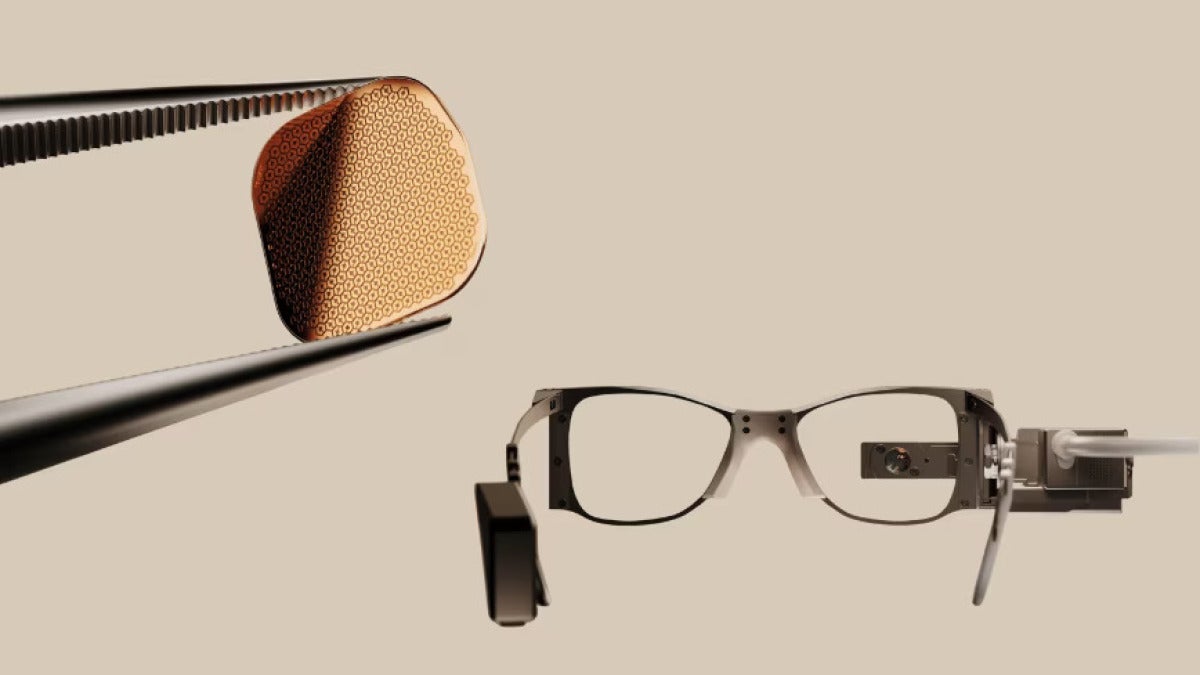
The system itself has two parts: a tiny wireless photovoltaic chip placed under the retina, and a pair of glasses fitted with a camera, a projector, near-infrared light, and zoom. The chip converts light into electrical signals that stimulate the retinal cells still left working. The goal isn’t normal vision. It’s limited “form vision,” enough in many cases for patients to make out shapes, letters, numbers, and short words.

Results so far are encouraging, though they come with limits. In a 38-patient study run across 17 sites in five countries and published in The New England Journal of Medicine, people using PRIMA gained an average of 25.5 letters, or more than five lines on an eye chart. Reading ability returned for 84% of them. Even so, vision was still nowhere near normal, landing around 20/400 in some cases, and the quality-of-life improvements weren’t the same for everyone.

For anyone who keeps an eye on vision-restoring implants, PRIMA is one to watch. The surgery is still delicate. The price could run into the hundreds of thousands. Reimbursement talks are still happening. Science Corp. acquired PRIMA from Pixium in 2024 and says it improves on Argus II. The company is also aiming for the US in 2027, backed by FDA Breakthrough Device and Humanitarian Use Device designations.

France passes EU-first under-15 social media ban: starts in 2026

France has approved a law that would bar children under 15 from social media starting September 1, 2026, putting it on course to become the first EU country to impose a nationwide restriction like this.

Qustodio Download

There’s still a legal hurdle. France’s Constitutional Council has to clear the law first. If it does, new accounts for under-15s would be blocked from September 1, 2026, and existing accounts held by users under 15 would have to be closed by January 1, 2027. If the Council objects, enforcement could be pushed back or parts of the law could be revised.

Platforms would have to use age-verification checks approved by France’s privacy regulator. Online encyclopedias, plus educational and scientific directories, are exempt. The broader French bill also includes a ban on mobile phone use in high schools.

French officials say 90% of 12- to 17-year-olds use smartphones every day, and that more than half spend between two and five hours a day on their devices. Supporters of the law point to self-esteem problems, addiction, cyberbullying, and harmful content. Critics, for their part, question whether it will hold up constitutionally, raise privacy concerns, and note how easy it could be to get around with VPNs or false information.

The French measure would apply across social platforms in France, and this debate probably won’t stay there. Expect similar arguments elsewhere, especially after Australia’s ban on social media for under-16s and parallel moves in Spain, Denmark, Greece, the UAE, Brazil, Gabon, Rwanda, and Zimbabwe.