The Chang’e-6 probe and the Long March-5 Yao-8 rocket that will transport it into space were moved on Saturday to a launch platform at the Wenchang Space Launch Center.

The National Space Agency of China indicated early May as the probable launch date, while other reports point to May 3rd as the ideal date.
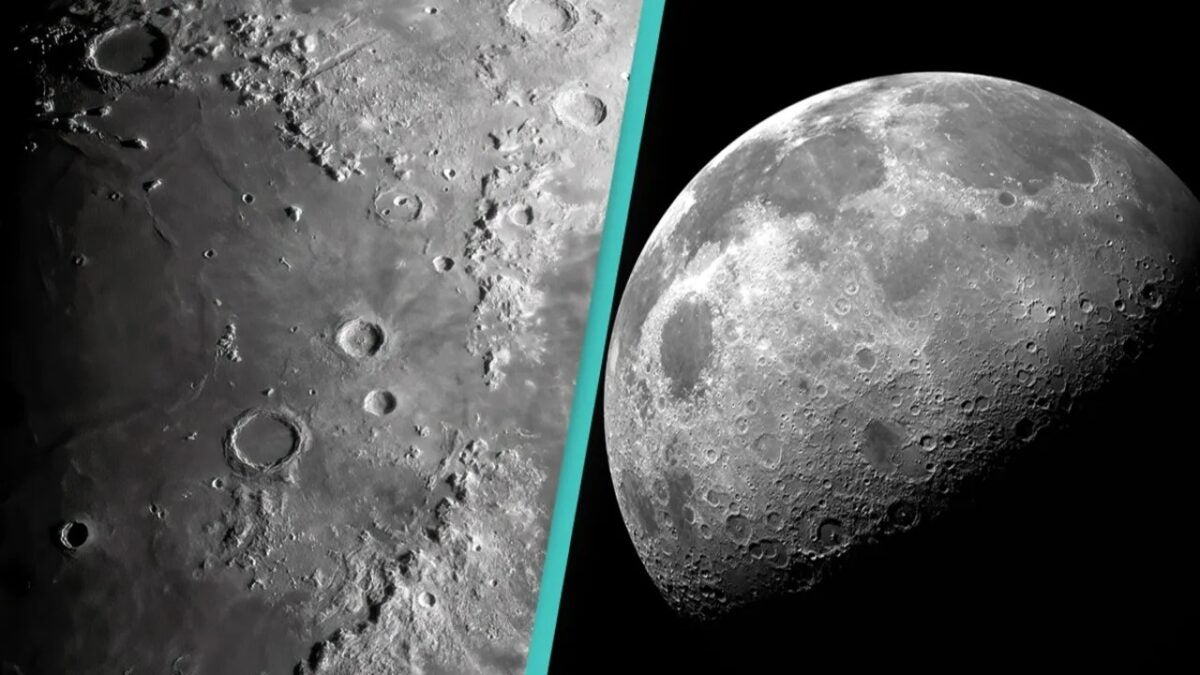
At any time, Chang’e-6 will head to a region on the far side of the Moon near the south pole, a zone believed to provide clues about the satellite’s evolution.
A complex, but very important mission for China
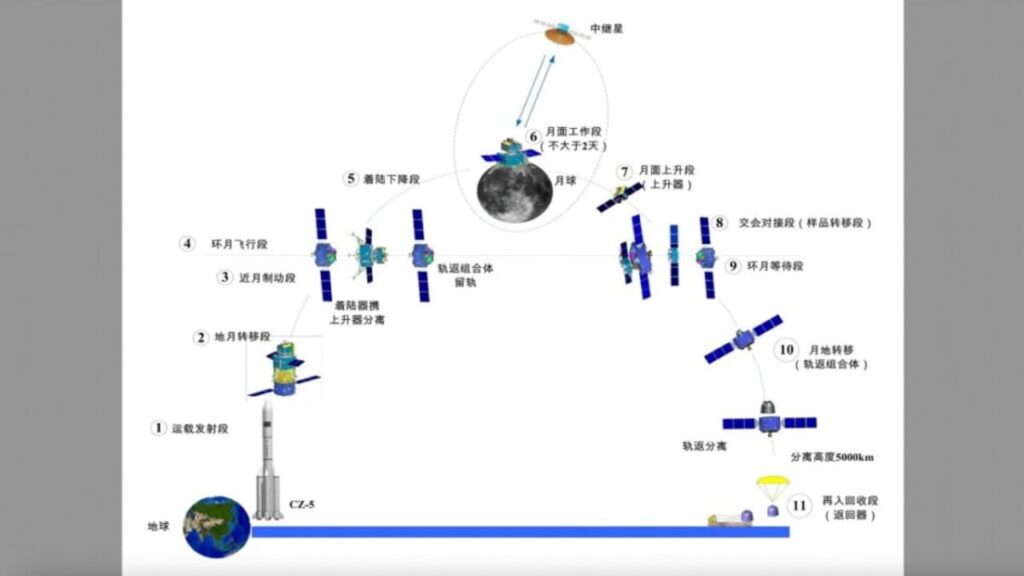
The mission is complex, as it includes an orbiter, a lander, an ascent module, and a reentry module. But China has already done this before: Chang’e-6 was built as a backup for Chang’e-5, and the latter mission ended successfully.
The landing module is equipped with a drill and a scoop. According to the mission plans, these tools will collect about two kilograms of lunar material, which will be loaded into the elevator. That spacecraft will connect with the reentry model to bring pieces of the Moon back to Earth.
The mission is expected to last 53 days, 30 more than the Chang’e-5 mission, and will require retrograde orbits around the Moon. The battle between the US and China to colonize the Moon is one of the great battles of our century.
According to the South China Morning Post, China is also considering a Mars sample return mission. The newspaper reported last week that Wu Weiren, chief designer of the Chinese Lunar Exploration Program, said at a conference that they plan to launch a spacecraft called Tianwen-3 in 2030.
The mission plan includes two launches: one to carry a landing module and an ascent vehicle, and another to transport an orbiter and a return vehicle to Mars.
The most efficient round-trip journeys to Mars require more than 500 days of travel, so even if China manages to launch Tianwen-3 in 2030, it would take several years before it returns with any red rock.
But even a return in 2033 would leave NASA behind – due to technological and funding issues – struggling to design a sample return mission that can return to Earth in 2040.
If China becomes the first to bring a piece of Mars, the nickname “red planet” could acquire a new meaning, literally.
