The Japanese satellite Akatsuki has officially closed its operations after 15 years of traveling through space. Launched on May 21, 2010, this satellite was decorated with over 13,000 drawings and messages sent by fans of Hatsune Miku, making it a unique monument to the famous virtual idol. The Japan Aerospace Exploration Agency (JAXA) aimed for Akatsuki to study the weather patterns of Venus and search for signs of active volcanism on the planet. A satellite that had a whole life out there Despite its achievements, JAXA announced the loss of contact […]
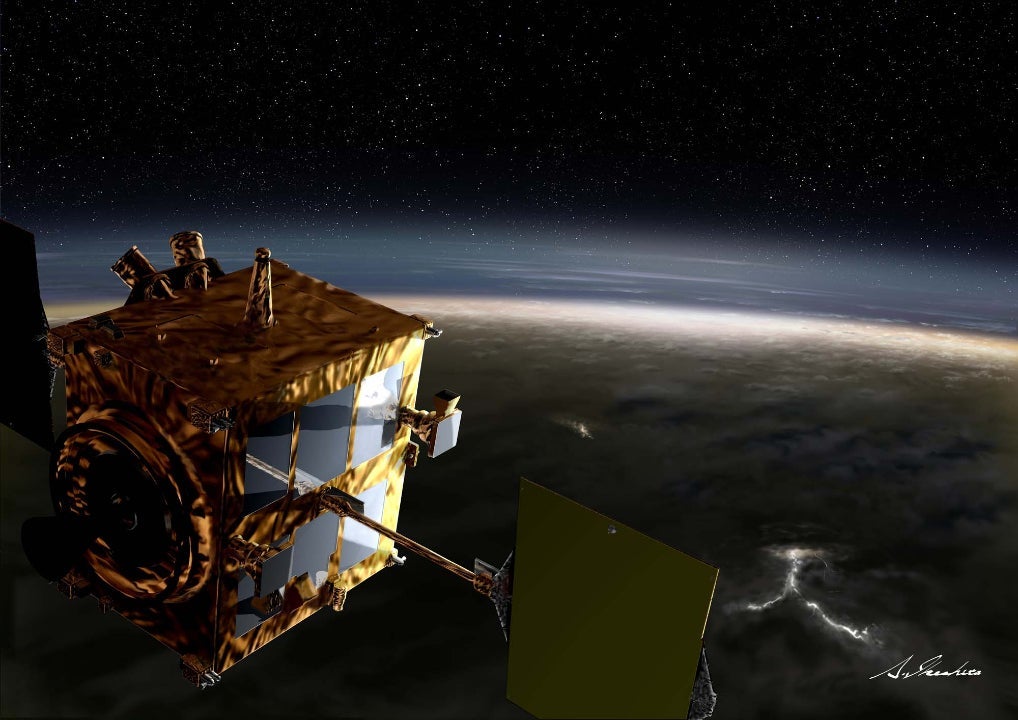
The Japanese satellite Akatsuki has officially closed its operations after 15 years of journeying through space. Launched on May 21, 2010, this satellite was adorned with over 13,000 drawings and messages sent by fans of Hatsune Miku, making it a unique monument to the famous virtual idol. The Japan Aerospace Exploration Agency (JAXA) aimed for Akatsuki to study the weather patterns of Venus and search for signs of active volcanism on the planet.
A satellite that had been out there for a lifetime
Despite its achievements, JAXA announced the loss of contact with Akatsuki in April 2024. After a year of trying to reestablish communications, the agency determined that recovery would be difficult and officially ended its operations. In a statement on Twitter, the Akatsuki team expressed their gratitude to everyone who supported the mission over these 15 years.
Akatsuki was the only operational satellite focused on Venus in the last decade, managing to capture stunning images of the planet, characterized by the brown and creamy tones of its atmosphere. This satellite became a symbol not only of space exploration but also of Japanese pop culture, by integrating fan art into its structure.
A hacker known as 7h3h4ckv157 has once again drawn attention after discovering new vulnerabilities in NASA’s systems. This is the second time he has managed to detect security flaws in the space agency, following an initial report in 2022, where he used the Cross-Site Scripting (XSS) technique to exploit weaknesses in their website. Despite NASA’s recognized security, the hacker has shown that their systems are susceptible to attacks similar to those that can affect other organizations. The second time’s the charm XSS refers to a […]
A hacker known as 7h3h4ckv157 has once again drawn attention after discovering new vulnerabilities in NASA’s systems. This is the second time he has managed to detect security flaws in the space agency, following an initial report in 2022, where he used the Cross-Site Scripting (XSS) technique to exploit weaknesses in their website. Despite NASA’s well-known security, the hacker has shown that their systems are susceptible to attacks similar to those that can affect other organizations.
The second time is the charm
XSS refers to a type of attack that allows hackers to inject malicious code into users’ browsers, which can result in the theft of sensitive information, such as passwords. This attack occurs when the page does not properly handle the data entered by users. In his first foray, the hacker received neither recognition nor reward for his finding, which generated some discontent in the ethical hacking community.
Nevertheless, on this occasion, NASA has decided to acknowledge its work by sending a letter of thanks signed by Mike Witt, the agency’s information security officer. This action highlights the importance of recognition within the field of cybersecurity and reinforces the value of security research conducted by external individuals.
Despite the fact that the hacker has not revealed details about the newly identified vulnerability, this situation underscores the need for constant security reviews in critical systems such as those of NASA. The agency has chosen not to provide specific information about the type of vulnerability, indicating that it must ensure the flaw is completely resolved before making a public disclosure. Rumors suggest that it may offer more information on its blog in the future.
Nintendo has decided to try to keep the file sizes of games for its upcoming console, the Switch 2, below 10 GB, despite the current trend in the video game industry where many titles take up more than 100 GB. To date, four games have been listed for the new system, with Mario Kart World being the only one that exceeds the 20 GB mark. A limit that exists due to the maximum capacity of the cartridges The console will hit the market on June 5 and will feature 256 GB […]
Nintendo has decided to try to keep the file sizes of games for its upcoming console, the Switch 2, below 10 GB, despite the current trend in the video game industry where many titles occupy more than 100 GB. To date, four games have been listed for the new system, with Mario Kart World being the only one that exceeds the 20 GB mark.
A limit that exists due to the maximum capacity of the cartridges
The console will hit the market on June 5th and will feature 256 GB of internal storage. Players will also be able to expand this capacity using microSD Express cards, providing additional flexibility for those who want to store more games on their device. In comparison, a title like Cyberpunk 2077, if purchased in physical format, would fit on a 64 GB card, suggesting that the digital space occupied would be similar.
As of now, the Nintendo eShop in the United States has not yet listed the Switch 2 games, but according to reports from the Japanese store, some titles have already become available. To facilitate the download and access to the games, Nintendo has introduced Game-Key Cards. These cards work similarly to physical cartridges, allowing games to be downloaded, but they must be inserted into the console to play.
With this approach, Nintendo is not only looking to optimize the use of the console’s internal storage, but also addresses one of the main concerns of players in the current generation of consoles. As the gaming community eagerly awaits the release of the Switch 2, it is clear that Nintendo’s commitment to a practical and accessible approach could make a difference in the gaming ecosystem.
After creating NASA in 1958, the American administration in charge of space research took only 10 years to conquer the Moon, an achievement so great that we have not managed to do it again. But from the year 2000 to 2024, we have achieved other milestones. The emergence of private companies and the liberalization of space programs have allowed the space exploration business, which seemed to be at a standstill, to shift into a higher gear. Today we are going to select what we consider to be the 7 most important milestones in the aerospace industry that have happened in the […]
After creating NASA in 1958, the American administration in charge of space research took only 10 years to conquer the Moon, an achievement so great that we have not achieved it again. But from the year 2000 to 2024, we have achieved other milestones.
Subscribe to the Softonic newsletter and get the latest in tech, gaming, entertainment and deals right in your inbox.
The emergence of private companies and the liberalization of space programs have accelerated the business of space exploration, which seemed to be at a standstill.
Today we are going to select what we consider the 7 most important milestones in the aerospace industry that have occurred in the last 24 years. If you feel that an important moment is missing, don’t take it personally: To select 7 moments, many more had to be left out of the list.
Artemis I
Everyone has forgotten that the program to conquer the Moon again began with Artemis I, a mission in which an uncrewed Orion spacecraft flew around the Moon at the end of 2022.
NASA has invested more money in the Artemis Program than in any other space mission in the last 24 years. With the Artemis I mission, NASA will mark a milestone in the program that will finally return humans to deep space after more than half a century—even if we are delayed.
The Dragon capsule crew
The retirement of the space shuttle in 2011 marked a painful moment for NASA. The space agency had to spend several years convincing Americans that the space program was not shutting down. NASA leaders also had to go to the Russian space corporation to ask them to take their astronauts to the International Space Station.
Then in 2020, SpaceX and its Dragon spacecraft arrived. The return of the United States to manned space flights was a significant technical achievement for SpaceX, which became the first private company to put humans into orbit, and allowed NASA to send more astronauts to the space station and make the most of the research capabilities of that facility.
Detection of gravitational waves
Although he theorized about their existence a century ago, physicist Albert Einstein was not sure that humans would be able to detect the faint echoes of gravitational waves traveling through the vastness of space.
However, experimental physicists struggled to achieve it for decades. Then, in February 2016, two LIGO observatories announced that they had detected gravitational waves from two merging black holes. This marked a triumphant moment for experimental physics and confirmed a key principle of Einstein’s general relativity.
The rise of space tourism
It wasn’t until the summer of 2021 that space tourism “took off.” First with the spacecraft VSS Unity from Virgin Galactic and then with Blue Origin’s New Shepard vehicle that took private citizens to suborbital space.
Shortly after, in September 2021, businessman Jared Isaacman commanded the first private orbital mission, Inspiration4, aboard the Crew Dragon. In December of that same year, the daughter of the first American, Laura Shepard-Churchley, followed in her father’s footsteps by flying on a similar trajectory aboard a spacecraft that bore her name. Private space travel is not yet commonplace, but the door has been opened.
China fully enters the space race
One of the main stories of this century is the rise of the Chinese space program and its efforts to challenge the preeminence of the United States. This has been most evident in the country’s efforts to study and land on the Moon with its Chang’e project. In 2007, China flew its first orbiter to the Moon, and in 2013, the Chang’e 3 spacecraft successfully landed on the Moon and deployed the small Yutu rover.
These initial successes laid the groundwork for even more ambitious missions. In 2019, the Chang’e 4 mission landed on the far side of the Moon, the first time anyone had achieved this. Subsequently, the country’s space program embarked on robotic sample return missions, including the Chang’e 6 mission at the Moon’s South Pole this year. China aims to send humans to the Moon by 2030, competing with NASA and the United States.
The SpaceX rockets that are captured
On October 13 of this year, SpaceX launched its massive Starship rocket for the fifth time, but the profile of this flight was different, as the company intended to recover the first stage of the rocket, the so-called Super Heavy.
Surprisingly, the rocket returned to the launch site, stopped next to the launch tower, and was caught in the air by a pair of hooks to be placed back on the launch stand.
This technical achievement demonstrates several important things, including the verification of the radical approach to catching a rocket and also allows SpaceX to accelerate the development and testing of Starship.
The launch of SpaceX’s Falcon Heavy
This February 2018 mission is very important. The visual effects were irresistible. The rocket launch itself was impressive, with the combination of 27 Merlin rocket engines. Next, the twin rockets separated and returned to Earth, landing like a pair of synchronized swimmers. Finally, the stunning vision of a cherry red Tesla (and Starman) moving away from Earth towards Mars.
It was a spectacle that captured the public’s attention. But the new rocket was more than a spectacle. By designing, building, and launching the Falcon Heavy, SpaceX demonstrated that a private company could independently finance and fly the largest and most powerful rocket in the world.
This demonstrated that commercial heavy-lift rockets were possible. By competing with the Delta IV Heavy, the Falcon Heavy saved billions for the U.S. government. This means that it is likely the U.S. government will never again design and develop a rocket.
Researchers have observed mysterious dark ovals, each approximately the size of Earth, appearing in the polar regions of Jupiter in the ultraviolet spectrum. Yes, remember that Jupiter is much larger than our small planet. The gas giant, whose Great Red Spot has been baffling astronomers for centuries, possesses an extremely powerful magnetic field that, according to scientists, could be behind this strange phenomenon. As detailed in a new article published in the journal Nature Astronomy, a group of scientists supported by NASA concluded that disturbances high […]
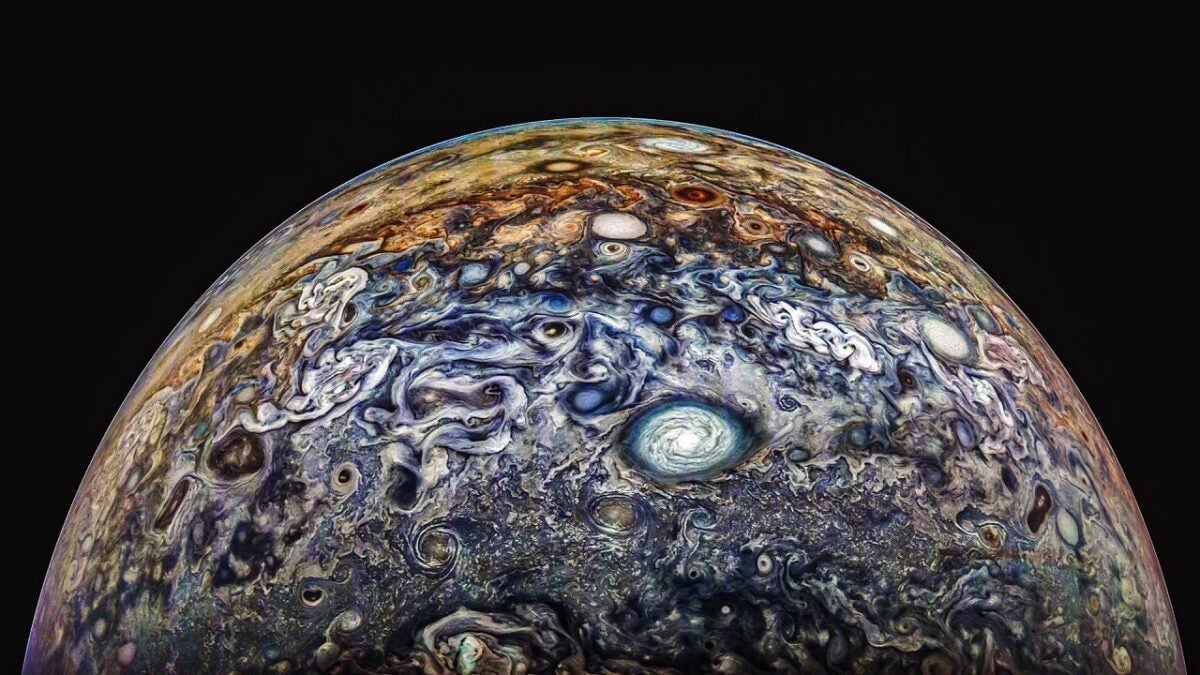
Researchers have observed mysterious dark ovals, each approximately the size of Earth, appearing in Jupiter’s polar regions in the ultraviolet spectrum. Yes, remember that Jupiter is much larger than our small planet.
Subscribe to the Softonic newsletter and get the latest in tech, gaming, entertainment and deals right in your inbox.
The gas giant, whose Great Red Spot has been baffling astronomers for centuries, has an extremely powerful magnetic field that, according to scientists, could be behind this strange phenomenon.
As detailed in a new article published in the journal Nature Astronomy, a group of scientists supported by NASA concluded that disturbances high in the planet’s atmosphere can cause the appearance of these dark spots in ultraviolet observations.
What's that black spot on Jupiter? No one is sure. During one pass of NASA's Juno over Jupiter, the robotic spacecraft imaged an usually dark cloud feature informally dubbed the Abyss. Surrounding cloud patterns show the Abyss to be at the center of a vortex. Since dark features… pic.twitter.com/Becef4TiSQ
In the depths of the planet’s atmosphere, very powerful forces are at work
Although the ovals were detected for the first time in Hubble observations in the late nineties, the team claims to have found the reason for their appearance: they suggest that magnetic tornadoes in the upper atmosphere could be stirring the stratospheric haze, causing the formation of these unusual features near Jupiter’s north and south poles.
These ovals appear dark in the UV observations made by NASA’s Hubble Space Telescope, as part of the Outer Planet Atmospheres Legacy (OPAL) project, because they absorb more ultraviolet light than their surroundings.
It is possible that the phenomenon is not limited to the upper part of the gas giant’s atmosphere. According to the researchers, the existence of the ovals suggests that very powerful forces are at work deep within the planet’s atmosphere.
1/2 So great achievement!
Using 26 global maps of Jupiter, obtained by Hubble between 1994 and 2022, UC Berkeley astronomers have detected transient ultraviolet dark ovals at the planet's north and south poles.
“In the first two months, we realized that these OPAL images were like a gold mine, in a sense, and very quickly I was able to build this analysis pipeline and send all the images through to see what we get,” said UC Berkeley undergraduate student and co-author Troy Tsubota in a statement.
Tsubota and his collaborators suggest that the deepest point of these vortices within the planet’s ionosphere may be stirring Jupiter’s hazy atmosphere and sending it upwards in a manner similar to a tornado, causing these ovals to form for about a month before dissipating.
The team hopes to shed more light on how atmospheric dynamics differ between Earth and Jupiter. The gas giant has always been a mystery to us, but we are gradually getting to know it better as our measuring instruments improve.
This week we mentioned that NASA was going to update us on the status of the Artemis missions, those related to NASA’s conquest of the Moon. And although we were expecting good news, the reality has been quite different. The Artemis II and III missions, planned to take American astronauts to the Moon, have been delayed. In a press conference, NASA officials reported that issues with the heat shield and life support systems would delay the launches until 2026 and 2027. On December 5, the Administrator of the […]
This week we mentioned that NASA was going to update us on the status of the Artemis missions, those related to NASA’s conquest of the Moon. And while we were expecting good news, the reality has been quite different.
The Artemis II and III missions, which planned to take American astronauts to the Moon, have been delayed. In a press conference, NASA officials reported that issues with the heat shield and life support systems would delay the launches until 2026 and 2027.
On December 5, NASA Administrator Bill Nelson, Deputy Administrator Pam Melroy, Associate Administrator Jim Free, and astronaut and Artemis II commander Reid Wiseman provided an update on the status of the Artemis program dedicated to returning American astronauts to the Moon and establishing a permanent human presence there.
Why the Artemis II and Artemis III missions are delayed
In a statement, the officials explained that the issues with the thermal shield used to protect the crew capsule upon re-entering Earth’s atmosphere and the ongoing problems with the environmental control and life support systems of the Orion spacecraft have forced a new delay in the mission schedules.
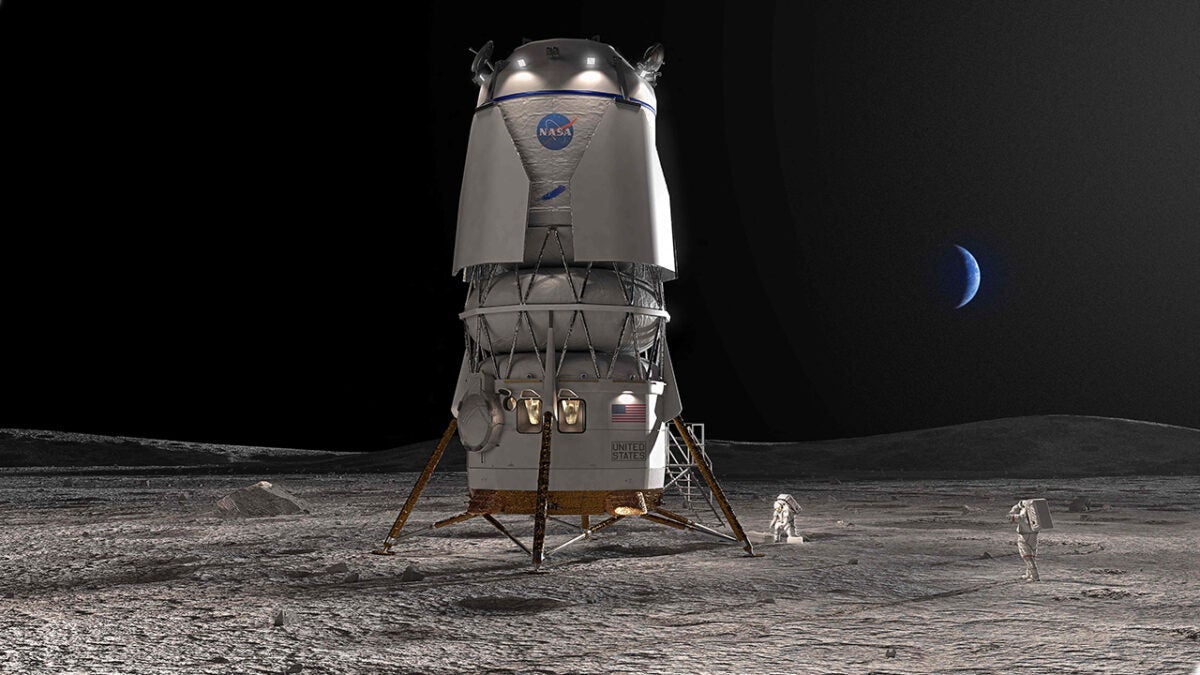
Meanwhile, Artemis III, which was supposed to allow astronauts to land at the Moon’s south pole, has been rescheduled for mid-2027 and there has been speculation about the possibility of canceling the landing or even changing the mission to low Earth orbit to test the technology.
After investigating how the @NASA_Orion spacecraft’s heat shield fared during the Artemis I mission to the Moon, we are confidently preparing for Artemis II with the heat shield already attached to the capsule. #Artemis II is now targeted for April 2026. https://t.co/o1i0nxU9VQpic.twitter.com/uNQFeWNwm2
The reasons for the delay are mainly based on the heat shield. It is the largest heat shield ever made for a manned spacecraft and is made of a novolac epoxy resin, called Avcoat, with special additives set in a fiberglass honeycomb matrix. It was originally created for the Apollo command module, but has since been reformulated to meet current environmental regulations.
The problem with the shield occurred during the uncrewed Artemis I mission. Upon entering the Earth’s atmosphere on a trajectory that mimicked a lunar return at 40,000 km/h (25,000 mph), some sections of the shield were charred and had not softened as designed.
Subsequent tests showed that the gases generated inside the material at the tremendous reentry temperatures had not escaped properly and had cracked the shield, causing pieces of it to break off.
In order to safely carry out our upcoming #Artemis missions to the Moon with astronauts, we are now targeting September 2025 for Artemis II and September 2026 for Artemis III.
The new delay is the latest in a series of embarrassments for the space agency regarding the Artemis program, the most ambitious to date and the most disastrous.
The project, which was already facing criticism about the mission’s objectives and the insistence on using outdated space shuttle technology from the seventies for the Space Launch System (SLS) launch vehicle, has been plagued by cost overruns.
With a budget that skyrockets to 93 billion dollars for 2023 and a cost of at least 2.2 billion per launch, with only one launch every two years. Compared to SpaceX, it seems that the American agency is in trouble.
On his fourth trip to orbit, NASA astronaut Don Pettit has shared some wonderful images captured from the International Space Station (ISS) since his arrival there in September 2024. His latest work shows distant stars, city lights on Earth about 250 kilometers below, and what he describes as cosmic fireflies, which are actually Starlink internet satellites deployed by Elon Musk’s company SpaceX. As Pettit notes on Twitter, the flashes of light are sunlight reflecting off the small Starlink satellites while […]
On his fourth trip to orbit, NASA astronaut Don Pettit has shared some wonderful images captured from the International Space Station (ISS) since his arrival there in September 2024.
Subscribe to the Softonic newsletter and get the latest in tech, gaming, entertainment and deals right in your inbox.
His latest work shows distant stars, city lights on Earth about 155 miles, and what he describes as cosmic fireflies, but are actually Starlink Internet satellites deployed by Elon Musk’s company SpaceX.
As Pettit points out on Twitter, the flashes of light are sunlight reflecting off the small Starlink satellites as they orbit the Earth more than 100 miles above the space station.
After the deployment of the first Starlink satellites in 2019, SpaceX has already sent more than 6,700 to low Earth orbit. It currently has permission to deploy up to 12,000 of the satellites, but its goal is to send up to 42,000 into orbit.
This means that the number of satellite sightings from the ISS will only increase in the coming years, at an even greater rate than currently, considering that other companies like Amazon also want to send small satellites into orbit as part of their own Internet initiatives from space.
And not only astronauts can see SpaceX satellites. Astronomers have long complained that the sunlight reflecting off Starlink satellites interferes with their ability to use ground-based telescopes to view deep space.
In fact, the problem seems to have worsened since SpaceX began deploying the new V2 version of the Starlink satellite in February of last year, and disturbances in radio astronomical observations due to electromagnetic radiation emitted by the satellites have also been reported.
With SpaceX launching about 40 second-generation Starlink satellites each week, astronomers have warned that the problem is becoming increasingly serious.
Subscribe to the Softonic newsletter and get the latest in tech, gaming, entertainment and deals right in your inbox.
SpaceX has been working to address the concerns of astronomers, but despite the efforts, some astronomers remain skeptical about the effectiveness of these measures, particularly for radio astronomy.
The first Chinese space tourism company took a small step towards commercial reality last week when it sold the first tickets for its rocket to space. SpaceX and Blue Origin now have a rival on the other side of the world. Deep Blue Aerospace used a live broadcast on the Chinese e-commerce site Taobao to sell two seats on its first suborbital flights for only 1,000,000 yen (140,000 dollars), a great discount, given that future flights are expected to cost 1,500,000 yen (210,000 dollars) per seat. The discount is understandable, as it is not expected that […]
The first Chinese space tourism company took a small step towards commercial reality last week when it sold the first tickets for its rocket to space. SpaceX and Blue Origin already have a rival on the other side of the world.
Deep Blue Aerospace used a live broadcast on the Chinese e-commerce site Taobaoto sell two seats on its first suborbital flights for only 1,000,000 yen ($140,000), a great discount, given that future flights are expected to cost 1,500,000 yen ($210,000) per seat.
The discount is understandable, as the flight is not expected to take off for about three years. It’s worth arriving early when you can save so much money.
The cheapest flight is Chinese, as it could not be otherwise
By way of comparison, the Japanese company Iwaya Giken will take passengers to space for $180,000, Virgin Galactic charges $450,000 and it is rumored that Blue Origin, owned by Jeff Bezos, asks for more than $200,000.
The live broadcast was the first time that space tourism tickets were put on sale in China and it attracted three million viewers.
The space company boasted that the tickets were sold out… which doesn’t seem really difficult, as only two tickets were put on sale.
China’s first outer space travel announced at $210,000 for 12 minute flighthttps://t.co/KK1vlJlLsG
The two lucky anonymous buyers of this approximately 12-minute trip “will experience the vastness and mystery of the universe” in “a multisensory and comprehensive space journey” that Deep Blue Aerospace describes as unforgettable.
That journey will take them and up to four other passengers beyond the Kármán line, the altitude of 100 kilometers commonly recognized as the boundary between Earth’s atmosphere and outer space, where they will experience weightlessness for about five minutes.
The spacecraft intended to transport passengers is called Nebula-1. The rocket, powered by kerosene and oxygen, will launch a 7.9-ton capsule named Rocketaholic, which offers passengers the opportunity to look out through six windows.
According to state media, the rocket, China’s first reusable launcher similar to SpaceX’s rocket, can be used up to 50 times.
The two ticket holders will pay an initial deposit of 50,000 yen ($7,000). They will also sign a confidentiality agreement and, interestingly, promise not to throw their trash into space.
Ahora la nave ya está en posición y es cuestión de horas que tenga lugar el primer paseo espacial comercial de la historia de la humanidad. Dos de los cuatro astronautas de Polaris Dawn saldrán a pasear a 700 kilómetros por encima de nuestro planeta.
Jared Isaacman, jefe y financiador de la misión, y Sarah Gillis, ingeniera de SpaceX, abandonarán los confines y la seguridad de la cápsula Crew Dragon durante 15 y 20 minutos cada uno. Obviamente, el que ha pagado de su bolsillo los costes del viaje tiene la preferencia a la hora de hacer historia.
Una misión histórica que aquí puedes ver
Los otros dos miembros de la tripulación, Scott Poteet y Anna Menon, permanecerán dentro del vehículo para supervisar el estado de los astronautas en su paseo y asegurarse de que todo está en orden.
SpaceX retransmitirá el evento en directo en su página web y en Twittera partir de las 4:50 de la madrugada, hora del Este (11:50 h en España). En caso de que el paseo espacial tenga que suspenderse, los astronautas tendrán otra oportunidad el 13 de septiembre a la misma hora.
Como explica The New York Times, la Crew Dragon no tiene esclusa de aire como la Estación Espacial Internacional, por lo que los astronautas tendrán que dejar salir todo el aire del vehículo antes de abrir una de sus escotillas. Los cuatro tendrán que llevar los trajes de actividad extravehicular (EVA) de la compañía, que son versiones mejoradas y más resistentes de sus trajes para actividad intravehicular (IVA).
Los EVA de SpaceX incorporan nuevas articulaciones que pueden flexionarse y girar, lo que proporciona una mayor movilidad. Sus cascos están equipados con una pantalla de visualización (HUD, como en los videojuegos) y una cámara, y los trajes espaciales en su conjunto tienen una capa de Faraday que puede protegerlos de los campos eléctricos.
El paseo espacial de la tripulación del Polaris Dawn pondrá a prueba el traje al someterlo al duro entorno del espacio exterior mientras realizan pruebas de movilidad.
La misión civil comenzó en la madrugada del 10 de septiembre tras múltiples retrasos. Además de lograr el primer paseo espacial comercial, la misión tiene otros objetivos, entre ellos enviar a una tripulación más lejos que ninguna misión Dragon anterior y más lejos de lo que nadie ha llegado desde el programa Apolo de la NASA.
Ahora la nave ya está en posición y es cuestión de horas que tenga lugar el primer paseo espacial comercial de la historia de la humanidad. Dos de los cuatro astronautas de Polaris Dawn saldrán a pasear a 700 kilómetros por encima de nuestro planeta.
Jared Isaacman, jefe y financiador de la misión, y Sarah Gillis, ingeniera de SpaceX, abandonarán los confines y la seguridad de la cápsula Crew Dragon durante 15 y 20 minutos cada uno. Obviamente, el que ha pagado de su bolsillo los costes del viaje tiene la preferencia a la hora de hacer historia.
Una misión histórica que aquí puedes ver
Los otros dos miembros de la tripulación, Scott Poteet y Anna Menon, permanecerán dentro del vehículo para supervisar el estado de los astronautas en su paseo y asegurarse de que todo está en orden.
SpaceX retransmitirá el evento en directo en su página web y en Twittera partir de las 4:50 de la madrugada, hora del Este (11:50 h en España). En caso de que el paseo espacial tenga que suspenderse, los astronautas tendrán otra oportunidad el 13 de septiembre a la misma hora.
Como explica The New York Times, la Crew Dragon no tiene esclusa de aire como la Estación Espacial Internacional, por lo que los astronautas tendrán que dejar salir todo el aire del vehículo antes de abrir una de sus escotillas. Los cuatro tendrán que llevar los trajes de actividad extravehicular (EVA) de la compañía, que son versiones mejoradas y más resistentes de sus trajes para actividad intravehicular (IVA).
Los EVA de SpaceX incorporan nuevas articulaciones que pueden flexionarse y girar, lo que proporciona una mayor movilidad. Sus cascos están equipados con una pantalla de visualización (HUD, como en los videojuegos) y una cámara, y los trajes espaciales en su conjunto tienen una capa de Faraday que puede protegerlos de los campos eléctricos.
El paseo espacial de la tripulación del Polaris Dawn pondrá a prueba el traje al someterlo al duro entorno del espacio exterior mientras realizan pruebas de movilidad.
La misión civil comenzó en la madrugada del 10 de septiembre tras múltiples retrasos. Además de lograr el primer paseo espacial comercial, la misión tiene otros objetivos, entre ellos enviar a una tripulación más lejos que ninguna misión Dragon anterior y más lejos de lo que nadie ha llegado desde el programa Apolo de la NASA.