
If you’ve been generating images with AI tools for any amount of time, you’ve probably noticed the pattern: everything starts to look the same. The same compositions, the same color palettes, the same visual language. Generative AI has made image creation accessible to anyone with an internet connection, and that accessibility has produced a flood of content with almost no personality. Impressive at first glance, increasingly generic once you’ve seen it a few dozen times.
Adobe has taken a different approach with Adobe Firefly, its generative AI model. One of its newest features, Custom Models, lets you train an AI model using your own images, so what it generates actually reflects your visual identity. If you want to know how it works, here’s what you need.

Custom Models in Adobe Firefly: What They Are and How They Work
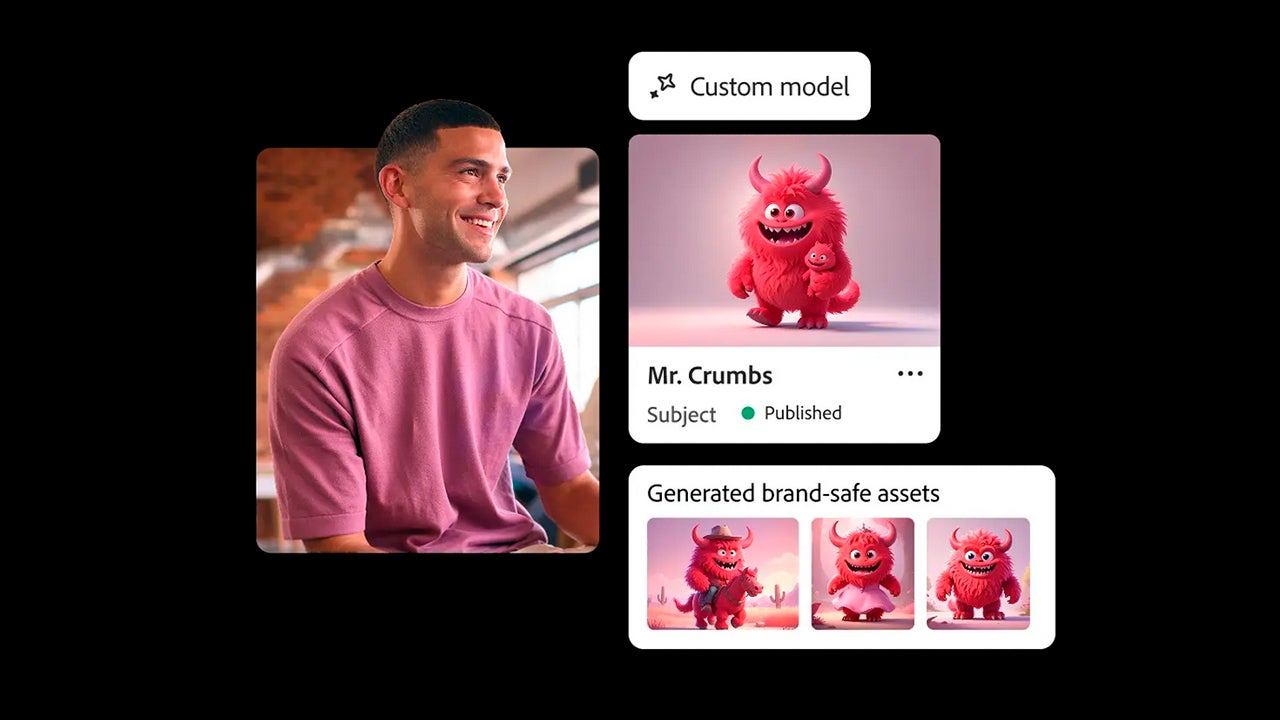
Custom models are AI models trained on your own images. Instead of generating content from Adobe’s general dataset, Firefly learns from the patterns in your work: your color palettes, your visual style, the kind of compositions you typically use.
The difference in output compared to a generic model is significant. When the model is trained on your content, the images it generates look like yours. And since Firefly’s underlying technology is used throughout, everything you create is commercially safe.
If you’re working in an organization, you can share and manage custom models across your entire team. That means faster workflows and visual consistency from the start, instead of everyone generating in different directions.
How to Create Your Own Custom Model in Adobe Firefly
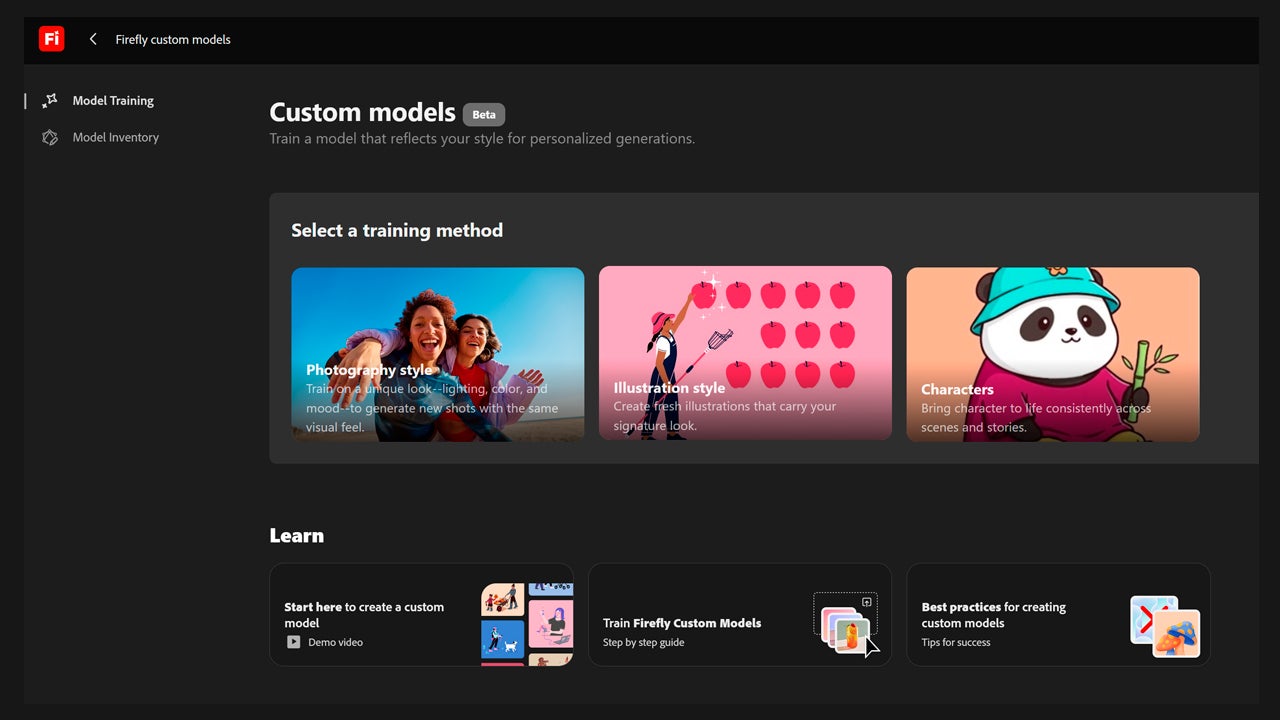
On the Adobe Firefly main page, you’ll find a list of sections in the left sidebar. Click Custom models to get started.
First, you’ll choose a training method. There are three options: photos, illustrations, and characters. Photos is the right pick if you want the model to generate realistic, detailed imagery. Illustrations and characters are more focused on stylized and artistic output.
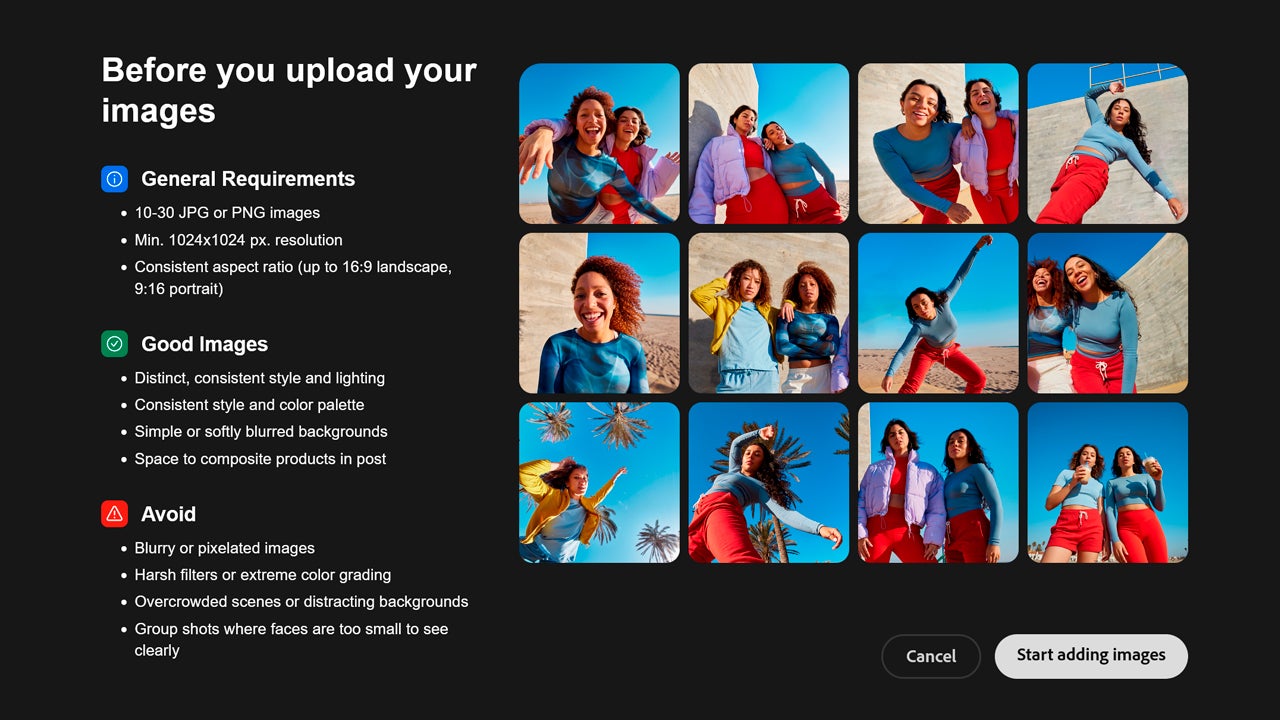
Once you select a category, you’ll see the requirements for best model performance. You’ll need to upload between 10 and 30 images, each with at least 1024 x 1024 pixel resolution and a consistent aspect ratio. The images should share a distinctive visual style and include enough open space for product compositions. Make sure every image is the best quality you have.
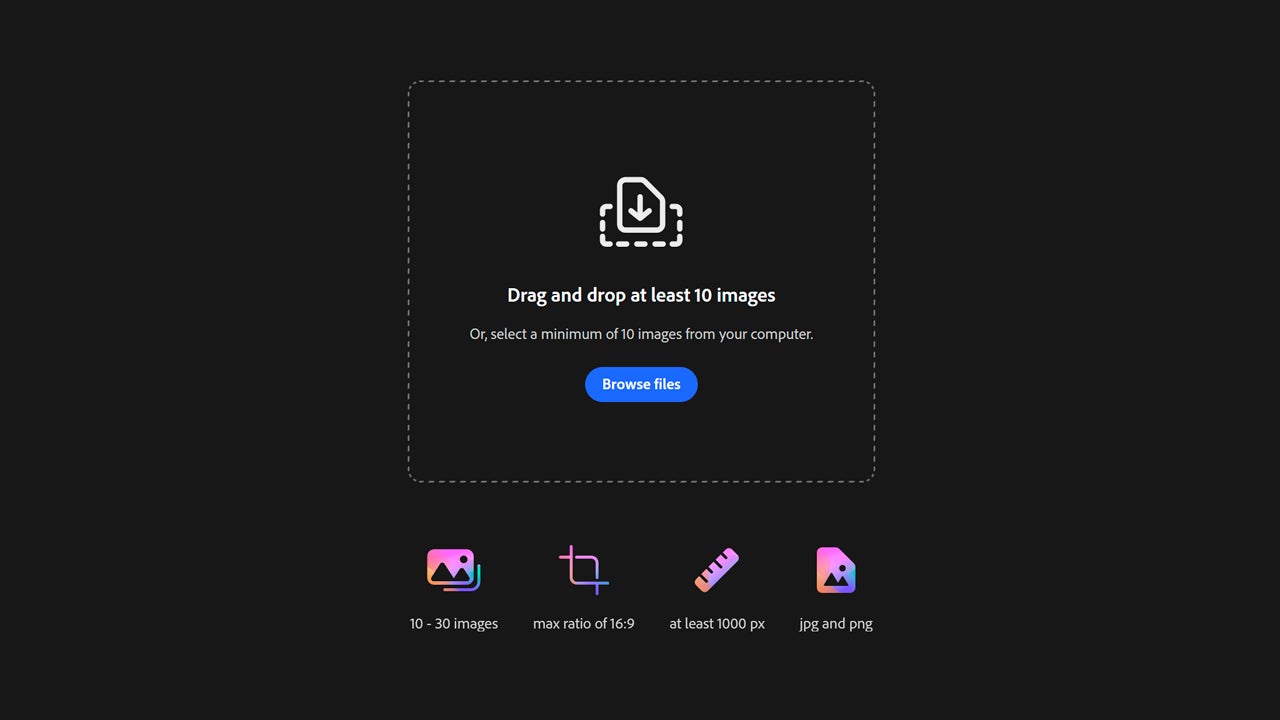
Select Start adding images and upload your files. Firefly will analyze each one. When it’s done, every file gets an automatic description based on what appears in the image. On the right, you’ll see tags you can use later when generating new images.
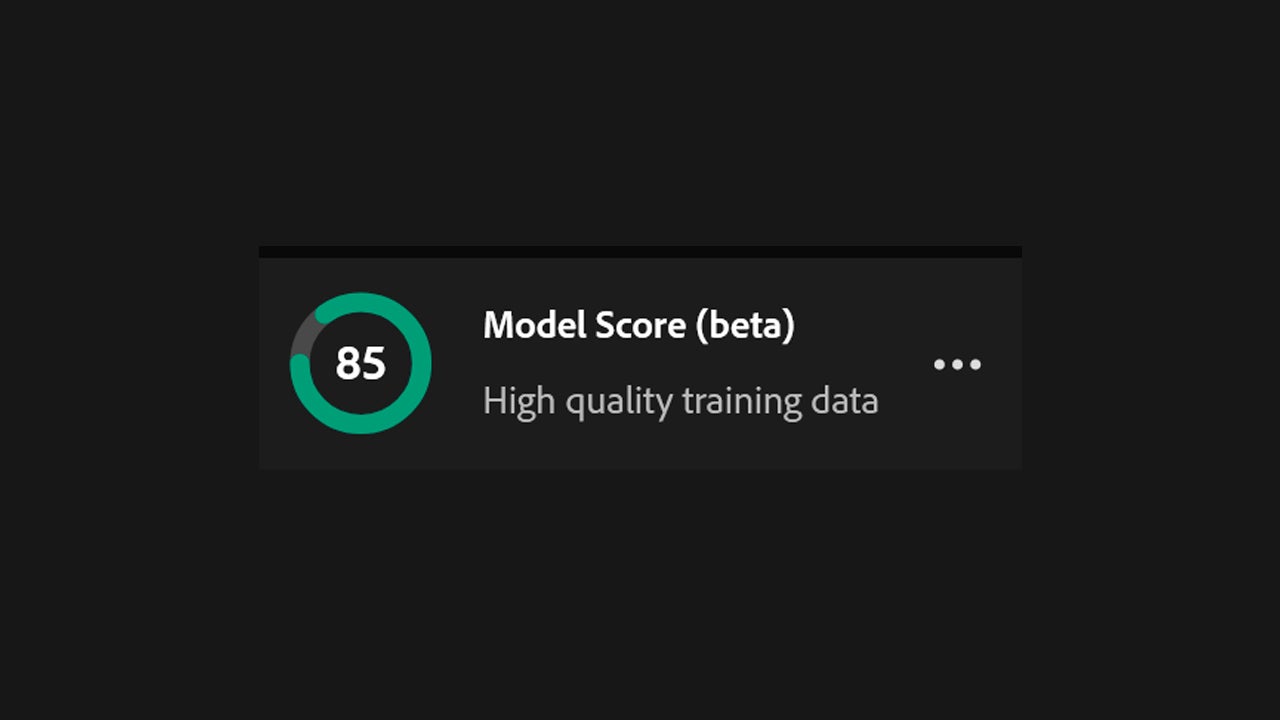
You’ll also see a Model Score, where Adobe rates the quality of the data you’ve uploaded. Keep in mind it’s a guide only and still in beta.
When you’re ready, click Train and grant Adobe permission to use your images to build the model. You’ll receive an email from Adobe when it’s done. You can track the training process from Model Inventory by selecting your project.
Training a custom model currently costs 500 credits. In Adobe, credits are the currency for advanced generative AI features. Depending on your subscription plan, you get a set number of credits per month. If you run out, you can purchase more through this link.
Is My Content Safe Inside Firefly?
If you’re wondering whether it’s safe to upload personal or company material to Firefly to build custom models, the short answer is yes.
Adobe confirms they don’t use your data to train Firefly’s commercial models, the ones available to the general public. You also get control tools to manage who can view the training data and use the models.
You can upload your material without concern. Content Credentials are added to every generated asset, showing how the image was created, which tools were used, and whether generative AI was involved. Adobe’s goal is that anyone can identify whether something was AI-generated or not.
