There was a time when we shared funny photos and stayed in touch with friends and family on social media. Essentially, these platforms were pure spaces filled with fun and entertainment, where our biggest worries revolved around picking the right photo filter or wondering how many likes a post would get.

Over the years, however, and with the exponential growth in user numbers, these virtual realms have transformed into fertile ground for scammers and cybercriminals looking to take advantage of the unwary.
It’s true that social media today remains a vital tool for communication and entertainment. Yet, these platforms have also become environments where all types of digital threats lurk. From online store scams to sophisticated phishing campaigns, the dangers are very real and present in every corner of our favorite platforms.
The main issue is that in such a precarious setting, taking extreme precautions isn’t always enough to protect ourselves. It’s essential to have trustworthy security tools to keep our devices safe.
In this regard, Avast Free Antivirus stands out as a highly effective solution for combating malware that could infiltrate our devices via social media or other sources. Want to know which threats hide in your beloved social networks? Keep reading!
The Biggest Dangers on Social Media
As social networks have evolved, a wide range of threats have emerged that put user safety at risk. Below are some of the most common:
Online Store Scams
Platforms like Facebook and Instagram have integrated e-commerce features, which has led to an increase in scams involving fake stores. Scammers create profiles that appear to be legitimate retailers, offering products at irresistible prices to lure unsuspecting buyers. Once the purchase is made, the product never arrives—or is of far poorer quality than advertised.
Furthermore, these fake stores typically use urgent tactics, such as limited-time discounts or low stock messages, to pressure users into buying before verifying a seller’s legitimacy. In many cases, scammers disappear after receiving money, leaving shoppers with no product and no refund options.
Malvertising
Malvertising is a technique in which ads that seem legitimate contain malicious code. When clicked, these ads can infect the user’s device. Platforms like YouTube and Reddit, which rely heavily on advertising, are frequent targets for such attacks.
These malicious ads can be disguised as product promotions, software updates, or even false security alerts. Once users interact with them, they may be redirected to pages that install malware on their device without their knowledge, compromising both security and privacy.
Phishing
Phishing is used by cybercriminals to trick users into revealing confidential information, such as passwords or bank details. Through links shared in direct messages (DMs), attackers direct victims to fake pages imitating real ones, successfully encouraging them to enter personal data.
This type of attack is particularly dangerous in the social media realm, where scammers can impersonate friends, companies, or even banks. Worst of all, with the advent of artificial intelligence, they can craft ever more convincing messages to persuade users to share their credentials—potentially resulting in hijacked accounts or significant financial losses.
Cryptocurrencies
Scammers have taken advantage of the popularity of cryptocurrencies to promote false investments or misleading deals of all kinds. Given that crypto transactions are hard to trace, these digital coins have become the preferred method for many fraudulent activities on social networks.
One of the most common tactics is to promise exorbitant returns in a short timeframe. Through ads and posts, scammers grab the attention of users and convince them to invest in fraudulent platforms. Once the money is deposited, criminals vanish without a trace, making it nearly impossible to recover the funds.
Which Threats Are Most Common on Each Social Network?
Each platform has unique characteristics that make it vulnerable to certain threats—ranging from how ads are managed, how users interact, and limited security controls, among other factors:
As one of the most popular social networks, Facebook is a hotbed of various scams, especially those involving fake online stores. Marketplace and Communities features allow fraudsters to list non-existent or fraudulent products, tricking users into paying for items they’ll never receive.
YouTube
The world’s largest video platform isn’t free from danger. Malvertising is particularly prevalent on YouTube, where malicious ads can redirect users to unsafe websites or even download unwanted software onto their devices.
X (formerly Twitter)
On X, minimal human moderation allows an endless array of scams to thrive. Cybercriminals use fake or compromised accounts to spread malicious links or deceptive offers, targeting unwary users.
With its community-based structure and constant sharing of links, Reddit is susceptible to malvertising and phishing. Users may encounter links that, once clicked, install malware or direct them to sites designed to steal personal information.
Instagram’s visual format facilitates the creation of eye-catching galleries that are, in reality, fronts for online store scams. Fraudsters exploit the trust users place in well-curated profiles to sell nonexistent or poor-quality products.
Strengthen Your Device’s Security with Avast Free Antivirus
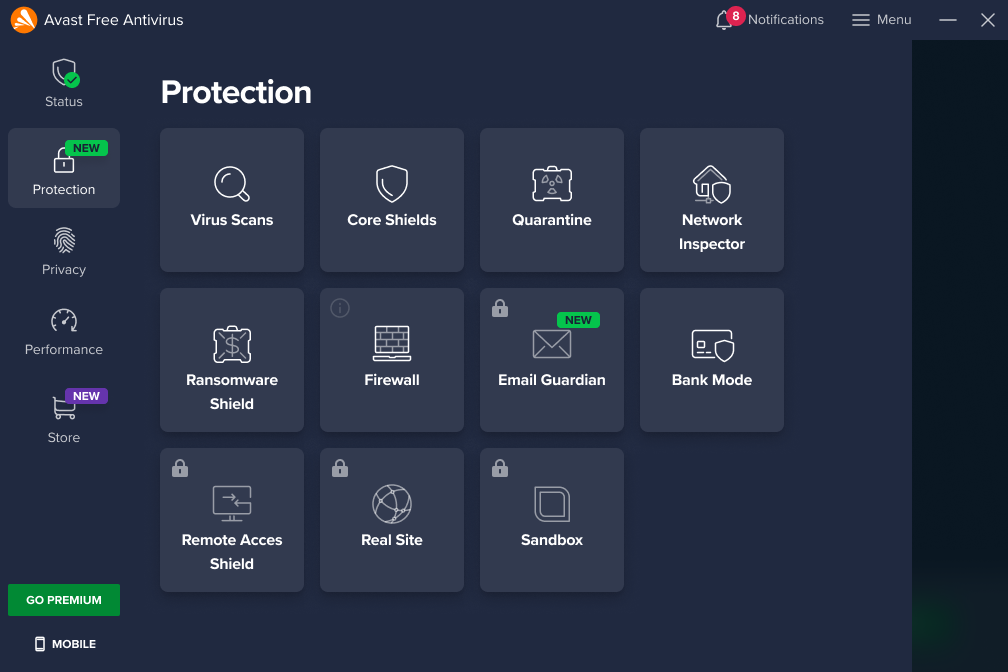
With all these threats, it’s best to take extreme precautions and avoid clicking on any link unless you’re absolutely sure of its origin. Though remaining cautious is vital in your daily internet use, sometimes it’s just not enough. That’s why Avast Free Antivirus provides a range of features to keep your devices truly safe:
Real-Time Malware Protection
Avast Free Antivirus helps to detect, block, and remove all types of malware, including viruses, spyware, trojans, and more. This real-time protection ensures that while browsing social media—or any other website—your device remains safeguarded from possible infections.
Phishing Defense
As you’ve seen, phishing is one of the most widespread threats on social media. Avast Free Antivirus offers protection against these attacks by helping to detect and block fake websites designed to steal personal or financial information.
Behavior Shield
In addition to traditional protections, Avast Free Antivirus features Behavior Shield, an advanced technology that monitors suspicious activities within the system. This allows it to detect and stop unknown threats before they cause damage—even zero-day attacks—helping protect your device from every angle.
Automatic Updates
The cybersecurity landscape constantly evolves, and Avast stays on top of new threats. Avast Free Antivirus updates automatically so your device is always protected against the latest dangers.Thanks to the wide range of benefits Avast Free Antivirus provides, you’ll have an added security layer to prevent your personal information from falling into the wrong hands. Don’t wait any longer to safeguard your digital life! Download Avast Free Antivirus now and enjoy your favorite social networks with total peace of mind.
