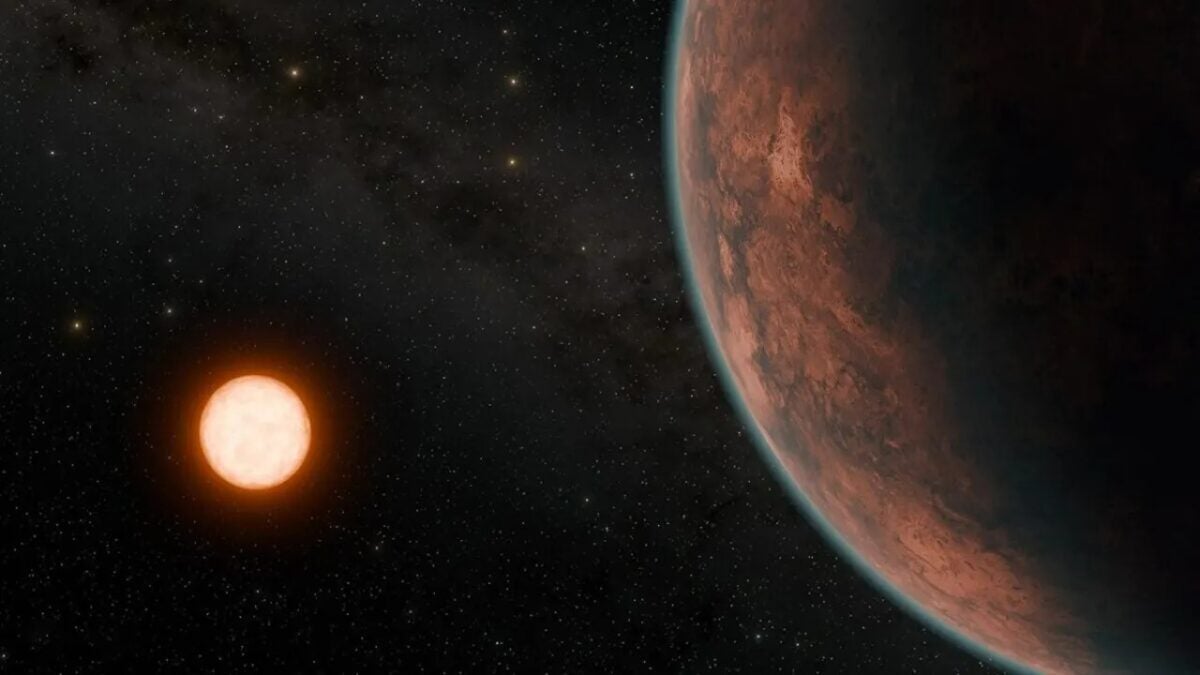
Two teams of scientists have identified a potentially habitable planet located about 40 light-years from Earth. Called Gliese 12b, this exoplanet is smaller than our planet but larger than Venus, and it orbits around a cold red dwarf star in the constellation of Pisces.

The host star, with only 27% of the size of the Sun and 60% of its temperature, allows Gliese 12b to remain in the habitable zone, that is, at a distance where liquid water could exist. Despite completing its orbit in just 12.8 days due to its proximity to its star, the surface temperature of the exoplanet is estimated at 42 degrees Celsius, assuming it has no atmosphere.
“This is the closest world, in transit, temperate and the size of Earth located to date,” said Masayuki Kuzuhara, professor at the Tokyo Center for Astrobiology and co-leader of one of the research teams. The discovery was made using public data collected by the NASA’s TESS satellite, which observes the brightness of tens of thousands of stars each month, in search of transiting exoplanets.
Larissa Palethorpe, a PhD student at the University of Edinburgh and University College London, highlighted the importance of the discovery due to the relative proximity of the exoplanet. This finding allows scientists to analyze the atmosphere of Gliese 12b to determine if it contains crucial elements for life, such as water. “We have only found a handful of exoplanets that are good candidates for this. And this is the closest one,” Palethorpe pointed out.
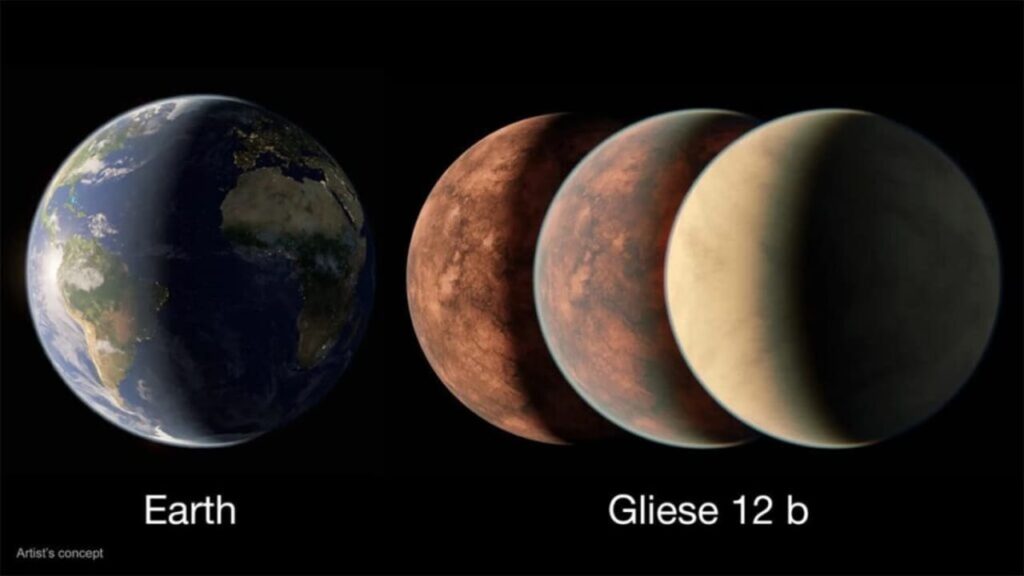
However, the presence of water on Gliese 12b is still uncertain. Palethorpe mentioned that there may not be any water, which would imply a runaway greenhouse effect similar to that of Venus. The next phase of the study will use the James Webb Space Telescope to perform spectroscopic analysis, which would capture starlight through the exoplanet’s atmosphere and determine the presence of certain molecules.
This finding not only sheds light on Gliese 12b, but also provides clues about the conditions that allowed Earth to remain habitable while Venus did not. According to Palethorpe, this exoplanet could help us better understand the pathways to habitability that planets take as they evolve.
Despite the potential interest, a manned mission to Gliese 12b is currently unfeasible. As Palethorpe pointed out, the exoplanet is “12 parsecs” away, which would mean a journey of approximately 225,000 years with the fastest spacecraft we have today.
