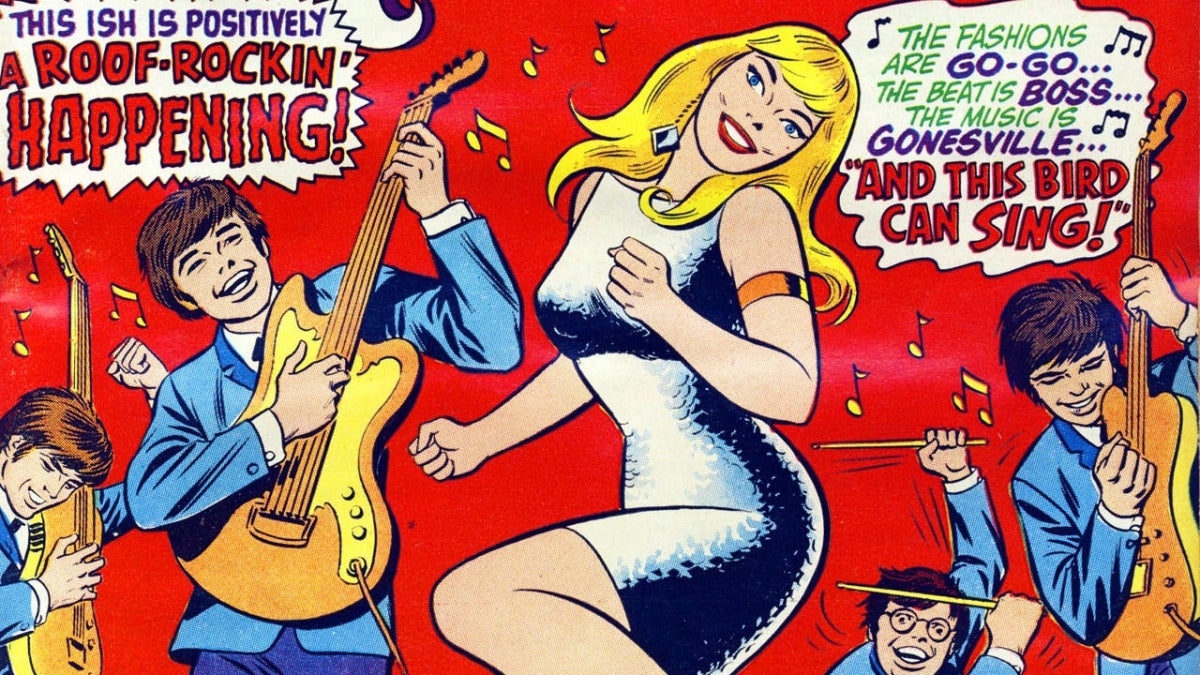
Normally, people start counting Marvel’s existence as a publisher from the release of Fantastic Four #1. It makes sense: it changed the world of superheroes and American comics in general forever, defining a whole generation in the process. And yet, wouldn’t it be a little ridiculous to think that the publisher came out of nowhere, published one comic, became the best, and carried on? We need a bit of history, because the FF debuted in 1961, but their origin can be traced back to the mid-1930s. No small thing.

The girl without powers
Stan Lee wasn’t even around in those first comics: the creator of Marvel (well, of Timely Comics) was Martin Goodman, who had just turned 30 when he started publishing comic magazines like Marvel Comics (fittingly enough), Daring Mystery Comics, Mystic Comics, or Captain America Comics, which introduced the character we all know. The comics were about whatever the moment called for: during World War II, war stories. Afterwards, love stories. A little science fiction, a bit of action… After all, the public called the shots!
Among these early characters were some that stuck around longer, like Bucky Barnes, Namor, or the first Human Torch. Anything that could sell got published, from talking-animal comics (which were a smash in the 1940s) to comics for girls written by men who thought they knew how to win them over with cheap romances. Among them two key characters emerged: Patsy Walker and our protagonist, Millie the Model. If you’ve read Marvel’s early comics you’ll have recognized her instantly, because she was Stan Lee’s butt of the joke. It was for girls, right? Then it was open season for making fun of her!
But before that, Millie the Model saved Timely Comics from going under. In 1945, the character made her debut, and she was such a success for 28 years that she ended up starring in a good handful of spin-offs about her comic and romantic escapades. Credit where it’s due: instead of being created by a man with a cigar and a beard, she was created by Ruth Atkinson, one of the first female cartoonists, who drew her for the first time (even if she was later modified and even written by Stan Lee, of course). Her adventures were absolutely harmless and naive, and usually revolved around her nights of dancing or her assorted flings. Nothing out of the ordinary… if it weren’t for the fact that Lee found it absolutely hilarious that this little gal always showed up between Spider-Man and Daredevil.
Millie’s run ended in 1973, but that didn’t stop her from returning a few years later to Marvel continuity, as a successful businesswoman who owned her own modeling agency. What’s more, she even teamed up with her contemporary Patsy Walker and the publisher’s other great model, Mary Jane Watson. There was just one problem: Patsy and Millie weren’t exactly the same. Though her colleague started out with teen romance stories like hers for decades, in 1975 she got powers and joined the Defenders as Hellcat, who killed herself, came back to life, and even ended up helping the Avengers. Millie, meanwhile, kept worrying about her outfits. Some people are born for glamour.
