Metal Gear has always been a very popular franchise. From its very first installment it managed to captivate audiences both in Japan and in the West, showing that Kojima knew he was onto something. Even if it wouldn’t be until Metal Gear Solid, and especially its first three entries, that its popularity would really take off, turning it into one of the most beloved sagas in history.
This was evident in the warm reception of Metal Gear Solid Master Collection Vol. 1. Celebrated as a genuine milestone, it seemed like everything was already there. But we still had, at least, one more collection left. And this second one could have been called “wayward and underrated,” because every game it contains is a game that, while it hasn’t been gotten the credit it deserves, is a masterpiece. And we can prove it.
The game locked inside a console that almost ruined Sony
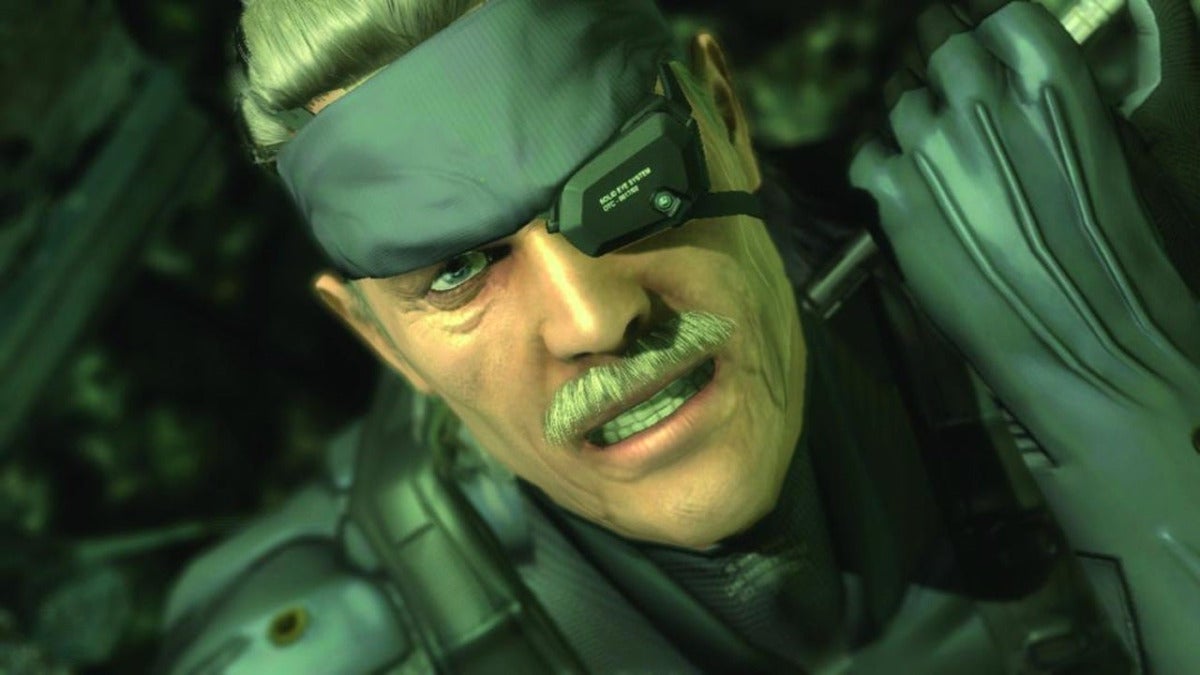
Metal Gear Solid 4: Guns of the Patriots has for years been the black sheep of the family. Accused of having extremely long cutscenes, bosses with absurd stories and brushing up against misogyny, a horrible pace, and an incredibly convoluted narrative, all of that is true. It’s no lie. And we could add that it’s not usually pointed out that it has extremely interesting mechanics that are underused. None of that takes away from it being an absolutely excellent game.
It’s not just that even today it still looks unbelievably good not only for a game of its time, but by today’s standards, thanks to prodigious art direction and technical execution. That its level and mechanical design is virtuosic. Or that the bulk of the game is one of the most elegant examples of how to make gameplay serve narrative not only on its platform, but in the history of the medium. It’s that it does all of this in such a prodigious way that it feels like all the games in the franchise have done it the same way when that’s not true.
This is a game worth championing for the absolute finesse and thought behind it. All its flaws, and it has them and they are enormous, do not diminish how brilliant it is in every other respect. And it even makes up for that in other ways: if you need clarification on something in the narrative, read the novelization written by Project Itoh. Not only will you not regret it: you’ll thank us.
Two handheld games that could be mainline
If Metal Gear Solid 4: Guns of the Patriots is an underrated game, Metal Gear Solid: Peace Walker is an ignored game. And it shouldn’t be. Everything that Metal Gear Solid V: The Phantom Pain would refine and perfect to a degree that even today still hasn’t been surpassed or even truly replicated, is already here, at least, in its early form. Peace Walker is a handheld game that knows how to bring the Metal Gear formula to instanced, freer scenarios, where base management and how to approach each mission become especially important.
But the jewel that would combine both aspects, being underrated and ignored, is the bonus title in this collection. It’s Metal Gear: Ghost Babel. A Game Boy Color delight that mixes the style of the Metal Gear games, the MSX games, with that of Metal Gear Solid, the first game in the franchise to appear on PS1, into an ideal blend that still feels addictive and brilliant today. A game not only excellent for a Game Boy game, one of the best games in the Game Boy catalog, but an excellent Metal Gear in its own right.
If Metal Gear Solid Master Collection Vol. 1 was an essential collection for obvious reasons, because it had three of the most important games in the history of the medium, Metal Gear Solid Master Collection Vol. 2 is an essential collection for less obvious reasons, but equally important ones. Because it contains games for die-hard fans. Perhaps they aren’t the games everyone knows are the best, that are excellent, but they are three brilliant games that, each in its own way, have defined and shaped the franchise. Now all that’s left is to see whether a third volume exists that gives us what we’re missing to have all the great Metal Gear games: The Phantom Pain, Acid, and Rising.
