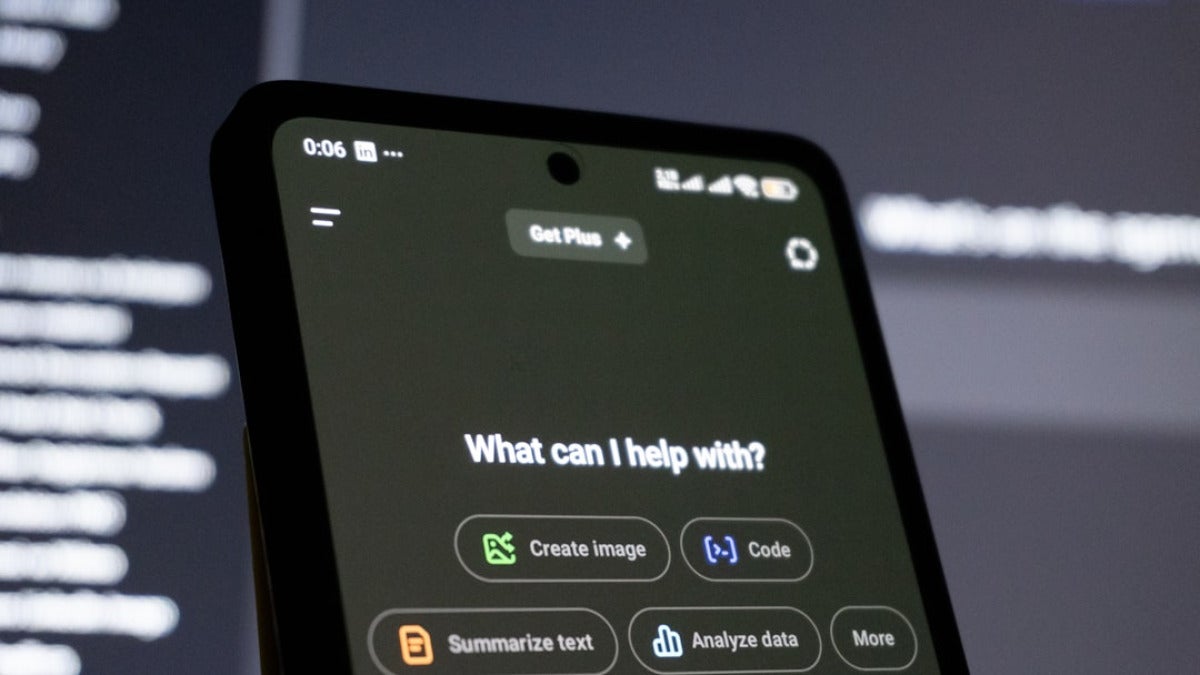
New phones now come with smart features baked in, whether you’re buying an Apple iPhone or an Android handset. That means on-device and cloud-based automation is already there in the camera, battery management, voice commands, and the suggestions your phone surfaces throughout the day. Privacy worries are still high, though, and a lot of buyers still put performance, battery life, and cameras ahead of any of those extras.
Which also makes smart features harder to avoid. Phone makers now build both the hardware and the software around NPUs, scene detection, low-light and portrait processing, along with memory, battery, and app-usage tuning. You can turn off a chatbot or ignore an AI wallpaper tool. You can’t really opt out of the automation that shapes how the phone performs from one day to the next.
Privacy remains the biggest concern. Among US smartphone owners, 34% say they’re worried about data collection, profiling, and software drawing sensitive conclusions without clear consent. More on-device processing does keep some data local, and some features can work offline, but you still don’t get clear answers about what’s being analyzed, what’s stored, or what actually switches off.
People still rank the basics higher. In a July 2026 survey in India with more than 40,000 respondents, performance and speed came first at 87%, ahead of battery at 79% and cameras at 77%.
US smartphone owners are skeptical, too. A quarter don’t find these tools helpful, 45% won’t pay extra for them, and 73% of Apple iPhone users plus 87% of Samsung Galaxy users say they see little or no value in them. That’s happening even as market forecasts put the market at $124.3 billion in 2025 and $140.8 billion in 2026.
If you want a simpler phone, it’s still a good idea to limit permissions, because the next wave of these features is expected to handle things like bookings, product comparisons, and routines for you.
You’ll find these features across current Apple iPhone and Android handsets right out of the box.
