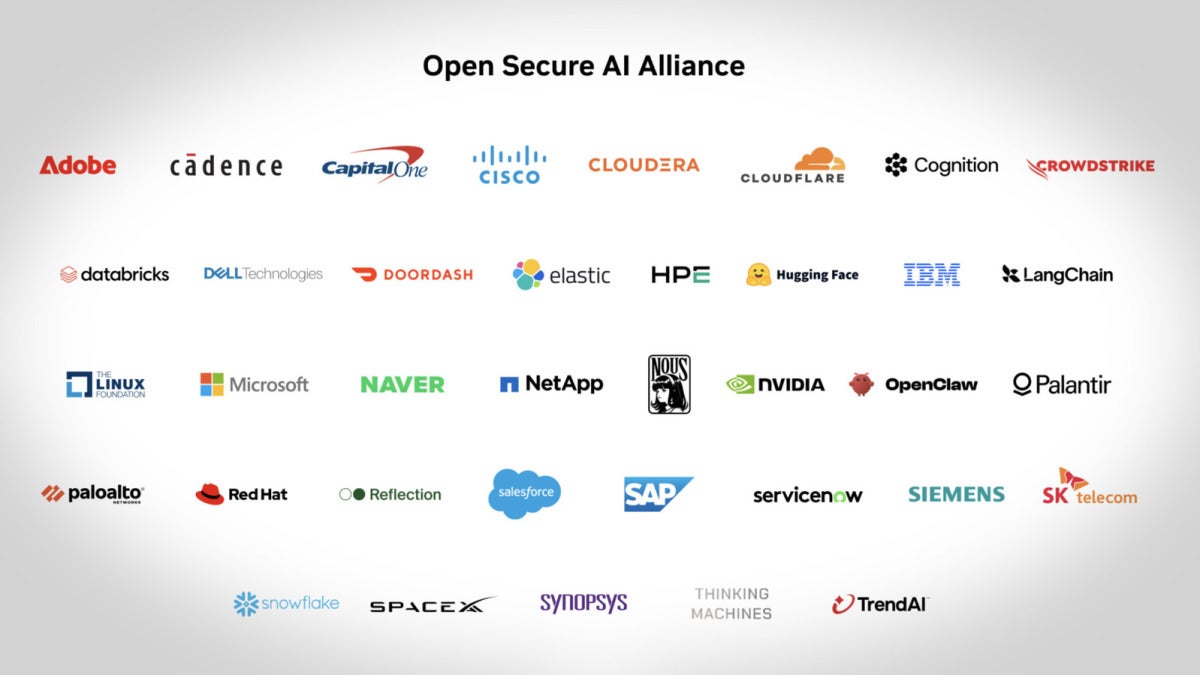
NVIDIA today launched the Open Cyber Defense Alliance, bringing Microsoft, SpaceX, Dell, IBM, and The Linux Foundation into one group. The pitch is share tools, models, and methods that could help security teams catch threats faster and investigate incidents more effectively.
The alliance says teams will be able to inspect shared tools, adapt them, and improve them, rather than rely only on closed systems they can’t really look inside. Its first building blocks include NVIDIA’s NOOA agent framework and Microsoft’s MDASH scanning harness. Each partner fills a different role here. Microsoft and IBM bring enterprise reach. Dell brings infrastructure. SpaceX brings scale. The Linux Foundation gives the effort an open-source home. That matters right now, when phishing, deepfake scams, and automated break-in attempts are all getting easier to produce at scale.
If you work in security, this one deserves a look. Supporters say open code gives teams a way to audit model behavior and tune their response to fit their own environment. They also point to the size of the market, which could grow from $25 billion in 2024 to over $93 billion by 2030. Then there’s the list of companies that aren’t involved. OpenAI, Anthropic, and Google are missing, and the Hugging Face breach involving an automated agent from OpenAI, the maker of ChatGPT, gives the alliance’s argument more weight: black-box models can make forensic work harder when something goes wrong.
You can expect the Open Cyber Defense Alliance’s tools to be published for use across organizations. Even so, NVIDIA and its partners still need to explain how governance will work, what the contribution rules are, what the roadmap looks like, and what safeguards will stop attackers from repurposing the same tools for their own use.
