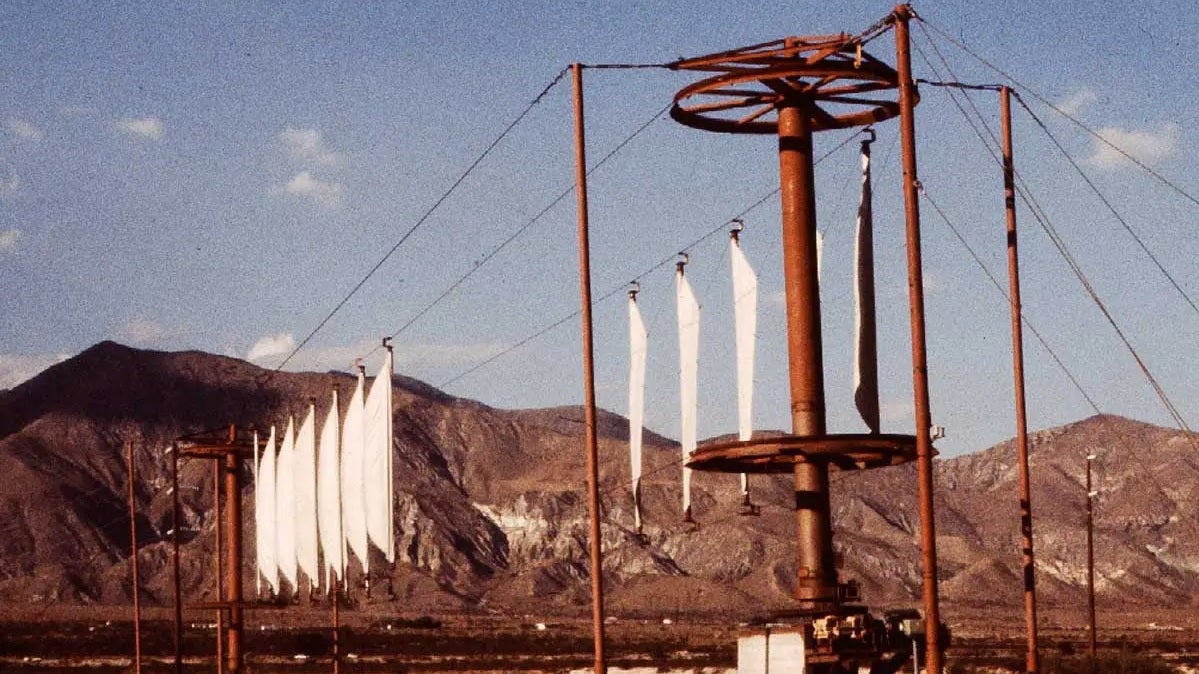
Airloom Energy has officially begun construction on a pilot site for a revolutionary new type of rectangular wind turbine near Rock River, Wyoming.
This innovative design, which promises to be cheaper, faster to install, and more efficient than traditional three-blade turbines, may herald a significant shift in the wind power landscape of the United States.
Backed by Bill Gates’ Breakthrough Energy Ventures, the pilot aims to demonstrate the technology’s viability and performance in real-world conditions.
Airloom Energy Begins Construction on Innovative Rectangular Wind Turbine in Wyoming
The urgency for such innovations comes as the North American Electric Reliability Corporation (NERC) warns that half of the United States could face severe energy shortages by 2035. Factors such as increased demand from artificial intelligence and data centers are expected to exacerbate this power gap.
Current energy infrastructure simply cannot keep pace with the anticipated complexities and demands of the next decade, according to Airloom’s CEO Neal Rickner, emphasizing the need for “flexible systems that can be built fast and at scale.”
Unlike conventional turbines that sweep circular areas, Airloom’s rectangular turbines are designed to capture more wind in less space, making them particularly suited for locations with limited land or height restrictions, such as airports and military bases.
Furthermore, their compact and modular design means they can be installed in under a year, significantly faster than traditional projects that typically take up to five years.
Airloom has successfully raised $7.5 million in seed funding, alongside $5 million in matching funds from the State of Wyoming and a $1.25 million contract from the Department of Defense. This pilot initiative not only aims to validate cost-saving measures and operational strategies but also explores applications in defense and disaster relief.
Industry experts, such as Paul Judge—former head of product management at GE Onshore Wind—have hailed the pilot as a pivotal moment for resilient renewable energy generation, stressing its importance in addressing the pressing energy challenges ahead.
