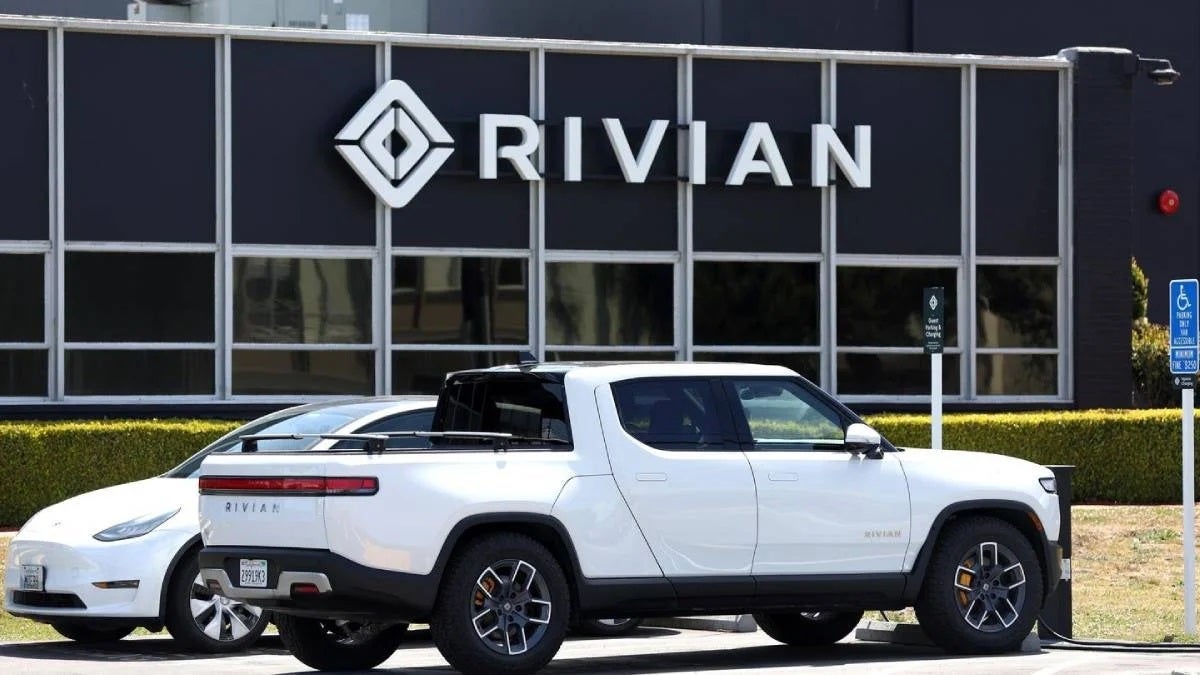
Rivian’s (RIVN) shares experienced a drop of nearly 10% yesterday, reaching a new annual low.

This drop occurs despite the fact that the company reported its first gross profit in the fourth quarter of 2024, with a total of $170 million, a significant improvement of $776 million compared to the same period last year.
Rivian, which manufactured 49,476 vehicles and delivered 51,579 last year, projects deliveries between 46,000 and 51,000 units for 2025. This slight reduction in delivery expectations is due to external factors, including changing government policies.
A lot of competition and a very changing electricity market
Bank of America analysts have expressed concerns about a more aggressive competitive landscape, with new brands like Lucid, GM, and Volkswagen (VW) potentially impacting sales projections.
Recently, Bank of America downgraded Rivian’s stock from “Neutral” to “Underperform,” lowering its price target from $13 to $10, citing a weaker delivery forecast. Despite this negative assessment, some analysts like Needham and Wells Fargo have raised their price targets, acknowledging that Rivian remains one of the most viable electric vehicle startups in the market.
Additionally, Rivian has closed a joint venture agreement with Volkswagen, valued at up to $5.8 billion, although this agreement could complicate short-term profit projections. In the long term, Rivian plans to begin production of its more affordable SUV, the R2, in mid-2025, which could help improve its market position.
Despite securing a loan of up to $6.6 billion with the U.S. Department of Energy, uncertainty persists due to potential changes under the Trump administration, which has expressed its intention to freeze federal loans.