YouTube plans to launch a feature that users will not find amusing

YouTube continues to adapt to the short video trends driven by TikTok and Instagram Reels. In its latest test, the platform has introduced a new “swipe up” gesture in full-screen long videos, similar to the one already used in Shorts. This change, identified by journalist Tushar Mehta, is intended to create consistency in the app by allowing users to swipe up to move to the next video in the queue (currently, this gesture minimizes the player). The proposal has not been well received by users, many of whom consider […]

YouTube continues to adapt to the short video trends driven by TikTok and Instagram Reels. In its latest test, the platform has introduced a new “swipe up” gesture in full-screen long videos, similar to the one already used in Shorts.

YouTube DOWNLOAD

This change, identified by journalist Tushar Mehta, is intended to create consistency in the application by allowing users to swipe up to move to the next video in the queue (currently, this gesture minimizes the player). The proposal has not been well received by users, many of whom believe that this update could affect the traditional YouTube experience.

The difference between the consumption of long and short videos is evident. In the case of long YouTube videos, users usually choose to watch the content with a specific and concrete interest, and not scrolling passively as in short video feeds. This new gesture could interfere with the interaction that has developed over the years, interrupting the natural flow of watching extensive videos, an aspect valued by many users.

The short videos benefit from the speed and ease of the swipe gesture, a feature that has been fundamental to the success of TikTok, Shorts, and Reels. However, in long videos, changing content by swiping can be intrusive, creating a less immersive experience.

So far, the feature seems to be in an experimental phase and has not been implemented in all accounts or devices. There is also no mention in the app’s release notes or in YouTube Labs, suggesting that the platform is evaluating user reactions before making a final decision.
YouTube DOWNLOAD

Good times don’t last long: YouTube Premium is increasing its price (almost) worldwide

This weekend, many YouTube Premium users outside the United States began receiving notifications informing them of an upcoming price increase that will affect both individual and family plans. According to Android Authority, this increase (up to 50%, depending on the country) will take effect in regions such as the European Union, the Middle East, and South America, with the most significant increases in some European countries. Complaints have quickly surfaced on social media, where users have expressed their frustration with this new price adjustment. “I’m sorry, but none of the […]

This weekend, many YouTube Premium users outside the United States began receiving notifications about a future price increase that will affect both individual and family plans. According to Android Authority, this increase (up to 50%, depending on the country) will take effect in regions such as the European Union, the Middle East, and South America, with the most significant changes in some European countries.

The complaints have quickly surfaced on social media, where users have expressed their frustration with this new price adjustment. “I’m sorry, but none of the small changes this multi-billion dollar company has made inspire me to believe that a 50% price increase in a year is justified,” commented PastaStregata, one of the affected users on the YouTube subreddit.

So far, this price increase exclusively affects regions outside the United States, with some of the main affected users being those in Belgium, Ireland, Italy, and the Netherlands. In these countries, prices will rise from 17.99 to 25.99 euros for the family plan and from 11.99 to 13.99 euros for the individual plan, starting November 7.

YouTube already raised its prices in the United States in July 2023, and in November of the same year for some international markets. Now, less than a year later, users outside the country are experiencing another increase, and it is not ruled out that the United States will follow the same path soon. Subscribers in the United Kingdom, Canada, and Australia already pay 11.99 pounds, 11.99 Canadian dollars, and 14.99 Australian dollars, respectively, although it has not yet been confirmed if these prices will also be modified.

YouTube Premium allows YouTube users to watch videos without the hassle of ads, already present in practically every corner of the platform. Additionally, the subscription service provides access to YouTube Music, one of the main rivals of Spotify, as well as other features, such as the ability to continue listening to a video after turning off the device’s screen.

YouTube DOWNLOAD

TV 2? YouTube will show ads when you pause a video on a Smart TV

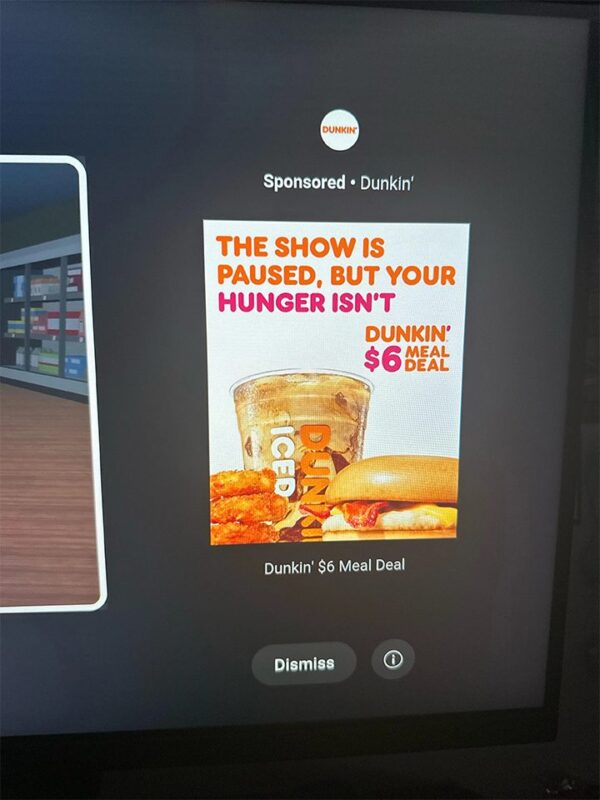
The Google video platform has started displaying advertising on Smart TVs when YouTube videos are paused. As reported by 9to5Google, some users have reported the appearance of this new advertising format, announced for the first time in May of last year. The ads appear in a column to the right of the paused video and are labeled “Sponsored.” Users can choose to dismiss the ad or access more information about it.

So far, only Dunkin’ Donuts ads have been detected, although it is likely that other brands will join soon. Some users on social media platforms such as Twitter and Reddit have commented on this new type of advertising, questioning if YouTube “didn’t already have enough ads.”

Although various websites have failed to reproduce these ads (which could indicate that this feature is still in testing or being gradually rolled out), it seems clear that YouTube aims to attract more advertisers to its platform through this new format.

Dunkin’ Donuts ad during a YouTube video break – u/Pale_Baker3255 (Reddit)

YouTube generates significant revenue through advertising, representing 13.31% of Google’s total advertising revenue in the second quarter of 2024, which is approximately $34.4 billion annually. As if that weren’t enough, the platform is also experimenting with a new type of ad that cannot be blocked with ad blockers.

YouTube DOWNLOAD