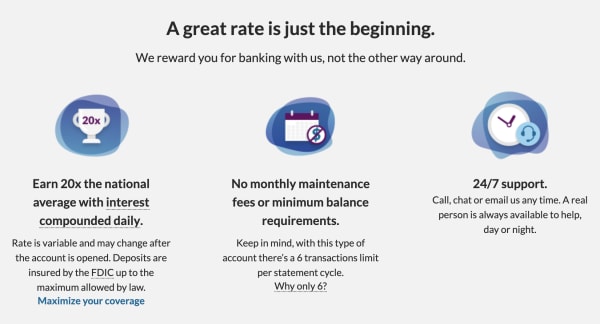

5 best online savings accounts

Are you looking to find a new online bank? We’ve got the best of the best for you!

Online banking

Choosing a savings account might not be as fun as spending money on your next trip, a new computer, or a bunch of new clothes. However, picking the right one can net you some extra money in the bank — literally.

Not only that, but the right savings account also provides some protections that a basic checking account can’t give you.

Not all savings accounts are the same, and online versions often offer better features than their brick-and-mortar counterparts.

Things to look for in an online savings account
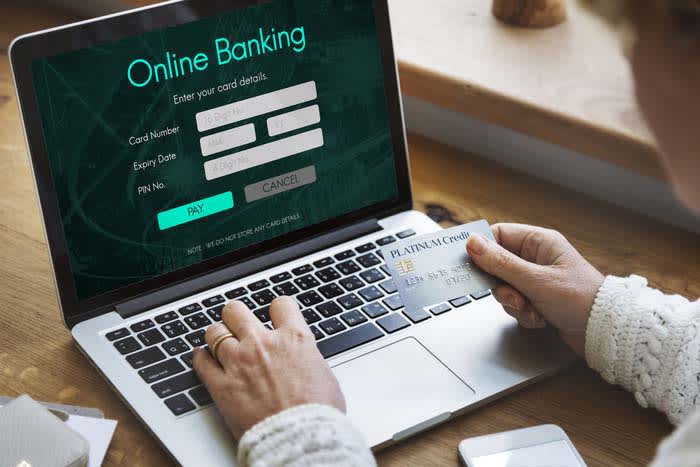
Online banking

The best savings accounts offer easy access to funds, reliable customer service, and seamless online experience.

Beyond that, and perhaps more importantly, they should offer low monthly fees and higher-than-average interest rates. These help you grow your nest egg into something bigger.

Interest rates

Most of the options we’ll list below come with interest rates higher than 2%.

By contrast, Bank of America accounts only offer savers a 0.3% interest rate, meaning you likely won’t notice your savings growing beyond what you put into your account.

Easy withdrawals
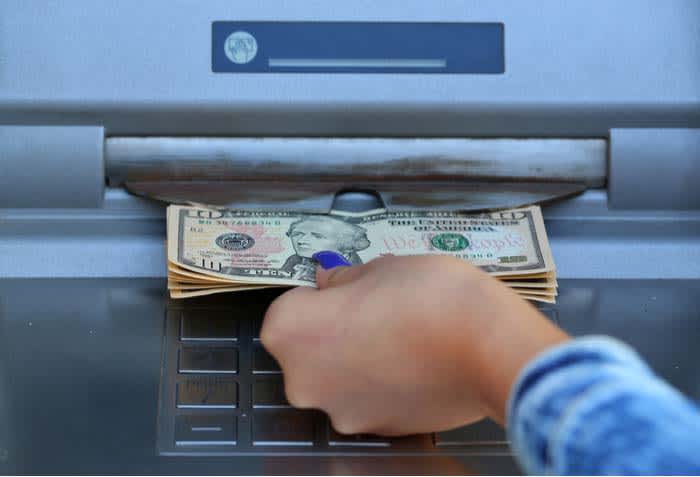
Withdrawal

What happens if you need quick access to funds? While the purpose of savings accounts is saving not spending, you’ll want to make sure that you can access your money in case of an emergency.

That said, don’t treat your savings account like a checking account. Federal regulations dictate that you can’t make more than six withdrawals in a month. If you do, your bank will charge you a fee.

Opening deposit

Some banks require an initial deposit. This amount varies considerably, but often it’s a smaller amount like $25 or $50. This isn’t a huge deal, as the whole point of opening a savings account is to, well, save some money.

In other cases, you’ll see higher minimum deposits, which may be a barrier to entry if you’re just starting to save money. Obviously, not all of us can front multiple thousands of dollars.

That said, many online banks offer access to low- or no-minimum accounts. Just make sure that you review any associated fees before you sign up.

5 best online savings accounts

1. HSBC
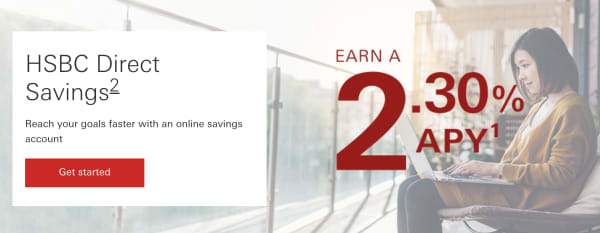
online savings HSBC

The global banking giant offers an online savings account that blows its traditional savings accounts out of the water.

The minimum opening deposit is $1, and from there; you’ll get started earning interest at a 2.30% APY. There’s no monthly fee, but the bank will charge you a $25 cancellation fee if you close the account within six months of opening.

What’s neat about HSBC is that it offers a budgeting tool to help you set goals and visualize your financial progress. You can also deposit checks electronically through the mobile app. Howeverm some users have reported that mobile functionality is a bit clunky and could use some work.

2. Ally

ally banking online

Ally is a bank that doesn’t have any branches, and consistently pays high-interest rates for savers; we’re talking 2.20%.

There’s no minimum balance requirement, and you can open a free checking account, too. The benefit of opening a checking account with Ally is, you’ll get 1% cash back on purchases and can connect your accounts. This makes it easy to transfer money into your savings account.

3. Citizens Access

citizens access banking online

Citizens Access is an online-only extension of East Coast brick-and-mortar Citizens Bank. Their online savings account provides one of the highest interest rates we’ve seen at a whopping 2.35% APY. You also won’t pay any account fees.

The catch is that there’s a $5,000 minimum deposit, which may be a bit steep for some consumers. It’s also important to note that if your balance drops below the $5,000 mark, the APY drops along with it.

Still, Citizens Access is one of the best options around. The website is easy to use and supports electronic deposits, and all deposits are FDIC-insured.

4. American Express (Amex)
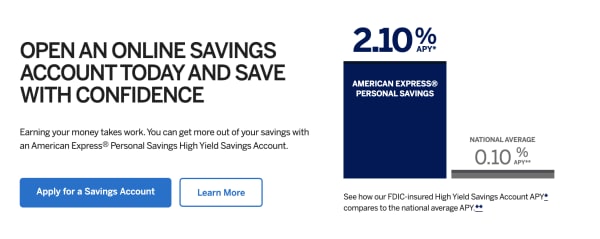
American Express savings account

American Express does more than just credit cards. They also offer a high-yield savings account with a 2.10% interest rate.

Heck, they’re even endorsed by the 1989 Cleveland Indians: 

What’s more, this option is accessible to anyone. Unlike Citizen’s $5,000 entry deposit, Amex has no minimum deposit, no monthly fee, and FDIC-insured deposits up to $250,000.

That said, they do require that all account holders fund their account within 60 days of applying.

Overall, American Express offers a flexible savings account that gives you the ability to earn interest while still allowing you to access funds if needed.

Unfortunately, the account is not set up to support daily transactions. That means no mobile apps (AE only offers an app for credit card accounts), no checks, and deposits needed to be mailed, physically.

5. Barclays
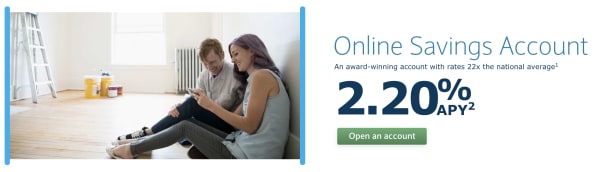
barclays high yield banking

Barclays has a 300+ year history in the UK, though it has yet to make it big stateside. However, the bank’s online savings accounts come with competitive interest rates (2.20%APY), no monthly maintenance fees, and doesn’t require any minimum balance to open an account. Your deposits are FDIC insured up to the legal limit.

What’s more, you can quickly transfer money back and forth between your Barclays account and your checking account or other savings accounts with other banks. Barclays also supports electronic deposits through its mobile app.

Barclays Download now ►
8

Wrapping up

Selecting the right savings account is a significant first step toward getting your finances on track, and a high-yield account is a long term investment. However, it can add up to thousands of extra bucks in interest down the road.
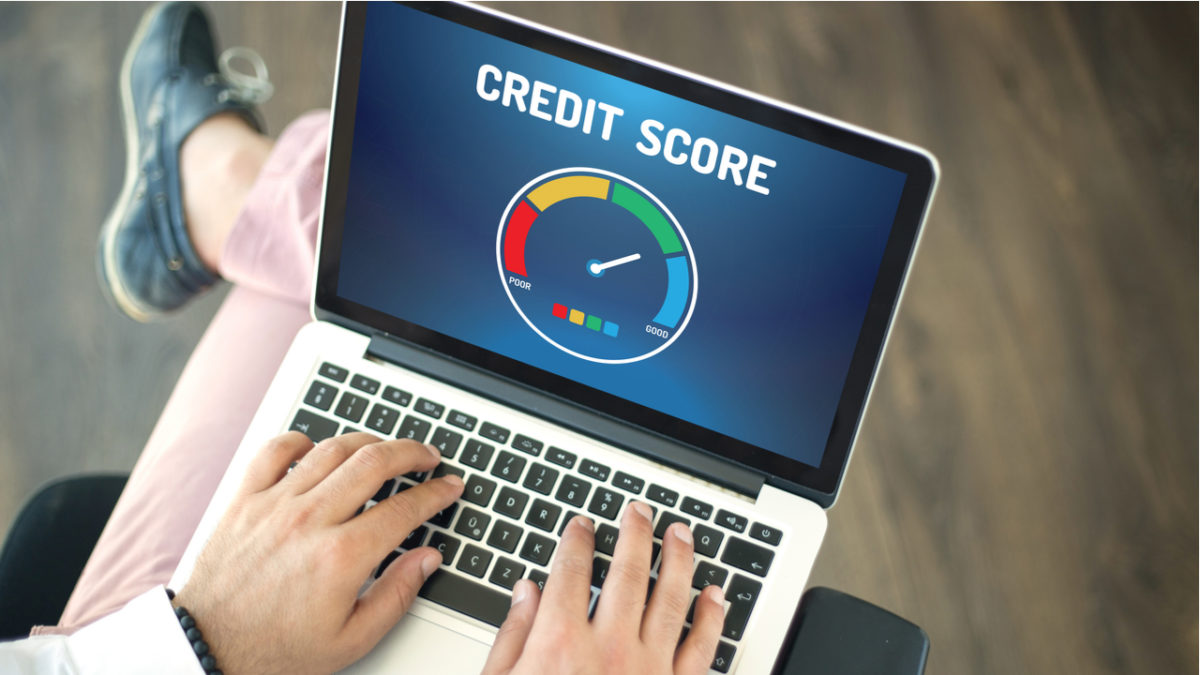
Credit scores matter — best ways to improve yours

Need to improve your credit score? Here’s how.

credit score

Discover defines credit scoring as a means of distilling your relationship with debt down to a number. That three-digit score allows lenders to quickly size up the risk of doing business with you, which can have major implications on your day-to-day life. 

Credit scores come into play if you want to apply for a credit card, rent an apartment, buy a car, or switch phone providers. Pretty important elements of existing in the modern world, right?

Credit scores range from 350-850, and most lenders look for scores above 650, with preferences given to those with scores in the 700s and higher.

A low score, on the other hand, means you may be denied access to some resources, or forced to pay higher deposits and interest rates.

If you don’t know your credit score or you know it’s bad, here are some tips for improving your score.

How to improve your credit score

credit score

Get a baseline first

First things first, you can’t improve upon what you don’t know.

Get started by running a credit report. There are three credit reporting agencies that provide this information, Experian, Equifax, and Transunion. All three offer one free report per year, we recommend staggering these throughout the year, so you can monitor your credit on a regular basis.

For ongoing tracking, most credit card companies provide a free credit tracker, which reports on a weekly basis. If you don’t have a credit card, Credit Karma allows you to check your status for free, too.

The only downside is, the app does promote financial products alongside the tool, which some users might not like.

Set up payment reminders or autopay

Making payments on time accounts for a high percentage of your credit score. Which makes sense, this metric demonstrates to lenders that they can count on you to make payments on time.

Late or missed payments hurt your credit, and after a month of nonpayment, the three credit reporting agencies will be notified of your delinquency. 

The best way to keep track of payments is to sign up for auto payments — so you can set it and forget it. 

We do also understand that autopay can be a big source of anxiety for those dealing with debt on a limited income. If you feel uneasy about automatic payments, request that your creditors send you a reminder about upcoming bills—most companies do this now. 

Dispute any errors on your reports

credit score

Check all of your credit reports — Transunion, Equifax, and Experian — for any errors. These might include hard inquiries (applications for auto loans or credit cards) or an unpaid bill you don’t recognize.

Incorrect information can cause your scores to drop, so if you see anything that doesn’t add up, make sure you dispute that information and clear things up ASAP. For more information on how to dispute an item on your report, we’ll refer you to the FTC’s official guide.

Limit hard inquiries

Hard inquiries usually occur when you apply for credit or try to rent an apartment or get a loan. Unfortunately, when you apply for these resources, they can slightly lower your credit rating.

A lot of hard inquiries at once might signal desperation — you need a loan, say, and you’ve applied for several different options. That raises a red flag with the credit reporting agencies, as it looks like you’re trying to get a lot of credit or you keep getting declined. 

While you can’t get around hard inquiries if you’re trying to rent an apartment or sign up with a new utility company, we recommend checking the criteria for loans and such before submitting the actual application. We also don’t recommend applying for say, financing multiple cars at a time.

Don’t max out your cards

Card utilization is one of the biggest parts go your credit score. What this means is, the lower the percentage of your credit you’ve used, the better. 

Ideally, you should aim to carry a balance of no more than 30 percent of your available credit.

If you have multiple card balances, consider consolidating them to one credit card or a personal loan. This allows you to take a more strategic approach to lowering debt — and reduces the amount of interest paid each month.

Another thing to think about: even if you’re paying off your credit card balances in full each month, your credit utilization ratio might not look as good as you think.

Credit card companies typically report your current balance to the credit bureaus—so it has more to do with the snapshot of your account at any given time, not so much your record of on-time payments. 

One way to combat this is making multiple payments per month, so the balance stays below that 30% threshold.

If you’re looking for an easier way to juggle multiple credit cards, sign up for a service like Tally. The service allows people to lump multiple payments together into a single monthly payment. 

Watch out for fraud

credit card

Data breaches are no joke these days. Between the Equifax breach and the Facebook leak, you need to be careful about the information you share online. 

Use strong passwords and PINs—if you can’t remember, use a password manager. Options like 1Password or LastPass are perennial faves, as they allow you to forget your passwords and stay safe. No more forgetting those annoying special character codes or storing everything on a low-tech post-it note.

Check your bank statements and credit scores on a regular basis — make sure there are no unauthorized charges.

Additionally, investing in a system like Lifelock or IdentityForce is a smart idea. If someone gets a hold of your social security number and birthdate they can steal from accounts, open credit cards, and file tax returns — all of which can have a dramatic impact on your credit score years down the line. You can click here for a 10% Lifelock discount for Softonic readers.

Don’t close old accounts after you pay them off

It sounds like a smart thing to do. You’ve knocked out your credit card debt, and the next thing on the agenda is closing the account. 

While that seems like a good plan for keeping your finances in check, closing an account can count against you on your credit report.

It’s better to keep your account open and paid off — which shows future creditors that you are low risk. 

Have patience: your score won’t change overnight

Raising your credit score isn’t an overnight fix. Instead, it’s a process that requires patience and a few new habits. In the meantime, make sure you’re paying your bills and using credit responsibly. 

Eventually, your score will rise.