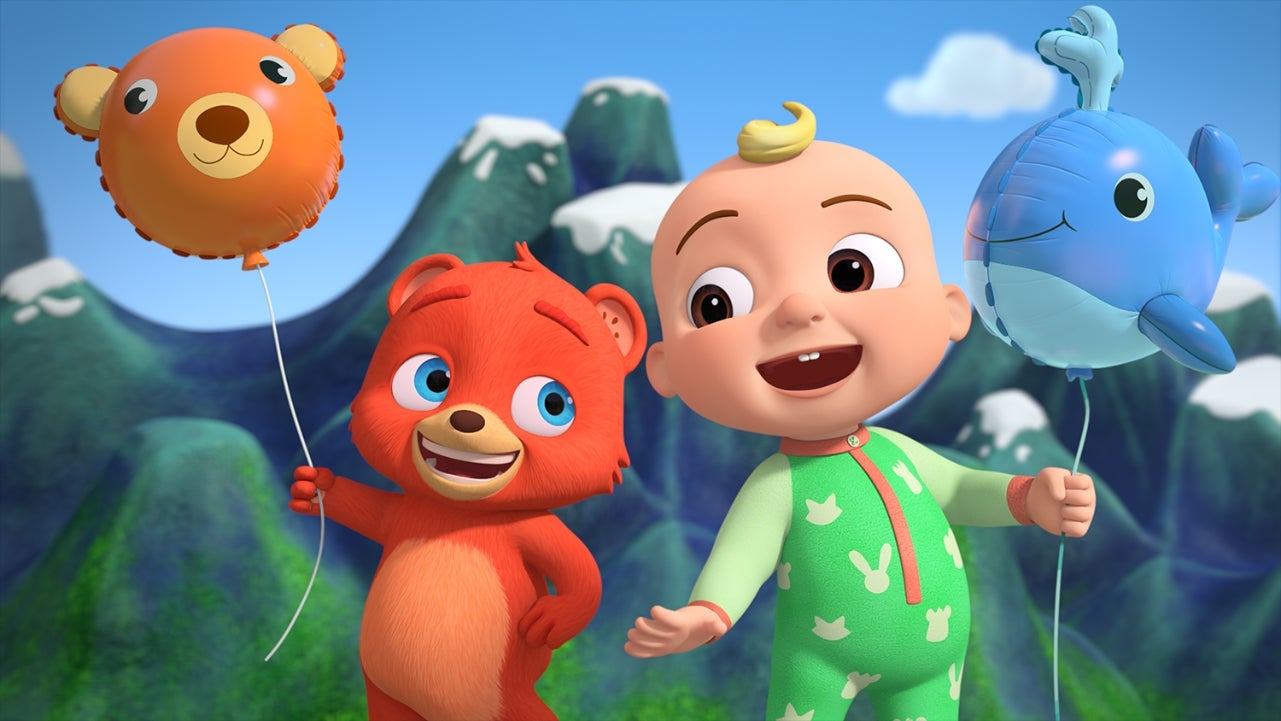
If you want to see how a parent’s face changes from joy to exhaustion, you just have to say one word: CoComelon. The YouTube channel has 200 million subscribers and totals 220 billion views, or in other words: an absolute empire of children’s entertainment starring babies. Experts say that children shouldn’t watch it, but kids get hooked every time it comes on, and Hollywood, of course, has seen a goldmine. And you’re my baby, you’re my baby After 20 years and a huge amount of shorts, […]
If you want to see how a parent’s face changes from joy to exhaustion, you just have to say one word: CoComelon. The YouTube channel has 200 million subscribers and has accumulated 220 billion views, or in other words: an absolute empire of children’s entertainment featuring babies. Experts say that children shouldn’t watch it, but kids get hooked every time it airs, and Hollywood, of course, has seen a goldmine.
And you are my baby, you are my baby
After 20 years and a huge number of shorts, the second most-watched YouTube channel in the world will finally have its own movie. Imagine a movie theater filled with the usual audience of CoComelon: yes, indeed, that is a drop of sweat running down your forehead. The release date is February 19, 2027, and it promises an “epic adventure” that… well, we’ll have to see to what extent it fulfills both claims.
Now we know that Cocomelon: The Movie will star SZA, Nicholas Hoult, and Sarah Sherman, who will join a cast that will also feature (of course) the typical voices from the television series. The premiere will coincidentally coincide with its arrival on Disney+ next year, because the streamer wasn’t satisfied with just having Bluey: it has gone straight to conquer absolutely everything.
According to the synopsis of the movie itself, CoComelon “invites families to go beyond the world of CoComelon they know, following JJ, his friends, and a new cast of characters on a cinematic journey filled with original music and rich storytelling”. Watching it must be one of the best contraceptives possible, honestly.
World War II changed history forever. Not only for the obvious reasons (geopolitics was never the same again, its consequences are still felt today), but even in the audiovisual field. It is important to note that there were a good number of production companies that were thriving in the United States and, when they came to a sudden halt, they never returned to being the same, and the same happened with industries like comics, which were completely renewed after the conflict. During these years, breakfast, lunch, and dinner were all about war. And, of course, it even affected the […]
World War II changed history forever. Not only for the obvious reasons (geopolitics was never the same again, and its consequences are still felt today), but also in the audiovisual realm. It is important to note that there were a good number of production companies that were thriving in the United States and, when they came to a sudden halt, they never returned to their former state, and the same happened with industries like comics, which were completely renewed after the conflict. During these years, war was the main topic for breakfast, lunch, and dinner. And, of course, it even affected animated cartoons.
The soldier messed up
As early as 1938, Disney and Warner began producing short films about the war where, for example, we could see Porky mobilizing his troops against an evil “ducktator,” but the real action started the following year when everything began officially. Everyone used cartoons to their advantage, from Germany to the USSR and, of course, the United States. Donald Duck even became a Nazi for a day in the magnificent Der Fuehrer’s Face, Bugs Bunny bombed the Japanese, and Daffy Duck went to Berlin to fight against Hitler himself. But that’s not what interests us.
On June 28, 1943, at the height of the conflict, the first short film featuring a character created specifically by Frank Capra premiered, with contributions from legends like Dr. Seuss, Munro Leaf, and Mel Blanc, who provided the voice. The character was Soldier Snafu, a name that seems randomly chosen, but it was actually an acronym used by Americans during the war: “Situation normal: all fucked up.” These shorts were shown exclusively to soldiers, and their purpose was to demonstrate to the illiterate how to proceed in various situations.
Snafu was clumsy, idiotic, and very, very popular among the rank-and-file soldiers. And in each episode, he messed up in a thousand different ways, from not getting a necessary vaccine to sharing secret plans with strangers. Obviously, they were not aimed at children, so to this day, the language used and some of the situations he finds himself in can be quite shocking. No one even knew if they would see each other outside the army!
In total, Warner made 24 short films, featuring cameos from Daffy Duck or Bugs Bunny, which lasted just over four minutes and showcased Snafu’s struggles with issues like malaria, bombs, or gas masks. They are impressive to watch (after all, they were made during Warner’s Golden Age), they have fascinating gags and, fortunately, they can all be easily obtained after being declassified by the American government. Because yes, of course, they were considered sensitive material for years.
Snafu was the most famous, but he was not the only cartoon character that was shown to soldiers during that time. In fact, there were others like Mr. Hook (who encouraged buying war bonds) or Soldier McGillicuddy (who was also voiced by Mel Blanc). All of them disappeared at the end of the war, although Snafu, who has even been featured in museums, has made cameos in meta series like Animaniacs. Well, in fact, he was even about to have a family: Tarfu (an acronym for “Things Are Really Fucked Up”) made a single short film when the war was about to end. Indiscriminate killings with cartoons seem to hurt less, it seems.
It is one of the great gems of the 80s: Robocop is not only a hyper-violent and ultra-bloody movie. Moreover, it is a testament to Paul Verhoeven’s cinema, always wicked, always political, always telling more than it seems at first glance. Robocop, in particular, which he made just before Total Recall and Basic Instinct, was a fantastic satire of modern society, of justice and of the police force that, of course, was rated “R” in the United States, meaning exclusively for those over 18. Not that they cared too much. You have the right to remain dead Verhoeven […]
It is one of the great gems of the 80s: Robocop is not only a hyper-violent and blood-soaked movie. Moreover, it is a testament to Paul Verhoeven’s cinema, always wicked, always political, always telling more than it seems at first glance. Robocop, in particular, which he made just before Total Recall and Basic Instinct, was a fantastic satire of modern society, justice, and the police force that, of course, was rated “R” in the United States, meaning it was exclusively for those over 18. Not that they cared too much.
You have the right to remain dead
Verhoeven was so confident in his film that he claimed the cut that could not be shown in conventional theaters (rated X) made his young children laugh. However, the organization that rates films by age did not hesitate for a moment: children should stay away from Robocop. But of course, it grossed 53 million dollars and the kids couldn’t help but see the ads on television and the posters on the street: they adored Robocop, he was iconic and magnetic. And this was indeed a film they were forbidden to watch.
In 1988, a little over a year after its premiere, Marvel, which was launching series left and right and taking the lead in the coveted Saturday morning children’s programming, teamed up with Orion to create and air a Robocop animated series for kids that would be broadcast alongside reruns of the 1981 Spider-man, Dino-Riders, or Dungeons and Dragons in a children’s block called Marvel Action Universe. Marvel’s involvement is significant: it had already published an adaptation of the movie in 1987 and would launch a collection from 1990 to 1992 with new adventures of the robotic police officer.
Obviously, the series had to change many, many things in order to be broadcast during family hours, from replacing bullets with laser beams to avoiding the death of Clarence Boddicker. In fact, each episode was a standalone adventure and fans consider it to take place in an alternate universe where similar situations to those in the movie occurred, but at the same time were completely different. For example, in episode 4, Robocop faced a criminal gang similar to the Ku Klux Klan called “the Brotherhood” that aimed to destroy the robots of Detroit, and in episode 11, he investigated a factory that was polluting the environment. If there’s one thing Robocop has always done, it’s care about our well-being.
In total, the series was supposed to have 13 episodes, but it ended up with 12. It wasn’t due to a lack of budget, but because Marvel decided to use the money from one episode to make a pilot for the X-Men, Pryde of the X-Men, which aired in 1989 but did not move forward. However, it was a cornerstone in creating the famous X-Men series of the 90s that continued on Disney+ last year. And none of this might have happened if it weren’t for the sacrifice of Robocop. It’s not like anyone really missed that episode, to be honest.
Don’t think they learned who their target was: in 1994, after the release of the more child-friendly Robocop 3, they launched a live-action youth series featuring a robot that no longer kills and in which the critical tone had notably decreased. Additionally, both in 1998 and 2001, two more series based on the movie were released, the first aimed at children and the second satirical and adult. And such a powerful concept cannot die so easily.
If you are asked about the best Netflix series, which one would you say? Stranger Things, perhaps? Squid Game? Or maybe a more modest production, like Don’t Touch the Cats, Tiger King, or Paquita Salas? Forget it: there’s one you haven’t seen, but as soon as you do, it will rank among the top spots in your list. You’ve never seen anything like its silly humor, nostalgic atmosphere, and twisted plot. There are only eight episodes, and they will leave you wide-eyed, I promise. Were you expecting something different from something called Saturday Morning All-Stars Hits? Uh… Subs? […]
If you were asked about the best Netflix series, which one would you say? Stranger Things, perhaps? Squid Game? Or maybe a more modest production, like Don’t Touch the Cats, Tiger King, or Paquita Salas? Forget it: there’s one you haven’t seen, but as soon as you do, it will rank among the top of your list. You’ve never seen anything like its silly humor, nostalgic atmosphere, and twisted plot. There are only eight episodes, and they will leave you wide-eyed, I promise. Did you expect anything else from something called Saturday Morning All-Stars Hits?
Uh… Subs?
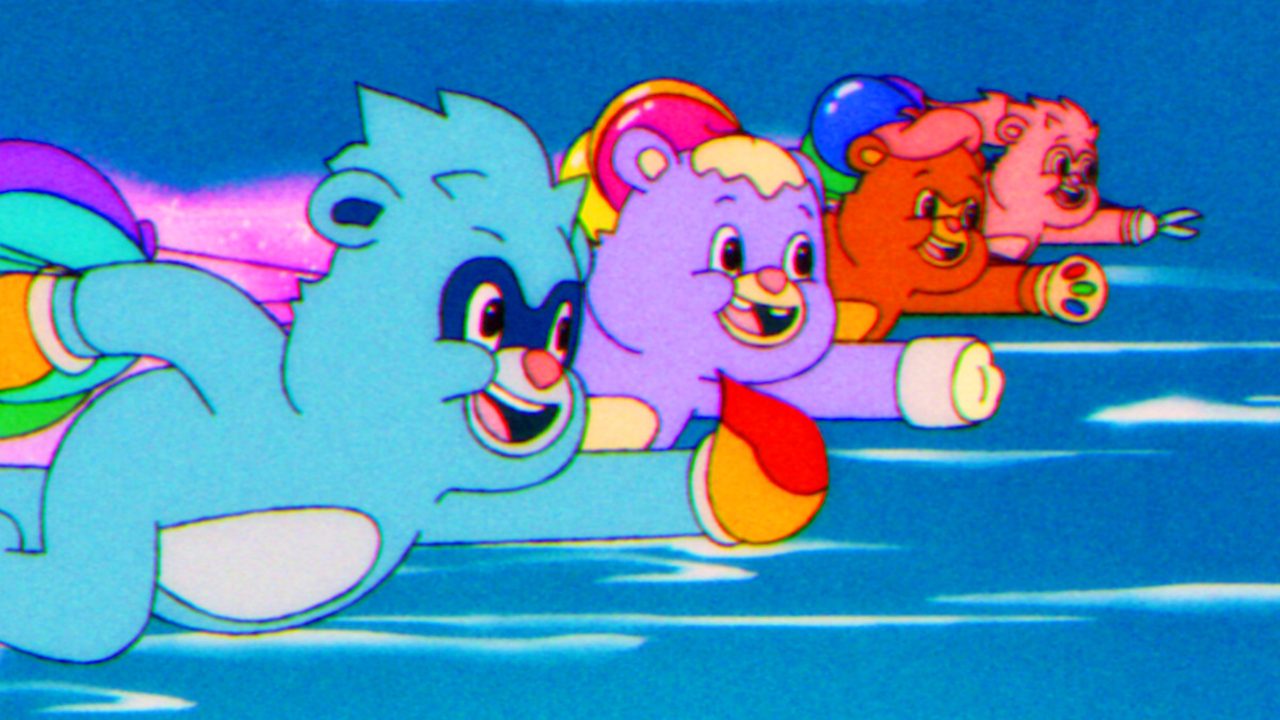
The complete series premiered on December 10, 2021, during the era when Netflix was experimenting and allowing new creators to do whatever they wanted, and that free environment is noticeable in every pore. However, it requires patience, because the first episodes are simply a comedic parody of the 80s with bits of animated series that openly mock Denver, the Last Dinosaur, the Care Bears, or the Teenage Mutant Ninja Turtles. But, as SMASH continues to air, it becomes darker and darker, with a sense of humor as black as coal that will make you click “Next Episode” as soon as you get the chance.
The series recreates different Saturday morning shows and how the relationship between its two hosts, brothers Skip and Treybor, evolves from being colleagues to becoming fierce enemies along the way. However, the frenetic pace and the narrative influenced by YouTube, TikTok, and viral videos in general ensure that it never loses its spark, rhythm, or that underground feel at any moment. Additionally, starting from episode 4, the series begins to tell another story in the background: that of a missing teenager. And things get even more turbulent.
The creator, screenwriter, and lead actor (of both brothers and more characters) is Kyle Mooney, who at that time was in his final stage of Saturday Night Live and had already made the movie – equally strange, but equally fascinating – Brigsby Bear. Mooney was born from the best tradition of American humor, and in a time of clone sitcoms and humor carefully crafted to please everyone, it’s a delight to see that series like SMASH can exist. Although, of course, not everyone is going to get it right away.
Netflix Smash!
If I had to rate Saturday Morning All-Star Hits, I would call it “post-television.” Self-aware television, capable of playing with its codes and with the metanarrative, that can shift tones between different episodes, narrating a river story that knows it is self-contained, but also unique, a rare bird that has its value as a comedy series, but also as an artistic piece. And coming from a Netflix that doesn’t always take care of its products to this extent.
It is true that SMASH will never appear on the lists of the best on Netflix, overshadowed by other comedies like BoJack Horseman, Never Have I Ever, American Vandal, or Love, but perhaps it should make its way through. Because we already have many series that take the easy route, we have seen dozens of products that can only be original up to a point, and never fully exploit all their strangeness, their reason for being, their most primitive DNA. This one does achieve that: it leaves nothing unsaid, tells everything it wants, no matter how crude, beastly, and strange it may be. And it is commendable that it does not aim to appeal to all audiences at any moment.
When was the last time you saw something that you really felt was special? Do you remember the feeling of watching a series and thinking “I’ve never seen anything like this”? Give the algorithm, the lists, and the recommendations that always go for the most basic, what a billion people have already pointed out, the middle finger: spend a weekend watching Saturday Morning All-Star Hits, and don’t be discouraged after its first two episodes. You’ll thank me later.
If Netflix stands out for anything, it’s because its series gradually lose audience after each season until the streamer quietly cancels them. This is what happened, for example, to The Witcher or GLOW, and the likely fate of current hits like One Piece. There aren’t many that have lasted beyond five seasons, but there are a few, like A Place to Dream, The Upshaws, or The Crown, that have managed to escape that trap by a hair. But so far, only the Spanish Élite, Voltron, and a couple of children’s series […]
If Netflix stands out for anything, it’s because its series gradually lose audience after each season until the streamer quietly cancels them. This is what happened, for example, to The Witcher or GLOW, and the likely fate of current hits like One Piece. There aren’t many that have lasted beyond five seasons, but there are some, like A Place to Dream, The Upshaws, or The Crown, that have managed to escape that prison by the skin of their teeth. But until now, only the Spanish series Élite, Voltron, and a couple of children’s shows had stood out as the titles that lasted the longest, with eight seasons each. Until now.
The Audience Monster
If someone tells you that in a place so little inclined towards innovation and risk as Netflix we were going to end up with eight seasons (and two of a spin-off) of a sexually explicit animated series for teenagers and adults, filled with songs about taboo topics and with grotesquely ugly designs, you would probably think they are crazy: How can they renew something like this and not series like Mindhunter? And yet, there is Big Mouth to prove that the strange, somehow, always triumphs.
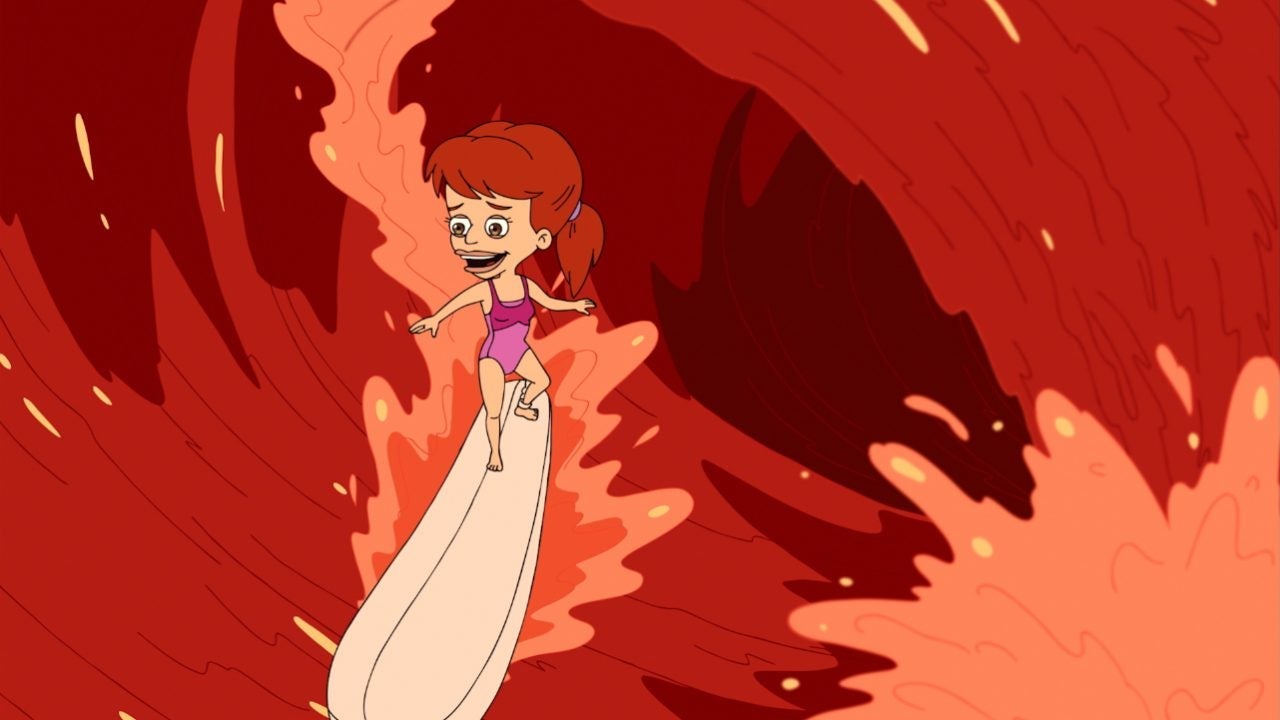
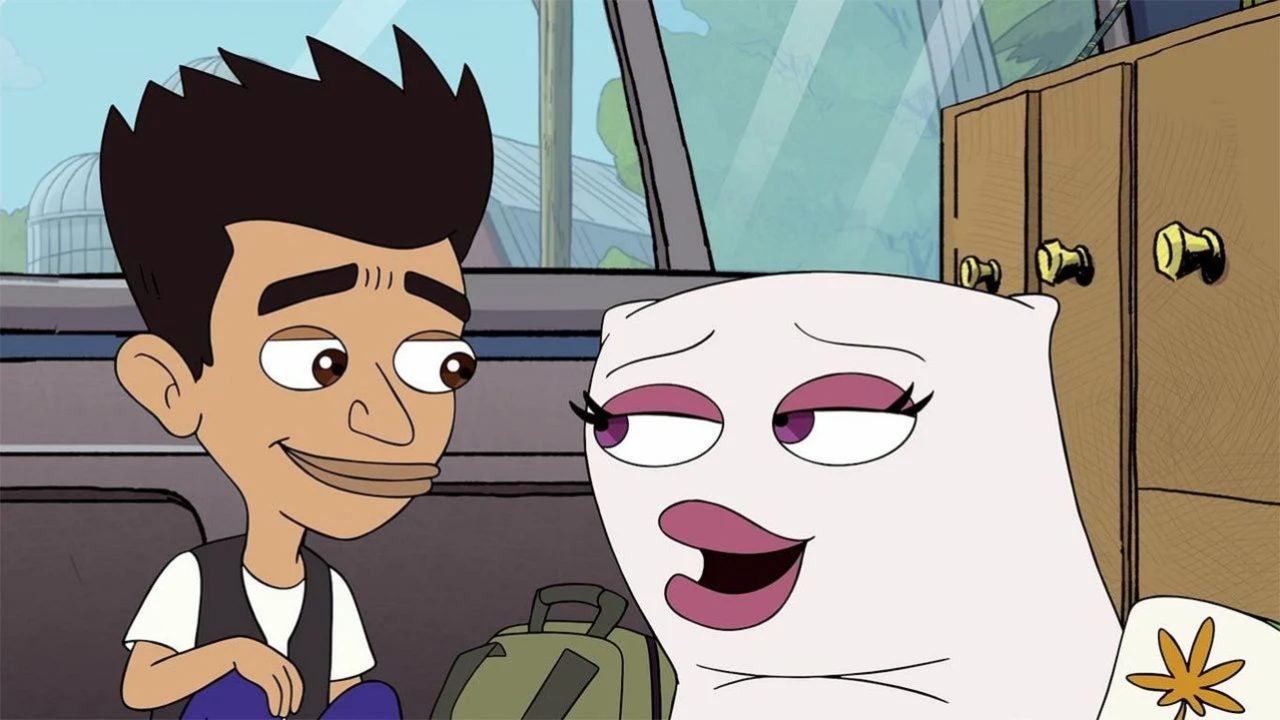
Big Mouth is the series I would have liked to watch as a teenager to understand many, many things about myself and everyone around me: through its 81 episodes, the series has addressed any teenage issue related to sex, from first crushes to involuntary erections. It could be very thorny, but by doing it from the uninhibited perspective of kids aware that they are in a show and accompanied by “hormone monsters” that force them to do all kinds of silly things. And all of this is set to songs with a cast of characters that could resemble, with some distance, that of The Simpsons.
This is not a trivial comparison: after all, both in Big Mouth and The Simpsons there are dozens of secondary characters with a single line who can, at any moment, take center stage during an episode, and neither of the two series is afraid to talk about important topics, no matter how much they may be, at first glance, taboo for a large part of the audience. But of course, instead of a teenager coming out to talk to you about her first menstruation, it’s a big-headed cartoon character who does it while singing a sexually explicit song that ranges from tampons to the genitals themselves. How can you get mad at such shamelessness?
Farewell, big mouth
It may have been a very cheap series, or somehow it resonated with its captive audience, but whatever the case, it has been enough to keep it on Netflix for almost a decade, from 2018 until just a few days ago, on May 23, 2025. And, given what we’ve seen, no one rules out another spin-off like the one they already made, Human Resources, focused on the “monsters” and with a more adult tone and, to put it in some way, emotional to a frankly unusual degree in Big Mouth.
In the end, that is what made this small series so great: never knowing what is going to happen, what limits they will break, how far they can go. Although at first they were transgressive for the themes they addressed, once the audience got used to it, it was time to go further, and that is where Big Mouth, despite its ups and downs, its rises and falls in quality, has hit the nail on the head and has paved the way for the future of Netflix series. If you want something to succeed, don’t think about what the audience wants to see: think about what you would like to see.
Big Mouth has not only set a record for duration on Netflix: it has also shown that some of the public’s accusations about indiscriminate cancellations are not entirely fair. If we were to rely solely on the “Netflix standard,” Big Mouth would never have been approved at all. And yet, there it is, it has grown up alongside us. Because few things please us adults more, let’s not deny it, than a good dirty joke.
If Netflix stands out for anything, it’s because its series gradually lose audience after each season until the streamer quietly cancels them. That’s what happened, for example, to The Witcher or GLOW, and the likely fate of current hits like One Piece. There aren’t many that have lasted beyond five seasons, but there are a few, like A Place to Dream, The Upshaws, or The Crown, that have managed to escape that trap by a hair. But so far, only the Spanish Élite, Voltron, and a couple of children’s series […]
If Netflix stands out for anything, it’s because its series gradually lose audience after each season until the streamer quietly cancels them. This is what happened, for example, to The Witcher or GLOW, and the likely fate of current hits like One Piece. There aren’t many that have lasted beyond five seasons, but there are some, like A Place to Dream, The Upshaws, or The Crown, that have managed to escape that prison by the skin of their teeth. But until now, only the Spanish series Élite, Voltron, and a couple of children’s shows had stood out as the titles that lasted the longest, with eight seasons each. Until now.
The Audience Monster
If someone told you that in a place so unlikely to embrace innovation and risk as Netflix we would end up having eight seasons (and two of a spin-off) of a sexually explicit animated series for teenagers and adults, filled with songs about taboo topics and featuring grotesquely ugly designs, you would probably think they are crazy: How can they renew something like this and not series like Mindhunter? And yet, there is Big Mouth to prove that the strange, in some way, always triumphs.
Big Mouth is the series I would have liked to watch as a teenager to understand many, many things about myself and everyone around me: through its 81 episodes, the series has addressed any teenage issue related to sex, from first crushes to involuntary erections. It could be very thorny, but by doing it from the uninhibited perspective of kids aware that they are in a show and accompanied by “hormone monsters” that force them to do all kinds of silly things. And all of this is set to songs with a cast of characters that could resemble, with some distance, that of The Simpsons.
This is not a trivial comparison: after all, both in Big Mouth and The Simpsons there are dozens of secondary characters with a single line who can, at any moment, take center stage during an episode, and neither of the two series is afraid to talk about important topics, no matter how much they may be, at first glance, taboo for a large part of the audience. But of course, instead of a teenager coming out to talk to you about her first menstruation, it’s a big-headed cartoon character who does it while singing a sexually explicit song in which they sing about everything from tampons to their own genitals. How can you get mad at such shamelessness?
Farewell, big mouth
It may have been a very cheap series, or somehow it resonated with its captive audience, but whatever the case, it has been enough to keep it on Netflix for almost a decade, from 2018 until just a few days ago, on May 23, 2025. And, given what we’ve seen, no one rules out another spin-off like the one they already made, Human Resources, focused on the “monsters” and with a more adult tone and, to put it in some way, emotional to a frankly unusual degree in Big Mouth.
In the end, that is what made this small series so great: never knowing what is going to happen, what limits they will break, how far they can go. Although at first they were transgressive for the themes they addressed, once the audience got used to it, it was time to go further, and that is where Big Mouth, even with its ups and downs, its rises and falls in quality, has hit the nail on the head and has paved the way for the future of Netflix series. If you want something to succeed, don’t think about what the audience wants to see: think about what you would like to see.
Big Mouth has not only set a record for duration on Netflix: it has also shown that some of the public’s accusations about indiscriminate cancellations are not entirely fair. If we were to rely solely on the “Netflix standard,” Big Mouth would never have been approved at all. And yet, there it is, it has grown up alongside us. Because few things please us adults more, let’s not deny it, than a good dirty joke.
Behind the animation and the story is Sony and, be careful, Atlantis Animation, a company located in the Canary Islands that will ensure that things come to fruition. Homeland flavor.
During a certain period, animated series based on real-life characters filled the mornings of children in the United States. Episodes featuring the Harlem Globetrotters, The Monkees, Mike Tyson, Mister T, The Three Stooges, Roseanne Barr, Jackie Chan, or Gary Coleman provided hours and hours of television of varying quality that gradually faded away, leaving celebrities as mere cameos in ‘Scooby-Doo’. But Lionel Messi, a seven-time winner of the UEFA Best Player in the World award, is determined to revive it.
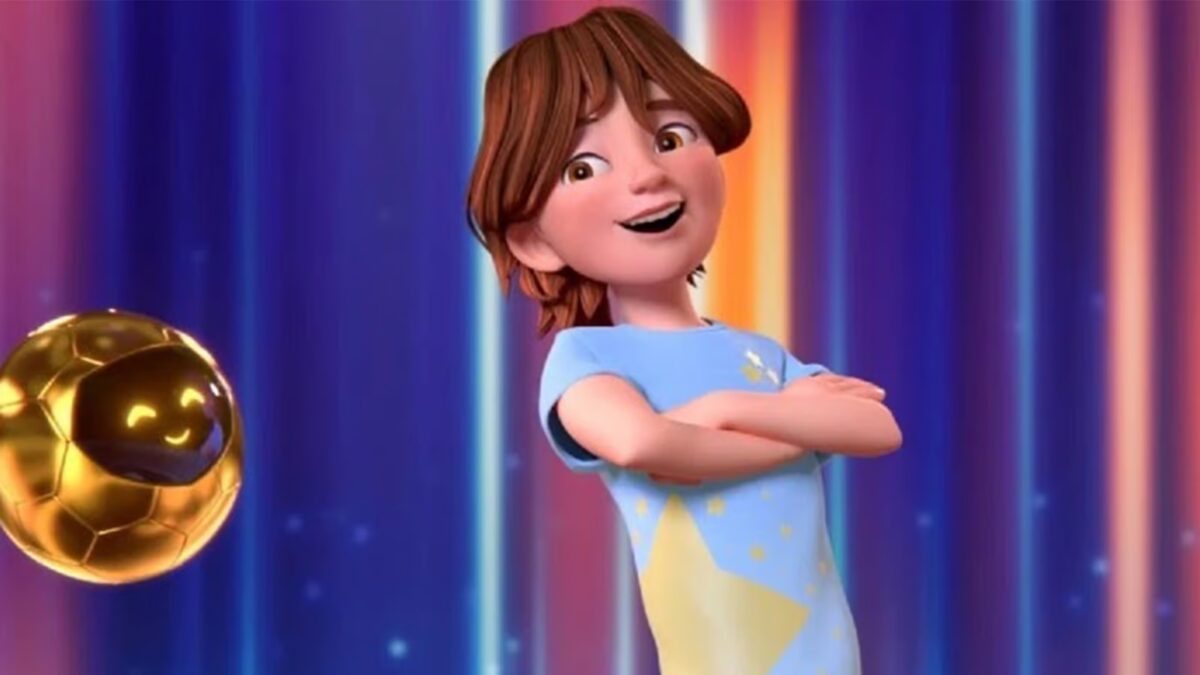
The most curious thing is that the Argentine footballer will not be alone in his show, titled ‘Messi and the Giants,’ a story that has little to do with his life: at the age of 12, returning from training, a young Lionel gets trapped in a video game and has to escape through different challenges with the help of a Ballon d’Or. The slogan, “In every child, there is a hero.” It couldn’t be more generic.
It’s like ‘Dungeons and Dragons’ but with one of the most famous footballers in history as the protagonist trapped in the digital world. An isekai, if you think about it. Behind the animation and the story is Sony, and watch out, Atlantis Animation, a company located in the Canary Islands, will ensure that everything goes well. Homegrown flavor.
It is said that ‘Messi and the Giants’ will open up to the multiverse and will highlight the moral values of its protagonist (yes, the same one who made the phrase “What are you looking at, silly?” go viral) above all else. Honestly, these things usually don’t turn out very well, but the soccer player is a children’s idol, so who knows? For now, its teaser doesn’t give us any hints. Not even the release date.
Meanwhile, those of us who don’t enjoy soccer are watching ‘Messi and the Giants’ with a blank expression, waiting to see if there are at least superpowers involved beyond the power of friendship and perseverance. We already know about those.