The wait of almost four years came to an end on March 20, 2026, with the premiere of Peaky Blinders: The Immortal Man. The film, which has already reached number one on Netflix in 82 countries, marks the return of Cillian Murphy in his iconic role as Tommy Shelby. This production, set during World War II, presents a Shelby removed from action and dedicated to writing a book, until his son Duke drags him back into criminal intrigue by facing an imminent catastrophe. He has survived the premiere of the great […]
The wait of almost four years came to an end on March 20, 2026, with the premiere of Peaky Blinders: The Immortal Man. The film, which has already reached number one on Netflix in 82 countries, marks the return of Cillian Murphy in his iconic role as Tommy Shelby. This production, set during World War II, presents a Shelby removed from action and dedicated to writing a book, until his son Duke drags him back into criminal intrigue by facing an imminent catastrophe.
It has survived the premiere to the general public
Peaky Blinders: The Immortal Man was written by Steven Knight, the creator of the original series that captivated audiences from 2013 to 2022. The film is shaping up to be a necessary bridge before the new series in the Peaky Blinders universe begins, which has already been confirmed by the producers. This feature film has assembled a luxury cast, including Barry Keoghan, Rebecca Ferguson, and Tim Roth, who join Murphy in what promises to be an epic return of this renowned franchise.
The first reviews are mostly favorable, with a rating of 91% on Rotten Tomatoes, just two points lower than the original series. However, some critics have pointed out that the film tries to compress what could have been a season into a single movie, which could affect its narrative development and the emotional impact it manages to convey. This perception suggests that, although well received, it may not reach the depth that fans of the series expected.
With high expectations, everything indicates that Peaky Blinders: The Immortal Man will be one of the most-watched movies on Netflix in 2026. However, the precise viewing data will be known next Tuesday, the day the platform will reveal the figures corresponding to the week following the premiere.
World War II changed history forever. Not only for the obvious reasons (geopolitics was never the same again, its consequences are still felt today), but even in the audiovisual field. It is important to note that there were a good number of production companies that were thriving in the United States and, when they came to a sudden halt, they never returned to being the same, and the same happened with industries like comics, which were completely renewed after the conflict. During these years, breakfast, lunch, and dinner were all about war. And, of course, it even affected the […]
World War II changed history forever. Not only for the obvious reasons (geopolitics was never the same again, and its consequences are still felt today), but also in the audiovisual realm. It is important to note that there were a good number of production companies that were thriving in the United States and, when they came to a sudden halt, they never returned to their former state, and the same happened with industries like comics, which were completely renewed after the conflict. During these years, war was the main topic for breakfast, lunch, and dinner. And, of course, it even affected animated cartoons.
The soldier messed up
As early as 1938, Disney and Warner began producing short films about the war where, for example, we could see Porky mobilizing his troops against an evil “ducktator,” but the real action started the following year when everything began officially. Everyone used cartoons to their advantage, from Germany to the USSR and, of course, the United States. Donald Duck even became a Nazi for a day in the magnificent Der Fuehrer’s Face, Bugs Bunny bombed the Japanese, and Daffy Duck went to Berlin to fight against Hitler himself. But that’s not what interests us.
On June 28, 1943, at the height of the conflict, the first short film featuring a character created specifically by Frank Capra premiered, with contributions from legends like Dr. Seuss, Munro Leaf, and Mel Blanc, who provided the voice. The character was Soldier Snafu, a name that seems randomly chosen, but it was actually an acronym used by Americans during the war: “Situation normal: all fucked up.” These shorts were shown exclusively to soldiers, and their purpose was to demonstrate to the illiterate how to proceed in various situations.
Snafu was clumsy, idiotic, and very, very popular among the rank-and-file soldiers. And in each episode, he messed up in a thousand different ways, from not getting a necessary vaccine to sharing secret plans with strangers. Obviously, they were not aimed at children, so to this day, the language used and some of the situations he finds himself in can be quite shocking. No one even knew if they would see each other outside the army!
In total, Warner made 24 short films, featuring cameos from Daffy Duck or Bugs Bunny, which lasted just over four minutes and showcased Snafu’s struggles with issues like malaria, bombs, or gas masks. They are impressive to watch (after all, they were made during Warner’s Golden Age), they have fascinating gags and, fortunately, they can all be easily obtained after being declassified by the American government. Because yes, of course, they were considered sensitive material for years.
Snafu was the most famous, but he was not the only cartoon character that was shown to soldiers during that time. In fact, there were others like Mr. Hook (who encouraged buying war bonds) or Soldier McGillicuddy (who was also voiced by Mel Blanc). All of them disappeared at the end of the war, although Snafu, who has even been featured in museums, has made cameos in meta series like Animaniacs. Well, in fact, he was even about to have a family: Tarfu (an acronym for “Things Are Really Fucked Up”) made a single short film when the war was about to end. Indiscriminate killings with cartoons seem to hurt less, it seems.
They didn’t want to introduce a new board game that would entertain children during the war, but… get their own out of prison.
The year is 1941: World War II rages in Europe, and British prisoners are falling into Nazi hands by the handful. However, a handful of them seem to be successfully escaping from German prisons. How is this possible? What were the jailers overlooking? They had made sure that they received nothing beyond the bare necessities: clothes, food and a game of ‘Monopoly’ to keep them entertained.
“Go to jail. Go directly without passing through the Exit box and without collecting the 20,000 pesetas”. If you had a ‘Monopoly’ in the 90’s you know perfectly well how many hours it could last until someone decided to withdraw from the game or went bankrupt buying hotels. It is the quintessential capitalist game (although it was born with the opposite idea in 1903) and it is difficult to tell something about it that you don’t know.
But there is a period when perhaps the least important thing in the world was ‘Monopoly’: obviously, during World War II. And yet, it became an indispensable ally in helping imprisoned soldiers get out of jail. But how? It all starts with one man, Christopher Clayton Hutton: soldier, escape artist, secret service employee, inventor in the Q style of James Bond movies. It was he who came up with the great idea of teaming up with Waddington’s, the board game company that, among others, first published ‘Cluedo’. But not to introduce a new board game to entertain children during the war, but to… get his own out of prison.
The escape kit that went past the Nazis as if it were humanitarian aid contained a silk map of different European countries on which were marked the safe houses, the places to go, knives, miniature compasses, pieces of metal (all posing as real pieces), rope and, what is even better, real money… placed exactly under the money in the game. But how is it possible that no one noticed?
Hidden in plain sight
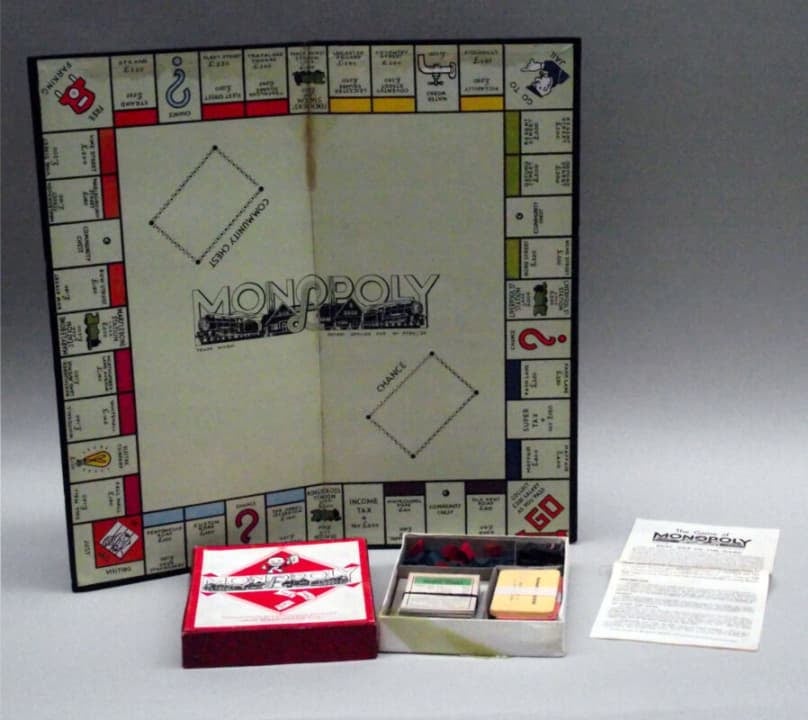
As if it were a movie (and oddly enough, no one has made the biopic yet), Waddington’s and Hutton hid the maps and utensils inside the Monopoly boards: being made of silk and not paper, the maps held water well and could easily be hidden in a small place. Also, since they didn’t make any noise, they didn’t attract the attention of the guards. Not that they had to figure all this out on their own: before going on a mission, the British already knew that the fake Monopolys existed.
You may be thinking that it doesn’t make any sense that enemies would allow their prisoners to play board games, but the truth is that the Geneva Convention allowed NGOs to send them to keep their minds active. Besides, the Germans figured that, as long as they played, they wouldn’t make escape plans. Spoiler: it goes wrong.
These games could easily be mistaken for real Monopolys, and the only way prisoners could tell it was their key to freedom was by a red dot in the Free Parking box. Obviously, after using them, the soldiers had to destroy the games so that the Germans would not know how they had managed to escape. It may sound like something out of a ‘Mission Impossible’ movie, but the truth is that thousands of captured soldiers escaped this way. It can be said, yes, that they got a letter to get out of prison.