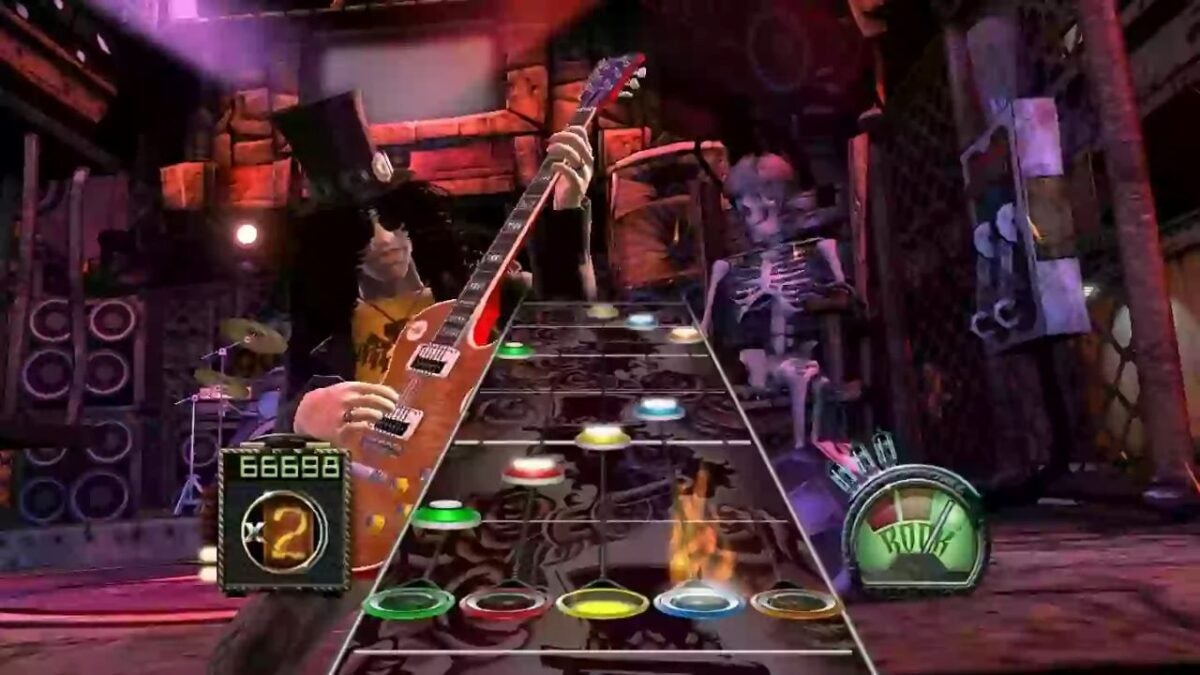
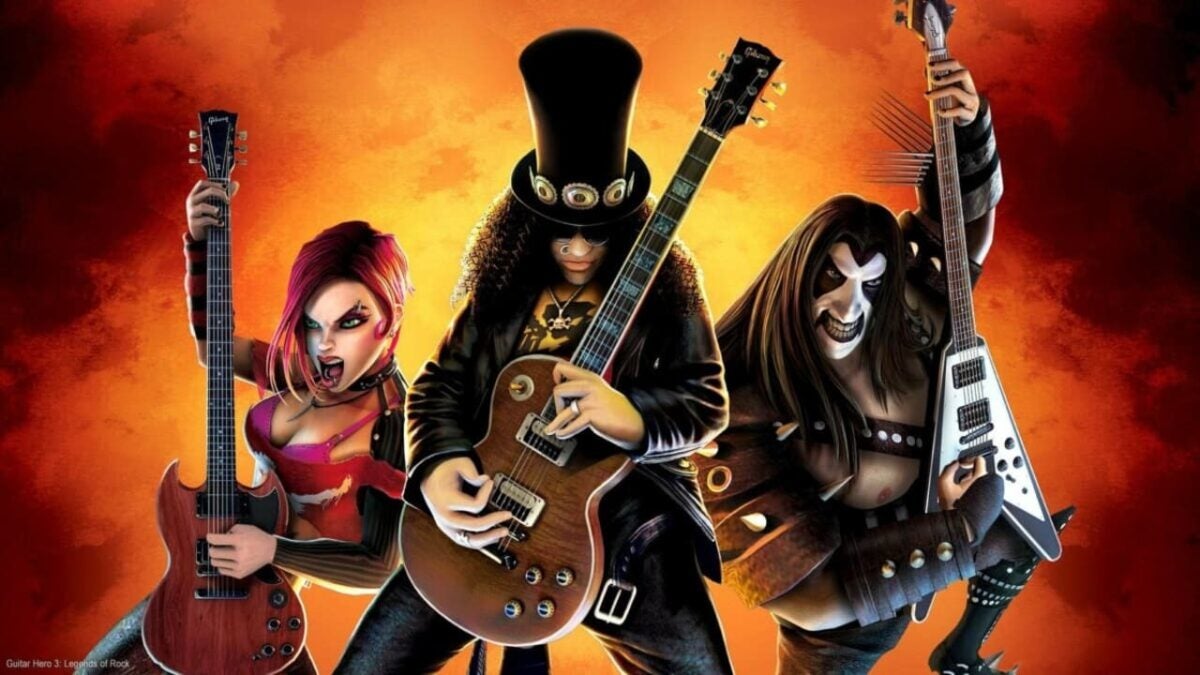
Twenty years ago, playing with the traditional controller was out of fashion: before Nintendo saw the potential with the Wii, PS2 surprised everyone by breaking all sales records with a game that was not controlled with joysticks, but with a toy guitar: in 2005, Guitar Hero became a hit for Harmonix. In reality, it was an American version of the Japanese Guitar Freaks, but no one cared that it was a semi-plagiarism of Konami’s game: as soon as you picked up the guitar and played Smoke on the Water by Deep Purple, there was something that made you want to keep going and going. And people did. Oh yes, they did.
Let’s rock and roll!
The first Guitar Hero cost a million dollars, and everyone was somewhat afraid. In fact, years earlier, when they were trying to sell the project, Acclaim told them that no one would buy a peripheral like that. Yes, of course, no one would want an electric guitar in their home, what madness! We all know what happened: it was a hit, the second part came out in 2006 and from that moment on, the madness: 15 games in four years. That’s how any brand gets burned out.
From 2007 to 2010, unusual games such as Guitar Hero On Tour (the version for Nintendo DS, which was played with a kind of accordion attached to the Game Boy Advance cartridge slot), DJ Hero (which replaced the guitar with a DJ turntable), or Band Hero (which expanded the instruments and allowed you to form a virtual band with your friends) were released. And, of course, the titles from the main saga and those released by individual groups, such as Van Halen, Metallica, or, indeed, Aerosmith.
It may be that Guitar Hero: Aerosmith is not particularly remembered by either the band’s fans or those of the series, and with some reason considering that only 29 of the 41 songs are by Aerosmith, and the rest are by bands that apparently inspired them. It did not present any novelties or anything of special interest outside of the fans, and one might think it sank in the sales charts, but nothing could be further from the truth: it arrived just after the legendary Guitar Hero III and people wanted more and more. To the point that the band itself was completely unprepared for it.
In complete control
In just three months, Guitar Hero: Aerosmith had sold a million copies, which amounted to 50 million dollars. In the end, it was 3,600,000 copies, the highest number for games dedicated to specific bands. Obviously, not all the money went to the band, but a good chunk in the form of royalties. So much so that, according to them, it made them earn more money than the rest of their albums. It’s not surprising, considering that bands take a very small percentage of the records sold (and where they really make a fortune is on the subsequent tours), but it is curious that such a well-known band as this, with 15 studio albums, 9 live albums, and 15 compilations, made more than just a simple game.
In fact, in the months following the game, its sales increased by 40%, and Aerosmith members even showcased images from the game during their concerts. However, not all of them were particularly pleased with the final result (it is said that one of them, after watching the video following a performance, remarked, “This was very stupid”). This is especially striking when you see the sense of wonder and care that was given to other bands later on, such as in the legendary Rock Band: The Beatles, which was a perfect tribute to the group.
Guitar Hero died completely in 2015, after Live, which was supposed to be its relaunch title, but it sank before it could move forward. Who knows, ten years have passed, the industry has changed again and there is a whole new generation at the guitar controls. Is it time to let loose again in heavy metal style?