Do you miss Guitar Hero? Bobby Kotick too and that's good news for you

Bobby Kotick has spoken internally at Activision about Microsoft’s purchase of the company, talking again about Guitar Hero

Now that Activision Blizzard is officially becoming a part of Microsoft, starting next Friday, significant changes in their production methods are expected. Under Microsoft’s umbrella, they will likely alter their current development approach. This is natural and happens in all companies when they are acquired. And while their games won’t automatically enter Game Pass, a likely change for the near future is the return of an acclaimed fame that no one understands why it vanished.

Xbox Game Pass DOWNLOAD

On Tuesday, October 10th, the infamous CEO of Activision Blizzard, Bobby Kotick, had a meeting with the company’s employees. In this meeting, he wanted to discuss the state of the company given the imminent acquisition by Microsoft.

Regarding what Kotick himself has done, he emphasized that he has taken a keen interest in what they are working on at Microsoft. Highlighting that Microsoft has made significant advancements in many areas, particularly in the fields of AI and data analytics, he believes they can bring a lot of potential to the company in developing their franchises. As for Activision itself, he stated that he believes that is what they bring most substantially to Microsoft— a series of major franchises that can be exploited in unique ways.

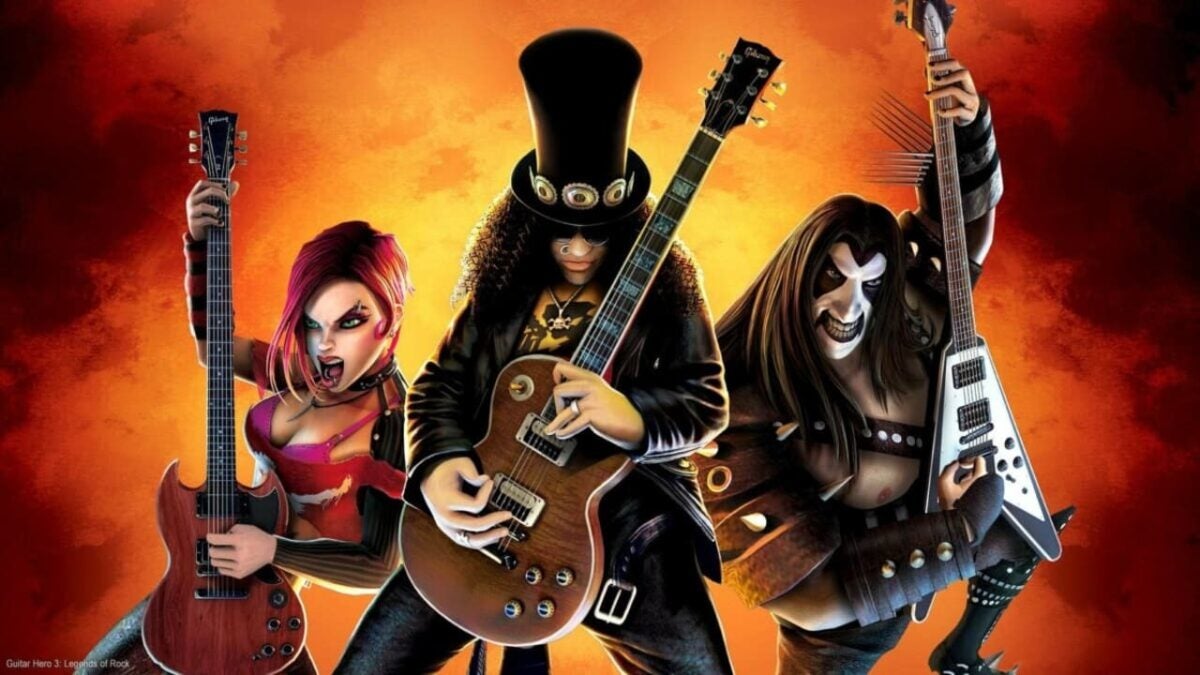
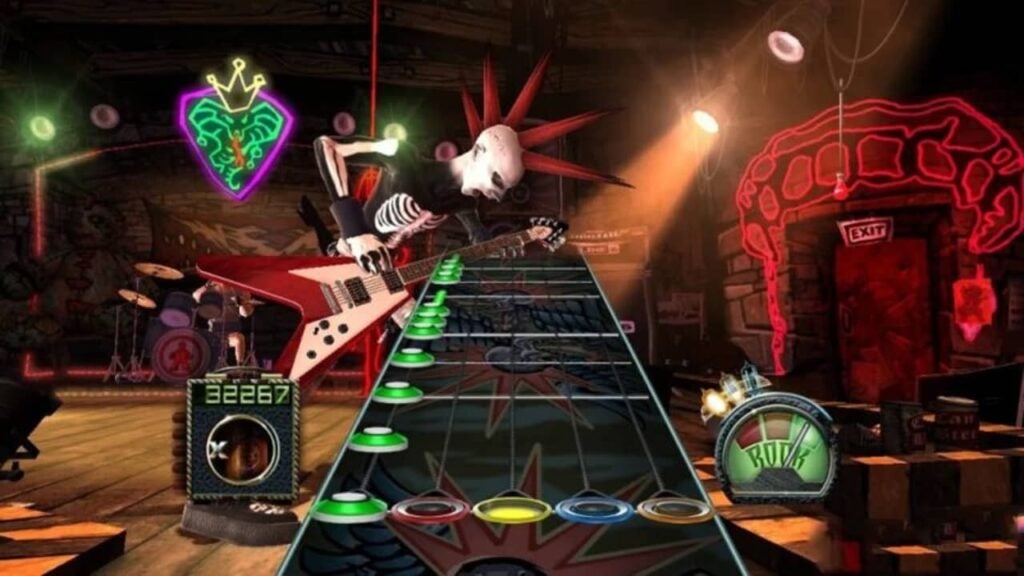
This is where Bobby Kotick emphasized Guitar Hero. Saying that he has a very particular vision of what a new Guitar Hero could be, he stated that only with Microsoft’s technology does he believe it would now be possible to carry out what he truly wants to do with the franchise. This is something he has talked about in the past, but it seems that this time, it could be formalized more concretely.

Xbox Game Pass DOWNLOAD

The Shocking Discovery: Where Call of Duty Players Actually Play

Call of Duty is one of the most played franchises in the world, but what we never expected is that it wasn’t exactly on PC.

Call of Duty is one of the most played games in the world. That shouldn’t come as a surprise to anyone. There are people who don’t play video games, they play Call of Duty, and that’s why it’s no wonder that their numbers are absolutely staggering when we think about the number of people playing the franchise’s titles and the number of games they sell. However, what might catch us off guard is the platform where most of these players are. Because it’s not the one that most of us would expect.

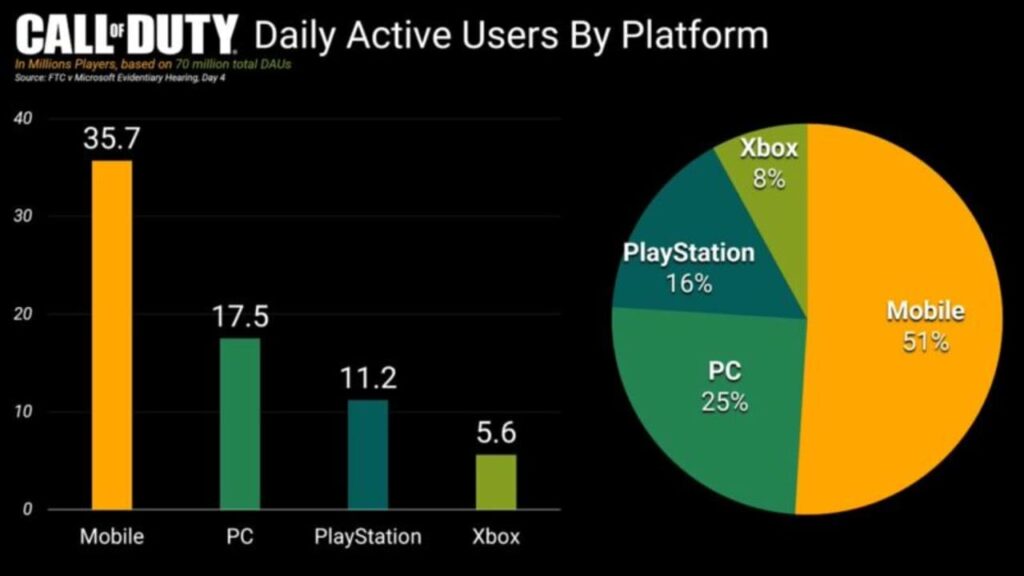
Thanks to the testimony of Bobby Kotick, CEO of Activision Blizzard, in the FTC trial against Microsoft regarding the purchase of their company, he has provided data, among many other things, about the platforms where Call of Duty is predominantly played. Surprisingly, it is neither PlayStation nor PC. It is mobile devices.

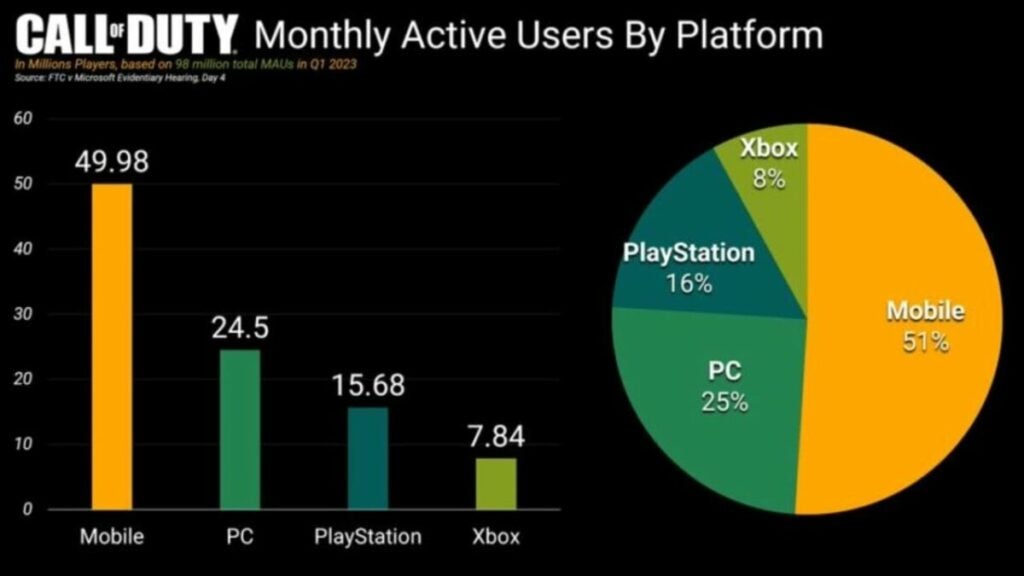
According to the information provided, mobile platforms have the highest number of daily active users for Call of Duty games. With an average of 35.7 million players, the franchise has more users on mobile platforms than all other platforms combined, with 17.5 million on PC, 11.2 million on PlayStation, and 5.6 million on Xbox. This trend is consistent when looking at the monthly active user figures as well. With nearly fifty million monthly active users on mobile devices, reaching 49.98 million, PC falls behind with 24.5 million, PlayStation with 15.68 million, and Xbox with 7.84 million. This explains why Microsoft offered favorable conditions to Sony to acquire Call of Duty: because their largest player base is on mobile devices.

Indeed, this information should be taken with caution. While it is true that it comes from Bobby Kotick and was given under oath in a trial, we do not know to what extent these figures are real or accurate. What we do know is that it gives us a much clearer and more precise picture of what is happening behind the scenes with Call of Duty. While we may have thought that it was primarily a game played on PC, it seems that its main platform all this time has been tablets and mobile phones.

Some of the links added in the article are part of affiliate campaigns and may represent benefits for Softonic.

Bobby Kotick thinks AI can resurrect Guitar Hero, the rest of the world can’t

Bobby Kotick sees a future in AIs to do what he believes humans can’t do, but the public, industry, and lawmakers see it differently.

The video game is full of memorable villains. Bowser, Ganondorf, Sephirot, Doctor Eggmann or Albert Wesker are names that quickly come to mind to anyone who wants to think of the worst of the worst. Of people who have made our lives miserable, brightening countless afternoons in the process. Unfortunately, in the video game industry there are also villains, much more real, who seem dedicated only to being a caricature of a human being. Among them, our favorite is probably Bobby Kotick.

Xbox Game Pass DOWNLOAD

Born in 1963 in the United States -we cannot give more biographical data because, in fact, he has never wanted to disclose them-, he is the CEO of Activision Blizzard since 2008, and will remain so at least until the purchase of the company by Microsoft is completed. Among many other things, Bobby Kotick is a person who has been accused and investigated for sexual harassment, since under his leadership the working environment of the company has become so toxic that a woman was harassed until she was driven to suicide, and his public statements are so controversial that, not infrequently, his words have significantly lowered the value of the company in the stock market. Bobby Kotick generates fewer problems the less he talks and the more he delegates, but to the frustration of people in his company, he has decided to talk about one of the most fashionable topics today: the use of AI.

During a conference last week Kotick has stated that he thinks AI can play a big role in video game development. Stating that AI “started with the idea of beating games, whether it was Warcraft, or Dota, or Starcraft, or Go, or chess,” he said that it has now evolved into something beyond that, into language learning models, but that it has always been a technology closely associated with video games. Thus, he believes that the use of AI “will allow us to do things that we have not been able to do in a long time”. And what’s his example? Resurrecting the Guitar Hero franchise.

Exactly how he would do that is something he hasn’t explained in terms intelligible to anyone other than Bobby Kotick. Claiming that “I’ve always had an idea of what a new Guitar Hero product could be” thanks to AIs, everything he’s said about it is a concatenation of sentences that barely make any sense on their own, much less when they try to conjure up some kind of idea. If we have to guess what he might have in mind, we can assume he means that the AI could create inputs from any song players input, without the need for programmers to create the patterns for each particular track, but since he hasn’t clarified anything at all, we don’t know what exactly he’s referring to.

What we do know is that Blizzard has patented a technology that would serve for an AI to create visual content by feeding in designs created by the company’s artists. Something that some former employees of the company have harshly criticized and that Blizzard’s own president has defended, arguing that it will be used to allow artists to focus exclusively on the valuable tasks of their production. But the problem is the same as always. If technology allows them to replace their employees, what prevents them from doing so?

If China serves as an example, its own customers. Gamers. Because recently, some of the world’s largest video game companies such as Tencent, NetEase and miHoYo decided to try to streamline their production process by using AI-generated art in their video games. This has led to fierce criticism from Chinese gamers, criticizing these publishers for creating “digital carcasses”, even leading the Chinese government to consider creating a new law requiring companies to specify whether any kind of AI has been created to create their content. Something that could deal a severe blow to anyone wanting to use AI-generated content, given the stiff opposition it generates among the public.

That’s why Bobby Kotick can play innocent and hide behind Mike Ybarra, but the reality is that it’s hard not to see that behind his passionate, if rather incoherent, defense of AIs is business as usual: a way to generate more money at the expense of his employees and consumers. That’s why we can only define him as a villain. Even as our favorite villain. Because no other villain is so transparently diabolical in the video game industry. Nor does anyone seem to have it so easy to get away with it as Bobby Kotick.

Some of the links added in the article are part of affiliate campaigns and may represent benefits for Softonic.