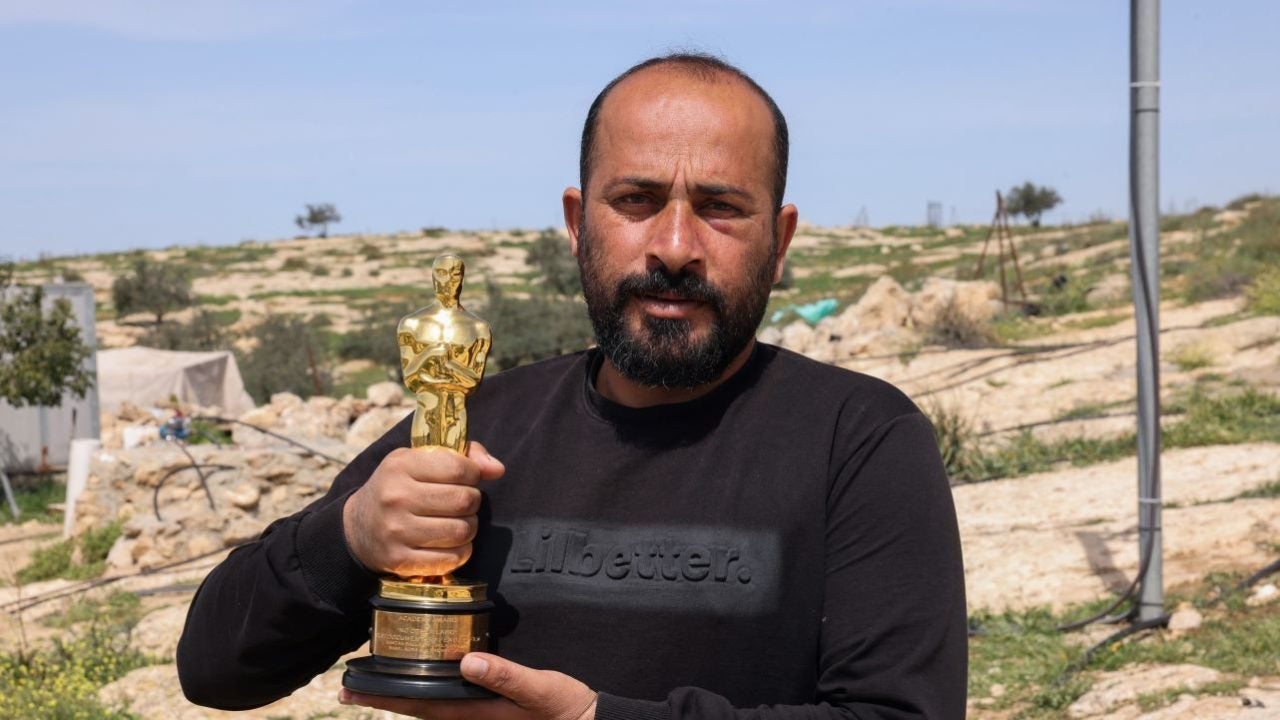
Hamdan Ballal, the co-director of the film No Other Land, was attacked in his home along with his family, less than a year after being assaulted by a group of Israeli settlers. This new attack has raised concern and controversy, focusing attention on the safety of artists in conflict areas and the possibility that violence could threaten freedom of expression in the film industry. From the river to the sea Ballal, an Oscar-winning director, is recognized not only for his work on No Other Land, but also for his […]
Hamdan Ballal, the co-director of the film No Other Land, was attacked in his home along with his family, less than a year after being assaulted by a group of Israeli settlers.
This new attack has raised concerns and controversy, focusing attention on the safety of artists in conflict areas and the possibility that violence could threaten freedom of expression in the film industry.
From the river to the sea
Ballal, an Oscar-winning director, is recognized not only for his work in No Other Land but also for his commitment to representing critical issues in his films. The work, which addresses complex situations in its context, has become a benchmark in contemporary cinema, highlighting the perspective of communities affected by the conflict.
In a statement shared through social media on both the official account of the film and on the page of its co-director Basel Adra, information about the attack was reported.
Although the exact details of the incident are scarce, the seriousness of the situation has sparked a debate about the climate of insecurity faced by creatives in areas of tension. There are concerns that these events may have repercussions on public perception regarding the safety and well-being of artists addressing sensitive topics.
The attack on Ballal is a disturbing reminder of the challenges filmmakers face in contexts of violence and injustice. Analysts warn that violence against cultural figures can silence important voices and hinder the production of meaningful works that critique contemporary social and political situations.
In this context, the international artistic community has expressed its solidarity with Ballal and his family, emphasizing the importance of protecting artistic freedom everywhere.
The Israeli police recently shut down a screening of the film Palestine 36, which has been selected as the Palestinian entry for the 2026 Oscars. The incident took place at the Yabous Cultural Center and Cinematheque, a venue considered essential for the dissemination of Palestinian cinema in Jerusalem. Annemarie Jacir, the film’s director, described the closure of the screening as a violation of freedom of expression. “We forbid you from seeing the truth.” According to Jacir, Israeli police officers interrupted the activity at the cultural center, which has served as a fundamental space for showcasing works that […]
The Israeli police recently shut down a screening of the film Palestine 36, which has been selected as the Palestinian entry for the 2026 Oscars. The incident took place at the Yabous Cultural Center and Cinematheque, a venue considered essential for the dissemination of Palestinian cinema in Jerusalem. Annemarie Jacir, the film’s director, described the closure of the screening as a violation of freedom of expression.
We forbid you to see the truth
According to Jacir, Israeli police officers interrupted the activity at the cultural center, which has served as a fundamental space to showcase works that represent the Palestinian narrative. In a statement sent to Deadline, Jacir expressed her deep concern about the assault on artistic freedom and censorship, highlighting that such actions impact not only film production but also the rights of artists and the public to access diverse voices and perspectives.
The closure of Palestine 36 occurs in a context of constant tensions between Israeli forces and the Palestinian community, especially regarding cultural expression. The situation has generated reactions both locally and internationally, with calls for the right to free expression in all its forms to be respected. Meanwhile, Jacir continues to advocate for Palestinian cinema to receive the visibility it deserves, arguing that creative voices are essential to connect with and understand the complexity of the conflict.
Critics note that this incident highlights a pattern of censorship facing Palestinian art, raising questions about the future of freedom of expression in the region. As the international community closely follows these events, many are wondering if there will be additional measures to protect artists’ rights to express their visions without fear of reprisals.
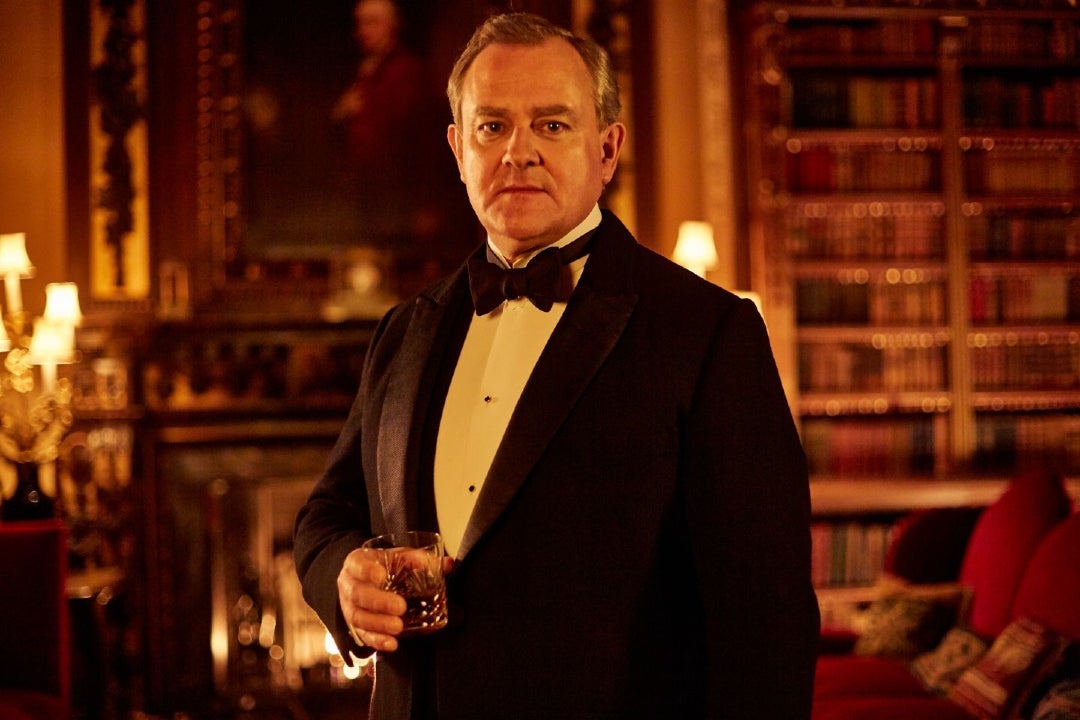
Hugh Bonneville, a recognized actor for his portrayal of Lord Grantham in the acclaimed series Downton Abbey, used his appearance on the red carpet at the event Downton Abbey: The Grand Finale to make an appeal to the international community about the current situation in Gaza. In an unexpected moment, Bonneville shifted the focus from promoting the series to a politically significant issue. An explicitly pro-Palestinian stance During the interview with an ITV reporter, Bonneville was asked about the closure of the Downton saga, and instead of focusing on the event, he chose to look directly […]
Hugh Bonneville, recognized actor for his portrayal of Lord Grantham in the acclaimed series Downton Abbey, used his appearance on the red carpet at the Downton Abbey: The Grand Finale event to make an appeal to the international community about the current situation in Gaza. In an unexpected moment, Bonneville shifted the focus from promoting the series to a politically significant issue.
An explicitly pro-Palestinian position
During the interview with an ITV reporter, Bonneville was asked about the closure of the Downton saga, and instead of focusing on the event, he chose to look directly at the camera and express his concern about the conflict in Gaza. His intervention was clear: he made an urgent call for international action, asking the global community to intervene to help mitigate the crisis affecting the region and its inhabitants.
Bonneville’s decision to address this topic during an event dedicated to his artistic career was significant, showing his commitment not only to his work in acting but also to issues that affect the current world. Through this statement, Bonneville joins other artists who have used their platform to raise awareness about critical situations.
The actor is not unfamiliar with politics; his intervention resonates at a time when many figures in entertainment feel the responsibility to use their voice to advocate for change and support victims in humanitarian crises. This act by Bonneville could add pressure on other members of the artistic community to speak out on social and political issues in the future.
Some analysts suggest that with gestures like Bonneville’s, the entertainment sector could play a more active role in raising awareness of global issues. However, the audience’s and media’s response to this intervention remains to be seen.
The Olympics are about brotherhood, human achievement, and celebrating the will of the human spirit. Unfortunately, it is also the perfect occasion to perpetrate notorious acts of terrorism. With basically all the countries of the world represented there, with the best athletes in the world gathered in one place, there is no moment when more people will be looking at a single point at a given time than during the Olympics. And everyone knows that. A questionable massacre This became evident during the Munich massacre, during the 1982 Olympic Games. The terrorist group […]
The Olympics are about brotherhood, human achievement, and celebrating the will of the human spirit. Unfortunately, it is also the perfect occasion to perpetrate notorious acts of terrorism. With basically every country in the world represented there, and the best athletes in the world gathered in one place, there is no moment when more people will be looking at a single point at a given time than during the Olympics. And everyone knows that.
A Questionable Massacre
This became evident during the Munich massacre, during the 1982 Olympic Games. The terrorist group Black September, a faction of the Palestine Liberation Organization, kidnapped several Israeli athletes demanding the release of 234 Palestinian prisoners in Israeli jails, as well as the founders of the Red Army Faction, Andreas Baader and Ulrike Meinhof, imprisoned in West Germany.
The rescue attempt was an absolute disaster. With eleven athletes and coaches dead, a fallen police officer, and five of the eight members of Black September killed, the police operation was an absolute disaster. And the reprisals from the state of Israel, in their own way, were not much better, organizing Operation Spring of Youth and Operation God’s Wrath, where hundreds of Palestinians died.
This context is important because it arrives on streaming September 5. A film that narrates these events, choosing a very particular point of view: that of the ABC Sports news team that decided to cover the kidnapping and the resulting police operation minute by minute.
Using many archival images from ABC itself, the film contemplates the limits of journalistic information. And it does so with actors in a state of grace. Peter Sarsgaard, John Magaro, Ben Chaplin, and Leonie Benesch are some of those involved in the film, giving a more than evident weight to a movie very aware of the gravity of the events. And they are walking in the footsteps of a previous film: Munich, by Steven Spielberg, released in 2005.
The difference between both films is that, while Spielberg was more interested in the political side of it, Tim Fehlbaum, director of September 5, is more interested in the journalistic aspect. Without judging or wanting to weigh in on the motivations of the terrorists or the state of Israel, it invites us to think about what the role of journalism should be in these dramatic moments of history.
The Perspective of Journalism
Considering how the situation in the Gaza Strip has worsened and the relations between Palestine and Israel, the film is not only more relevant now than at the time of its release on August 29, but it also serves to reflect on the role of journalism regarding the current conflict. If there is really good work being done in how the acts of terrorism from Palestine are covered, but also the reprisals, in the form of state terrorism and, probably, genocide in the face of history, of the nation of Israel.
September 5 is a tough but tremendously interesting film that is now available for streaming on Paramount. And you shouldn’t miss the opportunity because few films have managed to better capture the underlying conflict in all journalistic work between the duty to inform and the awareness that, perhaps, what is being done is part of the problem.
Paramount+ is the app for the streaming platform of the same name from ViacomCBS. It offers hundreds of episodes of TV series, shows, and movies of all genres.
The Israeli army has begun using Microsoft’s artificial intelligence technology to analyze intercepted data and communications, which has influenced its military operations in Gaza. This use of advanced tools has been the subject of criticism and protests, both locally and internationally, as it is associated with surveillance and the execution of targeted attacks. By using AI, the army can analyze large volumes of information to detect suspicious behaviors and enemy movements, according to a report by Associated Press. Microsoft is the technology company most committed to the Israeli army […]
The Israeli army has begun using Microsoft’s artificial intelligence technology to analyze intercepted data and communications, which has influenced its military operations in Gaza. This use of advanced tools has been the subject of criticism and protests, both locally and internationally, as it is associated with surveillance and the execution of targeted attacks. By using AI, the army can analyze large volumes of information to detect suspicious behaviors and enemy movements, according to a report by Associated Press.
Microsoft is the technology company most committed to the Israeli army
The controversy has led several Microsoft employees to speak out against the company’s collaboration with the Israeli military, resulting in the dismissal of some of them. In response to these actions, the Boycott, Divestment and Sanctions movement has intensified its calls to boycott Microsoft products and for institutions to divest from the company, accusing it of being “perhaps the most complicit technology company in Israel’s illegal apartheid regime and the ongoing genocide against 2.3 million Palestinians”.
Within the world of video games, the team behind Tenderfoot Tactics has echoed this discontent by withdrawing their game from sale on Xbox as a gesture of support for the boycott led by Palestine. Their designer, Badru, communicated this decision on Bluesky, stating that the team stands in solidarity with the BDS campaign. This event marks a notable precedent in the industry, being the first studio to withdraw a game from a Microsoft platform for political reasons, although it is expected not to be the last.
The BDS campaign urges everyone to avoid Microsoft products whenever possible, ranging from its video game services to other consumer products. The current situation regarding Microsoft’s technology and its relationship with the Israeli military continues to generate debate and could have repercussions for the company’s future and its public image.
Sometimes, the best things come from where you least expect them. In this case, it’s time to talk about the series The 11th Body, which has captured the attention of the public in Israel and is now coming to streaming, where fans of the police thriller genre can enjoy its seven episodes. The plot follows detective Iris Abramov, played by Magi Azarzar, who investigates the appearance of a body in a laboratory at the Haifa University of Technology. During her investigation, she finds a second body related to a missing medical student, which further complicates her […]
Sometimes, the best things come from where you least expect them. In this case, it’s time to talk about the series The 11th Corpse, which has captured the attention of the public in Israel and is now coming to streaming, where fans of the police thriller genre can enjoy its seven episodes. The plot follows detective Iris Abramov, played by Magi Azarzar, who investigates the appearance of a corpse in a laboratory at the Haifa University of Technology. During her investigation, she finds a second body related to a missing medical student, further complicating her already challenging personal life, marked by a complicated divorce and caring for her father with dementia.
Created by Yaniv Iczkovits, an author known for his critical stance towards Netanyahu’s government and operations in Palestine, the series not only captivates with its intriguing narrative but also raises a debate about the morality of artists in the performance of their work. Recently, a significant number of users on various social networks have started to boycott the series, claiming disagreement with the author’s political views, which raises questions about the separation between the work and the creator’s ideology.
Despite the controversies, The Cadaver Number 11 has achieved remarkable success in its country of origin, standing out for the mix of genres that combines thriller with a human narrative focused on the emotional background of its protagonist. The series promises to captivate not only mystery lovers but also those interested in complex stories with multi-layered characters.
With its arrival on the international market, The Eleventh Corpse presents itself as an essential option for those seeking an engrossing plot in series format. From its focus on investigation to Iris’s personal struggles, the production offers a rich narrative experience that will not leave viewers indifferent.