Bluesky presenta tres niveles de verificación de cuentas

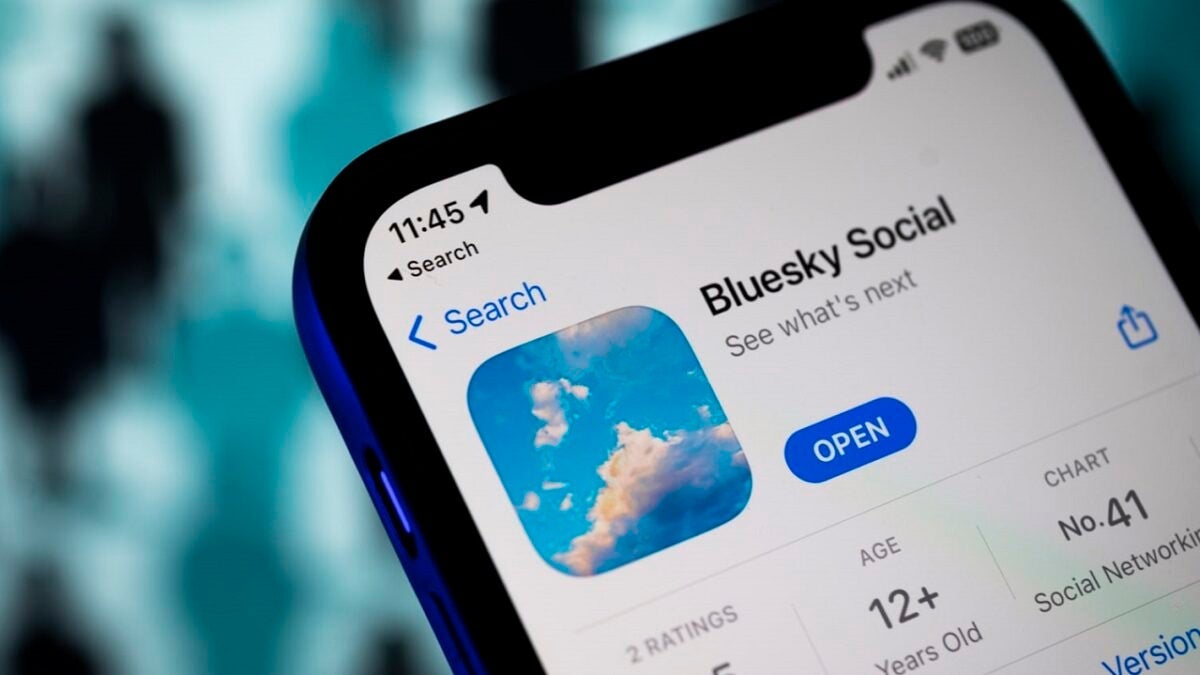
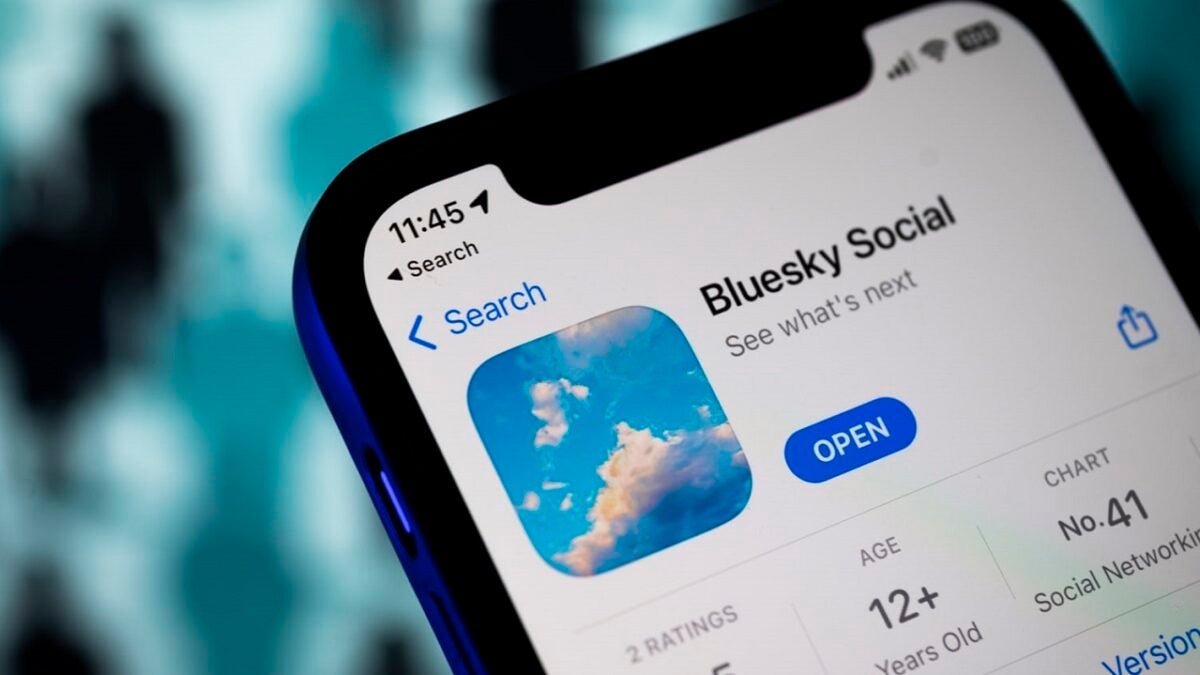
Bluesky, la red social emergente y descentralizada, ha lanzado un nuevo sistema oficial de verificación de cuentas, que recuerda al icónico sistema de verificación de Twitter.

Esta decisión surge como respuesta a un creciente problema de suplantación de identidad en la plataforma.

Hasta el 22 de abril de 2025, no existía un método respaldado por Bluesky para verificar cuentas, lo que generaba preocupaciones sobre la autenticidad de los perfiles.

Bluesky lanza un sistema oficial de verificación de cuentas para combatir el robo de identidad

El nuevo sistema de verificación de Bluesky establece tres niveles de identidad: cuenta básica, Verificador de Confianza y Cuenta Verificada. Los “Verificadores de Confianza” son cuentas que, tras ser verificadas por Bluesky, tienen la capacidad de validar otras cuentas. Por ejemplo, el perfil de Bluesky del New York Times puede verificar las cuentas de sus periodistas, similar a prácticas pasadas en Twitter.

Para conseguir la verificación, Bluesky está trabajando en verificar cuentas “auténticas y notables”, las cuales serán identificadas con un símbolo distintivo: un check blanco en un círculo azul. Los verificados tendrán un check azul con contornos que denote su estatus como Verificadores de Confianza. A través de un simple toque en el estado verificado, los usuarios podrán ver quién concedió la verificación.

Aunque Bluesky ha simplificado el proceso para conectar un dominio a una cuenta, todavía no admite solicitudes de verificación de manera activa. Sin embargo, la plataforma ha afirmado que planea permitir futuras solicitudes a medida que el sistema se establezca y estabilice. Esto se produce en contraposición a otras plataformas, como Threads, que adoptan directamente las verificaciones de Instagram, propiedad de Meta.

La evolución del sistema de verificación de Bluesky será clave para su crecimiento y para abordar preocupaciones sobre la autenticidad en la era digital. Los observadores se preguntan qué requisitos se establecerán en el futuro y si se requerirá alguna forma de identificación para el proceso.

Bluesky presenta tres niveles de verificación de cuentas

Bluesky, la red social emergente y descentralizada, ha lanzado un nuevo sistema oficial de verificación de cuentas, que recuerda al icónico sistema de verificación de Twitter.

Esta decisión surge como respuesta a un creciente problema de suplantación de identidad en la plataforma.

Hasta el 22 de abril de 2025, no existía un método respaldado por Bluesky para verificar cuentas, lo que generaba preocupaciones sobre la autenticidad de los perfiles.

Bluesky lanza un sistema oficial de verificación de cuentas para combatir el robo de identidad

El nuevo sistema de verificación de Bluesky establece tres niveles de identidad: cuenta básica, Verificador de Confianza y Cuenta Verificada. Los “Verificadores de Confianza” son cuentas que, tras ser verificadas por Bluesky, tienen la capacidad de validar otras cuentas. Por ejemplo, el perfil de Bluesky del New York Times puede verificar las cuentas de sus periodistas, similar a prácticas pasadas en Twitter.

Para conseguir la verificación, Bluesky está trabajando en verificar cuentas “auténticas y notables”, las cuales serán identificadas con un símbolo distintivo: un check blanco en un círculo azul. Los verificados tendrán un check azul con contornos que denote su estatus como Verificadores de Confianza. A través de un simple toque en el estado verificado, los usuarios podrán ver quién concedió la verificación.

Aunque Bluesky ha simplificado el proceso para conectar un dominio a una cuenta, todavía no admite solicitudes de verificación de manera activa. Sin embargo, la plataforma ha afirmado que planea permitir futuras solicitudes a medida que el sistema se establezca y estabilice. Esto se produce en contraposición a otras plataformas, como Threads, que adoptan directamente las verificaciones de Instagram, propiedad de Meta.

La evolución del sistema de verificación de Bluesky será clave para su crecimiento y para abordar preocupaciones sobre la autenticidad en la era digital. Los observadores se preguntan qué requisitos se establecerán en el futuro y si se requerirá alguna forma de identificación para el proceso.

Bluesky presents three levels of account verification

Bluesky, the emerging decentralized social network, has launched a new official account verification system, reminiscent of Twitter’s iconic verification system. This decision comes in response to a growing identity theft problem on the platform. Until April 22, 2025, there was no Bluesky-backed method to verify accounts, raising concerns about the authenticity of profiles. Bluesky launches an official account verification system to combat identity theft. The new Bluesky verification system establishes three levels of identity: basic account, Verifier of […]

Bluesky, the new decentralized social network, has launched a new official account verification system, reminiscent of Twitter’s iconic verification system.

This decision arises in response to a growing problem of identity theft on the platform.

Until April 22, 2025, there was no method backed by Bluesky to verify accounts, raising concerns about the authenticity of profiles.

Bluesky launches an official account verification system to combat identity theft

The new verification system of Bluesky establishes three levels of identity: basic account, Trust Verifier, and Verified Account. The “Trust Verifiers” are accounts that, after being verified by Bluesky, have the ability to validate other accounts. For example, the Bluesky profile of the New York Times can verify the accounts of its journalists, similar to past practices on Twitter.

To achieve verification, Bluesky is working on verifying “authentic and notable” accounts, which will be identified with a distinctive symbol: a white mark in a blue circle. Verified accounts will have a blue mark with outlines denoting their status as Trust Verifiers. With a simple tap on the verified status, users will be able to see who granted the verification.

Although Bluesky has simplified the process of connecting a domain to an account, it still does not actively support verification requests. However, the platform has stated that it plans to allow future requests as the system is established and stabilized. This contrasts with other platforms, such as Threads, which directly adopt verifications from Instagram, owned by Meta.

The evolution of the verification system of Bluesky will be key to its growth and to address concerns about authenticity in the digital age. Observers are wondering what requirements will be established in the future and whether some form of identification will be required for the process.

Before Bluesky, there was already a social network that tried to compete directly with Twitter… and it sank: the sad story of Pebble

When something is successful, many rush to copy it in the hope of also achieving success. Sometimes it works out well, like that time Instagram copied Snapchat to create its Stories, but most of the time it goes wrong, like that Facebook copy manufactured by Google called Google+ that no one ended up being too interested in. And what about Twitter? Deep down, it’s the simplest social network of all: you only need text, images, and a couple of functions. It’s easy to copy, but… Why do we need another Twitter if we already have one […]

When something is successful, many rush to copy it in hopes of achieving success as well. Sometimes it works out, like that time Instagram copied Snapchat to create its Stories, but most of the time it doesn’t, like that Facebook copy manufactured by Google called Google+ that no one was really interested in. And what about Twitter? At its core, it’s the simplest social network of all: it only requires text, images, and a couple of functions. It’s easy to copy, but… Why do we need another Twitter if we already have one and don’t like it too much?

Twitter DOWNLOAD

Pebble goes bam-bam

Although now it seems that we have all packed our virtual bags to move to Bluesky, in November 2022 this exodus was not yet so clear. Clearly, something had to be done after Elon Musk’s arrival to power at the social network, but no one was quite sure what. Move to Mastodon? To Threads? To Bluesky? What was the right path? There are very few breadcrumbs, and they have to be shared among several, after all.

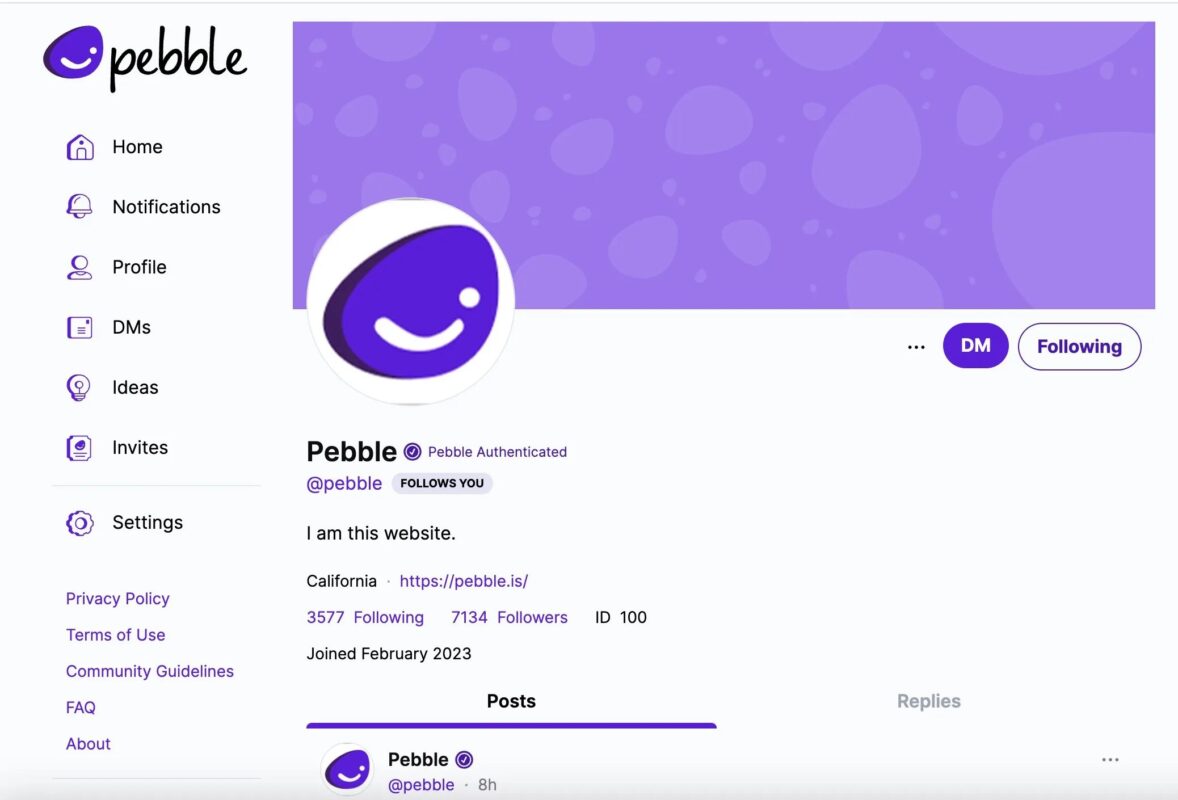
As soon as he arrived at Twitter, Musk decided to lay off a large part of the staff, who suddenly found themselves out of work. This was the case for Sarah Oh and Gabor Cselle, who decided to do what they did best: create Twitter 2. Or, to summarize, T2, which to avoid litigation evolved into Pebble some time later. Pebble was an alternative to Twitter that allowed, like the former, 280 characters, with the intention of being as similar to the social network they loved as possible, but with more security and moderation.

After several tests since they founded the company in November 2022, Pebble was finally launched on April 25, 2023, with an invitation system that initially allowed only 1000 users to post, who had to invite five other friends until reaching 6000, and then continue expanding. All this without an app, just through the web. And if you’re wondering if it was a success, consider whether people are moving to Pebble or other places.

Just seven months after opening, Pebble closed its doors: only 3000 people used it daily, and with that attendance, it simply wasn’t viable. The website became an instance of Mastodon and that’s where the adventure ended. Another grain in this vast sand that is the Internet, a footnote in history that at least dared to stand up. Hey, who knows? Maybe with a little more advertising, we would be moving to Pebble instead of Bluesky…

Twitter DOWNLOAD

Has the end of Twitter arrived or is it just a mirage? We tell you why everyone is moving to Bluesky

It has been a daily drip. When Twitter was bought by Elon Musk and started making erratic decisions, such as allowing people to see messages from those they have blocked or letting the social network fill with tension and far-right messages, many ended up leaving for a fresh start, either to a less relevant alternative (Mastodon, Threads, etc.) or to live their online life away from the social network. For over a year, we have lived with the uncertainty of what would be Twitter’s successor, but only now, when it has finally […]

It has been a daily drip. When Twitter was bought by Elon Musk and started making erratic decisions, such as allowing people to see messages from those they’ve blocked or allowing his social network to be filled with tension and far-right messages, many ended up leaving for good, either to a less relevant alternative (Mastodon, Threads, etc.) or to live their online life away from the social network. For over a year, we have lived with the uncertainty of what would be Twitter’s successor, but only now, when the massive exodus has finally arrived, have we known what the solution was.

Twitter DOWNLOAD

Blue like the sky

What worked on Twitter in its early days wasn’t the platform itself, but the people you encountered on it. When the worst you could find was a troll or someone bored who wanted to argue with you. When bad people were banned and hateful behavior wasn’t allowed. When it was a playground for creativity, humor, and camaraderie. Sometime later, it has turned into Mordor, a place where the people you didn’t want to enter have done so, and their greatest pleasure is to annoy you. You, specifically.

Long-time Twitter users felt like they were in a prison that they stayed in because there was no real alternative: after all, none of the other destinations had enough people to create a real community. However, after Donald Trump’s success in the elections, with Elon Musk as his second in command, more progressive users have decided to seek an island where they can be safe on Bluesky, the platform created by Jack Dorsey after leaving Twitter, which is basically like an early version of that social network.

Videos can only be one minute long, gifs have pixels, there are no polls, and you can’t attach photos in direct messages, but it has something that goes completely against the current direction of Twitter: you can block entire lists of people. In just two clicks, you can ensure that you won’t read anything that goes against your ideals and that no one will come to your comments to stir things up. Is it an echo chamber? Yes. Of course. After what we’ve been experiencing since 2020, it’s exactly what we need. A little bit of peace. There may be fewer people, but it’s growing by leaps and bounds… and it’s noticeable in the interaction.

Fewer people, more audience

The Twitter algorithm is so damaged that currently, by posting the same message, you get more views on Bluesky with a quarter of the followers. In other words: it’s worthless to have tens of thousands of followers if the interaction is null because the social network decides to hide your messages or show them only to those who oppose you to encourage confrontation. And a large part of the people have already realized this: Bluesky users, who in July were close to six million, now exceed 18 million, increasing at a rate of one million per day.

In fact, it is the most downloaded app in the App Stores, and we can all see in our Twitter follower count that it is causing real damage to the other social network, which is gradually declining, almost dripping, to a result that the owner of SpaceX doesn’t care about at this point. After all, he already has what he wanted, which was a position in politics. The natural result is what we are all sensing: Bluesky and Twitter will be separated by political affiliation, creating respective echo chambers. Except for a few brave souls shouting into the void and other successful accounts that don’t want to rid themselves of their ego so quickly, everything seems to indicate that we will have two powerful social networks, with Threads as the haven of Stephen King and Instagram users.

And yes, it’s a hassle. Of course, it’s a hassle. Starting from scratch is not something anyone enjoys, but there are tools and extensions that make it easy to find your friends and rebuild the community from scratch. It may take time to reach the numbers you once had, but you will gain something much better than that: peace of mind. Knowing that there are no bots, cryptocurrency ads, or people using your face to discredit you. That you won’t lose your job because of what a name followed by numbers, which is clearly a multi-account, says.

At the moment, Bluesky is in its early stages, and everyone is treating each other with the expected (and expectable) cordiality. For now, it hasn’t reached its user limit, and beyond the server issues, it should prepare to welcome the 20 millionth Twitter user. Considering that Twitter has 586 million active users, it still has a long way to go, but no one believed it would get this far. Who knows, it might just remain a niche social network, but it’s likely to grow, even if only due to the bandwagon effect. Because entering like a bull in a china shop has its consequences. And they are not positive.

Twitter DOWNLOAD