Martin Scorsese, one of the legends of film history, has announced his next project: a film adaptation of the horror novel What Happens at Night, written by Peter Cameron. This movie, which promises to maintain the unsettling atmosphere of the book, will see the collaboration of two major Hollywood stars, Leonardo DiCaprio and Jennifer Lawrence, who will bring their undeniable talent to the story. A director who never disappoints The narrative of What Happens at Night addresses themes of mystery and suspense, characteristics that are a hallmark of Scorsese’s work. The combination of his direction and the adapted script […]
Martin Scorsese, one of the legends of film history, has announced his next project: a film adaptation of the horror novel What Happens at Night, written by Peter Cameron. This movie, which promises to maintain the unsettling atmosphere of the book, will see the collaboration of two major Hollywood stars, Leonardo DiCaprio and Jennifer Lawrence, who will bring their undeniable talent to the story.
A director who never disappoints
The narrative of What Happens at Night addresses themes of mystery and suspense, characteristics that are a hallmark of Scorsese’s work. The combination of his direction and the adapted script by Cameron could result in a piece that captivates both horror genre fans and followers of auteur cinema. Scorsese has a well-established reputation for his ability to tell complex stories, and this project is certainly expected to live up to that.
Regarding production, Apple Original Films is in talks to finance and produce the film along with Studiocanal, the company that acquired the rights to the novel in 2023. This partnership suggests a significant commitment from Apple to create quality content, especially at a time when competition in the streaming platform space is fierce.
The participation of DiCaprio and Lawrence, two of the most renowned and successful actors today, adds an additional appeal to this project. Both actors have demonstrated their ability to handle complex roles, which raises expectations about how they will portray the characters in this adaptation. With Scorsese at the helm and a top-notch cast, What Happens at Night could become one of the most anticipated films in the coming years.
Apple has announced the release date and has offered a first look at Mr. Scorsese, a five-part documentary directed by Rebecca Miller. The series will launch on October 17 and promises to provide unrestricted access to the private archives of acclaimed director Martin Scorsese, a unique opportunity for film enthusiasts and his work. We love you, Martin Mr. Scorsese will allow viewers to delve into the life and career of one of the most influential filmmakers in history, thanks to an intimate perspective that can only be obtained through his […]
Apple has announced the release date and has offered a first look at Mr. Scorsese, a five-part documentary directed by Rebecca Miller. The series will be released on October 17 and promises to provide unrestricted access to the private archives of acclaimed director Martin Scorsese, a unique opportunity for film enthusiasts and his work.
We love you, Martin
Mr. Scorsese will allow viewers to delve into the life and career of one of the most influential filmmakers in history, thanks to an intimate perspective that can only be obtained through his personal archives. The documentary includes conversations with Scorsese himself, as well as interviews with iconic figures in cinema, such as Robert De Niro and Daniel Day-Lewis, who have worked on several of his acclaimed films, in addition to the participation of other icons like Leonardo DiCaprio, Mick Jagger, Robbie Robertson, and Thelma Schoonmaker.
This focus on the personal and professional history of the director seems to be designed not only to entertain, but also to educate new generations about his impact on contemporary cinema. The presence of personalities who have closely collaborated with him suggests a deep exploration of his influences, creative processes, and the evolution of his cinematic style over the years.
With a combination of archival material and testimonies from those who have worked alongside him, Mr. Scorsese will offer viewers a unique and unprecedented look at the career of this master of cinema. The documentary is expected to attract both veteran cinephiles and those who are becoming familiar with his work, highlighting his impact on the film world over the years.
You know him from Goodfellas, The Wolf of Wall Street, or Silence, but the Emmys have decided that he will not be nominated for his work behind the camera… but in front! Filmmaker Martin Scorsese has achieved a new milestone in his career by receiving his first Emmy nomination for a guest role in the series The Studio. This comedy, created by renowned writers and producers Evan Goldberg and Seth Rogen, explores the world of a fictional film studio and its clumsy new leader, offering a satire of modern entertainment. A theme for […]
You know him from Goodfellas, The Wolf of Wall Street, or Silence, but at the Emmys, they have decided that he will not be nominated for his work behind the camera… but in front of it! Filmmaker Martin Scorsese has achieved a new milestone in his career by receiving his first Emmy nomination for a guest role in the series The Studio. This comedy, created by renowned writers and producers Evan Goldberg and Seth Rogen, explores the world of a fictional film studio and its new clumsy leader, offering a satire of modern entertainment.
A topic to study
The nomination is due to a special performance by Scorsese in the pilot episode of the series, in which Goldberg and Rogen specifically wrote a scene for the director. The inclusion of a talent of his caliber in a comedy of this nature not only highlights his versatility as an actor but also the series’ ability to attract big names from the film industry.
The episode of The Studio reflects a characteristic style of humor from Rogen and Goldberg, with quick dialogues and absurd situations, making it an interesting project within the current comedy offerings. The portrayal of a film studio and its intricacies, along with eccentric characters, places the series in a privileged position among recent streaming content. As the Emmy Awards approach, the recognition of Scorsese highlights the relevance of his role in popular culture.
With this nomination, the director not only adds a new recognition to his prolific career, but also intensifies the debate about the intersection between cinema and television, highlighting how these two worlds can successfully merge. As the awards season progresses, ‘The Studio’ and its cast are expected to continue gaining attention in the media landscape.
The movie F1: The Movie has achieved notable box office success, generating $293 million in the first 10 days after its release. This impressive result has led the film to become one of Apple’s major cinematic productions, surpassing the total earnings of other prominent films, such as Martin Scorsese’s Killers of the Flower Moon, which grossed $158 million worldwide, and Ridley Scott’s Napoleon, which reached $221 million. A film that has dominated the box office and paves the way for Apple The strong performance of F1: The Movie reflects not only the interest […]
The movie F1: The Movie has achieved remarkable box office success, generating $293 million in the first 10 days after its release. This impressive result has led the film to become one of Apple’s major cinematic productions, surpassing the total earnings of other notable films, such as Martin Scorsese’s Killers of the Flower Moon, which grossed $158 million worldwide, and Ridley Scott’s Napoleon, which reached $221 million.
A movie that has dominated the box office and paves the way for Apple
The great performance of F1: The Movie reflects not only the interest in motorsport but also the growing impact of Apple in the film industry. With this movie, the company has secured a prominent place among the major Hollywood studios, expanding its portfolio of original content. Furthermore, this success can be seen as a positive response to the criticisms often directed at streaming platform productions, highlighting that they can also compete in traditional box office.
The movie has captured the audience’s attention with its combination of adrenaline, drama, and movie star, which may have influenced its rapid accumulation of revenue. The narrative centered around the exciting world of Formula 1 not only appeals to sports fans but also seeks to attract a broader audience, which in turn could open new opportunities for future productions related to sports and entertainment.
In a competitive environment where big movies fight for a space in the minds of the audience and in theaters, F1: The Movie firmly positions itself at the top, suggesting that Apple is ready to take on a more prominent role in the global entertainment offering. As the days go by, the expectation is that this production will continue to break records and challenge the figures of other major releases of the year.
Since I saw it, I only talk about The Studio. It is the best series of this year, no matter how much it is coffee for the most coffee lovers, and probably its best scene is in that moment with Martin Scorsese in the bar. If you know what I mean, you know. Oh, yeah. What we have learned now is that during filming, Scorsese showed a remarkable attitude of respect towards the creators, Seth Rogen and Evan Goldberg, avoiding excessive intervention in the shooting process. However, the director did not hesitate to share his opinion on the use of language […]
Since I saw it, I only talk about The Studio. It is the best series of this year, no matter how much it is coffee for the most coffee lovers, and probably its best scene is that moment with Martin Scorsese in the bar. If you know what I mean, you know. Oh, yeah. What we have learned now is that during filming, Scorsese showed a remarkable attitude of respect towards the creators, Seth Rogen and Evan Goldberg, avoiding excessive intervention in the shooting process. However, the director did not hesitate to share his opinion on the use of language in the series, suggesting that the creators were using too many swear words, despite being known for his own use of strong language in his films.
Oh, yeah!
The co-creators, Rogen and Goldberg, expressed their surprise and excitement at the iconic filmmaker’s participation in the project. “I had never met Martin Scorsese before,” Rogen commented. “We couldn’t believe he agreed to participate, but we worked hard to write dialogues that we hoped would be funny.” The series, which in its first season includes well-known stars like Charlize Theron, Paul Dano, and Steve Buscemi, is based on Rogen and Goldberg’s real experiences in the film industry, reflecting the challenges and absurdities that creators face in their work.
The Studio has received significant recognition by winning the award for innovative comedy series at the 2025 Gotham TV Awards, highlighting its success. Rogen revealed that the series is inspired by a real conversation he and Goldberg had with a studio executive, who expressed that his job was to “ruin” what he loved: cinema. This tragic yet inherently comedic context has become the core of The Studio’s narrative. The creators are excited about the audience’s response and the remarkable cameo by Scorsese in their innovative project. It’s no small feat.
The renowned director Martin Scorsese strongly opposed the development of a video game based on his iconic film Taxi Driver, which was presented at E3 in 2005. This project, considered an unauthorized sequel to the film, promised to offer a gameplay experience similar to the Grand Theft Auto series, allowing players to take on the role of Travis Bickle, the disturbed protagonist played by Robert De Niro. The idea was for players to freely navigate a recreated 1970s New York, working as taxi drivers while exploring the dark psyche of the character. Scorsese refused to […]
The renowned director Martin Scorsese strongly opposed the development of a video game based on his iconic film Taxi Driver, which was presented at E3 in 2005. This project, considered an unauthorized sequel to the film, promised to offer a gameplay experience similar to the Grand Theft Auto series, allowing players to take on the role of Travis Bickle, the disturbed protagonist played by Robert De Niro. The idea was for players to freely navigate a recreated 1970s New York, working as taxi drivers while exploring the dark psyche of the character.
Scorsese refused to allow the game to be produced
Despite having the initial approval from Sony Pictures and the vocal participation of De Niro, Scorsese managed to exert considerable influence to prevent the game’s progress, even though he officially had no rights over the project. According to statements from executive producer Dan Kitchen, the director used his prestige to pressure Sony, reminding them of the complications that could arise if they continued. This resulted in the abrupt cancellation of development, just weeks before its completion.
The development company Papaya Studios responded by filing a lawsuit against Majesco Entertainment for breach of contract, after having invested several million dollars in the production of the video game. Although other movie-based titles, such as The Godfather: The Game, found success in the market, Taxi Driver became a lost project in gaming history, leaving fans curious about what this adaptation could have been like.
Today, while some remember that era of GTA clones in gaming, the question remains of what a sequel to a classic could have been. Additionally, the possibility of a cinematic sequel to Taxi Driver has been discussed at times, although there have been no concrete advances so far.
Martin Scorsese, one of the most acclaimed filmmakers in the history of cinema, will be the star of a new five-part documentary series that will premiere on Apple TV+. This ambitious production aims to explore the life and career of the legendary director, who has left an indelible mark on the film industry over several decades. Beyond the Tik Toks with his daughter, the series will be directed by Rebecca Miller, known for her films such as Personal Velocity: Three Portraits and She Came To Me. Miller has proven to be a skilled storyteller and her collaboration […]
Martin Scorsese, one of the most acclaimed filmmakers in the history of cinema, will be the star of a new five-part documentary series set to premiere on Apple TV+. This ambitious production aims to explore the life and career of the legendary director, who has left an indelible mark on the film industry over several decades.
Beyond the Tik Toks with his daughter
The series will be directed by Rebecca Miller, known for her films such as Personal Velocity: Three Portraits and She Came To Me. Miller has proven to be a skilled storyteller, and her collaboration with Scorsese promises to provide a deep and personal look at the man behind some of the most iconic works in cinematography, including classics like Goodfellas and The Irishman.
Scorsese, for his part, is recognized not only for his work as a fiction director but also for his extensive work in the field of documentary. Throughout his career, he has directed more than a dozen documentaries, with acclaimed titles such as The Last Waltz and No Direction Home, which have been well received by both critics and audiences.
This new project on Apple TV+ seems to be a unique opportunity for Scorsese’s followers to get a closer look at his creative process, his influences, and reflections on cinema and contemporary culture. The series will be designed to appeal to both film enthusiasts and those looking to understand the complexities of the life of a renowned contemporary artist.
With Miller’s talent in direction and Scorsese’s charisma as the central figure, this production could become one of the most anticipated releases on Apple TV+. Although a specific release date has not yet been announced, expectations are high among movie fans and the director’s followers.
The highly anticipated second part of the docuseries Martin Scorsese Presents: The Saints will premiere on Fox Nation on April 4, coinciding with Holy Week. The release will take place throughout this holiday, promising to attract the attention of both film lovers and the religious. The more spiritual Scorsese With a focus on over 2,000 years of history, this series delves into the life and legacy of recognized religious figures, among which Saint Francis stands out. Martin Scorsese, acclaimed director and Oscar winner, takes on multiple roles in this project as host, […]
The highly anticipated second part of the docuseries Martin Scorsese Presents: The Saints will premiere on Fox Nation on April 4, coinciding with Holy Week. The release will take place throughout this holiday, which promises to attract the attention of both film lovers and those interested in religion.
The Most Spiritual Scorsese
With a focus on over 2,000 years of history, this series delves into the life and legacy of recognized religious figures, among which Saint Francis stands out. Martin Scorsese, acclaimed director and Oscar winner, takes on multiple roles in this project as host, narrator, and executive producer, bringing his expertise and cinematic vision to the historical narrative.
The first part of the docuseries received praise for its production and content, and with the return of this program, it is expected that Scorsese will continue to provide a unique perspective on spirituality and how holy figures have influenced the course of history. The combination of his narrative style and the seriousness of the subject promises an enriching experience for viewers.
In addition, Variety has revealed the first trailer for this second installment, fueling anticipation among fans of the series. It is expected that the docuseries will not only inform but also inspire viewers by addressing less explored aspects of religious history. The influence and relevance of these figures are timeless, allowing for meaningful dialogue in the current context.
With the return of The Saints at such a relevant time as Holy Week, the series could become a cultural and spiritual reference, fostering greater interest in the history of beliefs and their impact on contemporary society.
Quentin Tarantino has expressed his disillusionment with the future of cinema, sharing his perspective on the negative impact that streaming has had on theatrical releases. During a conversation at the Sundance Festival 2025, the iconic director mentioned that theatrical releases have become fleeting, with films now being overshadowed by their availability on streaming platforms within weeks. “I didn’t get into this for diminishing returns,” he stated. The COVID-19 pandemic and the recent WGA and SAG/AFTRA strikes have contributed to a bleak outlook for production and […]
Quentin Tarantino has expressed his disillusionment with the future of cinema, sharing his perspective on the negative impact that streaming has had on theatrical releases. During a conversation at the Sundance Festival 2025, the iconic director mentioned that theatrical releases have become fleeting, with films now being overshadowed by their availability on streaming platforms within weeks. “I didn’t get into this for diminishing returns,” he asserted.
The COVID-19 pandemic and the recent WGA and SAG/AFTRA strikes have contributed to a bleak landscape for the production and distribution of content in film and television. These circumstances have led to a contraction in the industry, affecting everyone from actors to catering companies and media covering entertainment.
Tarantino also announced that his next film, provisionally titled The Movie Critic, will be his last work on the big screen, which has sparked speculation about his legacy. Although it is rumored that Brad Pitt might star in the film as a film critic, no further concrete details about the project have been given.
Theater: the outlet for an unsatisfied genius
The director, who has mentioned that he feels satisfied with his career, addressed his growing interest in theater, describing it as “the last frontier.” Unlike making movies, Tarantino argues that theater offers a unique experience, as it captures the audience’s attention without the possibility of being recorded or shared.
While Tarantino shares a pessimistic view of the state of cinema, his contemporary Martin Scorsese has offered a contrasting perspective. Scorsese has criticized the current trend towards high-budget films, but he has also indicated that his narrative approach might differ from Tarantino’s. “We are built differently,” he noted, emphasizing that each director responds to the industry uniquely.
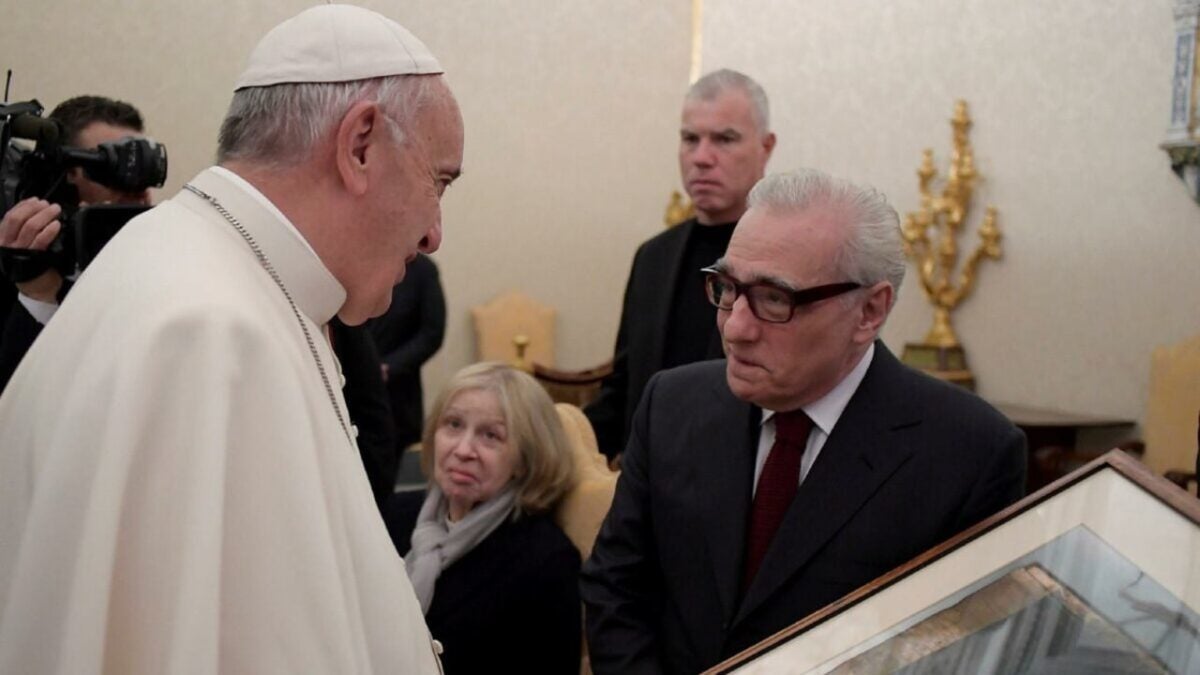
Scorsese has declared that, after a visit with Pope Francis, he wants to make a film about Jesus Christ. We explain why this makes sense.
Cannes has given us many memorable moments, but perhaps none as much as the press conference in which Martin Scorsese announced that his next film, following “Killers of the Flower Moon,” will be a movie about Jesus Christ. After a tour of Italy, which brought him and other artists of all kinds to a presentation before Pope Francis, he said that the work of artists “helps us see Jesus, healing our imagination from everything that obscures his face,” with the duty of artists being “not to explain the mystery of Christ, which is truly inexhaustible, but to make us touch it.” In relation to that, Scorsese has decided to embark on the task in the only way he knows how: through a film.
Many people may be surprised. Martin Scorsese and Jesus Christ may sound like two things that are not even close. Not for those who are not familiar with Scorsese’s work. The reality is that Christianity has always been very present in his work, being an explicit part of several of his films, as well as an implicit pivotal element in most of the others. Scorsese is a good Catholic boy, and that is evident in his movies. Something we are going to demonstrate in this article.
Guilt is a theme present in many of his films.
If there is a prominent theme in Martin Scorsese’s films, it is guilt. Many of his characters are driven by the guilt they feel for their actions, for the lives they have led, even when it is not explicitly stated within the film. This is something that is closely associated with Catholicism, which is not found in virtually any other religion and is not even as predominant or important in other branches of Christianity as it is in Catholicism.
That’s why films like Shutter Island, The Irishman, Mean Streets, or The Departed deal precisely with this. They portray individuals tormented by guilt, by what they have done, and by the awareness that they cannot redeem themselves in the eyes of God, the people they love, or even themselves. That’s why these films are so impactful. They resonate deeply with us, especially with the European audience. We recognize something very close to our culture that is often absent from Hollywood cinema but is very present in Martin Scorsese’s films.
Silence is a film that speaks explicitly about religious doubt
While it is true that guilt is the backbone of Catholicism, it is undeniable that the nervous system of that guilt is none other than doubt. While the Church conveniently likes to forget that doubt is not only not condemned but celebrated and an intrinsic part of the experience of communion with Christ, undoubtedly there would be no guilt to be relieved in the presence of God. Except when all we are left with in the face of the fact that Jesus Christ sacrificed himself for us is the silence of God.
Silence, a film released in 2006 and based on the novel of the same name by Japanese author Shūsaku Endō, starts from this premise. Jesus Christ died on the cross to save us, which means that God does not need to communicate with us because we are already saved. This means that no matter how much guilt we feel or how many doubts we have, God has already shown us that He is there and we are saved. In a nearly three-hour film about Jesuit missionaries in 16th-century Japan, where Christianity was forbidden, this leads to some of the most aesthetically spectacular shots and sequences in Scorsese’s career, and one of his films with a more implicit message. There is only silence. God will not respond to any prayers. You have to believe in salvation because Jesus Christ died on the cross for the sins you may have committed. Now you will have to live through life with that guilt and doubt.
It wouldn’t even be the first film he has made about Jesus Christ
In fact, guilt and doubt are a central part of a Martin Scorsese film that was extremely controversial and whose protagonist was none other than Jesus of Nazareth. Because The Last Temptation of Christ, a film that adapts the novel of the same name by Nikos Kazantzakis and whose screenplay was written by Paul Schrader – who, by the way, also has a marked obsession with Catholicism – is one of his most famous and controversial films. Particularly within the Catholic Church itself.
Not following the events narrated in the Gospels, but recreating what could be the last days of Jesus as he was tempted in multiple ways by Satan, the film tells us how Jesus was first human and then divine. That means that this is a Christ who errs, who feels guilt, and who, while he redeems himself and ends up on the cross, does so only after demonstrating that the process of accepting God must be conscious. There is no point in Jesus allowing himself to be crucified on the cross because he is the son of God if he does not willingly and enthusiastically accept being crucified. Something that Scorsese himself knows does not fit in with the institutional Catholicism of today, but it does fit in with the primitive Catholicism of Jesus Christ himself.
Nor about religious leaders in general
In fact, the need for the acceptance of one’s own position independently of divine destiny is something much more Eastern than Western. It is something that is not even present at all in non-Catholic Christianity, where condemnation and salvation is divine dictate without human intervention. So it should come as no surprise that Scorsese’s next film after a movie about Jesus Christ was about another spiritual leader: about the Dalai Lama.
In Kundun, adapted from Melissa Mathison’s biography, he tells the life story of Tenzin Gyatso, the 14th Dalai Lama, the political and spiritual leader of Tibet in exile. Narrating that exile, his attempt to fight for the welfare of his people and finally, the acceptance of his position when at the end of the film he is asked if he is the Buddha, answering “I consider that I am his reflection, like the moon in the water”, the film reinforces the position already told in The Last Passion of the Christ. Divinity is not something guaranteed by birth, but by actions. When we see Jesus Christ or the Dalai Lama, we see the best possible version of the human being, with his doubts and his achievements, and for that, we are inspired. Because ultimately, that is what Scorsese seeks to portray: how the human experience is mediated by that awareness that, at least in life, we will never have answers to how we feel.