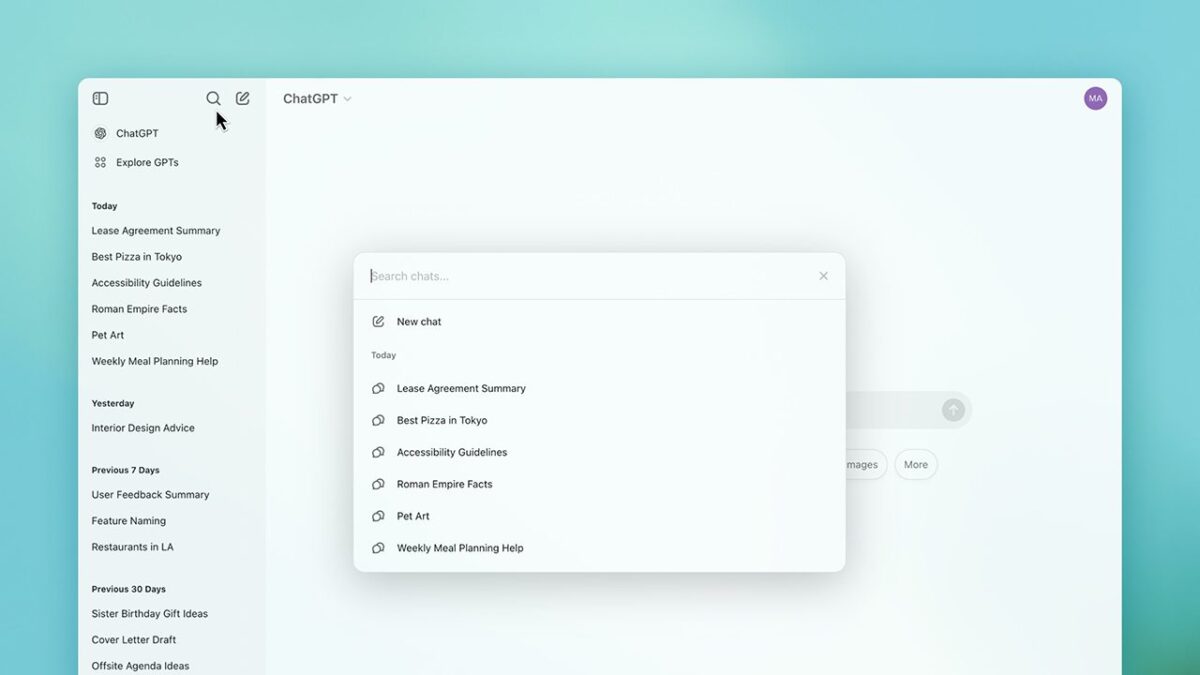
OpenAI has announced a new feature for ChatGPT that allows users to search for old conversations. Until now, finding a chat from a while ago was a rather tedious process that required searching for keywords from the conversation titles on the browser page itself. With this update, initially available only to paying users, users will be able to search their history through an integrated search box, accessible via a magnifying glass icon in the app’s sidebar. The internal search (which should not be confused with the anticipated search engine […]
OpenAI has announced a new feature for ChatGPT that allows users to search for old conversations. Until now, finding a chat from quite some time ago was a rather tedious process that required searching for keywords from the conversation titles on the browser page itself. With this update, initially available only for paying users, users will be able to search their history through an integrated search box, accessible via a magnifying glass icon in the app’s sidebar.
Subscribe to the Softonic newsletter and get the latest in tech, gaming, entertainment and deals right in your inbox.
Internal search (which should not be confused with the anticipated OpenAI search engine, SearchGPT) is capable of tracking both the titles and the content of the conversations, thus making ChatGPT a more intuitive and practical tool for those who need to organize their topics and projects more easily. Additionally, the more this function is used, the more efficient it will be in filtering results according to each user’s preferences.
This new search function is part of a series of recently launched improvements, including the launch of Canvas, an AI-powered text and code editor, as well as a redesign of the chat bar. In this way, OpenAI continues to refine ChatGPT to compete with chatbots from rival companies, such as Google or Anthropic.
Sam Altman’s company has just raised the astonishing amount of $6.6 billion, resulting in a valuation of $157 billion. Even for a huge Silicon Valley company, that’s a lot of money. And amid the company’s downturn, considering the foundational concept of a non-profit organization, OpenAI has not disclosed how it will invest the capital, only stating that it will accelerate AI research and increase its computing capacity. In an unprecedented operation, OpenAI has raised $6.6 billion in new funds, raising its valuation to […]
Sam Altman’s company has just raised the astonishing amount of 6.6 billion dollars, resulting in a value of 157 billion. Even for a huge Silicon Valley company, that’s a lot of money.
In the midst of the company’s downfall, if we consider the foundational concept of a non-profit organization, OpenAI has not disclosed how it will invest the capital, only stating that it will accelerate AI research and increase its computing capacity.
In an unprecedented operation, OpenAI has raised 6.6 billion dollars innew funding, bringing its valuation to the astonishing figure of $157 billion. This investment round is one of the largest in history in private markets and confirms OpenAI’s position as a leader in the AI race.
New @axios: OpenAI raises $6.6 billion in largest VC round ever
Yes, but: Investors can ask for their money back if OpenAI doesn't shift its business to a for-profit structure within two years.https://t.co/BMGbgaqYoR
Thrive Capital, led by Josh Kushner, spearheaded the funding round with an investment of 1.3 billion dollars. Microsoft, the main sponsor of OpenAI, contributed another 750 million dollars, as reported by a source to Bloomberg, which brings Redmond’s total investment to nearly 14 billion dollars.
Other investors included Nvidia, Khosla Ventures, Fidelity Management & Research Co, Tiger Global Management, Altimeter Capital, Coatue Management, and the venture capital firm Quiet Capital.
OpenAI's valuation nearly doubled to $157 billion after a $6.6 billion funding round, making it the largest venture capital deal ever. This surpasses xAI's $6 billion funding round at a $24 billion valuation in May, which was also backed by Elon Musk.https://t.co/tI0Xl6vNAf
The funding round also attracted global interest, as the Japanese group SoftBank and MGX, based in Abu Dhabi, joined the list of investors, according to people familiar with the matter who spoke to Bloomberg. SoftBank’s investment amounted to 500 million dollars, according to one of the sources.
Funding has turned OpenAI into one of the three largest venture-backed startups, along with Elon Musk’s SpaceX and ByteDance, the owner of TikTok.
OpenAI plans to use this capital injection to accelerate AI research and expand its computing capacity. “The new funding will allow us to double down on our leadership in cutting-edge AI research, increase computing capacity, and continue creating tools that help people solve difficult problems,” the company stated when announcing the operation.
When OpenAI introduced SearchGPT, the demonstrations suggested that everything related to the way people search for things on the Internet would immediately change forever.
Subscribe to the Softonic newsletter and get the latest in tech, gaming entertainment and deals right in your inbox.
However, that initial effect evaporated as soon as we saw it in action. The examples of the AI search engine in operation turned out to be somewhat faulty. The challenge to Google’s reign as a search engine is still under review.
Enjoyed talking to @washingtonpost about SearchGPT, and how it compares to Google AI Overviews and Perplexity. Shocked that @OpenAI declined to give SearchGPT access to journalists, and only gave 10k people access. (1/2) pic.twitter.com/QX2sHUyCVc
If an AI-powered search engine hallucinates in its answers, we have a problem
The problems are not difficult to understand. SearchGPT is supposed to combine OpenAI’s AI models with real-time web data to get faster and more accurate answers. Questions and keywords return a summary of the requested information instead of standard Google links. It can be fast and informative… but it’s not.
Unfortunately for OpenAI, that initial mistake is starting to look more like the rule than the exception. As the Post points out, early users who tested the service found that SearchGPT claimed that Sam Altman, CEO of OpenAI, was going to give a speech at a tech conference in the near future, which he actually had no plans to do. It’s a hallucination as bad as any other invented by ChatGPT.
And even if SearchGPT had the guarantee of telling only the truth, that is not of great comfort when it has no way of answering your questions. The evidence shared with the Post particularly minimized SearchGPT’s ability to help with local information.
And the thing is that this information has to come from somewhere. The decades that Google has been collecting data about a large number of businesses and the products and services they offer allow you to find in the blink of an eye most of the information that people need about the places around them.
Ultimately, Google has been the ultimate search engine on the Internet for 30 years and the amount of information it has in its databases is unparalleled, no matter how much OpenAI promises us with its AI. It will take many years to see a worthy rival and OpenAI will not achieve it overnight.
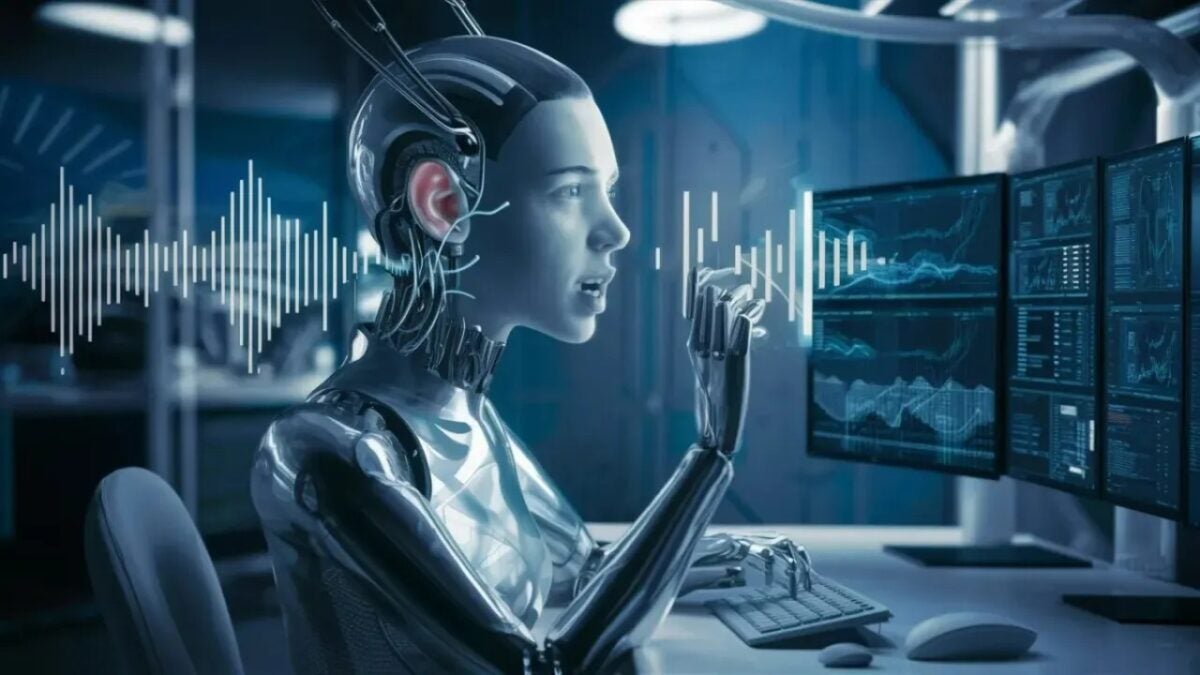
OpenAI has started implementing the Advanced Voice Mode of ChatGPT, with hyper-realistic audio responses thanks to GPT-4o. According to TechCrunch, the alpha version is available to a small group of Plus users since Tuesday, and will be released to all users in the fall of 2024.
Initially launched in May, the feature surprised the whole world by having a voice called Sky that was very similar to Scarlett Johansson’s in the movie Her, although the actress denied authorizing the use of her voice and took legal action. OpenAI denied using her voice, but ended up removing Sky from the voice library.
This new feature will allow ChatGPT to speak and listen more smoothly, thanks to the multimodal capability of GPT-4o. Unlike the previous voice mode, which used three separate models, the new system is able to process the entire conversation without the help of auxiliary models, significantly reducing latency and allowing for the perception of emotional intonations.
The launch is being done gradually to monitor the usage of the new feature, and selected users will receive notifications through the app and via email with instructions to test it. Since the May demo, OpenAI has tested the voice capabilities with over 100 security experts who speak 45 languages. The company will publish a report in early August about these tests.
The available voices are Juniper, Breeze, Cove, and Ember, created in collaboration with voice actors, while Sky is no longer available. Lindsay McCallum, spokesperson for OpenAI, assures that ‘ChatGPT cannot replace the voices of other people’ and states that filters will be implemented to avoid generating music or other copyrighted content. With this measure, the company seeks to avoid future legal problems and controversies like those that have occurred with other voice cloning technologies.
On Monday, ScarlettJohansson issued a statement claiming that she herself had forced this reversal, after her lawyers demanded that OpenAI clarify how the new voice had been created.
Scarlett Johansson’s statement, shared with WIRED, states that OpenAI CEO, Sam Altman, asked her last September to provide the new voice for ChatGPT, but she refused. She describes her astonishment when the company demonstrated a new voice for ChatGPT last week that still sounded like her.
OpenAI tried to hire Scarlett, but she rejected it
“When I heard the demo release, I was astonished, angry, and incredulous that Mr. Altman was seeking a voice that sounded so strangely similar to mine that my closest friends and the media couldn’t notice the difference,” the statement says.
And he points out that Sam Altman seemed to encourage the world to relate the demo to Johansson’s performance by tweeting “Her”, referring to the movie, on May 13th.
According to Johansson’s statement, Altman contacted her agent two days before last week’s demonstration to ask her to reconsider her decision not to work with OpenAI. After watching the demo, she says she hired legal counsel to write to OpenAI asking for details on how they had created the new voice.
The statement states that this led OpenAI to announce on Sunday in a post on Twitter that it had decided to “pause the use of Sky”, the company’s name for the synthetic voice.
We’ve heard questions about how we chose the voices in ChatGPT, especially Sky. We are working to pause the use of Sky while we address them.
The company also published a blog post explaining the process used to create the voice. “Sky’s voice is not an imitation of Scarlett Johansson, but belongs to another professional actress who uses her own natural voice.”
Sky is one of the several synthetic voices that OpenAI gave to ChatGPT last September, but at last week’s event, it showed a much more realistic intonation with emotional signals.
The conflict with Johansson adds to OpenAI’s existing battles with artists, writers, and other creatives. The company is already defending a series of lawsuits alleging that it improperly used copyrighted content to train its algorithms, including lawsuits from The New York Times and authors like George R.R. Martin.
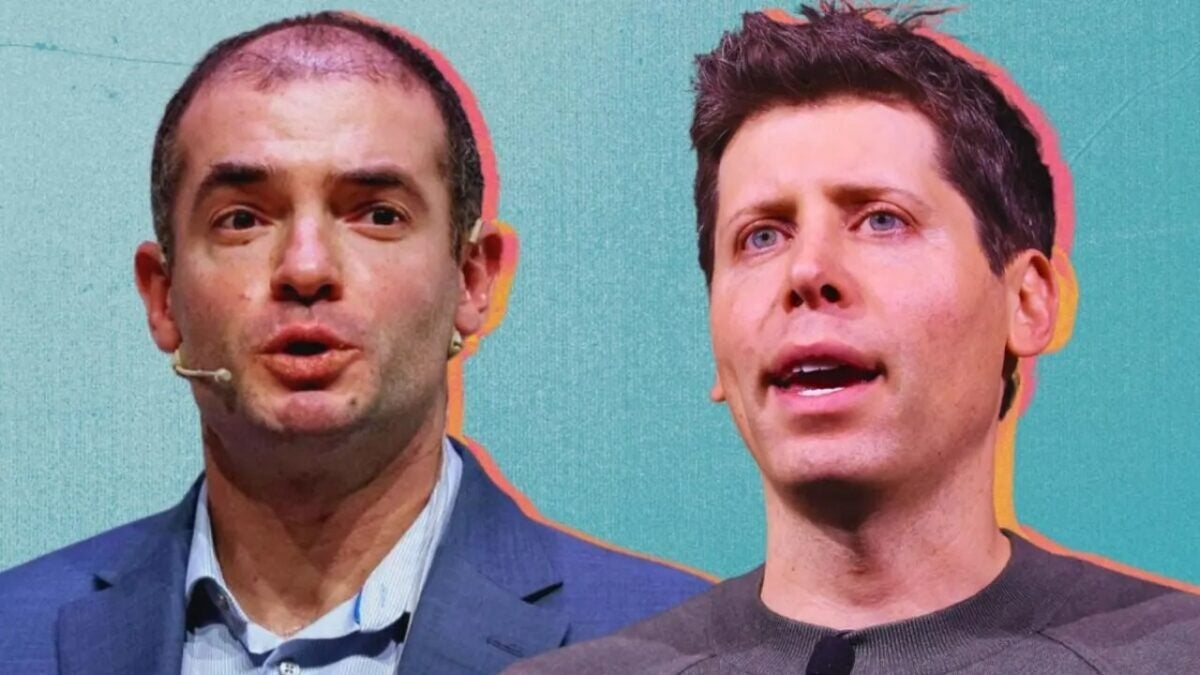
Ilya Sutskever, co-founder and chief scientist of OpenAI, has left the company. The former Google AI researcher was one of the four board members who voted in November to fire the CEO of OpenAI, Sam Altman, which triggered days of chaos where staff threatened to resign en masse and Altman was eventually reinstated.
Ilya and OpenAI are going to part ways. This is very sad to me; Ilya is easily one of the greatest minds of our generation, a guiding light of our field, and a dear friend. His brilliance and vision are well known; his warmth and compassion are less well known but no less…
A goodbye that has been cooking for months: will it be Altman’s decision?
Altman confirmed Sutskever’s departure on Tuesday in a Twitter post. In the months following Altman’s return to OpenAI, Sutskever had rarely made public appearances for the company.
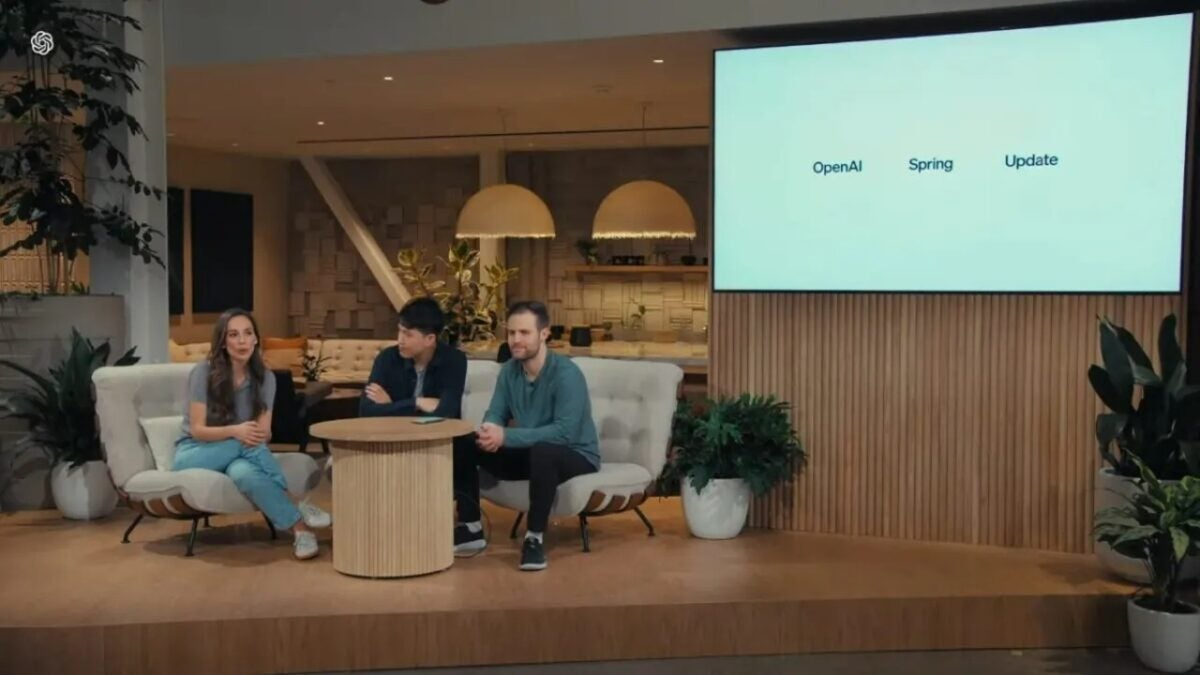
On Monday, OpenAI unveiled a new version of ChatGPT capable of engaging in fast and emotive conversations. Sutskever was noticeably absent from the event, which was livestreamed from the company’s offices in San Francisco.
“OpenAI wouldn’t be what it is without him,” Altman wrote in his post about Sutskever’s departure. “I’m glad to have been close to such a genuinely remarkable genius for so long, and someone so focused on achieving the best future for humanity.”
Sutskever’s position, said Sam Altman, will be filled by Jakub Pachocki, current research director at OpenAI. This way the transition will be smooth and without the need for a landing, since Pachocki has been at OpenAI since 2017.
Among the presented novelties, we will start with the one that affects all AI users who use ChatGPT regardless of their platform or payment method.
And it is that OpenAI is making available to free users of ChatGPT a series of features that until now were only available through subscription, the most important of which is the ability to create custom chatbots and browse their GPT Store.
The company opened its GPT Store to paying subscribers just four months ago, on January 10th. The store allows users to create their own chatbots, called GPT, and share them. Some of the most popular bots right now are an image generator bot, a chatbot called Consensus, aimed at assisting in scientific research, and a logo creator bot.
The company said it would offer a revenue-sharing program based on participation for GPT creators, which began testing in March. But the audience for the bots has been limited due to the restriction of the feature to paying ChatGPT users.
And ChatGPT arrives on Mac
ChatGPT will have a desktop application, but for now it is only available for macOS. OpenAI’s CTO, Mira Murati, announced the news during an event held on Tuesday, where she also mentioned that ChatGPT will have a revamped user interface.
In the demonstration shown by OpenAI, users were able to open the ChatGPT desktop application in a small window, alongside another program. They would ask ChatGPT questions about what was on their screen, either by typing or speaking. ChatGPT could then respond based on what it “saw”.
We’ll be streaming live on https://t.co/OcO6MLUYGH at 10AM PT Monday, May 13 to demo some ChatGPT and GPT-4 updates.
OpenAI states that users can ask questions to ChatGPT using the keyboard shortcut Option + Space, as well as take and annotate screenshots within the application. Both free and paid users will be able to access the new application, but it will only be available to ChatGPT Plus users starting today before a wider rollout in “the coming weeks”.
OpenAI plans to release a Windows version of the app “later this year”. ChatGPT is already available as an application on iOS and Android.
OpenAI has also shared an image of the new user interface of ChatGPT on the web, and it seems to come with fairly minor changes to the home screen and message design. “We know that these models are becoming increasingly complex,” explains Mirati. “But we want the interaction experience to be truly more natural, easy, and for you to not focus at all on the UI, but on collaborating with ChatGPT.”
Say hello to GPT-4o, our new flagship model which can reason across audio, vision, and text in real time: https://t.co/MYHZB79UqN
Text and image input rolling out today in API and ChatGPT with voice and video in the coming weeks. pic.twitter.com/uuthKZyzYx
GTP-4o, the AI that can reason through images, text or audio in real time
In addition to the new application and the new user interface, the company also showcased its new GTP-4o model, free for all users.
GPT-4o is their latest flagship model that provides GPT-4 level intelligence, but it is much faster and enhances its capabilities in text, voice, and vision.
Currently, GPT-4o is much better than any existing model when it comes to understanding and commenting on the images you share, the company claims.
OpenAI has just demonstrated its new GPT-4o model doing real-time translations ? pic.twitter.com/Cl0gp9v3kN
For example, now you can take a picture of a menu in another language and talk to GPT-4o to have it translated, learn about the history and meaning of the food, and get recommendations. In the future, improvements will allow for more natural and real-time voice conversation, as well as the possibility of conversing with ChatGPT through real-time video.
For example, you could show ChatGPT a live sports match and ask it to explain the rules to you. They plan to launch a new voice mode with these new features in an alpha version in the coming weeks, with early access for Plus users as they expand its usage.
OpenAI, the company behind the popular ChatGPT Artificial Intelligence, is already working on a new event, which is rumored to include the release of a new digital assistant that takes a significant qualitative leap in terms of operational capacity, being able to detect sarcasm, analyze images in the same way it interprets dialogues with its interlocutor, and even make phone calls.
According to The Information, at the event that starts from 7:00 PM on May 13th, OpenAI intends to showcase improvements in the multimodality of its Artificial Intelligence systems just like Google and other companies are currently doing. Whether as a voice assistant, tools such as the ability to make calls, visual analysis, and other elements, the company led by Sam Altman plans to stay ahead of this AI fever, a phenomenon mainly driven by OpenAI in recent years.
For now, however, if one thing seems clear, it is that the leap to a hypothetical GPT-5 would not be real yet. Therefore, it would be improvements at a general level on the current foundations that GPT-4 has, which, in reality, already provide very high capabilities to other tools from the competition driven by this same iteration.
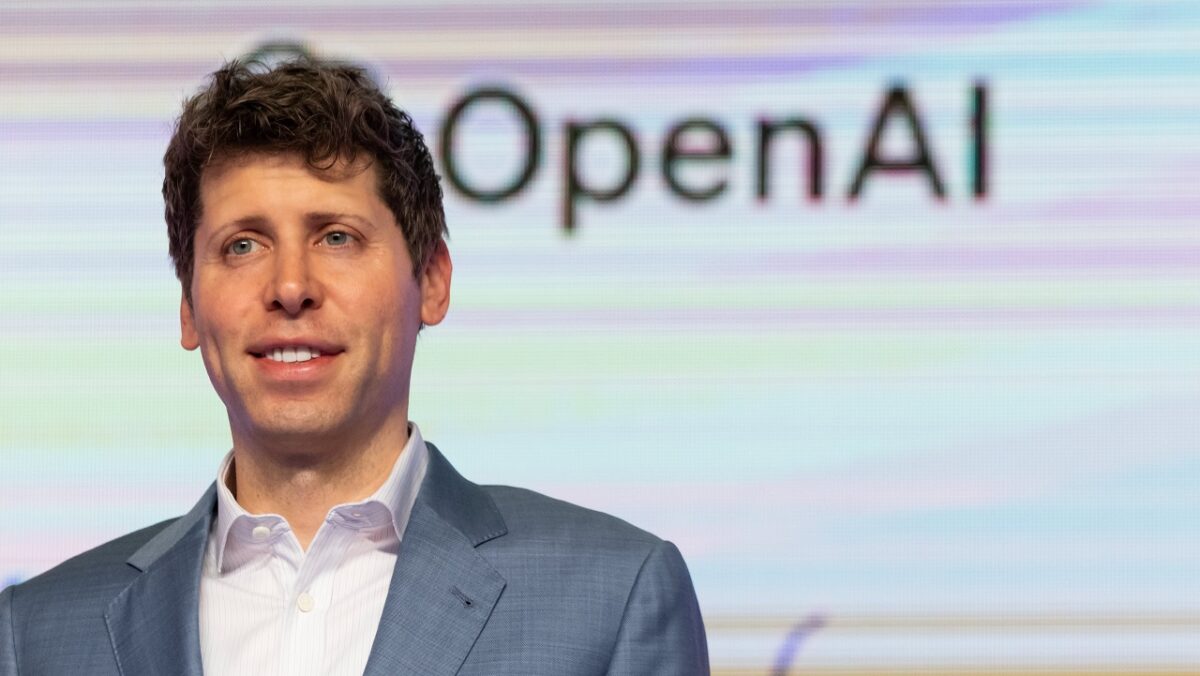
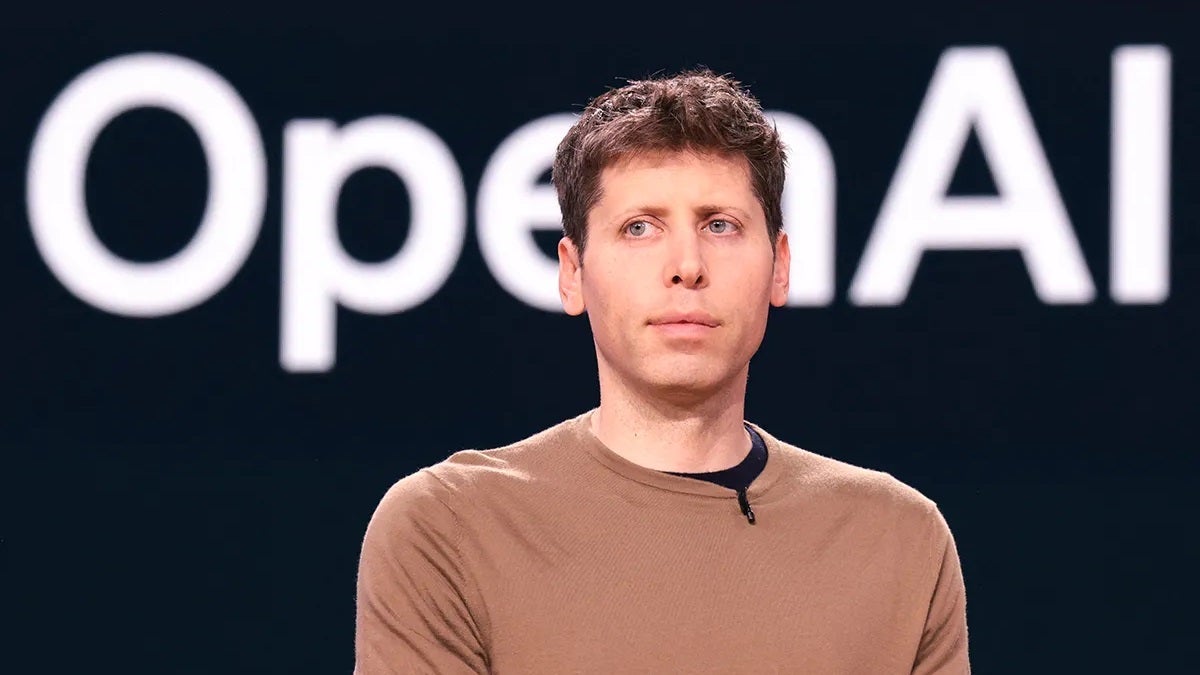
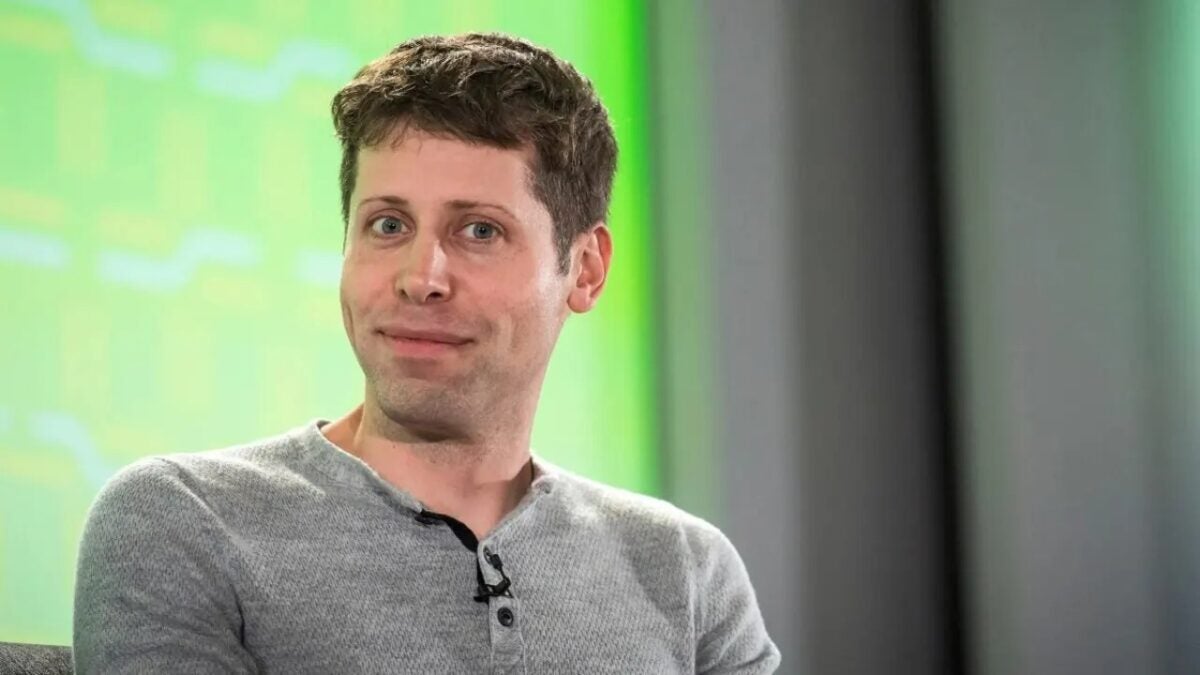
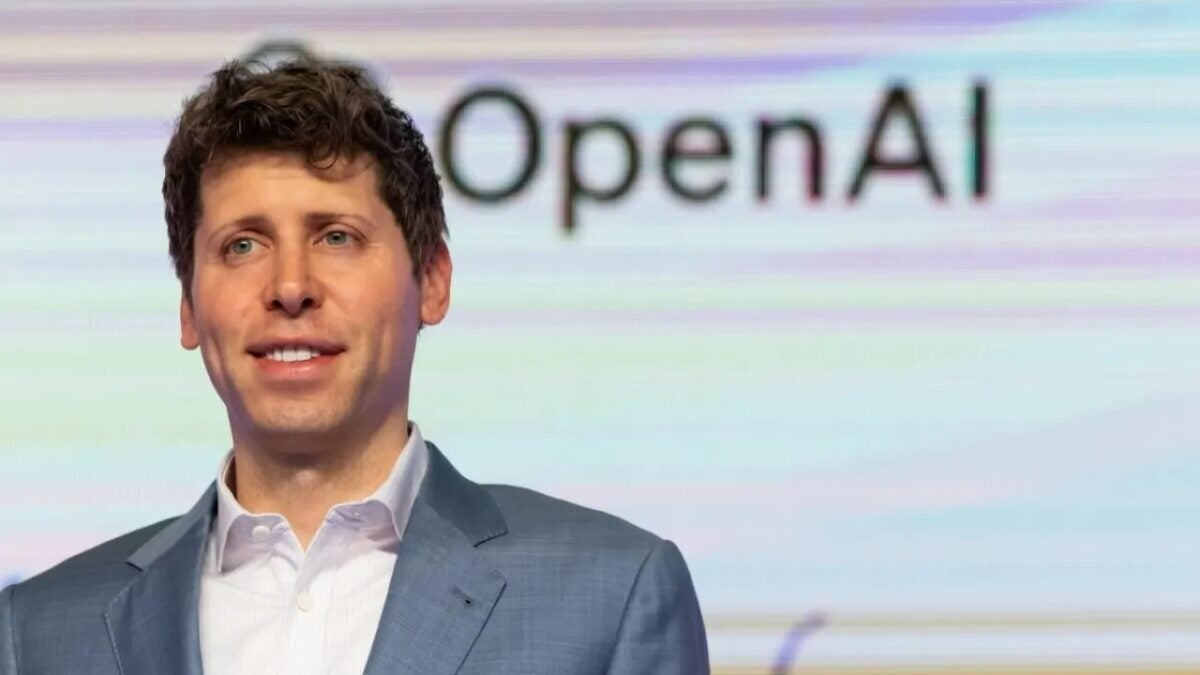
Sam Altman CEO of OpenAI
The path marked by its advances
It is true that OpenAI, thanks to the iterations of GPT it has been developing, and also thanks to the system developed in ChatGPT, made the popularity around Artificial Intelligence grow exponentially. However, in the last year, other systems are proving to be stronger in terms of functionality, such as Microsoft Copilot (which is powered by GPT-4) or Google Gemini, whose reasoning abilities amazed everyone since its presentation at the end of 2023.
With this, OpenAI now has the challenge and the task of once again placing its Artificial Intelligence-based systems at the forefront of public opinion. The tumultuous weeks that the company’s leadership had in 2023 are now further away, and stability is once again being established in a company that, under the umbrella of Microsoft, continues to work to offer innovation in this segment of technology that is now receiving more attention than ever.
OpenAI, the Artificial Intelligence company that has revolutionized this technological sector in recent years, continues to prepare strategies to boost its presence and ensure its viability in different countries. India, one of the most emerging technological powers today, is in the sights of OpenAI, and for this reason they have hired an Indian executive who will ensure that the company operates correctly and in accordance with the rules governing in the Asian country.
As mentioned, India is a rapidly growing country in recent years, and it could be said that, like China years ago, it is growing at an accelerated pace to become an increasingly relevant technological power on the international scene, where they are already achieving significant achievements. This does not go unnoticed by OpenAI, and that is why they want to strengthen their presence in a country that is already part of the major world powers.
OpenAI is looking for talent in India
As noted by Neowin, OpenAI has hired Pragya Misra, a recognized professional with deep knowledge of the technology sector in India, which will provide the company with value in the first instance to make any kind of decisions in the Asian country. In fact, her legal knowledge will provide the company with useful tools to comply with the regulations of that nation in terms of Artificial Intelligence.
With Misra’s signature, OpenAI takes an advantageous position with a name that is already well-known in Delhi for various collaborations with official institutions such as the Police to strengthen digital security for citizens.
Over the past year, Truecaller and Delhi Police have joined forces to enhance digital safety! ?✨
Whether you like it or not, Artificial Intelligence is more than just a temporary trend. This raises numerous concerns about the lack of regulation for a technology that has advanced at an astonishing pace in recent years. The dangers it presents have emerged much faster than the regulation itself, which is already being addressed by important institutions such as the European Union in the old continent, or by the United States in the country where OpenAI was founded.
As a result, especially due to the rapid advancement of OpenAI, many companies have tried to replicate its success and have made progress in AI. Examples of this would be Google with Bard and then with Gemini, Microsoft with Copilot, and the multiple applications it is developing around its ecosystem, and even Tesla, whose new vehicles have Grok Artificial Intelligence inside, also used in the social network X (Twitter).
OpenAI has removed Sam Altman as the owner and controller of the OpenAI Startup Fund, a venture capital fund associated with the company. According to Axios, control of the fund has been transferred to Ian Hathaway, who has been involved in its management since its launch in 2021.
The leadership change was reported in a presentation to the SEC on March 29th after it “raised eyebrows” due to its unusual structure. Explaining Altman’s leadership in the fund so far, OpenAI said:
“As previously communicated, the initial structure of the GP fund was a temporary agreement and did not involve any personal investment or financial interest from Sam. This change brings more clarity.”
The reason why the OpenAI Startup Fund raised questions was because it was not and is not owned by OpenAI, despite its name. Its legal owner is Sam Altman. It also has external limited partners, including Microsoft, which Axios describes as unusual for a venture capital firm, but it is not unique.
OpenAI said in February that the reason behind the structure was so that the fund could start quickly, and the fastest way to do it was to put it in Altman’s name. As they have been keen to remind, OpenAI said in February that the decision was only intended to be temporary.
The new manager of the fund, Ian Hathaway, has directed his accelerator program and led investments in different startups such as Harvey, Cursor, and Ambience Healthcare. This experience should mean that the fund is in good hands despite Sam Altman’s departure.