In the 80s, the use of cocaine on movie sets was such a common practice in Hollywood that Barry Diller, former head of Paramount, referred to it as “the classic Hollywood buffet” in his autobiography Who Knew. In a recent interview, Diller shared surprising anecdotes about the work environment of that time, noting that many actors were under the influence of drugs without it causing any alarm. One movie where there were no spinach on set precisely One of the most shocking stories revolved around the filming of Popeye in Malta, where […]
In the 1980s, the use of cocaine on movie sets was such a common practice in Hollywood that Barry Diller, former head of Paramount, refers to it as “the classic Hollywood buffet” in his autobiography Who Knew. In a recent interview, Diller shared surprising anecdotes about the work environment of that time, noting that many actors were under the influence of drugs without it causing any alarm.
A movie where there were no spinach during the filming precisely
One of the most shocking stories revolved around the filming of Popeye in Malta, where according to Diller, there was an unusual use of film cans to transport cocaine to the set. The production faced such an uninhibited environment that he himself stated: “You couldn’t escape it.” The revelation suggests that the crew was largely under the influence of drugs, which could explain the peculiar final result of the film.
Diller recalled how film cans were sent daily to Los Angeles to be processed, and during that process, they were used to transport cocaine. These types of anecdotes not only highlight the criminal relationship between cinema and drugs during that time, but also invite reflection on the entertainment culture in Hollywood during those years.
Currently, the Popeye film set has been transformed into a theme park, left intact by director Robert Altman. Visitors can explore the town that was part of the filming for a cost of 25 euros, and perhaps even find some “unexpected surprises” from 1980. Meanwhile, the story of the production and its turbulent relationship with drugs continues to resonate, offering an intriguing glimpse into a chaotic period in film history.
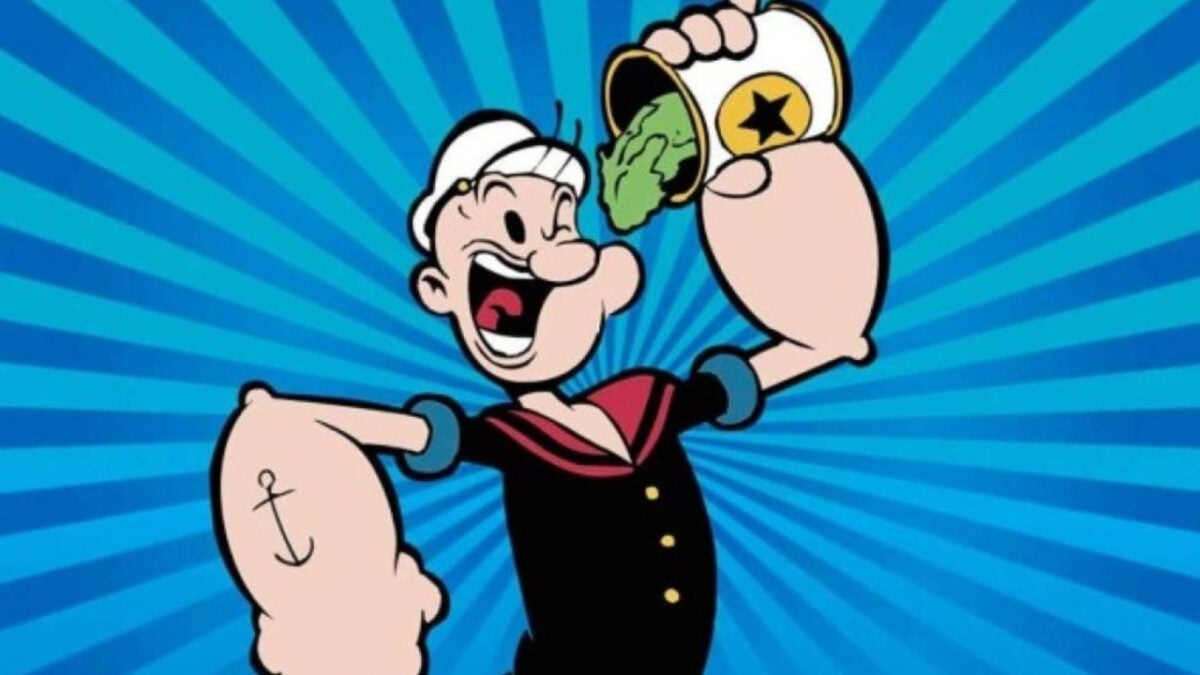
Contrary to popular belief, Popeye did not come out of nowhere eating spinach and beating up villains who wanted to kidnap Olive. In fact, it took almost ten years for him to make his first appearance in the comic strip Thimble Theatre, the masterpiece of E. C. Segar, which over the years increasingly focused on that grumpy sailor who, in a very short time, won the love of readers. In 1933, he made his first appearance outside the panels in the animated shorts of the legendary Max Fleischer (if all these […]
Contrary to popular belief, Popeye did not emerge out of nowhere eating spinach and beating up villains who wanted to kidnap Olive. In fact, it took almost ten years for him to make his first appearance in the comic strip Thimble Theatre, the masterpiece of E. C. Segar, which over the years increasingly focused on that grumpy sailor who, in a very short time, won the love of readers. In 1933, he made his first appearance outside the comic strips in the animated shorts of the legendary Max Fleischer (if none of these names sound familiar, ask Google, there’s a whole new and exciting world to discover in front of you) and the rest is history.
Popeye’s production is absolutely vast, from the thousands and thousands of comics (the strip has been published every Sunday for 106 years) to the 231 shorts, its three animated series, the live-action movie -whose set you can still see if you stop by Malta, now converted into an amusement park- or even restaurants and video games. Yes, video games. As strange as it may seem now, in the era of multimillion-dollar AAA productions, an open-world Popeye game throwing punches was not long ago a safe investment.
There have been versions for ZX Spectrum, Game Boy, Game Gear (which for some reason released a volleyball game with the character as the protagonist), Game Boy Advance, NES, and Nintendo Switch, but the most remembered one is one in which he didn’t even appear. It was an idea based on Popeye rescuing Olive across different platforms, which we ended up knowing as, effectively and unexpectedly, Donkey Kong.
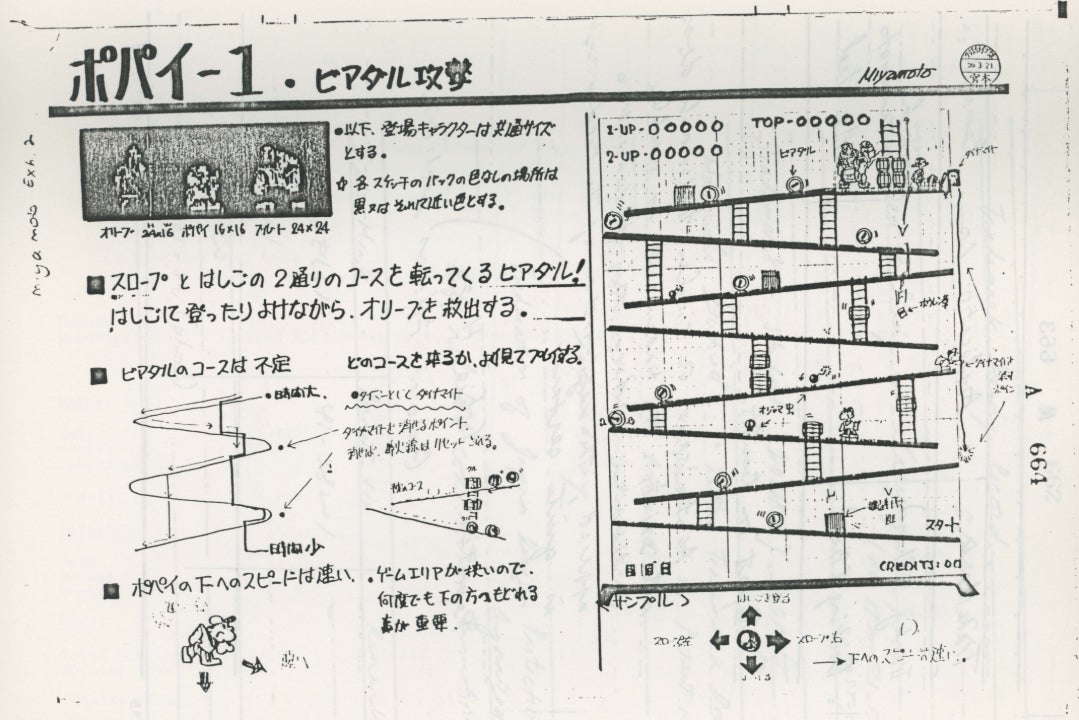
Shigeru Miyamoto had received the first serious assignment of his life, and he knew what he wanted: in March 1981, he was completely focused on creating his arcade game based on the Popeye comic strip. He even had a title: Popeye’s Beer Barrel Attack Game. You can imagine, after playing Donkey Kong, who Mario was and who Pauline was. The big surprise came when choosing an enemy: it would have been normal to choose the series’ villain, Bluto, as the kidnapper, but after a few tests, Miyamoto instead drew a nameless gorilla whom he ended up calling… Kong.
Monkeying Around
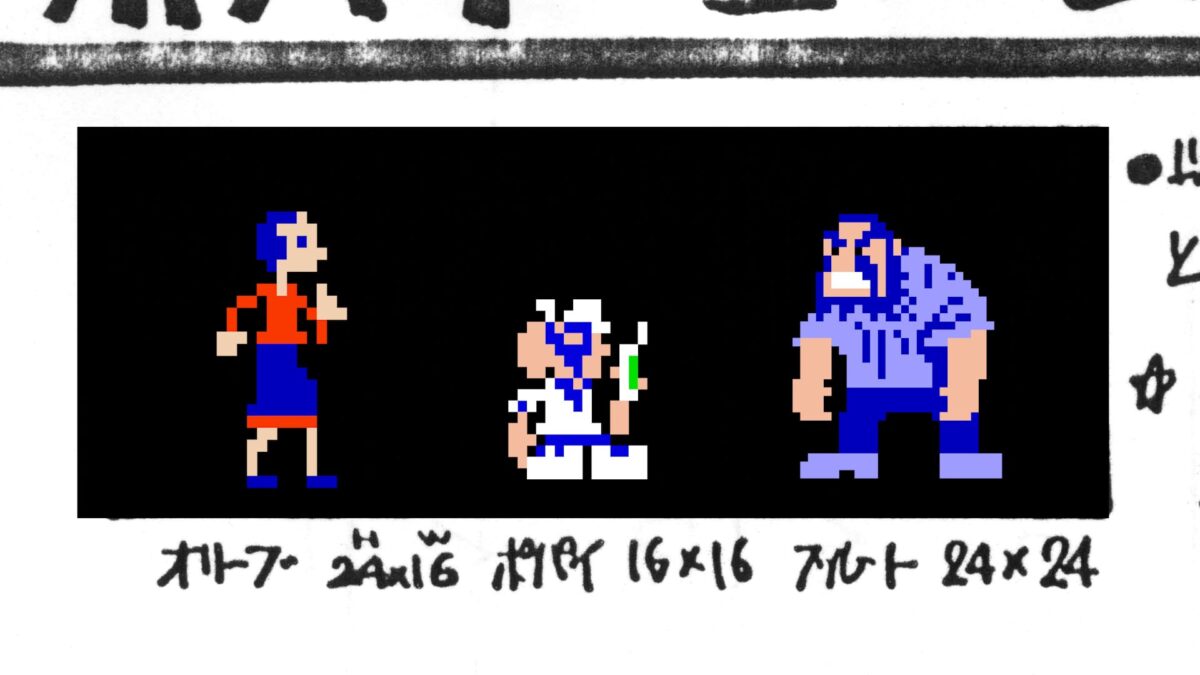
What was the reason for choosing a gorilla instead of Bluto? Well, Miyamoto found it more interesting and comical, “nothing too evil or repulsive”. The only problem was that it was very complicated to represent Popeye with a 16 x 16 pixel sprite and make him recognizable. Well, that and they had copyright issues: in the end, they didn’t get the license, so they had to improvise along the way. Can’t we use Popeye? Well, then we’ll have to rely on a character created for the occasion.
In this case, the hero would be a man with a mustache, red cap, and red overalls named Mario, as a tribute to the owner of the offices where Nintendo was located, Mario Segale. According to Miyamoto, he was “a fun and calm guy” (which is not exactly how I would describe him, but oh well). The studio wasn’t so sure, at least at first, and looking at the prototypes, they thought the game would be “like Crazy Climber and Pac-man together and divided between two”. But reality hit them in the face when, in just a few months, Miyamoto brought Donkey Kong to life, creating a success like few others remembered and creating from scratch two of the most incredible figures in video game history: Mario and Donkey Kong.
It is said that this is the first time a story (even if it came from the original comics that couldn’t be used) impacted the gameplay, instead of letting a narrative excuse be sought based on it. Donkey Kong was more important to the history of video games than any of us can imagine, but the story still has one more twist, an irony of fate.
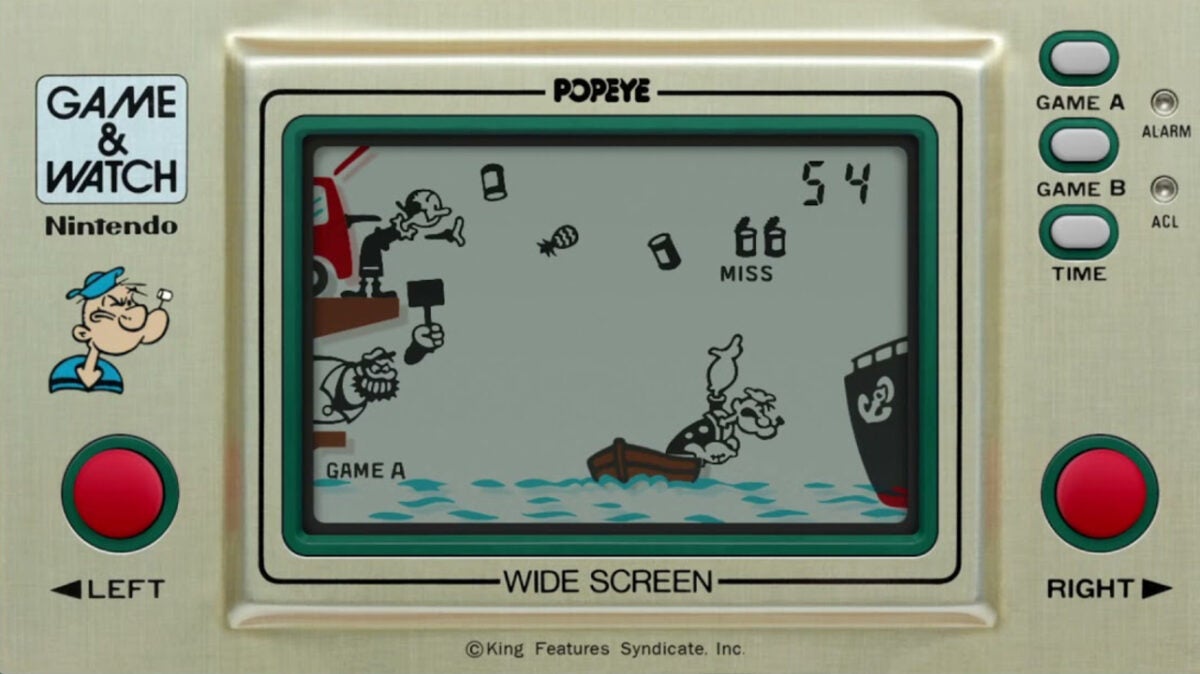
And in 1982, just a month after changing video games forever, Nintendo released its game based on Popeye for Game & Watch… And another for arcades the following year. Fortunately, Miyamoto was able to fulfill his desire and direct it. And yes, it is tremendously similar, at its core, to Donkey Kong, but filtered through time, learning, and someone who still has everything to prove. In 1983, Mario Bros appeared, definitively naming the red hero and his green brother. From here, Miyamoto never forgot to take his spinach and became the number one in the industry… And perhaps he wouldn’t have achieved it without this small setback. Wonders of life.