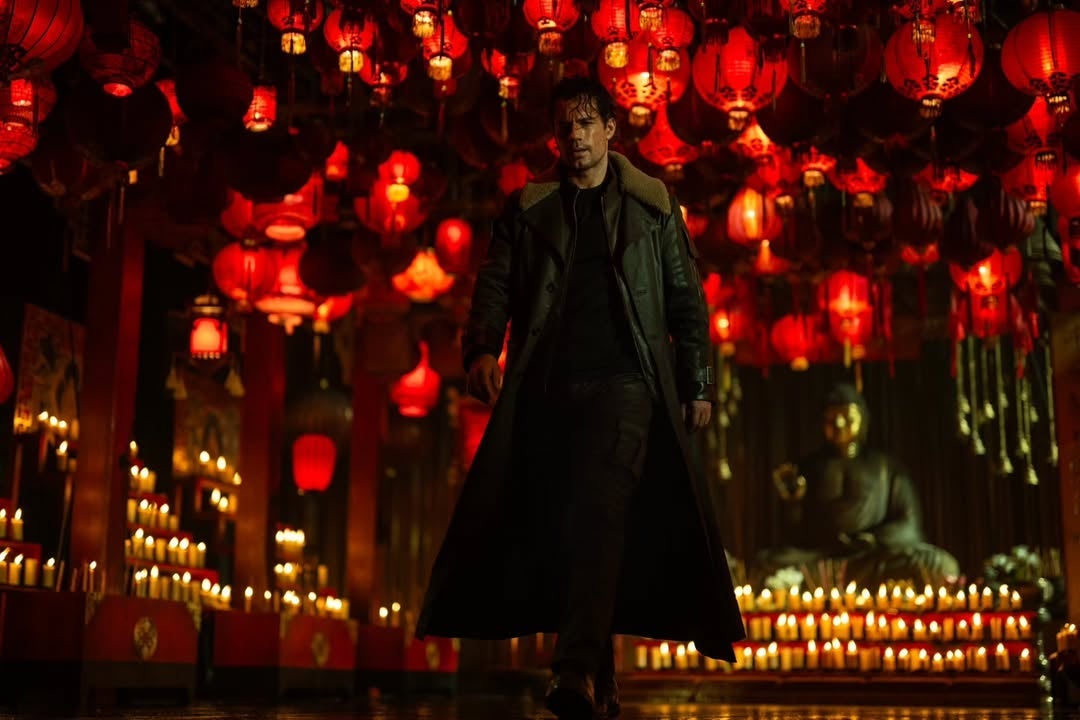
The new adaptation of Highlander, directed by Chad Stahelski, promises to revive the legacy of the iconic franchise that has had multiple installments over the decades. After six movies, three series, and countless spin-offs, the first glimpses of this resurrection have been shared by the lead, Henry Cavill, through his Instagram account. The images show Cavill as MacLeod in intense fight scenes, generating high expectations among fans. A man born to be MacLeod This reboot, which still does not have a release date, has arrived loaded with potential […]
The new adaptation of The Immortals, directed by Chad Stahelski, promises to revive the legacy of the iconic franchise that has had multiple installments over the decades. After six movies, three series, and countless spin-offs, the first glimpses of this resurrection have been shared by the lead actor, Henry Cavill, through his Instagram account. The images show Cavill as MacLeod in intense fight scenes, generating high expectations among fans.
A man born to be MacLeod
This reboot, which still does not have a release date, has arrived loaded with potential thanks to the considerable budget of 100 million dollars, the same amount received by John Wick 4. With Stahelski at the helm, known for his success in the John Wick saga, interest in a film that seeks not only to pay homage to the original work but also to attract a new audience is heightened. Happy first look at The Immortals! It has been quite an adventure for me, and I hope you enjoy it, Cavill shared in his post.
The cast of the movie includes recognized figures such as Russell Crowe, who will play Ramírez, a character that in the original film was portrayed by Sean Connery, as well as Karen Gillan, Djimon Hounsou, Dave Bautista, Marisa Abela, and Max Zhang. The challenge for this new team will be to compete with the nostalgia evoked by the actors of the classic film and the unforgettable soundtrack by Queen, which accompanied the original narrative.
The strategy of reviving established franchises aligns with the current trend in the industry, where producers seek to ensure success through recognized intellectual properties. From the first images, there is a sense that this new project has what it takes to bring freshness to a story already loved by many.
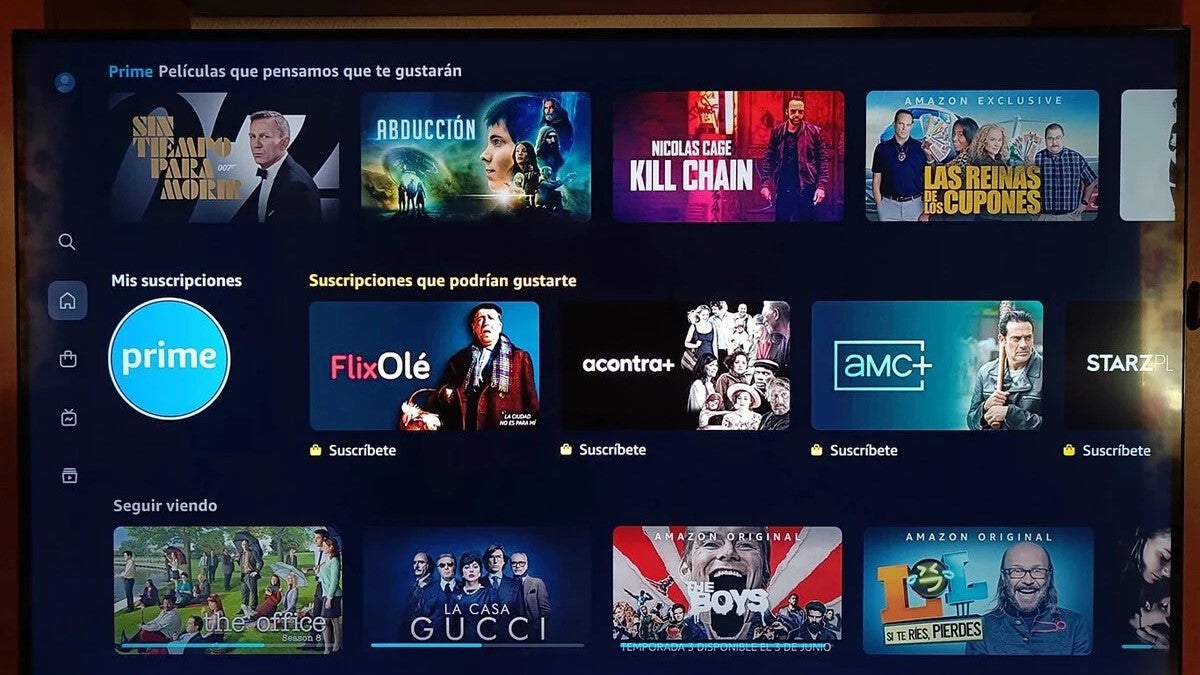
In October 2025, 45.7% of the total television viewing time in the United States corresponded to streaming platforms, a clear increase from the 40.5% recorded in October 2024. This trend underscores a significant shift in consumer behavior towards online content, which promises to transform the advertising landscape in the coming years. Will prices remain stable in 2026? According to projections, spending on connected TV (CTV) advertising is expected to surpass spending on traditional television advertising by 2028, reaching $45.96 billion, compared to $32.45 billion […]
In October 2025, 45.7% of the total television viewing time in the United States was attributed to streaming platforms, a clear increase from the 40.5% recorded in October 2024. This trend underscores a significant shift in consumer behavior towards online content, which promises to transform the advertising landscape in the coming years.
Will prices remain the same in 2026?
According to projections, spending on connected television (CTV) advertising is expected to surpass spending on traditional television advertising by 2028, reaching $45.96 billion, compared to $32.45 billion estimated for 2025. Despite these advances, many companies face a deficit in formulating effective strategies for CTV advertising and lack essential data, which could limit their potential earnings in this expanding field.
The streaming ecosystem is currently dominated by giants like Netflix, YouTube, Disney, and Amazon. However, potential consolidation and mergers among these platforms could alter the balance of power in the sector. Despite this dynamic, streaming services have continued to raise their prices; the average cost of the top 10 paid services in the U.S. has increased by 12% in 2025, accumulating double-digit increases since 2022.
This increase in prices seems to be driving the growth of ad-supported streaming platforms. As we move into 2026, it is unlikely that the consolidation of platforms or the rise in prices will slow down, which will give media companies the urgent need to replace the decline in advertising revenue from traditional television with gains from subscriptions and ad-supported viewing.
In the latest episode of the podcast Behind the Numbers, crucial topics related to success and failure in marketing campaigns were addressed. The participants discussed how to distinguish between a true failure and campaigns that, although they may not have achieved the expected results, manage to generate conversation and positive attention among the audience. There is no such thing as bad press if you know how to work it Suzy Davidkhanian, Vice President of Content, and analysts Sky Canaves and Arielle Feger offered perspectives on the impact of bad press on brand reputation. Often, what is considered “bad press” can […]
In the latest episode of the podcast Behind the Numbers, crucial topics related to success and failure in marketing campaigns were discussed. The participants talked about how to distinguish between a true failure and campaigns that, although they may not have achieved the expected results, manage to generate conversation and positive attention among the audience.
There is no bad press if you know how to work
Suzy Davidkhanian, Vice President of Content, and analysts Sky Canaves and Arielle Feger offered insights on the impact of bad press on brand reputation. Often, what is considered “bad press” can become an opportunity for companies, as long as it is handled properly. During the conversation, they reflected on how some campaigns, although criticized, can strengthen brand visibility in a saturated market.
Experts suggested that when a campaign does not achieve the expected results, brands should implement reactive strategies, such as redirecting their messages or interacting more directly with their audience to clarify their intentions and objectives. This could include the use of social media to address criticism or gather feedback that helps define future strategic directions.
The episode, which is available on multiple podcast platforms, including Apple Podcasts, Spotify, and Pandora, invites listeners to reflect on the importance of effective communication in marketing. The discussion highlights the need to prepare brands to adapt and respond to public scrutiny, turning adverse situations into growth opportunities.
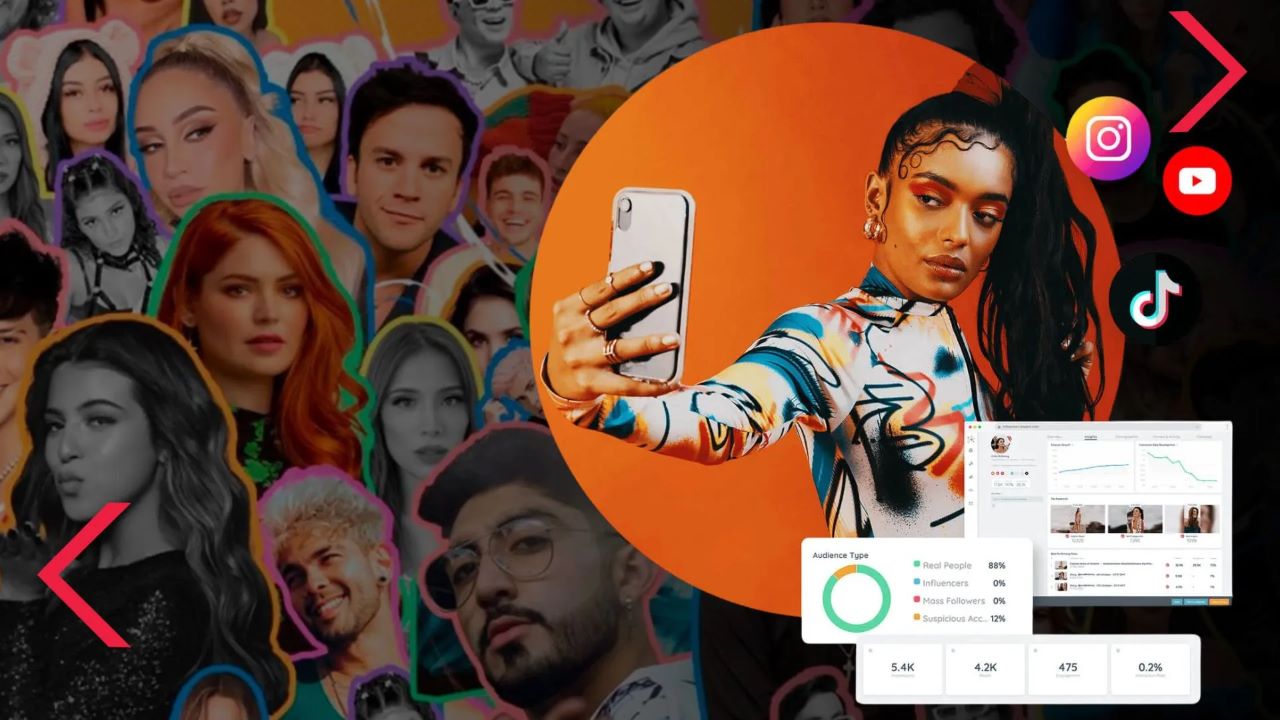
In a constantly evolving marketing landscape, nano-influencers, those content creators with fewer than 10,000 followers, are emerging as one of the most effective forces within digital advertising. According to Later’s report from June 2025, these influencers enjoy an impression rate of 34.1%, more than double that of any other category of influence. This data underscores their ability to effectively mobilize audiences, making them attractive to brands looking to maximize their investment. Small but powerful, the relationship between nano-influencers and their followers is notably stronger, which […]
In a constantly evolving marketing landscape, nano-influencers, those content creators with fewer than 10,000 followers, are emerging as one of the most effective forces within digital advertising. According to Later’s report from June 2025, these influencers enjoy an impression rate of 34.1%, more than double that of any other category of influence. This data underscores their ability to effectively mobilize audiences, making them attractive to brands looking to maximize their investment.
Small but mighty
The relationship between nano-influencers and their followers is remarkably stronger, resulting in authentic and meaningful engagement. For brands with modest budgets or those focused on niche audiences, these creators offer exceptional value that enhances audience participation. This makes them an ideal choice for product testing, local campaigns, or fostering grassroots interest.
The report, which covers data from over 2,500 campaigns and a survey of 1,005 content creators, highlights that both nano and micro-influencers are positioning themselves as essential allies in marketing strategies. This aligns with the growing preference of brands to establish more authentic connections with their audiences. Companies are beginning to recognize that a more focused approach on these influencers can result in greater loyalty and a more positive response from consumers.
With an increasingly saturated competitive environment, the use of nano-influencers may be the key for brands not only to reach their target audience, but also to encourage action and conversion in a space where trust and authenticity are increasingly valued.
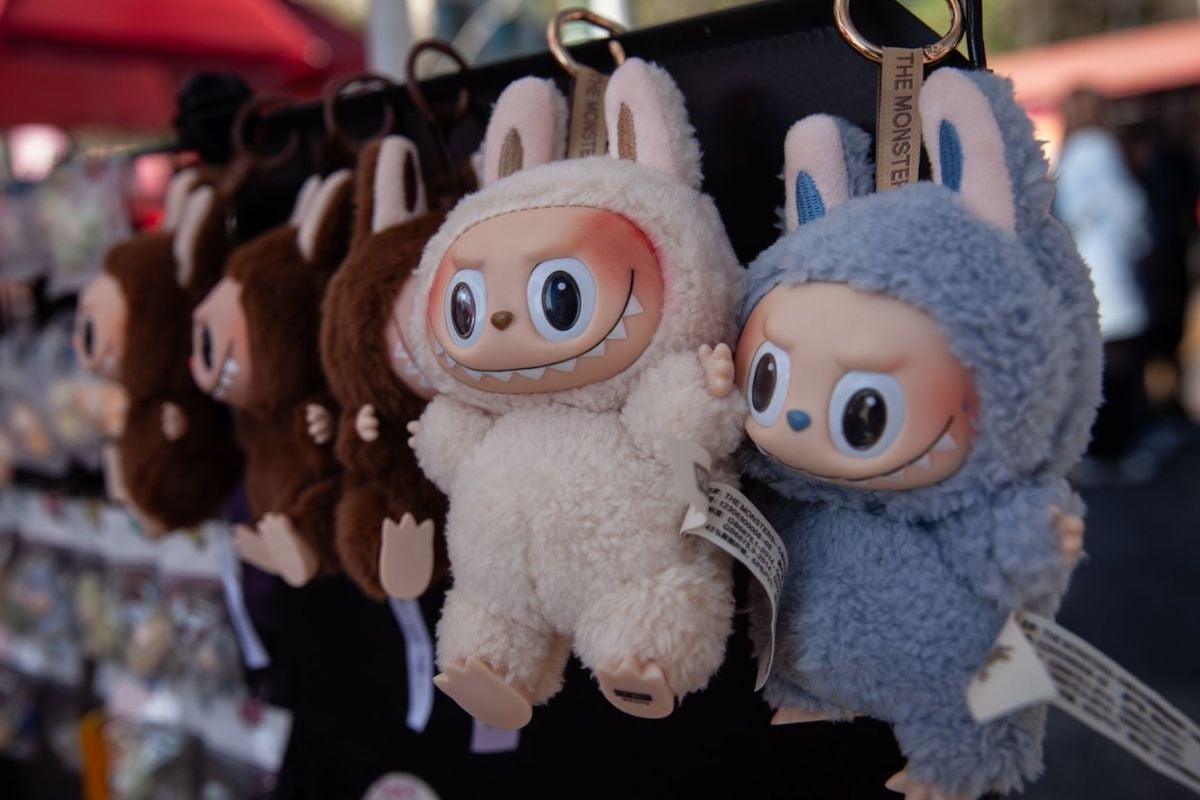
The current economic uncertainty has led consumers to be more cautious with their spending, causing a shift in their buying habits. While many focus on essential products, there is a segment of the population that chooses to spend more on small luxuries in search of emotional comfort. This behavior, known as the ‘lipstick effect’, reflects how people are willing to allow themselves occasional indulgences, such as bag charms, in a volatile consumption environment. Labubu fashion is at its peak. Despite the decrease in interest for high-value purchases, shoppers are each […]
The current economic uncertainty has led consumers to be more cautious with their spending, causing a shift in their buying habits. Although many focus on essential products, there is a segment of the population that chooses to spend more on small luxuries in search of emotional comfort. This behavior, known as the ‘lipstick effect’, reflects how people are willing to indulge in occasional treats, such as bag charms, in a volatile consumption environment.
Labubu fashion is at its peak
Despite the decline in interest for high-value purchases, shoppers are increasingly willing to let their emotions guide their spending decisions. Products that offer a sense of novelty or emotional well-being are seeing an increase in their sales. The beauty sector stands out as a suitable area for this type of spending for comfort, where consumers seem to delight in small indulgences that provide instant satisfaction.
According to recent reports, although consumers prioritize essential products, they do not rule out the possibility of making additional purchases that offer them a pleasant experience. This phenomenon can be brief, like what happened with the Labubu trend, but it also indicates how shoppers will always seek to stay interested in small luxuries that provide them with satisfaction. The ability of consumers to find pleasure in the simple suggests a transformation in the buying mindset, where emotions play a key role in the decision-making process.
In conclusion, while economic caution persists, retailers may find opportunities in selling products that provide an emotionally rewarding experience, despite the financial restrictions that many consumers impose on themselves. The search for comfort and satisfaction in small purchases could help tip the scales in a constantly changing market.
Nostalgia for the 90s is almost mandatory among millennials. And it’s normal: it was a different time, less politicized (or so it seemed to us), where we played in the street, video games lasted a few hours, and we bought magazines that explained what was to come, instead of relying on the Internet, losing romance along the way. But nostalgia for a time when we were young is often confused with intrinsic quality. It was good because I was younger, you see. Since the mid-90s until now, society has evolved and grown, but […]
Nostalgia for the 90s is almost mandatory among millennials. And it’s normal: it was a different time, less politicized (or so it seemed to us), where we played in the street, video games lasted a few hours and we bought magazines that explained what was coming, instead of relying on the Internet, losing romance along the way. But nostalgia for a time when we were young is often confused with intrinsic quality. It was good because I was younger, that’s for sure.
Since the mid-90s until now, society has evolved and grown, but that also has its consequences, for example, in advertising. And specifically, in video game advertising. While nowadays everything relies on a good trailer, at the time, ads (both in print and on television) were absolute crazy and unique pieces, iconic parts of pop culture that are worth rescuing for one reason or another. Are you up for a trip down memory lane? Let’s take a look at the craziest ads from the most nostalgic era. Grab your joystick, here we go.
Game Boy Pocket
It’s hard to believe that the most protective company in the world would think of releasing ads like these, where they promoted bad habits among their consumers. In the one you see, a woman tied to the bed was lying on her side for playing with the Game Boy (Pocket, of course), but there were others with an abandoned dog without food or another one, showing the back of a pair of jeans -and part of the underwear- where they kept the console, with the slogan “Keep it in your pants.” Impossible to imagine today.
About the announcement they made when they launched the different colors of Game Boy Pocket, frankly, I have no explanation at all.
PlayStation
There was no need to show a single minute of a game. This strange artistic piece, halfway between a museum installation and the beginning of the typical movie that your most cinephile friend tells you is “true cinema”, marked an era, and the face of the actress, which was modified with CGI and, according to her, left her horrified with the result, was featured in magazines around the world. Rightly so: it sold more consoles than many games, even if it was just to find out what the hell this was. Around the same time, the legendary ad “I have lived a double life” was aired. But that’s another matter.
Game Boy
Honestly, I don’t know if this ad is real or not, but it apparently aired in Australia throughout the 90s. A ferret in your pants? Of course! Once they had the children’s audience, it was time to go for the youth with outrageous proposals. And if that meant going with a visual nightmare, they weren’t going to hold back.
Yoshi’s Island
What makes you think of Yoshi’s Island? Its graphics that look like they were drawn with crayons? Its unforgettable gameplay? Its fabulous music? Well, for Nintendo’s advertisers, it must have reminded you of a binge like Mister Creosote from The Meaning of Life, ending in an explosion of the most disgusting food possible. The absolute antithesis of the video game. The 90s were definitely a thing.
The Legend of Zelda: A Link To The Past
If there is a country where absolutely bizarre commercials are made, it is Japan. Curiously, the cradle of video games. Of course, at some point they had to come together, in this videoclip of A Link To The Past where all of Hyrule, with Link at the forefront, decides to do a dance in the style of Michael Jackson. If you’re wondering, no, there is no hidden feature in the game to bust a move like Tony Manero with the boomerang in hand.
Game Gear
If you thought the current console war was tough, it’s because you didn’t live through the 90s, where Sega could easily call you an idiot and say that you behave like a dog if you preferred the Game Boy over the Game Gear. Perhaps with this announcement, you’ll better understand why an entire generation finds it so strange to see Sonic sharing Olympic games and Smash Bros with Mario.
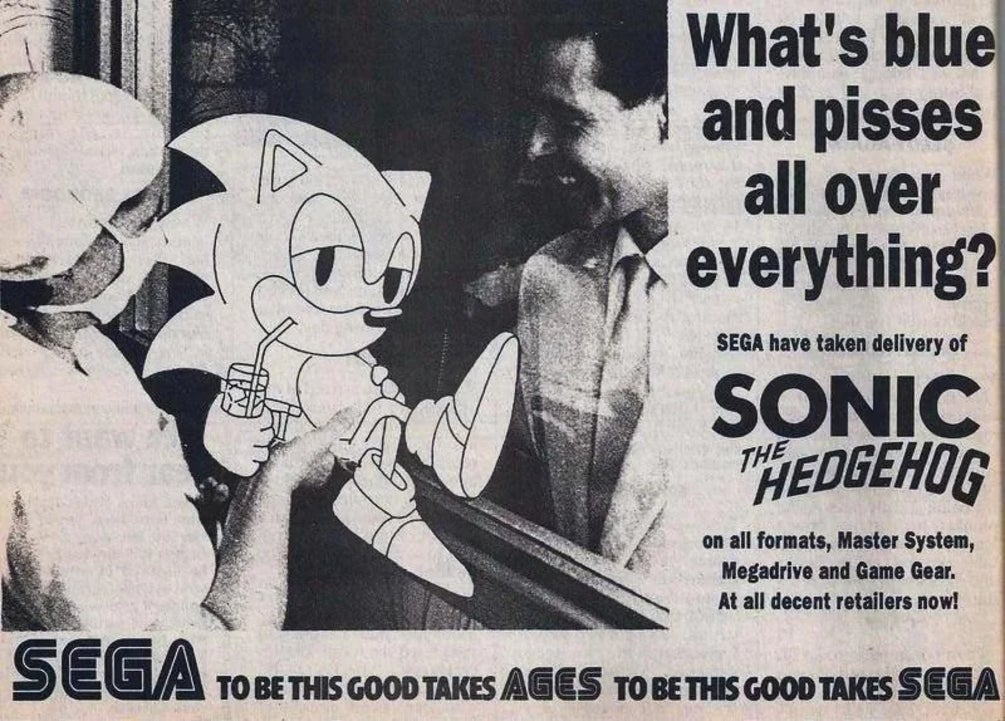
Sonic
And speaking of Sonic… This ad only appeared in a British magazine, but it speaks for itself. It didn’t really matter if it made sense as long as it grabbed attention, and boy did it. There are websites on the Internet that are much less shady than this ad.
32X
I hope the advertiser in charge of this ad found a partner shortly after, because the desperation was evident in every word.
Five announcements that arrived late, badly and were unpleasant for everyone, but that have that charm of very bad ideas, the aftertaste of bitterness, sleepless nights in the office and sweat to get something that everyone knew (or should have known) was going to be a monumental failure.
Creating a marketing campaign is not easy, and often, small variables that you might not even be aware of have to be taken into account. For instance, there could have been someone who spent a fortune on the slogan “Taller towers fell” and published it on September 10, 2001. It didn’t happen, but it could have. Today, we are going to review five advertisements that arrived late, went wrong, and were unpleasant for everyone, but they have that charm of terribly bad ideas, the lingering taste of bitterness, sleepless nights at the office, and sweat to push forward something that everyone knew (or should have known) would be a monumental failure.
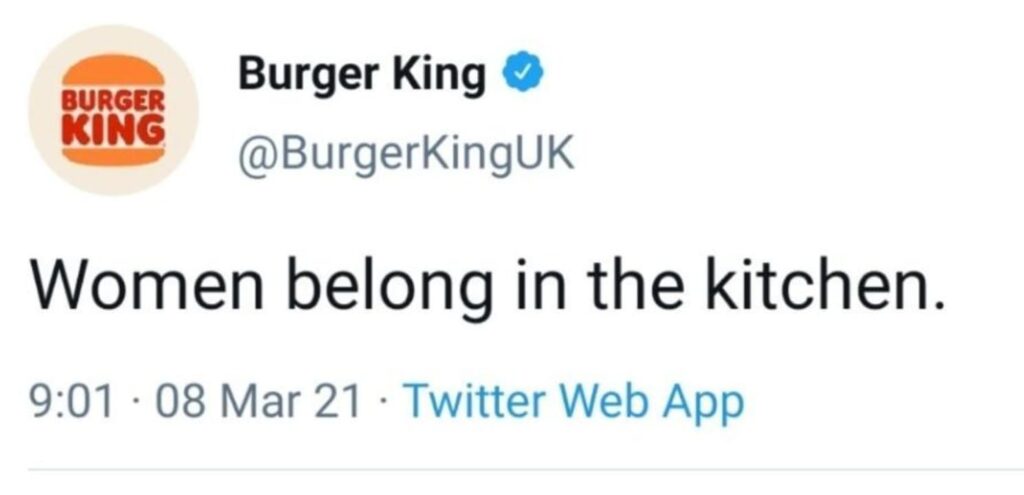
Personally, I applaud the idea of this campaign, especially because Burger King already anticipated that it could either be an incredible success or an epic failure. After all, in 2021, we all knew the risks involved in posting an inflammatory tweet on International Women’s Day. And that’s exactly what happened: the fast-food company wrote, “Women belong in the kitchen,” as the initial tweet of a thread aimed at addressing gender inequality in the kitchen and eventually announced a scholarship to help women pursue their culinary dreams.
The first tweet received 274,400 retweets. The second, where the campaign was explained, received 13,100 retweets. The last one, where the scholarships were announced, received 4,900 retweets. The outcome was both avoidable and, at the same time, expected: a disaster for the public relations department.
4 – PureGym
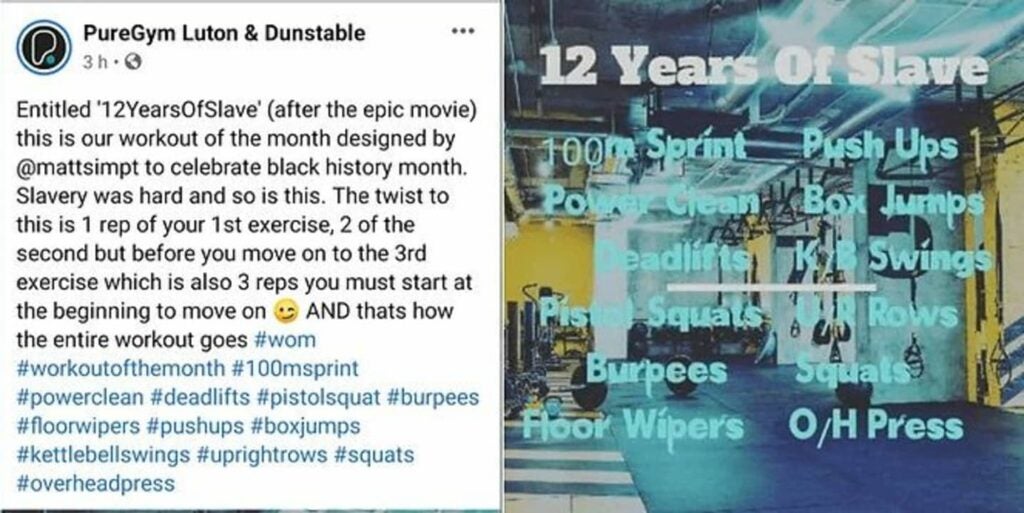
In 2020, a chain of gyms in the United Kingdom decided to announce the exercises for that month (such as sprinting a hundred meters, squats, burpees, etc.) under a specific name. Of course, they could have chosen a name like “Get in Shape” or “Get Your Body Moving,” but instead, they launched it as “12 Years of Slavery.” It was not a coincidence: they intended to celebrate Black History Month. It was a major misstep.
“They commented on a Facebook page that ‘Slavery is tough, and so is this,’ a page that is best left unsearched because it was completely taken down while everyone wondered how it was possible that no one, at any moment, said, ‘This is a terrible idea.'”
3 – Reebok
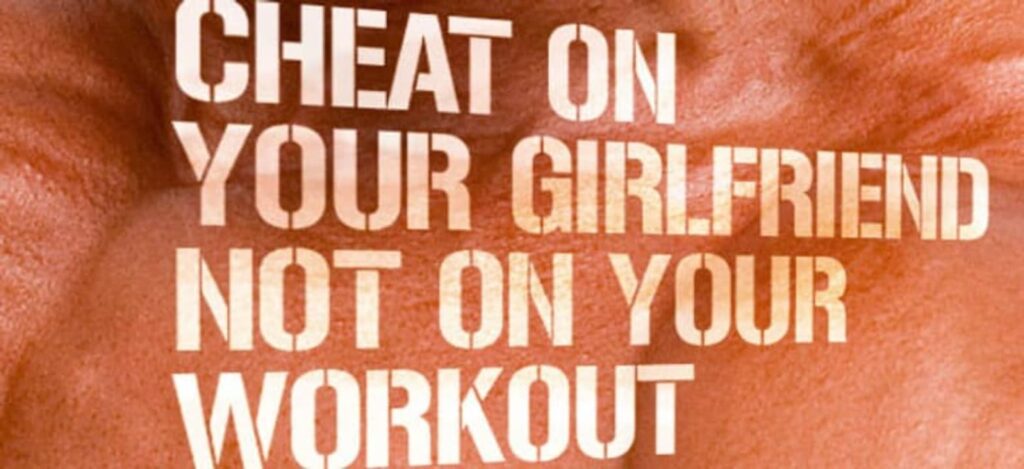
Germany, 2012. The team responsible for creating a compelling campaign at Reebok is brainstorming new slogans that are both fun and attention-grabbing. They want something that will generate playful controversy. You would never believe what they ended up with: “Cheating on your girlfriend is bad. Cheating on your workout is worse.”
The advertisement was withdrawn in record time (once again: Was there no one to say “Bad idea”?), and the company had to send a press release clarifying that they did not endorse infidelity. The magnitude of the blunder must have been significant for them to have to disassociate their brand from a concept that, at first glance, has nothing to do with it.
2 – PSP
During the ’90s, video game advertisements were, in hindsight, a collection of sexist, racist, and transphobic absurdities, but they were products of their time. By the time the PSP was released, Sony knew that the rules of the game had changed, and controversial ads did more harm than good. And honestly, I believe that with this billboard, they simply wanted to announce that the console would now be available in white color. But…
“The white is coming” with an image depicting a white person seemingly dominating a black person… It’s not the best idea, no matter how spectacular it may have sounded in their heads. The controversy was inevitable, and Sony did not withdraw the advertisement, explaining that there was no ill intent behind it. Well, there might not have been malice, but…
1 – Pepsi
Yes, it was a disaster that many saw coming. The biggest advertising blunder of the 21st century starred Kendall Jenner leading a protest and seemingly resolving tensions between protesters and police by handing a can of Pepsi. Not only did Twitter mock the advertisement endlessly, but it was also perceived as exploiting the Black Lives Matter movement for commercial gain.
Quickly, the million-dollar campaign was withdrawn, and Pepsi apologized to Kendall Jenner (who, on the other hand, might not have accepted the ad in the first place) and stated that they were “trying to project a global message of unity, peace, and understanding.” Clearly, someone involved had never been to a real protest, Pepsi.
From Cola-Cao to Carmen Sevilla singing for Philips (“I see bullfights in a bathing suit”), the creativity of advertisers has always skyrocketed to impossible limits.
With the decline of traditional television, we lost many things: the sweltering summers watching a show with scantily clad boys and girls, the late-night debates, the cartoons during lunchtime, and, of course, the music commercials. From Cola-Cao to Carmen Sevilla singing for Philips “Yo veo las corridas en traje de baño” (“I see the bullfights in a swimsuit”) , advertisers’ creativity has always reached impossible limits. And as evidence, here are eight music commercials that marked an era and will stay rent-free in your head. You’re welcome.
To announce that 14 million euros were being distributed in the summer draw, the advertisers from the Tándem agency did something unacceptable in a world of uptight people: they went out to sing summer songs in the cheesiest way possible. If you remember “Yo te doy cremita, tú me das cremita” (“I give you sunscreen, you give me sunscreen”), “Me pica la pierna, me pica el ombligo” (“My leg itches, my belly button itches”), and “¿Que qué es lo que tengo? Que tengo de tó” (“What do I have? I have it all”), your early 21st century was happier. The following year, they tried to emulate the success again (they even released an album), but they were no longer funny. A little goes a long way…
7-Bocatta and its controversy on the field (2003)
“One of the most bitter controversies in the history of advertising is found in this hilarious Bocatta campaign that was withdrawn after several farmers’ associations complained that Sra. Rushmore was mocking them with phrases like “Sabañones y callos, labrando bajo el día el sol”(‘Chilblains and calluses, toiling under the sun all day’) and insinuating that everything harvested from the fields would only lead to arriving home twisted with back pain. At least they were able to continue using the catchy tune as a base for future years, though.”
6-Calvo and Hu-ha! (2007)
Fifteen years after Chimo Bayo ruled the Ruta del Bacalao (Cod Route), Calvo turned him into the king of tuna. There wasn’t a child in Spain who didn’t drop everything to sing, almost tribal-like, “Sacatúnn que pen que summum que tun,” (“Sacatúnn, what a pain, what a summit, what a tune.”) which also became the most bizarre slogan possible. Chimo Bayo was never so celebrated again until the release of ‘La ruta’.
5-Trina and Ramón García (2009)
The Trina commercials were a masterpiece from start to finish. Under the guise of “being natural,” they began singing about the most cringe-worthy moments, like doing the polar bear with straws or being a fan of Ramón García. A year earlier, they had already been the best on television with phrases like No estás sola, yo me tatué a Iván Campo” (“You’re not alone, I got a tattoo of Iván Campo,”) Yo voté a Finlandia en televisión” (“I voted for Finland on TV,”) or “Yo salí voluntario a que me hipnotizarán” (“I volunteered to be hypnotized.”) A true masterpiece.
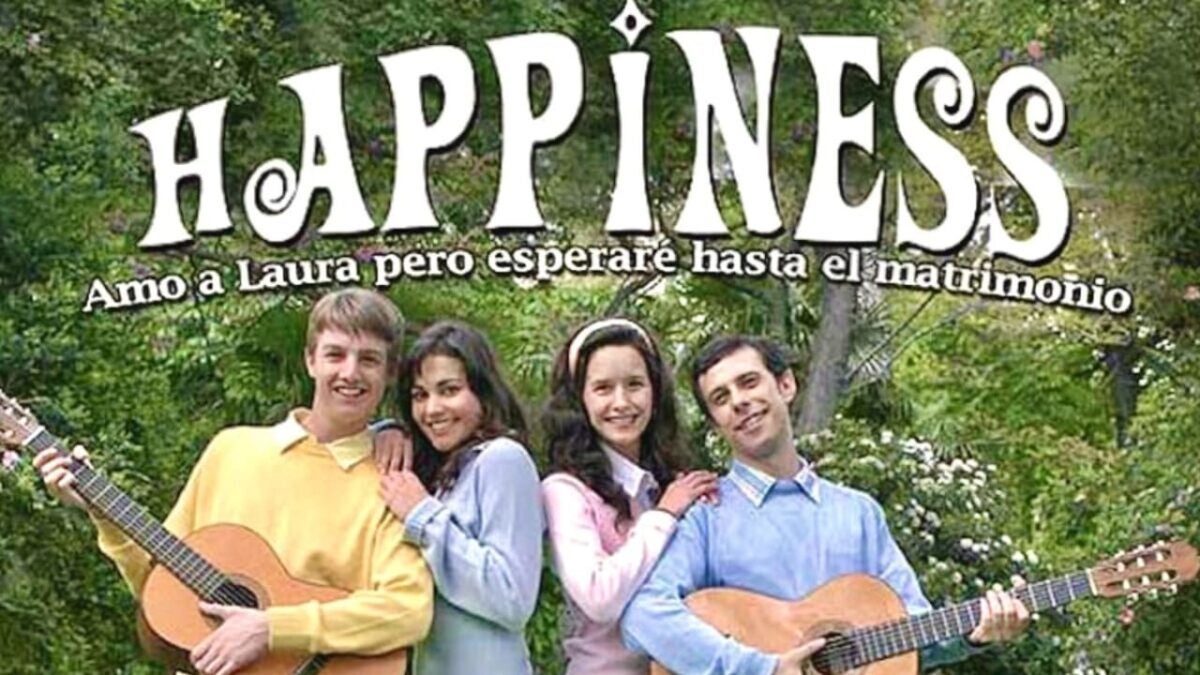
4-MTV and ‘Amo a Laura’ (2006)
MTV made its debut in Spain and entrusted the advertising campaign to the pioneer of Spanish pop bubblegum, Guille Milkyway, who had already released two fabulous albums with La Casa Azul, where he also hid behind a fictional band, which he virtually killed off with the release of ‘La revolución sexual’. The result was an impressive hit that many still believe to this day was real: The Happiness sang about chastity and became so successful that the following year they tried to repeat the feat with their sequel, ‘El honor de Laura’. It’s a great song, but it came too late.
3-Fanta and A Tomar Fanta (2012)
For two consecutive years, “A tomar Fanta” became a regular presence on television. First, with a chorus of children singing about the worst situations in the world, which perhaps haven’t aged as well “A la que te quiere solo como amigo y al que cuenta su vida por Tuenti” (“To the one who only sees you as a friend and to the one who shares their life on Tuenti”). Then, with rockstar cats. They gave it their all in such a way that they even started one of the first creative campaigns with influencers when Zorman was a hit. It was just ten years ago, you know. How time flies.
2-Coca-Cola and musicals (2003)
If every time you’ve been called to the director’s office at work you haven’t hummed “Veo una vida nueva y tú no estás en ella” (I see a new life and you’re not in it), then you’re not one of us. Three versions in just one minute ranging from opera to rap, passing through the hippy style. Years later, they would come back with ‘Del pita pita del’, which marked another milestone in our country. There’s nothing like a good song to make people remember you.
1-Pikolin and Nacho Vigalondo (2011)
After being nominated for an Oscar for ‘7:35 in the Morning,’ it was clear that Nacho Vigalondo had a future in composing songs. The same year he released ‘Extraterrestrial,’ he made a short film for Pikolin, a single-shot masterpiece that lasted two and a half minutes. In it, he went through, one by one, all the horrible things that can prevent you from sleeping, from that lover of power tools to the fifth-floor washer-dryer. I still don’t know how one can have so much creativity. Pure glory.
Left behind are ‘Los animales de dos en dos’,’La Española, una aceituna como ninguna’, ‘Somos los Conguitos y estamos requetebien’, ‘Con poco me lo monto’, ‘Y una maratón’… We have already proven that we can be dull in advertising. Can we start being cool again soon, please?