Every day it becomes clearer that what was promised as “the great cultural revolution” has turned into a mere refuge for the mediocre. I am talking, of course, about artificial intelligence, capable of creating texts without heart, images without soul, videos without naturalness, extracts from a future that science fiction authors have been warning us about for years. What have we done? Of course, we have embraced drawings with six fingers, dislocated jaws, blurry faces, and unnatural movements. And, among all the people in the world, who would you say has decided to support AI as […]
With each passing day, it becomes increasingly clear that what was promised as “the great cultural revolution” has remained merely a refuge for the mediocre. I am talking, of course, about artificial intelligence, capable of creating texts without heart, images without soul, videos without naturalness, excerpts from a future that science fiction authors have been warning us about for years. What have we done? Of course, we have embraced drawings with six fingers, dislocated jaws, blurry faces, and unnatural movements. And, among all the people in the world, who would you say has decided to support AI as if it were the salvation of creativity? Of course, the king of the mediocre: Elon Musk.
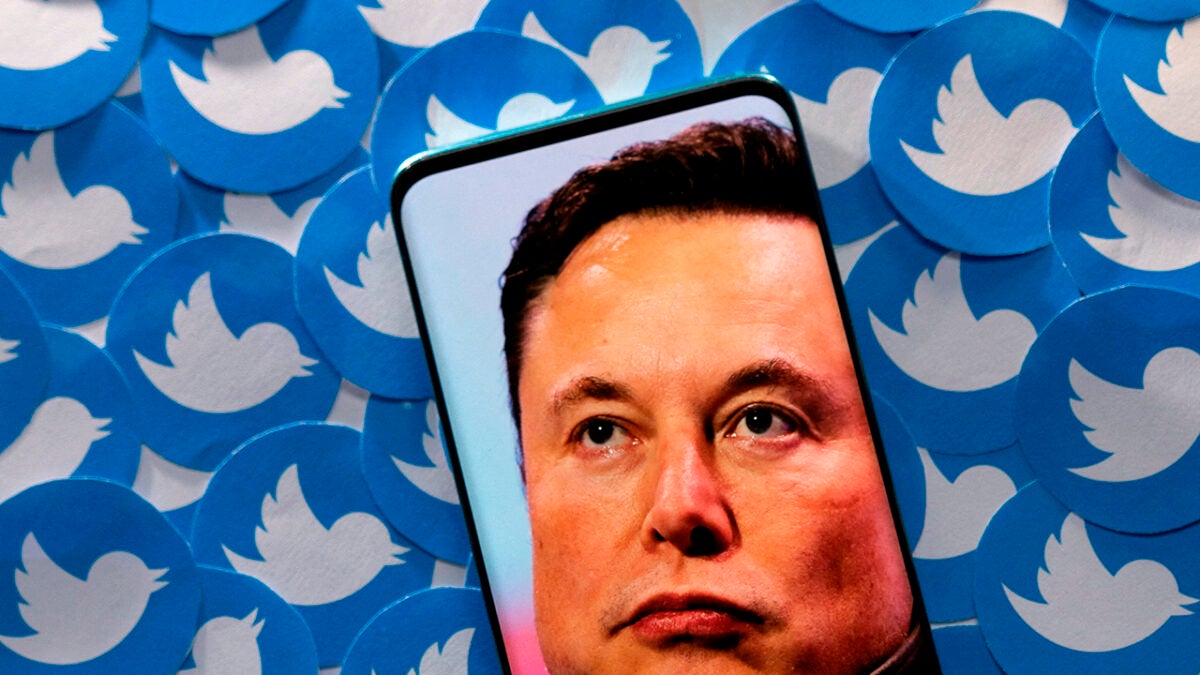
Imagine you are the richest person in the world. You are the right-hand of the President of the United States, own an aerospace company, the most well-known electric cars, and even your own social network that you have destroyed by mistreating it. What is the next step? Well, for Elon Musk, it’s video games. Does that mean he has gathered a group of people who will create the future of the industry over several years? Of course not: he has relied on an artificial intelligence company.
Musk has said on Twitter that he has created a video game studio that will use AI to “make video games good again.” Because it’s not like we’re literally drowning in pending games because most of them are excellent! Of course, by “good” he refers to his fanciful ideas of anti-woke power that he believes the silent majority shares (instead of the minority that shouts louder than it should).
The company in question is, of course, xAI (within Musk’s obsession with the letter X), which so far has brought Grok, the artificial intelligence of Twitter that literally no one is using. No one really knows what he means by “making games using AI” (all games in history have AI in some way, that’s what it’s about). Could it be that he’s still hurt from that time he was booed at a Valorant tournament and has decided to create his own games? His followers on Twitter think it’s the best idea ever. The rest of us just want this horrible dystopia to end once and for all.
When something is successful, many rush to copy it in the hope of also achieving success. Sometimes it works out well, like that time Instagram copied Snapchat to create its Stories, but most of the time it goes wrong, like that Facebook copy manufactured by Google called Google+ that no one ended up being too interested in. And what about Twitter? Deep down, it’s the simplest social network of all: you only need text, images, and a couple of functions. It’s easy to copy, but… Why do we need another Twitter if we already have one […]
When something is successful, many rush to copy it in hopes of achieving success as well. Sometimes it works out, like that time Instagram copied Snapchat to create its Stories, but most of the time it doesn’t, like that Facebook copy manufactured by Google called Google+ that no one was really interested in. And what about Twitter? At its core, it’s the simplest social network of all: it only requires text, images, and a couple of functions. It’s easy to copy, but… Why do we need another Twitter if we already have one and don’t like it too much?
Although now it seems that we have all packed our virtual bags to move to Bluesky, in November 2022 this exodus was not yet so clear. Clearly, something had to be done after Elon Musk’s arrival to power at the social network, but no one was quite sure what. Move to Mastodon? To Threads? To Bluesky? What was the right path? There are very few breadcrumbs, and they have to be shared among several, after all.
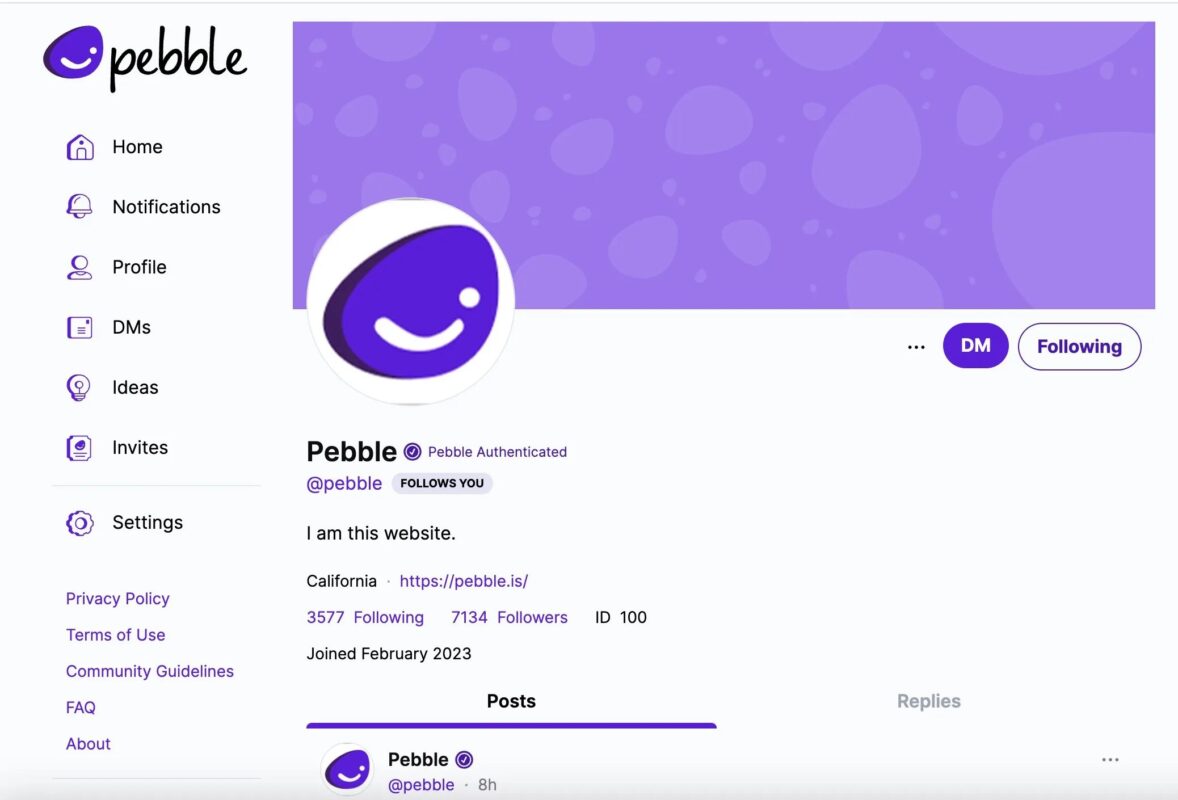
As soon as he arrived at Twitter, Musk decided to lay off a large part of the staff, who suddenly found themselves out of work. This was the case for Sarah Oh and Gabor Cselle, who decided to do what they did best: create Twitter 2. Or, to summarize, T2, which to avoid litigation evolved into Pebble some time later. Pebble was an alternative to Twitter that allowed, like the former, 280 characters, with the intention of being as similar to the social network they loved as possible, but with more security and moderation.
After several tests since they founded the company in November 2022, Pebble was finally launched on April 25, 2023, with an invitation system that initially allowed only 1000 users to post, who had to invite five other friends until reaching 6000, and then continue expanding. All this without an app, just through the web. And if you’re wondering if it was a success, consider whether people are moving to Pebble or other places.
Just seven months after opening, Pebble closed its doors: only 3000 people used it daily, and with that attendance, it simply wasn’t viable. The website became an instance of Mastodon and that’s where the adventure ended. Another grain in this vast sand that is the Internet, a footnote in history that at least dared to stand up. Hey, who knows? Maybe with a little more advertising, we would be moving to Pebble instead of Bluesky…
It has been a daily drip. When Twitter was bought by Elon Musk and started making erratic decisions, such as allowing people to see messages from those they have blocked or letting the social network fill with tension and far-right messages, many ended up leaving for a fresh start, either to a less relevant alternative (Mastodon, Threads, etc.) or to live their online life away from the social network. For over a year, we have lived with the uncertainty of what would be Twitter’s successor, but only now, when it has finally […]
It has been a daily drip. When Twitter was bought by Elon Musk and started making erratic decisions, such as allowing people to see messages from those they’ve blocked or allowing his social network to be filled with tension and far-right messages, many ended up leaving for good, either to a less relevant alternative (Mastodon, Threads, etc.) or to live their online life away from the social network. For over a year, we have lived with the uncertainty of what would be Twitter’s successor, but only now, when the massive exodus has finally arrived, have we known what the solution was.
What worked on Twitter in its early days wasn’t the platform itself, but the people you encountered on it. When the worst you could find was a troll or someone bored who wanted to argue with you. When bad people were banned and hateful behavior wasn’t allowed. When it was a playground for creativity, humor, and camaraderie. Sometime later, it has turned into Mordor, a place where the people you didn’t want to enter have done so, and their greatest pleasure is to annoy you. You, specifically.
Long-time Twitter users felt like they were in a prison that they stayed in because there was no real alternative: after all, none of the other destinations had enough people to create a real community. However, after Donald Trump’s success in the elections, with Elon Musk as his second in command, more progressive users have decided to seek an island where they can be safe on Bluesky, the platform created by Jack Dorsey after leaving Twitter, which is basically like an early version of that social network.
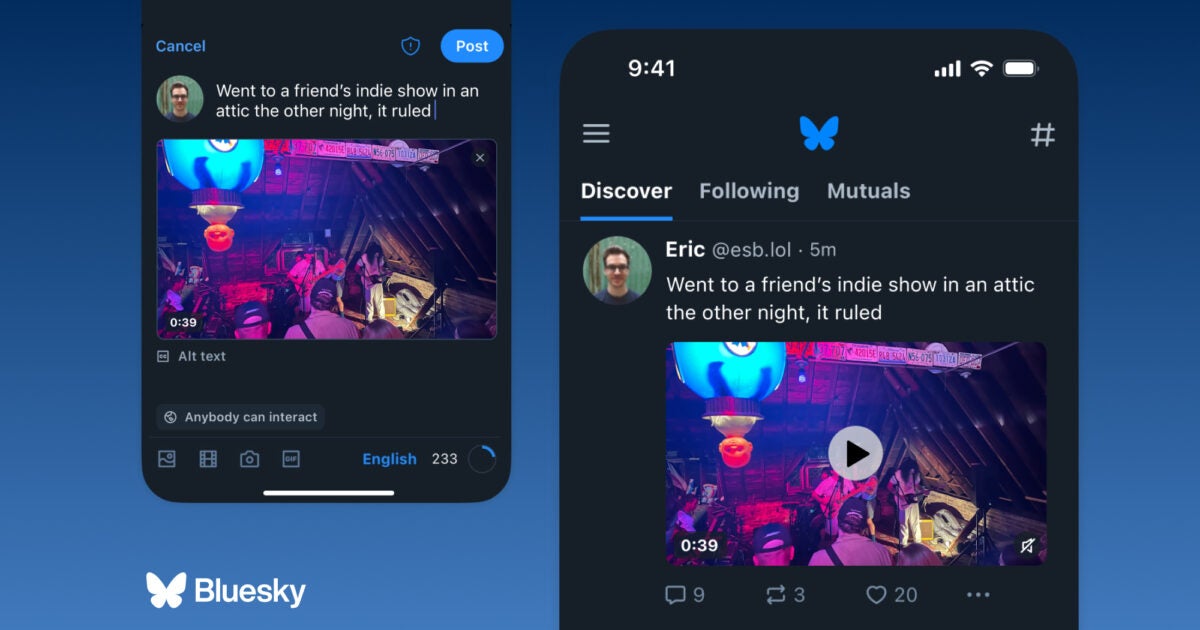
Videos can only be one minute long, gifs have pixels, there are no polls, and you can’t attach photos in direct messages, but it has something that goes completely against the current direction of Twitter: you can block entire lists of people. In just two clicks, you can ensure that you won’t read anything that goes against your ideals and that no one will come to your comments to stir things up. Is it an echo chamber? Yes. Of course. After what we’ve been experiencing since 2020, it’s exactly what we need. A little bit of peace. There may be fewer people, but it’s growing by leaps and bounds… and it’s noticeable in the interaction.
Fewer people, more audience
The Twitter algorithm is so damaged that currently, by posting the same message, you get more views on Bluesky with a quarter of the followers. In other words: it’s worthless to have tens of thousands of followers if the interaction is null because the social network decides to hide your messages or show them only to those who oppose you to encourage confrontation. And a large part of the people have already realized this: Bluesky users, who in July were close to six million, now exceed 18 million, increasing at a rate of one million per day.
In fact, it is the most downloaded app in the App Stores, and we can all see in our Twitter follower count that it is causing real damage to the other social network, which is gradually declining, almost dripping, to a result that the owner of SpaceX doesn’t care about at this point. After all, he already has what he wanted, which was a position in politics. The natural result is what we are all sensing: Bluesky and Twitter will be separated by political affiliation, creating respective echo chambers. Except for a few brave souls shouting into the void and other successful accounts that don’t want to rid themselves of their ego so quickly, everything seems to indicate that we will have two powerful social networks, with Threads as the haven of Stephen King and Instagram users.
And yes, it’s a hassle. Of course, it’s a hassle. Starting from scratch is not something anyone enjoys, but there are tools and extensions that make it easy to find your friends and rebuild the community from scratch. It may take time to reach the numbers you once had, but you will gain something much better than that: peace of mind. Knowing that there are no bots, cryptocurrency ads, or people using your face to discredit you. That you won’t lose your job because of what a name followed by numbers, which is clearly a multi-account, says.
At the moment, Bluesky is in its early stages, and everyone is treating each other with the expected (and expectable) cordiality. For now, it hasn’t reached its user limit, and beyond the server issues, it should prepare to welcome the 20 millionth Twitter user. Considering that Twitter has 586 million active users, it still has a long way to go, but no one believed it would get this far. Who knows, it might just remain a niche social network, but it’s likely to grow, even if only due to the bandwagon effect. Because entering like a bull in a china shop has its consequences. And they are not positive.
Attention, things are about to get interesting. Twitter will completely change the functionality of its block button, as confirmed by independent researcher Nima Owji. Soon, when you block an account, it will still be able to see your public tweets, although it won’t be able to interact with you. Elon Musk confirmed this change this week, explaining that “the block function will prevent that account from interacting with a public post, but it won’t prevent them from seeing it.” In other words, while interaction restrictions will remain, blocked accounts will have visual access to the public content of the people who have blocked them. Owji points out […]
Attention, things are about to get interesting. Twitter will completely change the functionality of its block button, as confirmed by independent researcher Nima Owji. Soon, when you block an account, it will still be able to see your public tweets, although it won’t be able to interact with you.
Subscribe to the Softonic newsletter and get the latest in tech, gaming, entertainment and deals right in your inbox.
Elon Musk confirmed this news this week, explaining that “the block function will prevent that account from interacting with a public post, but it will not prevent them from seeing it.” In other words, although interaction restrictions will remain, blocked accounts will have visual access to the public content of the people who have blocked them.
Owji points out that blocked users will no longer see the message “You are blocked” when they visit the profile of someone who has blocked them. Instead, they will be able to see the posts like any other user, although without the ability to reply, retweet, or quote those tweets.
The blocking option continues to work wonderfully on Bluesky, a social network that is giving Twitter a lot of “trouble”
As it could not be otherwise, Musk has defended the change, emphasizing that “it was about time this happened.” His stance on this situation is based on the fact that, previously, blocked users could see the tweets of a public account by logging out. Now, Twitter will allow those users to view the tweets without having to resort to any “tricks.”
Although interactions will still be prohibited, this enormous change could severely affect those who use blocking to protect themselves from harassers, as the barriers between blocked users will be much less strict.
Tensions between Brazil and Elon Musk have escalated even further. After the Brazilian Supreme Court decided to ban Twitter throughout the country, authorities have now turned their attention to Starlink, Musk’s satellite broadband company.
The ban on Twitter in Brazil was imposed by Judge Alexandre de Moraes, arguing that the social network allowed the spread of hate messages and disinformation that undermined the country’s democracy. This measure was supported by Brazilian President Luiz Inácio Lula da Silva, who emphasized that “the world is not obliged to tolerate Musk’s far-right ideology just because he is rich.”
The conflict between Musk and Judge Moraes is not new; it dates back to months ago, when Twitter disobeyed court orders to block those accounts accused of spreading disinformation. This led to the blocking of Starlink’s bank accounts in Brazil, after Twitter did not pay the imposed fines.
In response to this drastic measure, Elon Musk warned that he would seek a reciprocal embargo on Brazilian assets, although he did not specify how he would carry out this action. However, the situation became even more complicated after Starlink refused to comply with the order to block Twitter nationwide, leading the National Telecommunications Agency (Anatel) to consider the possibility of sanctioning the company. Artur Coimbra, a commissioner of Anatel, stated to Reuters that the agency is evaluating the possibility of revoking Starlink’s license in Brazil due to its lack of compliance.
Although Twitter has been blocked in Brazil, some users can still access it through VPNs. Moraes has threatened fines of 50,000 Brazilian reais (almost 8,100 euros) for those who use these means to evade the ban, but implementing this measure would not be an easy task.
Elon Musk continues to deny that he gave a Chechen warlord a Cybertruck equipped with a machine gun, despite the fact that the warlord himself made the claim.
As CNN reported, Ramzan Kadyrov, the head of the Republic of Chechnya annexed by Russia who acts as a soldier for Vladimir Putin in the region, claimed in a Telegram message over the weekend that Elon Musk had given him the makeshift cyber tank.
Kadyrov said he received a Tesla Cybertrack from Elon Musk. He promised to send it to the "special military operation" zone and attached a machine gun to it.
"Elon, thank you! Come to Grozny, I will receive you as the most dear guest! I do not think that our Russian MFA will be… pic.twitter.com/m72fg2G2PU
‘We have received a Tesla cybertruck from the respected Elon Musk,’ wrote Kadyrov, according to CNN’s translation. ‘I was delighted to test the new equipment and personally saw why it is called the Cyberbeast.’
In response to criticism on X, Musk insisted that the claim was false, and used an slang for disabled people to make his point clear.
Are you seriously so retarded that you think I donated a Cybertruck to a Russian general?
‘Are you seriously so r*tarded that you think I donated a Cybertruck to a Russian general?’ the billionaire wrote. ‘It’s unbelievable.’
A controversy that keeps haunting Elon Musk
After that initial denial, Kadyrov’s statement continued to spread like wildfire on social media. In response, Musk reaffirmed his denial, this time taking advantage of another user’s post.
‘I highly doubt that Elon Musk is giving away Cybertrucks to Russian officials,’ wrote the user alongside a screenshot of an article repeating Kadyrov’s claim. ‘Maybe the guy got it from someone who sold it to him. But I can’t imagine Elon Musk giving away cybertrucks to Russia.’
And the most logical answer is that the Chechen leader was probably just joking, or at least that’s what the X owner believes. ‘This is completely false,’ Musk wrote. ‘He’s trolling.’ It’s curious to see how trolls fail to turn his own social network against him… once again.
X (formerly Twitter) has decided to suspend the use of European user data to train its artificial intelligence, Grok. The company has made this decision following complaints from 9 European countries (including Spain) to the Data Protection Commission of Ireland (DPC), which oversees the activity of large technology companies in the European Union.
In a context of great control over AI companies, the DPC requested a few days ago the suspension of data processing activities by X to train its AI, alleging that the company did not obtain the express consent of users for such purposes.
The data collection process began on May 7, although the possibility of exclusion for users was not introduced until July 16 and was not immediately available to everyone. Therefore, for a while, X used the data without the explicit consent of users, going against the requirements of the General Data Protection Regulation (GDPR) of the EU.
X (formerly known as Twitter), under the leadership of Elon Musk, has stated that the data collected between May and August will not be used while the DPC order is being examined. The company has described the measure as ‘unwarranted, overbroad and singles out X without any justification,’ and has expressed concern that this could affect ‘the security of the platform’ and its operations in the EU.
And it is not an isolated case precisely. Other tech giants, such as Meta and Google, are being subjected to similar scrutiny by regulatory authorities, and have taken measures to adjust their practices to European laws. These measures reflect a change in attitude from EU regulators, who are now taking a more active role in supervising the use of data by tech companies.
Twitter, owned by Elon Musk, has received a series of complaints for privacy violations in the European Union. The platform is accused of using user data to train artificial intelligence models without their consent.
The case came to light when a Twitter user discovered that the social network was processing information from European users’ posts to train its chatbot Grok, which caught the attention of the Irish Data Protection Commission (DPC), responsible for overseeing compliance with the General Data Protection Regulation (GDPR).
The GDPR requires that any use of personal data must have a valid legal basis. However, Twitter, which handles data from 60 million people in the EU, seems to have relied on “legitimate interest” to justify the use of this information. This situation has not been well received by data protection authorities from nine European countries, including Spain, who have filed complaints against the platform alleging that Twitter did not comply with the GDPR requirements by not obtaining explicit consent from users.
Max Schrems, president of the organization NOYB, which supports the complaints, states that “companies must request user consent before using their data.” Although Twitter allowed users to opt out, this happened after several months of data processing without prior notification.
Several weeks ago, X, formerly known as Twitter, announced the implementation of a change aimed at better safeguarding our privacy: the privatization of ‘likes.’ Shortly after this update, however, a security incident occurred that allowed private likes to remain visible to other users.
According to a statement issued by the platform and reported by 9to5Mac, this flaw was detected last June, just after the implementation of the new privacy policy. ‘The X team received information that some likes may have remained publicly available,’ the company said in an email sent to affected users. Despite efforts to make likes private and reduce unwanted behaviors encouraged by their visibility, such as fear of retaliation or the need to protect public image, this flaw briefly exposed users’ preferences.
How can we know if we have been affected by this incident? X has started notifying users whose accounts may have been compromised. The delivery of notices is still ongoing, but if we do not receive a message from X soon, we can assume that our account was not affected.
Although the like counter of any tweet remains visible, only the account that has received the like can see where it comes from. A change that ensures that we can continue customizing our news feed on X privately. It’s a step in the right direction that, although with a brief incident, allows us to use X more personally without compromising our privacy.
En solo año y medio, la popularidad de X (como le gustaría a él que lo llamáramos) ha caído en picado y su aparente visión equidistante está claramente tendente a apoyar a un bando político sin vergüenza alguna. Tanto, que incluso ha mudado la sede fuera de California, enfadado por sus leyes progresistas.
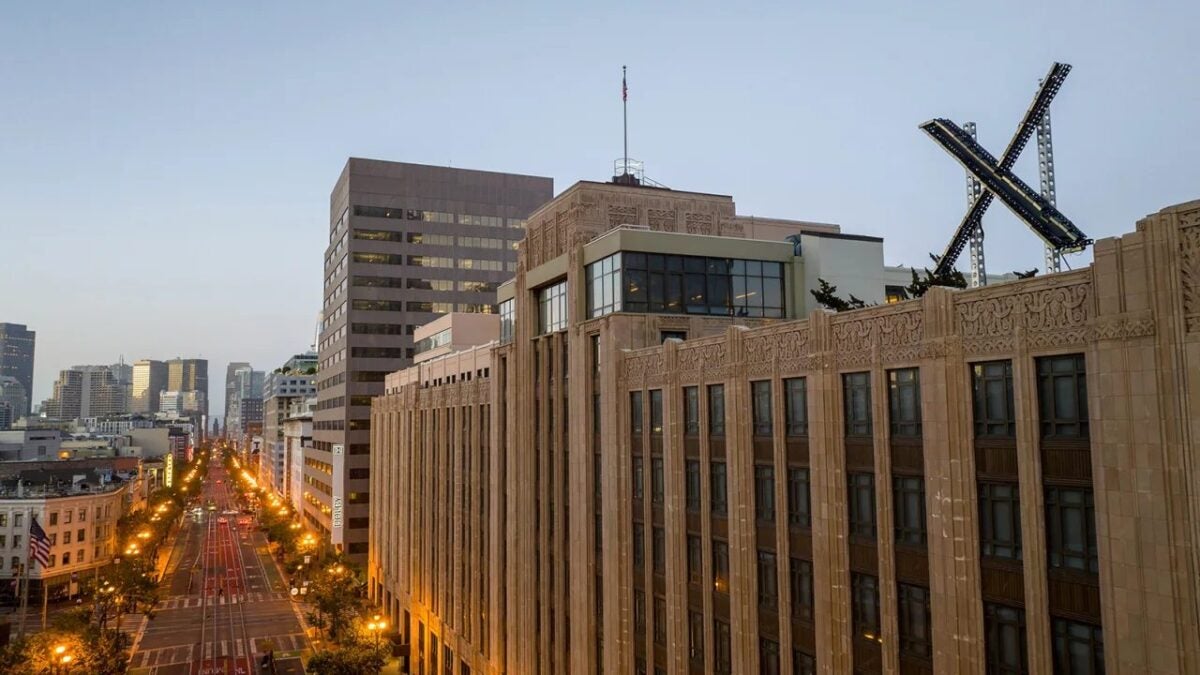
One of the things that excited me the most about visiting San Francisco years ago was seeing the facade of Twitter, adorned with the blue bird, when it was still called Twitter and Elon Musk was just a millionaire in love with the social network. In just a year and a half, the popularity of X (as he re-branded the platform) has plummeted and his neutral vision is leaning towards supporting a political side without being afraid. So much so, that he has even moved the headquarters out of California, angry at its progressive laws.
For Musk, the last straw has been a new law that prevents teachers from informing parents if their son or daughter wants to be identified as a different gender. You may ask, “What does this have to do with X?” Absolutely nothing, but the billionaire has a trans daughter named Vivian Jenna who hates him with all her heart, and to win back her love, he has decided to bet everything on transphobia. Well done, Elon.
Musk will not only move X’s headquarters from San Francisco to Austin (regardless of what its employees say), but will also move SpaceX from Hawthorne (California) to Starbase (Texas). The reason he has given is that the laws ‘attack families and businesses.’ The public, who should have reacted by raising their hands to their heads, mostly shrugged.
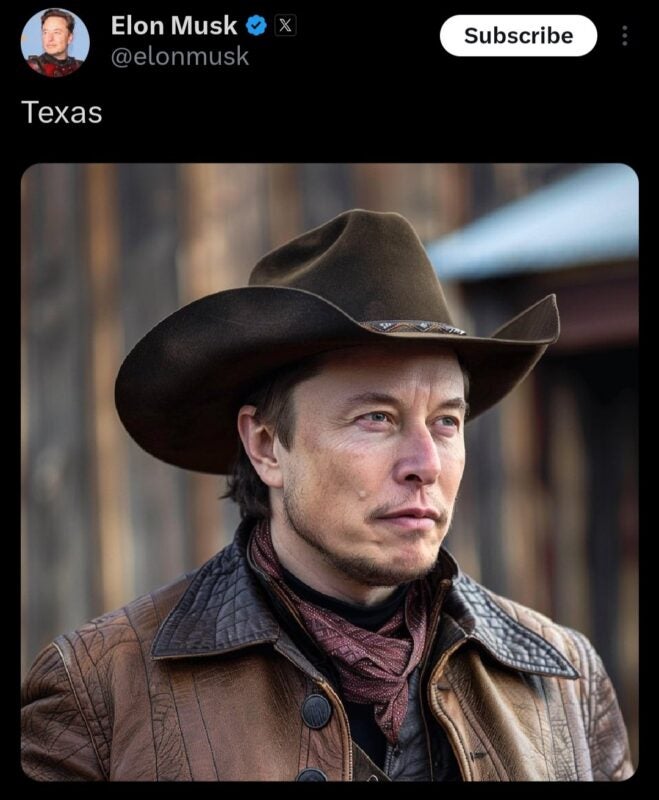
It is important to note that just a year ago, Elon wrote “San Francisco, beautiful San Francisco even if others abandon you, we will always be your friends.” Apparently, not anymore. Not only that, but he also believes that many will follow in his footsteps, and in a post made by AI (of course) he has posted a photo of himself wearing a cowboy hat. Because the energy of a divorced man must be embraced, it doesn’t come alone.
Of course, this is a political decision that, hopefully, will turn some heads and change some things around. It remains to be seen how long the charade of the heartless millionaire demanding that we all love him will last.