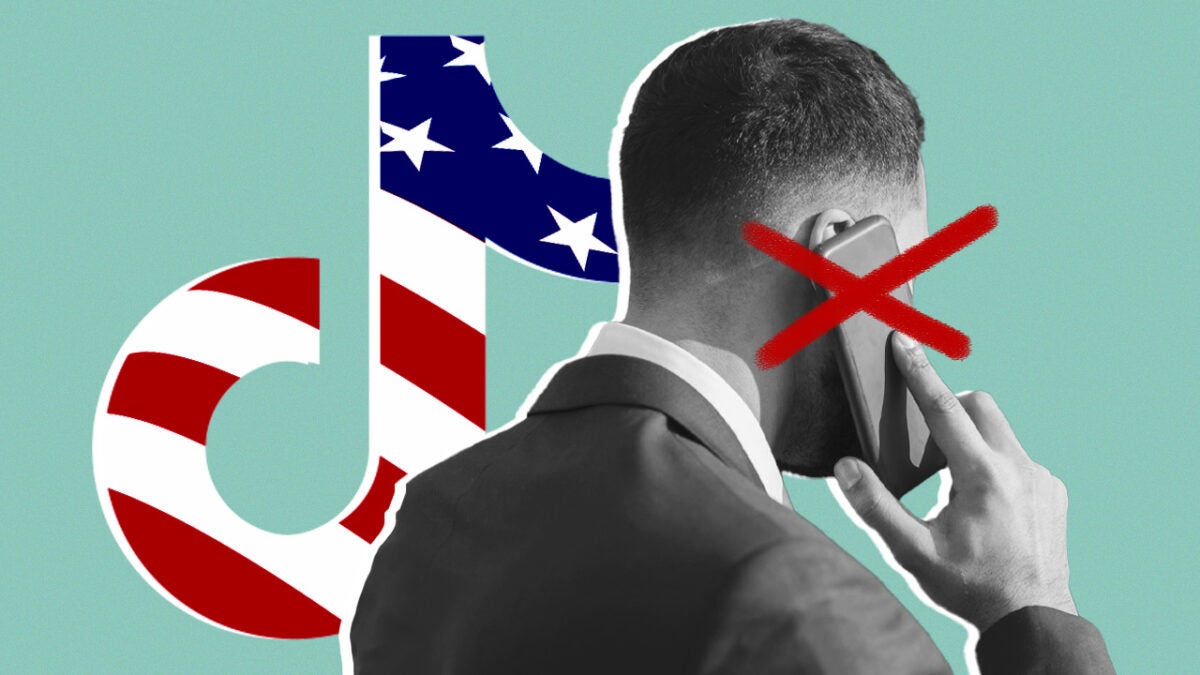
This week, the United States Congress voted in favor of banning TikTok if ByteDance did not make a difficult decision: either sell the short video application within a year in the US or they will have to close the business in the country.

As you may know, Congress approved a bill this week that requires TikTok to be sold or face a nationwide ban. President Biden signed the law on Wednesday, initiating a 270-day deadline for TikTok to decide its future in the United States.
For years there has been talk of a possible ban, but now it becomes a reality. Bytedance, the owner of the application, now has three options:
- You can fight the law in court, and if you win, then nothing will change for the application in the territory of the United States.
- Bytedance could sell TikTok US to a local owner, although probably without its addictive algorithm that so many companies desire.
- Or TikTok could simply shut down and comply with the ban. Here’s how each option would unfold.
Option 1: TikTok fights the law in court
A TikTok spokesperson stated last Wednesday: “This unconstitutional law is a ban on TikTok, and we will challenge it in court”, probably arguing that these measures violate the First Amendment.
Legal experts claim that banning TikTok would affect the freedom of expression of its 170 million American users, the app stores that offer it, and TikTok itself. If Bytedance wins this argument, the law would be overturned and everything would go back to normal.
@tiktok Response to TikTok Ban Bill
♬ original sound – TikTok
However, there are no guarantees that Bytedance will win in court. Although the company has sufficient arguments, the United States has many laws that infringe constitutional rights in the name of “national security”. That is exactly the argument that the United States is using in this case.
Apparently, lawmakers have received classified reports showing how TikTok is a “spy balloon on Americans’ phones,” claiming that the app shares that information with the Chinese Communist Party. If the United States can prove it in court, it could win. Then Bytedance will have two options for the application.
Option 2: Bytedance sells TikTok to a US owner
The next most likely option is for TikTok to be sold to a US owner. The Information reported on Thursday that Bytedance was internally discussing how to sell TikTok in the United States without its addictive algorithm.
However, Bloomberg and Reuters also reported on the same day that Bytedance would not sell TikTok under any circumstances. TikTok is estimated to be worth between 20,000 and 100,000 million dollars.
If the application doesn’t come with that sweet algorithm, then it’s probably worth closer to 20 billion dollars. But does the application really have any value without the algorithm? Sure, it has a good name and many users, but if it’s difficult to use, people will leave (no one looks at Twitter).
If a sale includes the algorithm, the sky is the limit: how can you put a price on something that has 170 million addicted Americans? For example, the former CEO of Activision Blizzard is interested.
In a sales scenario, it is possible that Meta, Snapchat, Alphabet or another big tech company buys TikTok. However, that would probably expose them to monopoly issues. There are very few people who can afford TikTok, and if Bytedance refuses to sell it, there is only one option left.
Option 3: TikTok US Shutdown
If the legal challenge of TikTok fails and the sale does not go through, TikTok could simply shut down in the United States. This would separate the most popular social media app in history from the wealthiest user base on Earth (Americans), which is why many see it as unlikely.
This would force Bytedance to leave empty-handed and lose tens of billions of dollars, but it is important to remember that this is not just about business, but also about politics.
It is a real possibility that TikTok may simply be banned, a possibility that I don’t think is being taken seriously enough. China has already banned US social media apps for about a decade, most recently Threads and WhatsApp.
American technology companies lose the entire Chinese market, but they do not sell their algorithms and previous brands to companies there. That would deprive the United States of its global competitive advantage.