Atari has acquired the rights to multiple iterations of the Wizardry franchise. Holding the licenses for Wizardry: Proving Grounds of the Mad Overlord (1981), Wizardry II: The Knight of Diamonds (1982), Wizardry III: Legacy of Llylgamyn (1983), Wizardry IV: The Return of Werdna (1987), and Wizardry V: Heart of the Maelstrom (1988), as well as “many other video games, rights, and other intellectual properties related to Wizardry.” This could well translate into new games for the franchise as well as series, movies, comics, or any other kind of productions. Wizardry, one of the most […]
Atari has acquired the rights to multiple iterations of the Wizardry franchise. Holding the licenses for Wizardry: Proving Grounds of the Mad Overlord (1981), Wizardry II: The Knight of Diamonds (1982), Wizardry III: Legacy of Llylgamyn (1983), Wizardry IV: The Return of Werdna (1987) and Wizardry V: Heart of the Maelstrom (1988), as well as “many other video games, rights, and other intellectual properties related to Wizardry.”
Wizardry, one of the most influential video games in history
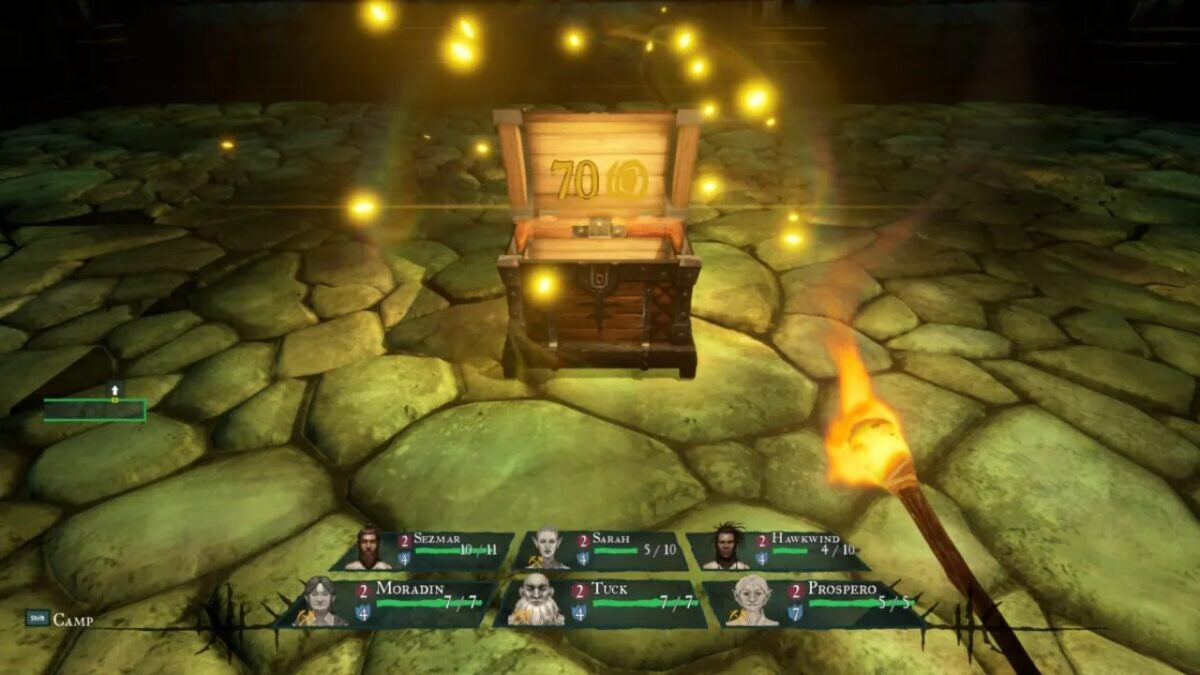
In fact, Atari is not new to the world of Wizardry. In 2024, they published a remake of Wizardry: Proving Grounds of the Mad Overlord, developed by the studio Digital Eclipse, which updated the graphics and mechanics of the game to make it more accessible to new generations of players. Something very necessary given the difficulty and roughness of a game originally released in 1981 for the Apple II.
The importance of Wizardry cannot be overlooked in any case. The franchise is of great significance to video games, as it shaped what RPGs would become thereafter.
Dragon Quest, Final Fantasy, and Baldur’s Gate are direct heirs of Wizardry, as their creators have explicitly stated more than once, but anime also has a clear heritage from this game, as its popularity was such that it has influenced numerous cultural productions outside of video games, including the pioneer of high fantasy in Japan: Record of Lodoss War.
On the other hand, it seems that things are not so clear. Drecom, the company behind the rights to Wizardry in Japan and which has been in a decades-long struggle for the rights with its original creator, Robert Woodhead, claims that Atari has not acquired the rights to Wizardry. Therefore, it seems that there will still be discussion about how all this will translate into the future of the franchise.
Wizardry, released in 1981 as Proving Grounds of the Mad Overlord, was a pioneer in the dungeon crawler genre, gaining recognition both in the West and in Japan, where it even inspired an anime series. The series has been in the spotlight recently thanks to several releases, including a faithful remake of the original classic, a game based on blockchain technology. A major inspiration for other classics like Final Fantasy, Wizardry Variants Daphne, which was initially released for mobile, has now been added to Steam, offering a first-person dungeon exploration experience with movement […]
Wizardry, released in 1981 as Proving Grounds of the Mad Overlord, was a pioneer in the dungeon crawler genre, gaining recognition both in the West and in Japan, where it even inspired an anime series. The series has been in the spotlight recently thanks to several releases, including a faithful remake of the original classic and a game based on blockchain technology.
A great inspiration for other classics like Final Fantasy
Wizardry Variants Daphne, which was initially released for mobile, has now been added to Steam, offering a first-person dungeon exploration experience with grid-based movement. In this game, players control a group of adventurers as they explore dungeons filled with goblins and trapped treasures. A tribute to the classics, the game maintains a focus on collection, allowing players to gather bones of lost adventurers that can be revived, featuring a rarity system and multiple in-game currencies.
The plot revolves around a missing king and a Lord of the Abyss, featuring a cast of notable voices, including Doug Cockle, known for his role in The Witcher. Although the combat system, which involves casting spells and facing creatures like goblins, is appealing, many players have pointed out that the gameplay experience is more forgiving than that of the original title, where characters could die permanently.
Despite the criticism towards certain modern versions of the saga, such as the blockchain-based game, the resurgence of Wizardry continues to show the influence that this classic has had on the development of subsequent CRPGs and JRPGs, demonstrating that its legacy endures over time.
Wizardry: Proving Grounds of the Mad Overlord will have a remake on May 23rd, and we’ll tell you everything you need to know about this classic RPG.
The history of RPGs is long, rich, and exuberant. Searching for the first RPG in history would be an ungrateful task, mainly because it is impossible to point out a title as the inventor of the genre. It’s not just that there always seems to be one earlier that we were not aware of, but there always seems to be another one that resembles more what we understand today as an RPG. Therefore, it is very difficult to find the origin of the genre. Although it is easy to point out some games as its predecessors.
In general, if we talk about games that have defined what RPGs are, we would have to mention two names. The first one is Ultima, a game by Richard Garriott published in 1981. The second one is Wizardry: Proving Grounds of the Mad Overlord, a game by Andrew C. Greenberg and Robert Woodhead also published in 1981. And they take two very different approaches to how an RPG should be.
Now Wizardry: Proving Grounds of the Mad Overlord is getting a remakeon May 23rd for PC, PlayStation 5, PlayStation 4, Xbox Series X, Xbox Series S, Xbox One, and Switch. That’s why it’s an excellent opportunity to delve into this franchise and its importance to the gaming industry. And why you shouldn’t miss its release.
What is Wizardry? Basically, it is a game of exploring a dungeon with a group of adventurers, obtaining treasures, killing monsters, and trying to reach the deepest part of it. In the first installment, the excuse is to descend to the end to defeat the evil archmage Werdna. To do this, we will have to manage our group, creating it from scratch and trying to make them survive the adventure without dying. Something that probably won’t happen.
This is because Wizardry was one of the first games to develop a video game in the style of Dungeons & Dragons. We needed to choose the race of our character, their class, alignment, and roll dice to decide their characteristics. This was not only the first game to offer the possibility of playing with a whole group, but also the first to come out in full color. Something that made it a technical prodigy, which also did unthinkable things until then.
Having to draw our map by hand, progressing slowly, and accepting that if one of our characters dies we will have to resurrect them or recruit a new one, is an early example of the more hardcore perspective of RPGs. Something that has survived to this day in franchises like Etrian Odyssey.
Because Wizardry is a difficult game. It helps that our characters don’t always have to have the most optimal characteristics for their class, the brutality of some of its encounters, and the existence of traps in the dungeon itself. Something that the game does to encourage us to explore slowly and carefully, returning to the initial town whenever we feel overwhelmed. Something that would make a big difference with its great competitor, Ultima, a game much more based on exploring the world and telling us a great story of salvation.
With eight main installments developed by Sir-Tech and over thirty, including the Japanese spin-offs, it is a well-known and beloved franchise among classic video game enthusiasts. Especially when it comes to the Japanese audience.
Wizardry was released in Japan in the mid-80s, becoming an even bigger phenomenon than it already was in the West. With numerous spin-offs of its own, which would give it a more personal aesthetic and a slightly greater emphasis on narrative and a darker tone, the franchise would have a great influence on the development of JRPGs. Both the creators of Dragon Quest and Final Fantasy have repeatedly pointed out the inspiration they had from both Wizardry and Ultima. In addition to being a great source of inspiration even today, as evidenced by being one of the influences of the popular anime Tragones y mazmorras.
Its influence in the West was not minor, but it is more difficult to specifically identify due to how obvious its references are. Many of the things that we could associate as indebted to Dungeons & Dragons come from what it had already borrowed from the role-playing game Wizardry, where it is much easier to see how it created certain gender notions. But that does not exclude the tremendous influence it had on the industry, showing how the logic of the board game could be translated into a video game.
Playing Wizardry nowadays is both extremely easy and difficult at the same time. Counting all its versions, the original game appeared on at least fourteen different platforms, and most of them have their own peculiarities. Except for the original version for Apple II and its adaptation for PC, the best version of Wizardry: Proving Grounds of the Mad Overlord is probably found between the Super Nintendo version and the PlayStation version. Both with improved graphics, original soundtrack, mechanical adjustments, and even an automatic map function in Sony’s console version, if drawing the map by hand is not your thing.
That’s why this remake is appreciated. With modern graphics and mechanical improvements to make it more accessible, it seeks to capture the spirit of the original without ignoring the fact that many people who can play it today weren’t even born when it came out. Something that can even be noticed in small details, like being able to run the Apple II version in a corner of the screen while playing the remake.
In addition, there are good reasons to have faith in this project. Its developers, Digital Eclipse, have a long history of bringing old games to the present in their best possible version. With their Gold Master series, they aim to bring important games from the history of video games with comments from their developers and all kinds of never-before-seen content. And compilations like Atari 50 or Teenage Mutant Ninja Turtles: The Cowabunga Collection are the best way to play some of the most important classic games from the 70s, 80s, and 90s.
If you like RPGs, you must at least try Wizardry: Proving Grounds of the Mad Overlord. An authentic classic that has defined the genre and that now, thanks to Digital Eclipse, we will be able to enjoy in a more suitable experience for the present.
Wizardry: Proving Grounds of the Mad Overlord receives a remake from Digital Eclipse that offers us a more refined version of this classic.
These days, remakes, remasters, and re-releases are very common. There comes a point where the sheer quantity of rehashed content can become uncomfortable because it can overshadow the quality of what is being published, as seen in the recent Nintendo Direct. Sometimes, what doesn’t need a remake overshadows what truly deserves this treatment. What does deserve this special attention, a fresh perspective, and careful work is the case of Digital Eclipse’s latest project.
Digital Eclipse is a studio specialized in bringing retro titles to life. They create compilations of games from consoles that are no longer available for sale, but they also work on remasters and reimaginings of titles that have been forgotten or become obsolete for various reasons. Their latest release falls into the latter category, and it happens to be one of the most important games of all time: Wizardry: Proving Grounds of the Mad Overlord.
Originally published for the Apple II in 1981 by Sir-Tech Software and designed by Andrew Greenberg and Robert Woodhead, it is considered the progenitor of RPGs. One of the most influential games of all time, it shaped the foundations of what we now understand as an RPG.
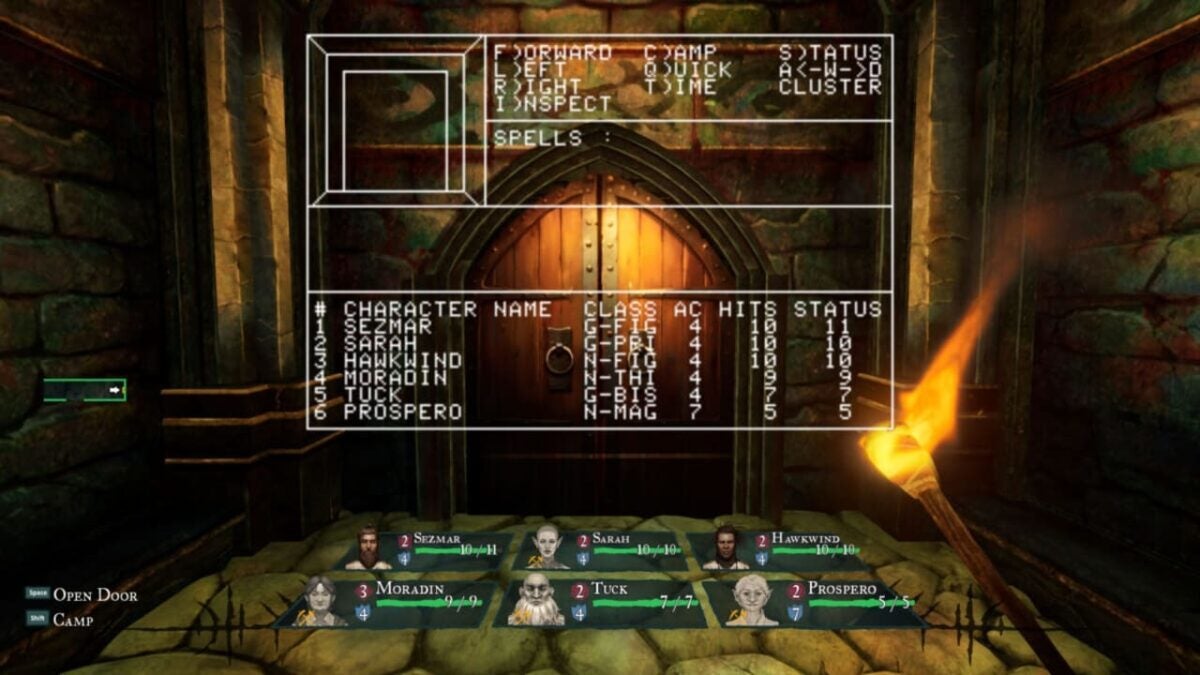
In early access, Digital Eclipse believes that the full game will be released by the end of 2024. Promising regular updates every two months, this version of Wizardry is built on top of the original Apple II version. This means that with just a key press, you can switch between the original Apple II version and the modernized version, allowing you to compare the changes between both versions in real-time.
If you want to enjoy this absolute classic of video games that has shaped the medium, you can purchase it on both GOG and Steam for €28.99. Furthermore, Digital Eclipse plans to increase the price as the game’s release date approaches, so it’s a good idea to keep an eye on it while it’s still in early access.