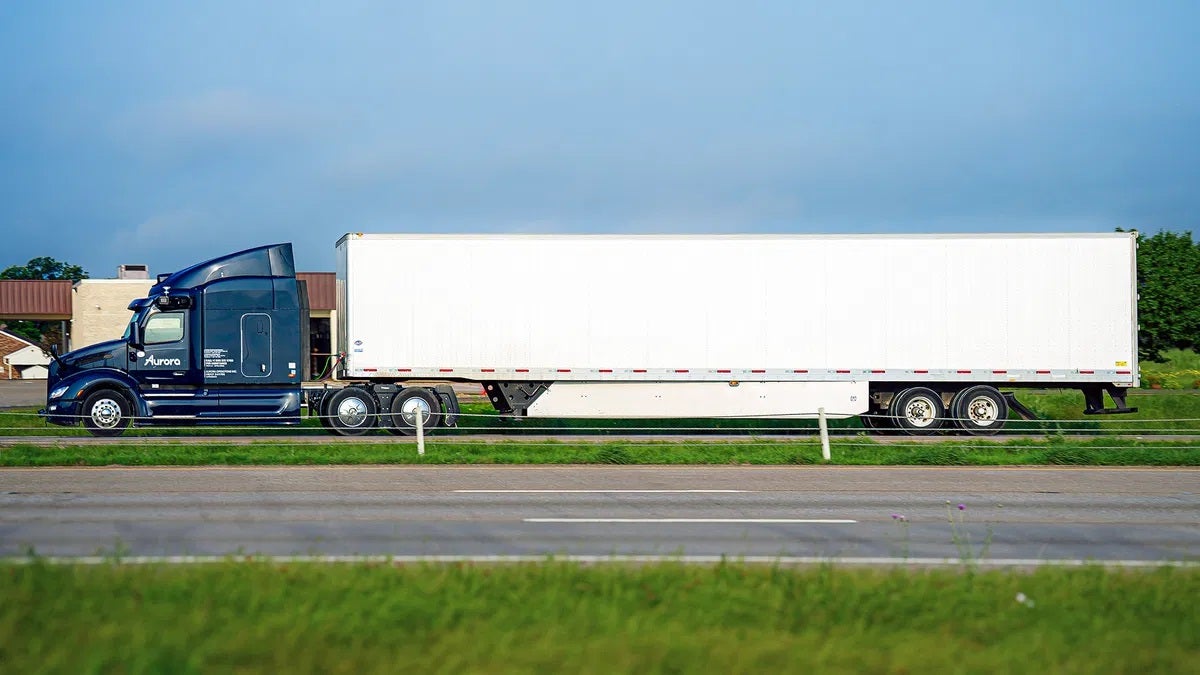
Texas technology firm Aurora made headlines earlier this month with the launch of the United States’ first fully autonomous freight service. However, the company has backtracked, reintroducing human operators in response to demands from truck manufacturer PACCAR.
In a blog post, Aurora CEO Chris Urmson confirmed that a human operator would now occupy the driver’s seat of their Peterbilt Class 8 semi trucks due to the presence of prototype parts in PACCAR’s vehicle platform.
Urmson stressed the importance of collaboration within the industry, stating, “A core part of our strategy has always been building a strong ecosystem of partners across the industry”.
PACCAR’s Prototype Parts Lead to Reintroduction of Human Drivers in Autonomous Trucks
Despite the skepticism surrounding the necessity of an operator, with Urmson affirming safety through extensive testing, the change signals a significant step back in the push for full automation.
Compounding Aurora’s challenges, Texas lawmakers are currently reviewing House Bill 4402, which proposes to require human operators in autonomous vehicles.
Brent Taylor, president of Teamsters Joint Council 80, supports the bill, articulating the need to protect jobs in a sector heavily reliant on human labor. “We can’t let out-of-state billionaires steal their jobs with reckless automation,” Taylor stated, emphasizing that many Texans depend on trucking for their livelihoods.
As the national driver and equipment operator shortage continues to make headlines, manufacturers face growing scrutiny over their reluctance to address wage disparities.
While driver salaries have increased by 24% since 1978, the compensation for industry executives has surged over 1,000% during the same period. The disparity raises questions about the commitment of these companies to address the very issues that have left a vacuum of qualified operators in the workforce.