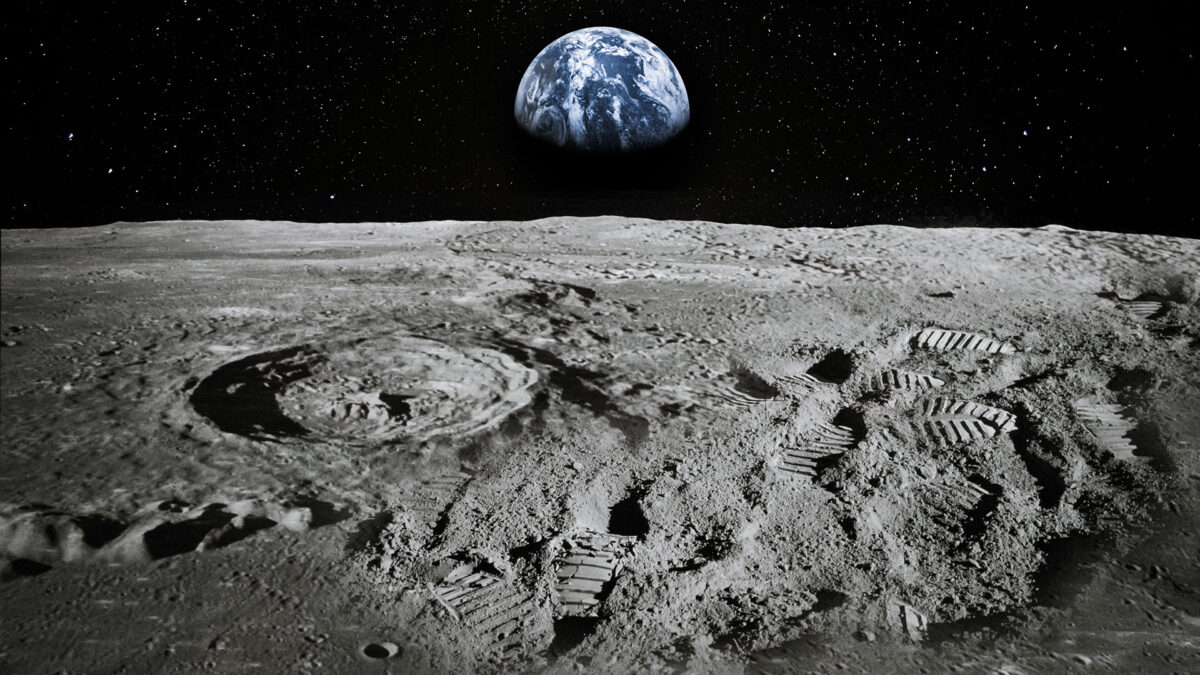
A group of scientists has confirmed the existence of a cave on the Moon, near the place where Neil Armstrong and Buzz Aldrin landed 55 years ago. The team of researchers reported on Monday about this cave considered accessible from the deepest known pit on the Moon, located in the Sea of Tranquility, 400 kilometers from the landing site of Apollo 11. Scientists suspect that there are hundreds of more caves that could house astronauts in the future.

The researchers analyzed radar measurements from NASA’s Lunar Reconnaissance Orbiter and compared the results with Earth’s lava tubes. Their findings were published in the journal Nature Astronomy. According to the scientists, the radar data only reveals the initial part of the underground cavity, and they estimate it to be at least 40 meters wide and several meters long (probably more).
“Lunar caves have been a mystery for over 50 years. So it was exciting to finally be able to demonstrate the existence of one,” wrote Leonardo Carrer and Lorenzo Bruzzone from the University of Trento in an email to the Associated Press.
The findings suggest that there could be hundreds of pits and thousands of lava tubes on the Moon. The Nature study states that the cave could be a “promising site for a lunar base, as it provides shelter from the harsh surface environment and could support long-term human exploration of the Moon.” However, building habitats from scratch would take longer and pose a greater challenge, even considering the possible need to reinforce the cave walls to prevent collapse, according to the research team.
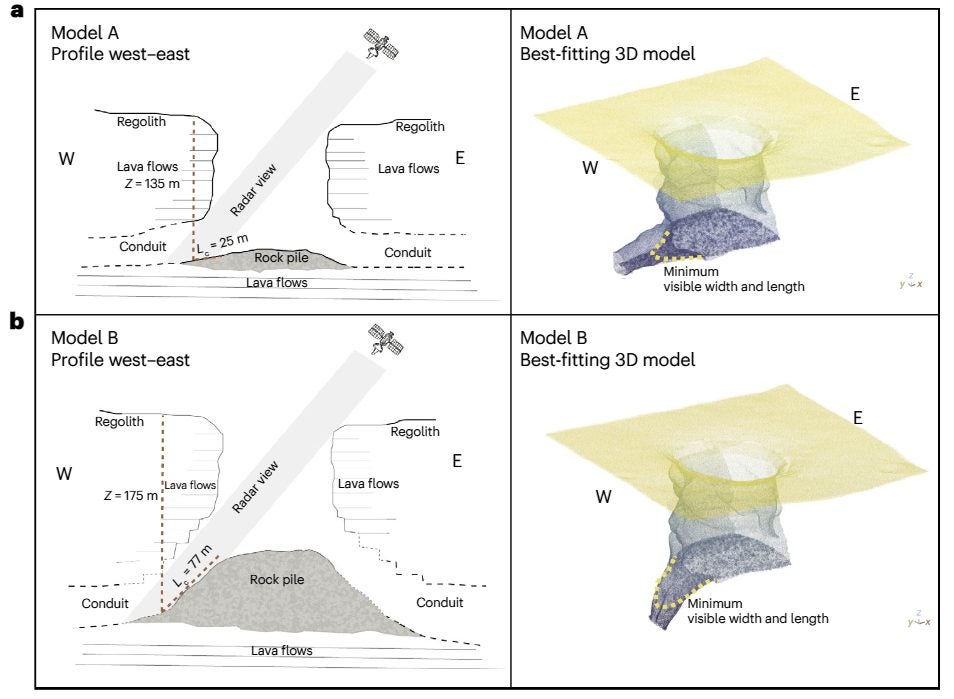
British astronaut Helen Sharman told BBC News that humans could take refuge in lunar pits like this within 20 to 30 years, but they might need “propulsion backpacks or an elevator” to exit due to the depth of the cave.
The rocks and other materials inside these caves, unaltered by the harsh surface conditions over the centuries, can also help scientists better understand the evolution of the Moon, especially regarding its volcanic activity.
