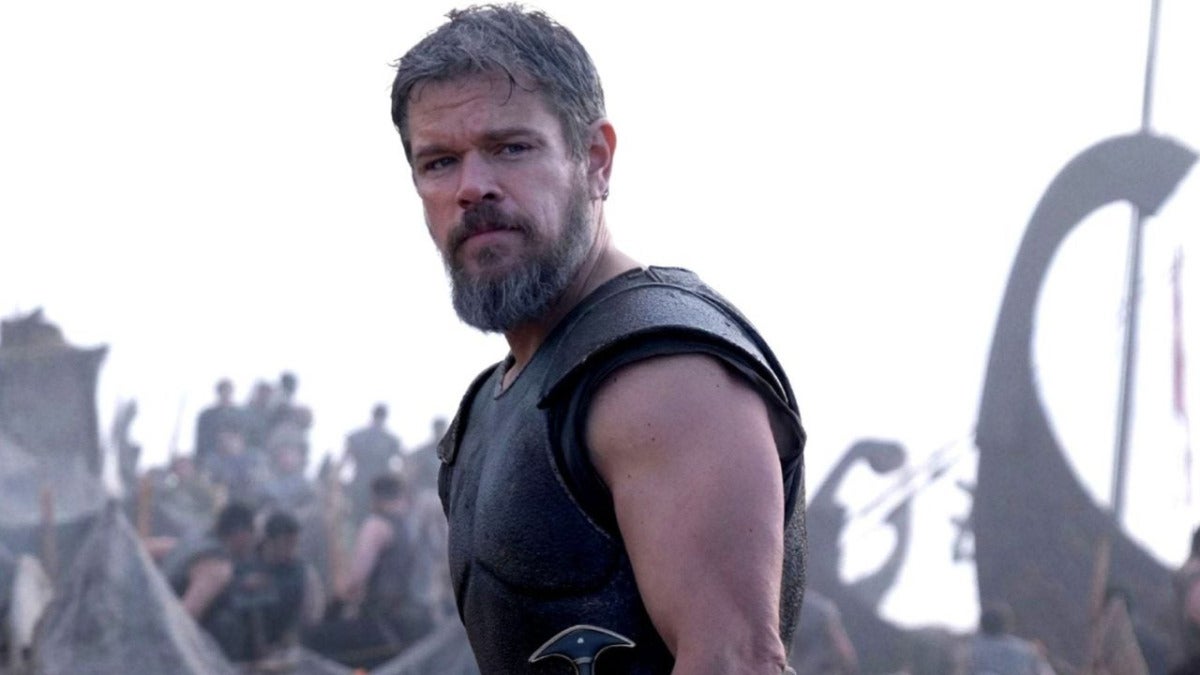
We tend to think sequels are something that only occurred to us, in the modern era, so we could get more out of the stories we tell. But the further back we look, the more we see they’ve been common since the beginning of culture. In 1905, Thomas Edison and Edwin Porter released a parody (and also a continuation) of their hit The Great Train Robbery, the first film sequel ever made. And even Miguel de Cervantes himself had to make a sequel to Don Quixote to protest the one Alonso Fernández de Avellaneda made, apocryphally!

The O2dyssey
It’s a little strange to talk about “sequels” to The Odyssey, because really everything is part of the oral tradition interconnected with Greek life and myths in one way or another. After all, The Odyssey itself is a kind of second part to The Iliad, and there are even characters connected to one another, but what isn’t so well known is that, with a public eager for something new, Greek artists actually made a sequel to The Odyssey that remains lost to history, but about which a lot is known that can change the way we see the Homeric poem: this is the story of the Telegony.
The work was about Telegonus, one of the sons Odysseus had with Circe. Yes, the one who in Christopher Nolan’s film turns his crew into pigs and then shows them the way has a much more important role in the poem: our protagonist actually comes to live with her for a year as her consort before leaving. Sadly, only two lines of the original poem have survived, but, together with a summary of the myth, it’s enough to give us an idea of what happens next.
The story begins directly after the burial of Penelope’s suitors, with Odysseus traveling to Thesprotia to carry out the sacrifices Tiresias ordered him to make in The Odyssey. Since our protagonist is up for anything, he marries the queen Callidice there and has another son, Polypoetes. After a war with the neighboring Brygoi in which even the gods take part, Callidice dies, Odysseus makes Polypoetes king and leaves for Ithaca again. He certainly makes the trip count.
Almost at the same time, Circe tells Telegonus his father’s name, and gives him a spear tipped with stingray venom. Telegonus ends up in Ithaca, and Odysseus, obviously, goes out to fight him… but he’s no match for him and his son ends up driving the spear into him and killing him. Then he regrets it, of course, but it’s too late. Since he feels he has to take charge of the situation, he takes Penelope and Telemachus to his mother’s island, where she makes them immortal. But wait, there’s more: after burying Odysseus, Telegonus marries Penelope… And Telemachus marries Circe! A full-on absurdity that makes it easy to see why Nolan has left out.
By the way: Homer doesn’t seem to be the author of this work, but rather a certain Cinaethon of Sparta, in the 8th century BC, although there are different opinions. Mythology really is gigantic, and, adding stories together, Odysseus ended up having a total of 14 children with 6 different women. What’s more! According to later tradition, Odysseus was resurrected by Circe after his death, and, grateful, he married Telemachus to Cassiphone, the daughter he had with her. In the end, Telemachus ended up killing Circe, Cassiphone Telemachus and Odysseus ended up dying again, but this time from grief. The thing is, he just couldn’t escape it.
If that’s not enough for you, there are more endings, especially when the tradition passed to the Romans centuries later and they called him Ulysses: one said Athena turned him into a horse, another that he founded Lisbon and another that he moved to Italy while in exile. Who knows how much he got around there, of course: the Julio Iglesias of his time.
