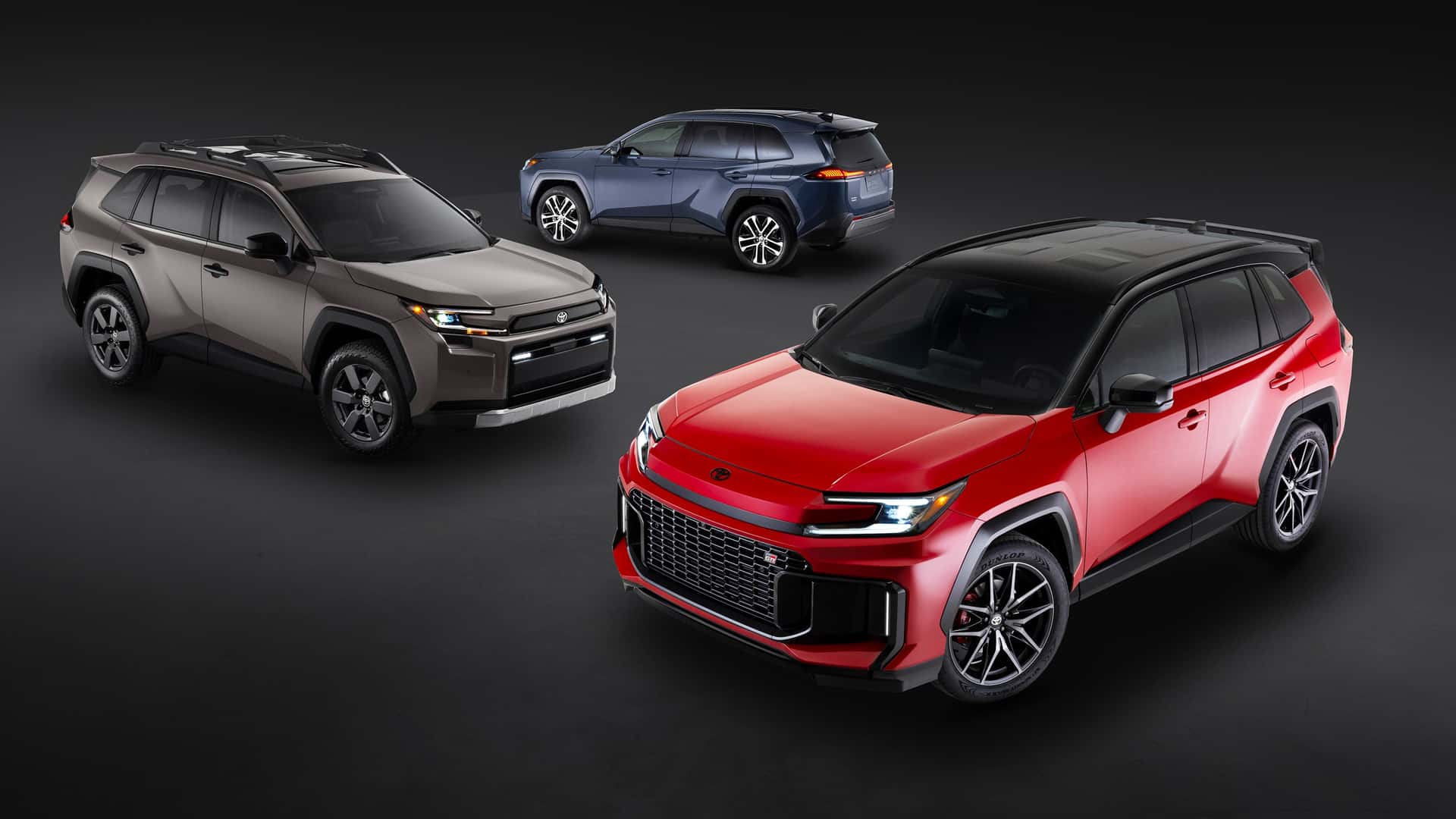
Toyota has announced that its widely popular RAV4 will transition to a fully hybrid lineup by 2026, phasing out its non-hybrid model.
The new RAV4 will only be available in Hybrid Electric Vehicle (HEV) and Plug-in Hybrid Electric Vehicle (PHEV) versions, a significant move that aligns with the automaker’s commitment to electrification, even if some critics have labeled it as “greenwashing”.
Despite its claims of being “100% electrified” all RAV4 models will still include a gasoline engine, raising eyebrows and skepticism about the accuracy of these assertions.
Toyota RAV4 to Transition to All-Hybrid Lineup by 2026
The refreshed RAV4 lineup will feature improved capabilities, particularly for the PHEV models, which see their electric-only range increase from 42 to 50 miles.
Some trims will also have access to DC fast charging, allowing for a substantial battery recharge from 10% to 80% in as little as 30 minutes— a welcomed enhancement for potential buyers.
However, Toyota has yet to disclose anticipated EPA mileage figures for both HEV and PHEV models operating on gasoline power, leaving some questions about fuel efficiency unanswered.
This move marks a significant shift for the RAV4, as it no longer offers any non-hybrid powertrain options. While there was speculation about the potential introduction of a fully electric RAV4, it seems the company is opting to rely on its newly branded bZ lineup for those needs. Notably, Toyota’s history of misleading marketing in its electrification claims includes previous complaints to the FTC about false advertising.
The 2026 RAV4 models are set to hit Toyota dealerships across the U.S. later this year, though pricing details remain pending. As the automotive industry pivots towards sustainable options, Toyota’s approach continues to spark debate about the authenticity of its electrification efforts amidst its longstanding role in climate change denial.