Toyota is bracing for a significant downturn in profits this year due to the tariffs imposed by former President Trump, casting a shadow of uncertainty over the automotive industry.
In light of this, the company has announced that it is re-evaluating its ambitious plan to sell 1.5 million electric vehicles (EVs) by 2026, hinting at a potential reduction of production targets to 1 million EVs.
Despite achieving total vehicle sales exceeding 10.2 million in the last fiscal year, only 145,000 of those were fully electric vehicles, representing a mere 1% of Toyota’s overall sales.
Toyota’s EV Ambitions Under Threat: Potential Reduction in Production Targets
This statistic starkly contrasts with the global automotive landscape, where approximately 14% of vehicle sales in 2024 were electric. A report last September from Nikkei indicated that Toyota had warned suppliers of a 20% cut in EV production goals, potentially necessitating 400,000 EV units this year and 1 million by 2026.
In discussions with the press regarding these changes, Toyota’s President Koji Sato acknowledged a burgeoning demand for EVs in various regions, stating, “We will be reviewing the figures”.
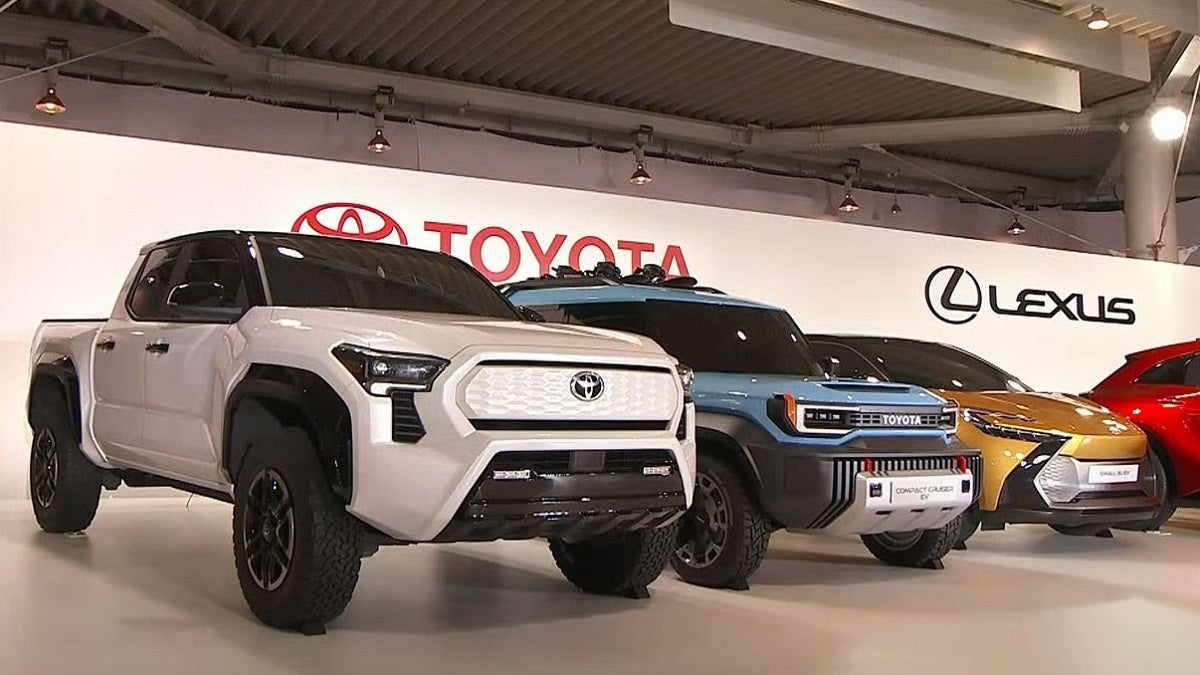
Historically hesitant to fully embrace electric vehicles, Toyota is now shifting gears, unveiling plans for ten new EV models by 2027, including two new electric SUVs for Europe and a three-row electric SUV for the U.S. market, set to be built in Kentucky and Indiana.
Moreover, the automaker has recently begun shipping batteries from its first overseas facility in North Carolina, a critical step forward in establishing a robust supply chain for its electric lineup. Notably, the Toyota bZ4X secured the title of the top-selling EV in Norway, indicating the brand’s potential in the competitive EV market. However, as competitors like BYD swiftly enter new markets, time is of the essence for Toyota to bolster its EV standing and meet consumer demand.