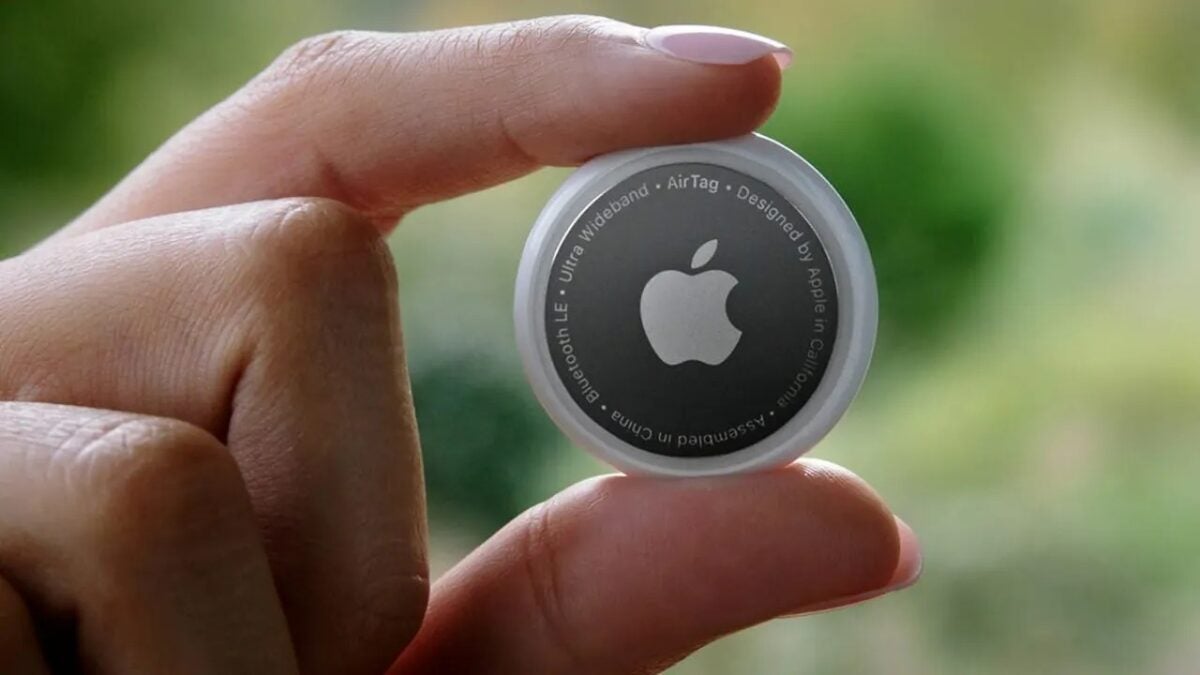
A new industrial specification devised by Apple and Google to address security risks of Bluetooth tracking devices is now available. Today we focus on the announcement made by Apple regarding iOS 17.5.

Apple announced this week that it has implemented alerts for unknown third-party Bluetooth trackers in iOS 17.5, and Google says it is rolling out support for the specification on all Android devices running 6.0 or higher.
The Detecting Unwanted Location Trackers (DULT) standard is a cross-platform initiative designed to prevent Bluetooth trackers such as Apple’s AirTags from being used improperly to track people without their knowledge. The specification allows iOS and Android devices to detect and alert when a compliant tracker travels with you and its owner does not.
What does this new anti-tracking measure consist of?
Apple states in a press release that you will receive an alert “[Item] found moving with you” on your iPhone if an unknown Bluetooth tracking device moves with you “over time, regardless of the platform the device is paired with”. You will be able to see the tracker’s identifier, make it play a sound so you can find it, and even find out how to disable it.
Although Apple released AirTags without the ability to alert Android users if someone was tracking them, they fixed it with an Android app a few months later.
Google implemented unwanted tracking alerts on Android that detected AirTags starting in July 2023. But with Google’s enhanced Find My Device network already in operation and being rolled out to Android users, the potential for third-party devices to track people without their knowledge could grow exponentially.
To avoid these types of valid privacy concerns, Google said it would wait for Apple to implement DULT in its ecosystem before adding support for Bluetooth tracking tags to the Find My Device network. Now that Apple has added the standard to iOS, it is likely that many of these new Bluetooth trackers will be launched soon.
Chipolo and Pebblebee have already announced tags, and devices from Motorola, Jio, and Eufy are expected soon. All these companies have said they will support the standard, and Samsung and Tile (which will also support its own Find with the Life360 network) previously committed to supporting it.
