 When does a Google app cross the line between being a brilliant innovation and purely an invasion of privacy? Many people, including myself, probably trust Google’s servers more than their own hard drive backups but does that mean that we should continue to flock like sheep to apps like Google Docs and Gmail which store huge amounts of private data? Google latest work in progress, the GDrive, has added a new dimension to the debate as it promises to revolutionise the way we view PCs. The GDrive will be a Web 2.0 app/online storage solution that means your machine will be viewed as simply an interface through which to access all your applications and data online. In other words, the machine will no longer be the star of the show.
Technology site TGDaily reports that the GDrive will be released at some time later this year predicting that:
Gdrive will likely cause a major paradigm shift in how we use computers and bring Google one step closer to dethroning Windows on your desktop.
GDrive is of course simply a progression of “cloud computing” that transfers processing power from the PCs to web servers. The Guardian defines the future of a PC linked to GDrive as:
A simpler, cheaper device acting as a portal to the web, perhaps via an adaptation of Google’s operating system for mobile phones, Android. Users would think of their computer as software rather than hardware.
Anything more specific than that at the moment is hard to say although TGDaily reveal a little more detail on what it should look like:
Gdrive is basically a cloud-based storage that should have two faces: A desktop client that keeps local and online files and folders in two-directional sync via a web interface for accessing your desktop files anywhere and anytime, using any network-enabled computer. In addition, it will come tightly integrated with other Google services to enable editing of supported document types, like spreadsheets and presentations via Google Docs, email via Gmail, images via Picasa Web Albums, etc.
The possibilities this offers are undeniably exciting if nothing new. It means that rather than having hard copies of documents that are out of sync with your online documents, once they are updated online, they will be automatically updated on your hard drive without you needing to lift a finger. This surely raises the issue though whether it will be even worth editing anything on your hard drive anymore other than to have a hard-copy backup. The bigger and more obvious question however surrounds personal privacy which has already got civil liberties groups such as The Free Software Foundation up in arms. Executive Director told The Guardian:
It’s a little bit like saying, ‘we’re in a dictatorship, the trains are running on time’. Does it matter to you that someone can see everything on your computer? Does it matter that Google can be subpoenaed at any time to hand over all your data to the American government?
As I wrote a while back too, other critics such as GNU founder Richard Stallman describe the entire cloud-computing movement as “worse than stupidity”.
Dave Armstrong of Google Enterprise however rejects such notions claiming that Google are simply bending to the demands of consumers:
There’s a clear direction … away from people thinking, ‘This is my PC, this is my hard drive,’ to ‘This is how I interact with information, this is how I interact with the web.
Armstrong is of course right – ask most people what they use their PC for and it will be web based activities such as e-mailing, social networking, reading, multimedia and online gaming rather than using any particular application they have installed. The fact is, we’ve already gone a hell of a long way down the road of online storage and web interaction to turn back now. There is nothing wrong with concepts such as the GDrive as long as their role is clearly defined i.e. that they can only access those parts of your hard drive that you allow them to.
The most important factor however is your own discretion. It goes without saying that anything that is particularly sensitive or private should not be stored on something such as GDrive for your own peace of mind. However, with PCs relatively easy to hijack, the truth is GDrive or no GDRive, there are few safe places for you to store data on a machine with a connection to the net.
There’s only one thing for it then – buy a Mac 😉
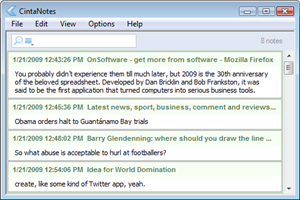 Spending much of my day at a computer, my daily routine leaves my desktop in a mess: A ton of browser tabs open, various documents and more. It’s like a chaotic to do list – it’s easier to leave a tab open than find it again later, I say to myself. It’s probably not great for my terminal’s performance.
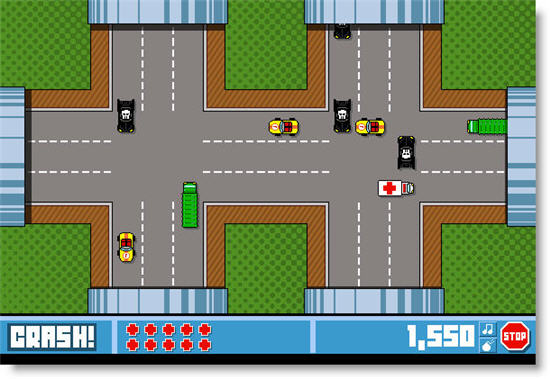
 Back in 2007 I got dangerously hooked on Puzzle Quest, then on my DS. Despite being a mix of two things I wasn’t that keen on – puzzles and fantasy RPGs – I found I couldn’t put it down. The story was pretty basic, but gaining abilities and the feeling of relief at beating the generic fantasy opponents was palpable, while defeat was crushing.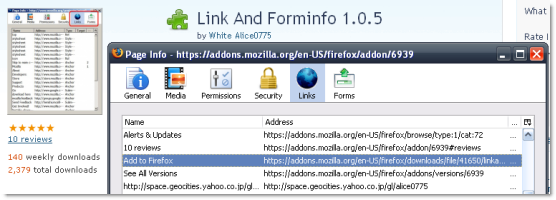
 Imagine you’ve just finished editing a series of documents but at the last minute you either realize you’ve made a mistake or are asked to change something in all of them. The prospect of painstakingly going through them one by one would be too hard to bare not to mention ridiculously time consuming. Or imagine for example that you’ve just downloaded a huge number of photos from your digital camera all with generic names. To go through each one and rename them would take ages so but by trying one of these search and replace apps, you could just save yourself a lot of time and trouble: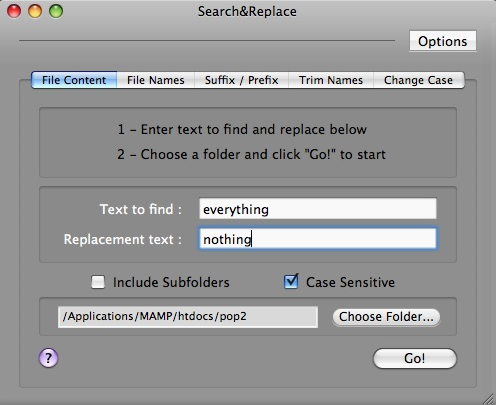
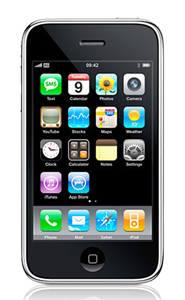 Last year I happily bought a first-generation iPhone, totally convinced that I was acquiring a state-of-the-art piece of technology. However, it didn’t take me much time to discover that my new phone had some ridiculous limitations and was clearly behind other terminals I had bought before.


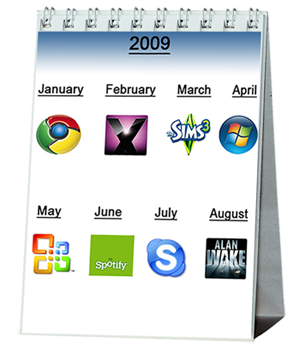 At this time of the year we’re always keen to start looking ahead at what’s in store for the software world over the next 12 months. Last year Nick made a series of bold
 You probably didn’t experience them till much later, but 2009 is the 30th anniversary of the beloved spreadsheet. Developed by Dan Bricklin and Bob Frankston, it was said to be the first application that turned computers into serious business tools.