Google Dashboard – see what data they’re keeping

Google are taking over the world! We’re entrusting our data with a faceless corporation!

Some people worry about that, anyway, though I’m not one of them. I think Google offer a great range of free services that greatly enhance my online life – even if sometimes I feel left out as a European.

Today Google announced on their blog a great new service that should help make people much more comfortable with using Google – Google Dashboard. This can also be found through your Google account settings. What it gives you is a single page summarizing all the Google products you use, and what is kept on them.

So, I can see how many conversations I have stored in my Gmail, how many albums in Picasa, what’s in my Google Docs and so on. It covers over 20 products, including the aforementioned, Calendar, Web History, Orkut, YouTube, Talk, Reader, Alerts, Latitude and more. From here you can control all of that data too.

Perhaps the data that’s most eye opening is your search history – searching while signed in is associated with your account, and it’s all there! There’s even a calendar that shows your levels of search activity. It’s fascinating, in a narcissistic way, but even better you are put in control of it all. If you want to delete it, that’s easy. You can delete bits, or everything and “pause” history collection.

I think this Google Dashboard really makes you feel in control of your online life, and I would love to see sites like Facebook and MySpace follow suit. Cynics and conspiracy theorists probably won’t be convinced, but it certainly takes some of the wind out of their sails.

*Apparently there are some issues with data collection for Google Apps for Domains.
The ultimate guide to USB drive security

flashdrive.pngUSB sticks, memory keys, pendrives. It doesn’t really matter what you call them, memory sticks are useful creatures. It’s precisely this usefulness, though, that leads to their major weakness: most people use them all the time without a second thought. They swap them between colleagues, lend them to friends and stick them into unfamiliar computers. Is it any wonder they are a major security risk?!
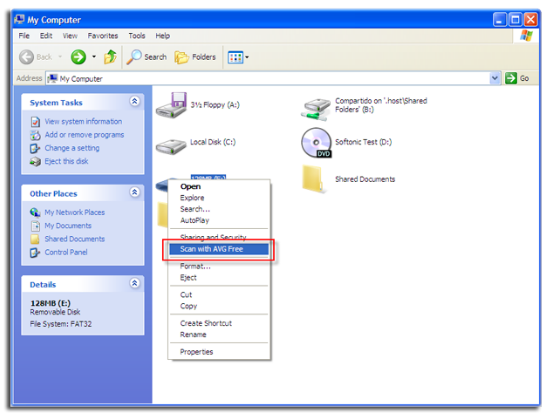


If you are an occasional user of a memory stick, it might be enough to run a context menu scan when you plug it in. Of course, this option has to be facilitated by your regular anti-virus, but most of the top ones, AVG and Kaspersky for example, offer this tool. Just find the memory stick in My Computer, right click, and chose Scan with….

usb-keys-1.png

If you are a more frequent user, you might want a specific anti-virus that targets memory sticks and USB drives. The trial version of USB Disk Security only offers one option, but it’s a good one – real-time monitoring of your computer for security risks from USB devices. It sits in the taskbar until you connect USB stick and lets you know if it there’s a problem. Continue reading “The ultimate guide to USB drive security”

Mailplane – the best way to manage multiple Gmail accounts

Mailplane logoOne of the frustrating things about having multiple Gmail accounts is managing them all at the same time. Until recently, I’d been using the Firefox Gmail Manager Plugin but it’s an absolute pain because having two different Gmail accounts open in separate tabs automatically logs you out of both accounts after a few seconds. This is even more annoying if you’ve got other Google apps open at the same time because it logs you out of those too. The best answer I’ve found to this problem is Mailplane.
Mailplane was actually created back in the days when you needed access to your Gmail account from your desktop but IMAP support wasn’t yet available. Nowadays you can consult Gmail from any mail client like Mail.app or Thunderbird but unlike Mailplane, none of them are made specifically for the use of Gmail or make managing multiple accounts so easy.

Like a mail client, Mailplane works outside of your browser. Along the top of the interface, you have buttons for replying, sending, printing, forwarding etc much like any other mail client. There are also buttons for quickly adding photos (with special integration for iPhoto) and managing downloaded items. Alternatively, you can drag and drop attachments such as photos and documents onto mail while you’re composing it which is another very nice feature of Mailplane. A similar feature also works for taking screenshots and sending them instantly via Gmail.

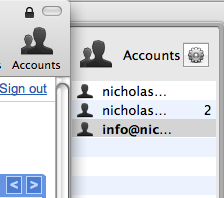
MailplaneYou can add as many accounts as you want using the Accounts button. When new mail arrives, a Mailplane icon in your Menu bar will indicate how many are waiting to be read and each account features a number next to it indicating the amount of mail in that particular inbox. I like the fact that by clicking on the Menu bar icon, a drop down menu shows you the subject heading of unread mail in each inbox. The big advantage I’ve found though is that managing multiple inboxes with Mailplane is so much easier than doing it in your browser.

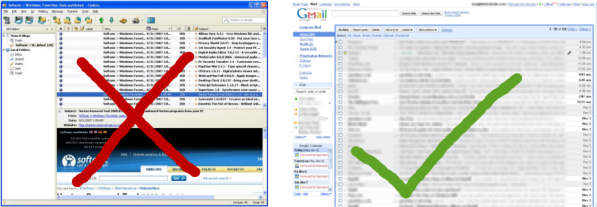

Although you can’t have more than one Gmail inbox at the same time, Mailplane makes switching between them much quicker and less hassle that in Firefox. In future, it would be nice to see a simultaneous open inboxes feature in the app but until then, it’s the best way of managing multiple Gmail inboxes I’ve found.

An indie-game feast

The 12th Annual Independent Games Festival is almost upon us, and has a huge selection of submissions to check out. There’s a record 306 entries, covering a huge range of genres. Lewie Procter at SavvyGames has completed part one of a ‘Pretend you are an IGF judge‘ series, which usefully brings together all the publicly available submitted games, so you can check them out yourself.


The sheer volume of games is pretty intimidating, but there’s sure to be tons of great stuff. I’ve already reviewed AaaaaAAaaaAAAaaAAAAaAAAAA!!! — A Reckless Disregard for Gravity, which I love and Terry Cavanagh’s excellent Don’t Look Back is also there, alongside his upcoming and highly anticipated VVVVVV (no demo for this yet, sniff!).

While publishing giant Activision’s Modern Warfare 2 will break barriers by allowing you to be a brutal terrorist, these indie developers are proving that you don’t need to shock or ask ridiculous moral non-choices of your players to do something revolutionary with video games or story telling. There’s also a wealth of humor, weirdness and creative enthusiasm that I feel is lacking from many of the season’s big upcoming releases – which unless I’m forgetting something are all sequels. While there is certainly lots of good stuff to play, like Hollywood before it, the games industry seems stuck in a blockbuster-sequel cycle, making it seem difficult for genuinely new games to make their mark.

Why are you still using that email client?

email-clients-suck-1.png

One of the most widespread problems people had with Snow Leopard when it launched was a compatibility issue in Mail.app (aka Apple Mail) which prevented messages being sent and even crashed the program in some cases. Nick wrote a guide to fixing these issues, so this obvious failing in Apple’s QA testing needn’t be too much of a hindrance.

That said, my first thought when I read about people having problems with Mail.app was: why are these people even using Mail.app? I’ve had my current iMac for around two years and I’ve never even run the Mail program. Not once. That’s because I use Gmail, a mail application that renders Mail.app and all other desktop email clients more or less obsolete.

For those of you still toiling in the dark with an email client, I know there is sometimes a good reason for that. If you’re trying to handle lots of different accounts, or if you need to connect to an Exchange server, it’s difficult to live without a mail client. But for the average home user and even for most home office users, webmail solutions will always be a better idea than clients. Here’s why:

Security and stability

Desktop email clients are inherently less stable than Gmail or other equivalent webmail services. Storing your data on a local disk (even if you backup) will never be as safe as trusting Google’s datacenters (which are, themselves never 100% safe: nothing is).

But perhaps more importantly, email clients generally rely on downloading message files (and often attachments) to your computer before you filter out content you don’t want. This means that the potential for spam and even malware finding its way onto your computer is significantly higher if you use a mail client application. Continue reading “Why are you still using that email client?”

Play Left 4 Dead 2 now!

After waiting all day yesterday with no joy, finally this morning the Left 4 Dead 2 demo is available to download and play! The first game offered some of the best cooperative multiplayer gaming around, and on first impressions, that certainly hasn’t changed.

This demo lets you play one campaign, entitled “The Parish” either in one player mode (with three AI companions), or online with four players fighting to survive together. There’s plenty of high speed frights and thrills in both, but playing with bots just isn’t the same. Multiplayer games are much more dynamic, and there’s more emotional involvement – whether it’s anger at a selfish player, or pleasant surprise when people are working together!

It looks like Left 4 Dead 2 is cementing its supremacy over the aged, lumbering Resident Evil series – these zombies are varied, fast moving and extremely vicious. There’s really nothing like the moment when a horde of zombies is rushing towards you: it’s one of the most visceral, adrenalin pumping creations in gaming history.

To play you’ll need the Steam client, and from there you can download the demo – but be warned, it’s not for the faint hearted.

What’s new in TuneUp Utilities 2010?

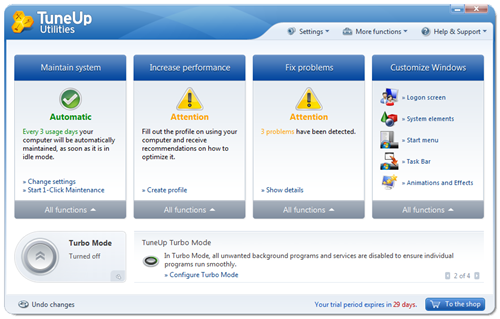
TuneUp Utilities is one of those programs that improves with every new release. We were particularly eager for its latest version, TuneUp Utilities 2010, because it offers full support for Microsoft’s brand new Windows 7 in both the 32-bit and 64-bit versions. But this isn’t the only new feature in this excellent program. Let’s take a look at all the new functions and improvements we can find in TuneUp Utilities 2010.

Redesigned Interface
The Start Center in TuneUp 2010 has been redesigned. A quick glance is enough to learn about the system’s current status and find out if there’s any problem. A cleaner, more minimalist style makes the program more comfortable and easier to use.

New features in TuneUp Utilities 2010

Turbo Mode
When you’re playing your favorite game, you need your computer to offer the highest performance possible. Turbo Mode can help you with that, disabling all superfluous Windows services and background applications with a single click. Continue reading “What’s new in TuneUp Utilities 2010?”

How to: Stream video from a Mac to a Wii

Wii TransferTom and Elena have already explained how to stream movies from your Mac to a PS3 and an XBox. To complete the series, I’m going to explain how to stream movies from Mac to your Wii. The good news is, it couldn’t be simpler using a nifty little app called Wii Transfer. Wii Transfer not only allows you to stream movies to your Wii, but also photos, music and it even allows you to backup your Wii profiles.
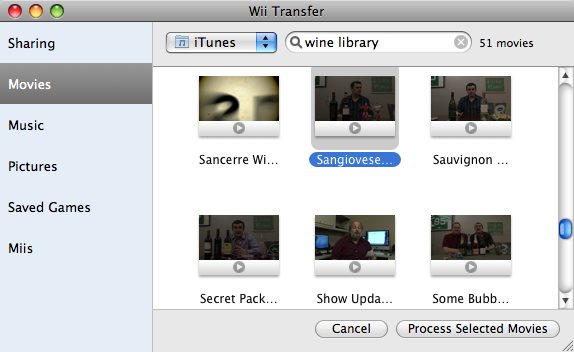
Here is how to in 3 easy steps.

1. Download the Wii internet channel

Fortunately, Nintendo have seen sense and stopped charging $10 for it. The browser is now available for free. Just go to Wii Shopping on the main menu to download it.

2. Convert your videos for streaming

In the main interface, click on the “Movie” tab in the left-hand menu and drag and drop your movie files into it. Wii Transfer will then convert your films into a format the Wii can read so you may have to wait a while for this.

movies_full.png

3. Setup sharing

Go back to the “Sharing” tab. You’ll see an IP address like: 10.0.1.197:9000. Enter this into your Wii internet browser. Continue reading “How to: Stream video from a Mac to a Wii”