GetGlue rebranded as tvtag, gets iOS makeover

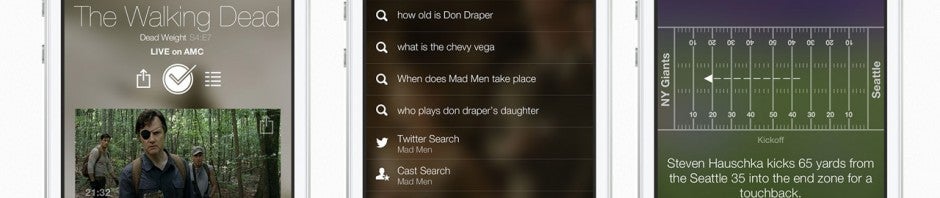
The social television app GetGlue has been rebranded as tvtag and will now focus on second screen content. GetGlue was purchased last year by i.TV, which is best known for creating second screen TV apps so it’s only logical that i.TV is turning GetGlue into a portal for additional TV content. Tvtag is employing over 50 employees to provide curation of live TV feeds and will generate “TV moments,” which include quotes, sports scores, and important scenes from various live TV events.

Default player


brightcove.createExperiences();

Much of GetGlue’s old functionality remains, such as checking into a show, sharing on social networks, and stickers. What’s change is the company’s strategy to become a TV guide more than a discovery app. “Most of us already know what we want to watch,” says Brad Pelo, CEO of i.TV. Tvtag also gets rid of any automatic show detection by listening in the background. Competitors apps do this but Plo explains automatic show detection “turned out to be an unnecessary burden.”

Tvtag is available now from the App Store with an Android version to follow “in the next two weeks.”

Source: Gigaom

RELATED STORIES

Facebook friends can now request personal information

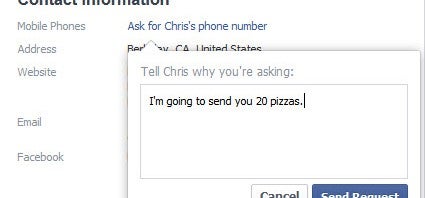
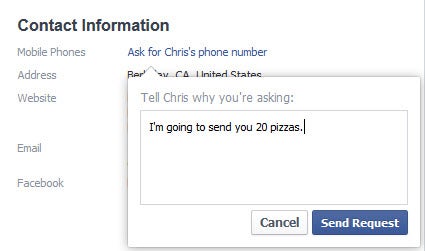
A subtle change to your Facebook profile now allows your friends to request you post personal information. ReadWrite writer Selena Larson noticed the change on her profile where unfilled personal information displayed an option for “asking” a friend to post personal information. Users can submit a request with an explanation about why he or she wants you to post your address or phone number. Users can also cancel a request if they’re overcome with a sudden sense of good judgement.

Facebook info request

Prior to this update, Facebook would nag users to fill in personal information while a user was on his or her own profile page. Now, users can send a request to a friend for information like a phone number or address and in return, share that information with a single individual or have it added to the profile page.

Only your Facebook friends can send you requests for personal information, so Facebook’s security hasn’t changed. Requests must also always be sent with a reason, to cut down on the spam. Unfortunately as of now, there’s no way to disable these types of requests.

Source: ReadWrite

RELATED STORIES

Rovio denies working with NSA to share user data

The New York Times and Britain’s The Guardian yesterday published new NSA revelations that suggested ‘soft’ apps like Angry Birds could be transmitting user data accessible to government agencies. Today Rovio has denied collaborating, colluding or sharing “data with spy agencies anywhere in the world.”

However, the original articles did not accuse Rovio of that, even if they unfairly singled out the mobile games company, and its statement does little to calm security fears about mobile apps. Read more about the original story here.

The original NYT and Guardian articles said that many users are unaware of the scope of data that many apps keep and sometimes share with advertising networks. This is true, as most people don’t read the small print when they begin using ad-supported free apps. It’s not true that either developers like Rovio or the ad networks they use are colluding with the NSA or the UK’s GCHQ, but those agencies have apparently been able to access data transmitted by them.

Rovio say ,”the alleged surveillance might be happening through third party advertising networks,” but that doesn’t change anything from the user’s perspective. App developers need to make sure that the third party companies they work with are as secure as they can be.

As we wrote yesterday, there are ‘five major failures in mobile security:’

  • 3rd party SDKs (including adware and analytics) cause security holes: One major risk is that some adware SDKs can perform tasks outside the original app permissions.
  • Permissions bypass user consent: Apps can sidestep required permissions to complete the same behavior or add more permissions for unused functions.
  • Include debug information from developer: This can contain information that can be used for targeted attacks against companies to steal data.
  • Improper handling of private appdata: Some popular apps may encrypt data on its servers, but data is send through unsecure channels.
  • Apps don’t apply security to user data: A lack of SSL/encryption, storing passwords in plain text, and not using expiring oAuth tokens for login.

None of this means Rovio is colluding with spy agencies, but that they are not making the data they collect secure enough to stop (or try to stop) those agencies. Angry Birds was mentioned in most articles regarding these latest NSA documents, but it was perhaps unfair of the media to single it out.

There are many worse, less secure and less trustworthy apps, and there is no evidence that Rovio willfully helped the NSA spy on citizens.

RELATED STORIES

[Sources: The Guardian, The Verge]

Chrome for iOS updated with translation bar and reduced data mode

Google Chrome for iOS has been updated to version 32.0.1700.20. It has a couple of new features plus bug and security fixes and faster searching.

The latest Chrome has a translate bar, which will translate any page for you with a tap, based on your language preferences. The language bar appears automatically whenever you view a page in a language different to your default language in Google Chrome.

There’s also a Reduce Data Usage mode, bringing Chrome more in line with Opera, which has had data saving options for some time. Like Opera, Chrome uses servers to compress pages before you download them. This system also claims to detect malicious pages before you open them.

There is also a new Tab Page update that makes “searching faster and easier”, and this will be rolled out to other platforms soon.

None of this has fixed Chrome’s habit of reloading a cached version of a page you were viewing, meaning you still have to load a page twice if you want to see the latest version of a website you visit regularly.

RELATED STORIES

Is Microsoft going to rename Office Web Apps too?

Microsoft seem to be on a roll when it comes to renaming products. The latest rumors from the Redmond company suggest Office Web Apps will be renamed Office Online.

Unlike OneDrive and the catchy Modern User Interface, Office Online is a big improvement on Office Web Apps. It’s a good name for an already good suite of productivity apps, which gives Google Drive a run for its money. The Office apps will also be renamed Word Online, Excel Online, PowerPoint Online and OneNote Online.

According to Mary Jo Foley at ZDNet, this should follow making Office Web Apps easier to find – currently you have to access them from SkyDrive or Outlook. Office Online should be easier to access in the future.

Let’s hope that Microsoft has checked that Office Online isn’t trademarked by anyone, who forces it into yet another name change.

RELATED STORIES

[Source: ZDNet]

DOTA 2 New Bloom Festival introduces new hero

DOTA 2, the online multiplayer fantasy game is introducing a new hero called Terrorblade as part of it’s latest event the New Bloom Festival. This and more are being introduced to DOTA 2 with the upcoming Game Update 6.80.

The New Bloom Festival in DOTA 2 lore is the time Winter begins to end, and brings with it ‘The Coming of the Year Beast’. This beast awakes covered in rare materials that can be crafted into amazing armor if anyone dares take it on. Valve’s New Bloom Festival page describes what special preparations players will need to take if they want to fight The Coming of the Year Beast.

Terroblade is a ‘demon marauder’. This dark hero has the ability of Reflection. He can create a double of your opponent which will attack for you, slowing down your opponent. Terrorblade can also conjure an image of himself to help during batles.

Valve has detailed all the changes on its New Bloom page. Another notable change is the introduction of Random Ability Draft, which assigns each player a hero at random, and the heroes’ abilities are placed in a pool that player can pick from. Lots of weapons and abilities have been balanced to make for better competition.

The update will be live soon.

RELATED STORIES

[Source: DOTA 2 Blog]

Twitter for Android updates with photo cropping, recommended Tweets

Sharing photos with Twitter for Android just got easier. The company just updated its Android app to include easy photo cropping so users can crop a photo for wide or square aspect ratios. Images can also be rotated before sharing as well. Twitter also recognizes your friends and will suggest you @mention them in your Tweet, similar to Facebook’s tagging suggestions.

Additionally, Twitter for Android has updated to recommend Tweets, trending topics, and suggestions for new accounts to follow when you refresh the app and there are no new Tweets to load. This keeps users engaged if Twitter serves up content that’s relevant to the user’s interests.

The update is available to Android users in the Google Play store. Twitter promises to bring the new features to iOS “soon.”

Download Twitter for Android

Source: Twitter

RELATED STORIES

Pinterest previews its new interest-based homepage

Pinterest is giving users a sneak peak at an upcoming feature called “Interests.” Interests will be a new homepage that curates content around the topics you’ve pinned about the most.

Pinterest’s recommendations look and feel similarly to Flipboard’s curated “Cover Stories” feature, where it mixes your story sources as well as suggested stories from Flipboard’s staff. If you have a ton of pins about travel, expect your Interests homepage to feature more travel stories and photos.

Interests pinboard

Interests is Pinterest’s attempt to make exploring content on the site easier. Currently, users have to navigate to specific sections of the site to see recommended pins for that category. With Interests, pins from all categories in which you’re active will be displayed.

To try out the new Interests homepage yourself, simply visit Pinterest and click on the “Preview! Explore Interest” button in the categories menu. The company has not provided a specific date when Interests will officially roll out.

Source: Pinterest

RELATED STORIES

NSA and GCHQ collected personal information from mobile apps

Newly leaked documents by Edward Snowden reveal that the NSA and British Government Communications Headquarters (GCHQ) have been collecting personal information from mobile apps such as Angry Birds and Flickr. The separate intelligence agencies have been working together since 2007, trading information about how to collect data from various smartphone apps. The information collected included age, sex, “political alignment,” and even geotag information from uploaded photos from apps like Facebook, Flickr, LinkedIn, and Twitter.

Previously leaked documents by Snowden revealed the extent of mobile data collection by the NSA. Earlier generations of mobiles phones were monitored for things like text messages and mobile network data, including mobile phone identifiers like IMEI numbers. The metadata was then tagged and stored in the NSA’s Xkeyscore/Marina database to be made searchable.

NSA mobile data tracking info

As mobile phones became more powerful and complex, the NSA and GCHQ began collecting more information including website histories, “buddy lists,” downloaded documents, user agents, email addresses, and even BlackBerry PINS. Documents from the GCHQ reveal the agency’s intense interest in collecting mobile phone data. “By 2015 up to 90% of internet traffic will be accessed on mobile devices. Over 200 3rd party Location Aware Applications on the iPhone alone,” states a document from the GCHQ.

GCHQ document

Worryingly, it appears that mobile ad networks are responsible for the collection of personal data from popular apps like Angry Birds. Ad company Millennial Media worked with Angry Birds developer Rovio in 2011 to integrate ads into the game. The documents do not explain whether or not players offered up data about their ethnicity, marital status, and sexual orientation willingly or if the company accessed the information by other means.

At the Samsung Developers Conference in 2013, Appthority held a seminar highlighting the dangers of mobile security. While the talk focused on the enterprise market, many of the company’s discoveries affect all users, not just those with enterprise devices. From its study, Appthority found that 41% of iOS and 77% of Android apps tracked location.

Appthority found five major failures in mobile security:

  1. 3rd party SDKs (including adware and analytics) cause security holes: One major risk is that some adware SDKs can perform tasks outside the original app permissions.
  2. Permissions bypass user consent: Apps can sidestep required permissions to complete the same behavior or add more permissions for unused functions.
  3. Include debug information from developer: This can contain information that can be used for targeted attacks against companies to steal data.
  4. Improper handling of private appdata: Some popular apps may encrypt data on its servers, but data is send through unsecure channels.
  5. Apps don’t apply security to user data: A lack of SSL/encryption, storing passwords in plain text, and not using expiring oAuth tokens for login.

This shows that the means to access user data is not as difficult as you would think. While many popular apps may look secure on the surface, the background functionality may be transmitting data openly for anyone to collect.

There are still many unanswered questions about the NSA and GCHQ’s mobile data collection, including which countries the data was collected from, how often data was collected, and how the security agencies were able to collect this data without app developers noticing. And with this much data being collected, how much of it is actually used in the fight against terrorism?

Chris Park contributed to this story.

Source: The New York Times
Read more about PRISM and the NSA

Grand Theft Auto: San Andreas now available on Windows Phone

Windows Phone users can now play Grand Theft Auto: San Andreas on their mobile phones as Rockstar has released the game in the Windows Phone Store. Android and iOS users have had access to the game for a month already but now it’s finally out for Microsoft’s operating system. Rockstar notes the game is officially supported on the the following devices: Nokia Lumia: 1520, 1320, 822, 820, 810, HTC: 8XT. While other phones may not be listed, there’s a chance the game will still work as long as you’re running Windows Phone 8 and have at least 1GB of RAM.

The game is out now for $6.99 in the Windows Phone Store and is a deceiving 19MB download. After the initial 19MB download, you’ll be prompted to download a 2.5GB file for the rest of the game.

Download GTA: San Andreas for Windows Phone

Source: Windows Phone Store

RELATED STORIES