Meet Radio Builder: the new YouTube Music feature to create your own radio station. The possibilities are endless.
Artificial Intelligence is becoming more advanced every day. While ChatGPT continues to evolve and rivals such as Bard are emerging, other platforms continue to experiment with it. In the field of music, Spotify is the most advanced in this use through its algorithms, but there is another that lags behind: YouTube Music.
Google‘s music platform has just launched a new feature that allows users to create their own radio stations. This way, you can escape from traditional music radios and create your own radio formula with your individual tastes. You can even create several according to genres, moods, etc.
Original image from The Verge.
How to create a radio station on YouTube Music
The feature is called Radio Builder and can be accessed from the “Your Music Tuner” section on the YouTube Music home page in both the iOS and Android apps.
Once inside this section, you can select up to 30 different artists that will be included in the programming of that radio. In addition, you can choose whether you only want to listen to music from them or add music from similar artists based on them. In addition, you can indicate if you want to play only songs that you have already heard, new ones that surprise you or a mix of both.
The possibilities are endless: you can create stations only of Spanish artists, of the entire Argentine rap scene or even make mixes that no traditional radio would dare. The power to program this radio is in your hands.
YouTube started testing this feature a few months ago, and wants to keep it in the future. It has also promised to introduce even more new features this year, so it may soon become an interesting competitor to Spotify.
New details are leaked about GTA Online 2, the multiplayer version of GTA VI. What will this version of the game be like?
GTA 6 is getting closer and closer, and proof of this is that new leaks with information about the game keep coming out. Therefore, although we will probably have to wait until 2024 for its release, we already know some details of what the new Rockstar video game will be like.
Among other things, it has been leaked that GTA VI will be set in Vice City, will feature a new game engine and its protagonists will be two siblings, a woman and a man. We have also been able to see some first leaked images of the game. But this is not the only thing we know about GTA 6.
Tez2, a hidden member of Rockstar, has revealed more information about the game. This time, about its online mode. As he explains, the images that could be seen leaked about the game belong to the multiplayer mode of GTA VI. Its title will be GTA Online 2, continuing with the first of GTA V.
How many players will the GTA Online 2 mode have?
“The leaked images showed test clips of the multiplayer mode with the maximum number of players online,” explains Tez2. This would mean that in GTA Online 2 will be able to play up to 30 people simultaneously. Two additional slots (up to 32) will be added for spectators. It has also clarified that it will use as a base the multiplayer of Red Dead Redemption 2: Red Dead Online.
According to Tez2, the video is from May 2022, so many things could have changed after that. Still, he doesn’t think the game will undergo too many structural changes already, as they are in the process of testing. Finally, he has made it clear that 2023 is the year when they will start marketing and announcing the game, so we will soon be able to know more information officially.
Meet Mary Kenneth Keller, the creator of BASIC and the forerunner of ChatGPT. She made computing history despite being a nun.
Today’s technology has reached such heights that we rarely think about the creators behind it all. In fact, with the Artificial Intelligence revolutionwe are currently experiencing, we may soon no longer have humans on board these advances.
However, we still have many geniuses and figures we can extol as the people who make possible the software and hardware we use every day. And one of these people is someone with a job that very few of us would relate to technology: a nun.
Died in 1985, Mary Kenneth Keller was a Catholic nun, a pioneer in computer science who became the first woman to earn a doctorate in computer science in the United States. Born in Cleveland (Ohio) on December 17, 1913, she came from a very Catholic family from Ireland, so she was raised to serve religion and at the age of 19 she joined the Sisters of Charity of the Blessed Virgin Mary in Dubuque (Iowa).
For eight years, Sister Keller was a novice, and then took her vows. But not content with serving God, she had interests that had little or nothing to do with being a nun, and decided to study mathematics at the university. She received her bachelor’s degree in 1943, and two years later a master’s degree in mathematics and physics.
Within these doctrines, what interested her most was Computer Science, and she worked on it until he began a doctorate at the University of Wisconsin-Madison in 1964. At this time she worked with a very new programming language, called FORTRAN, but a year later she created BASIC together with a team of programmers.
BASIC is the pioneer computer language in facilitating computer programming for students. This language was one of the main languages in the development of all subsequent computing, and even the first Artificial Intelligence applications that would eventually lead to ChatGPT, Bard and everything we know today.
Mary Kenneth Keller managed to earn her doctorate at the age of 52, with a thesis entitled “Inductive Inference on Computer Generated Patterns”. This is something she combined with a spectacular work in the educational environment, where she was also a revolutionary.
Sister Keller also founded and chaired the computer science department at Clarke College, now Clarke University, in Dubque (Iowa, USA). Her vision of computer science was progressive and she advocated that everyone should have access to it, as she knew that it would represent our future and that we would live in an increasingly globalized world.
That is why she worked so intensely on BASIC, since it is a programming language characterised, precisely, so that everyone can learn it. She did this work at Dartmouth University, where she gained admission in 1958, when they lifted the rule of allowing only men (they had been doing so for 188 years) to accept her as a member.
Keller worked together with John Geoger Kemeny and Thomas Eugene Kurtz in the computer department, and it was there that they started working on BASIC. The nun did not believe that computer science had to be something so sectarian and wanted, as she herself did, that people of her own background or lower class could have access.
Therefore, they began to work on this programming language, which finally saw the light in 1964 and began to be used in all kinds of systems. Even today it is still used, so the work of Mary Kenneth Keller is certainly to be taken into account.
The problem, however, as with these things, is that Sister Keller is usually left out when the creators of the program are mentioned, mentioning only Kemeny and Kurtz. Be that as it may, time has proven the nun right and little by little a figure that made history in the world of computing is beginning to be extolled.
The title from Electronic Arts and Omega Force is launched on the market with a solid playable proposal, although not so much technically.
Monster Hunter has been a mass phenomenon for almost two decades. What began with success only in Japan, has eventually expanded to the rest of the world. Millions of players enjoy the hunts all over the planet, thanks in large part to the addictive gameplay and well-implemented cooperation.
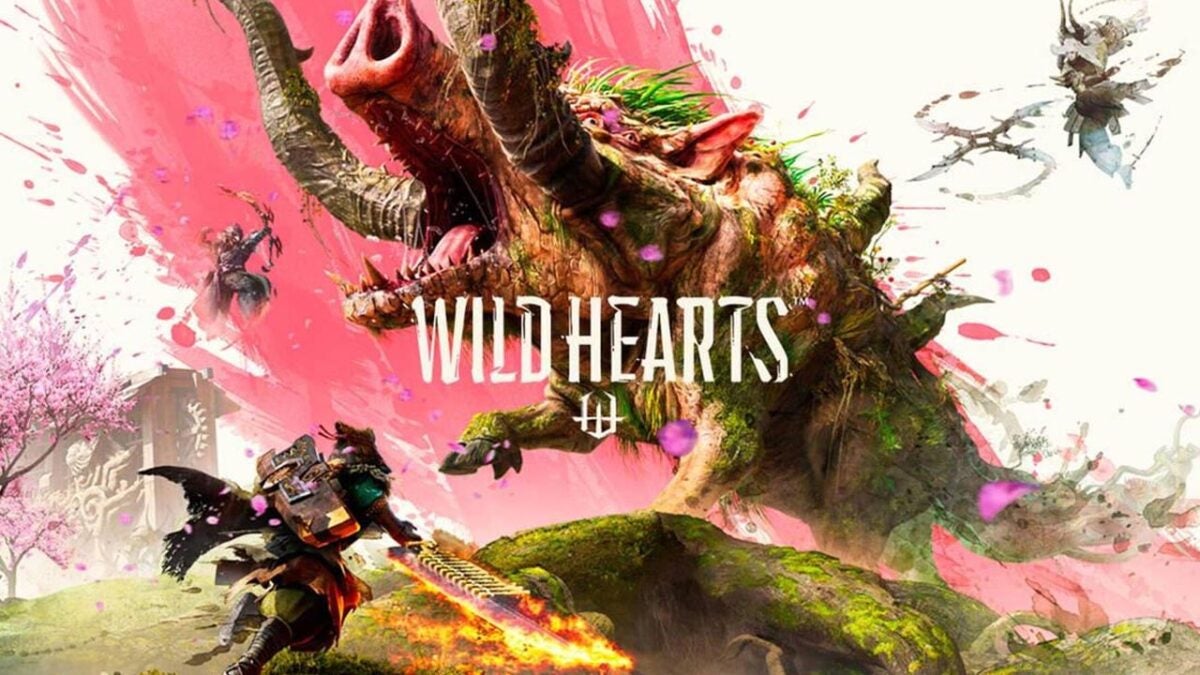
With this behind us, it was logical to think that sooner or later some studios would get down to work to try to recreate this formula. The last of them is Omega Force, who through Electronic Arts launches Wild Hearts, but with some very curious new features.
Harvesting, quarrying and hunting
The main peculiarity of this Wild Hearts game is that we are going to hunt creatures, yes, but there is a collection and crafting add-on. In the purest Minecraft style -saving distances, of course, but I think you get the idea-, the game proposes that the user can use the environment to get resources.
With this mining of trees, coal, etc., we will be able to create different elements to use in our favor, from tents to spend the night to, and this is the important thing, platforms for combat. Because yes, here comes the differentiating element.
While the combat design of Monster Hunter is more “horizontal” -to call it in a certain way-, in Wild Hearts it is more “vertical”. We can place platforms around the environment to propel us and make jumps. This simple addition changes the way of understanding combat. In addition, hooks and other elements are added so that the battle not only gains that verticality, but also speed.
From this discordant point, Wild Hearts builds all its gameplay. It may seem insignificant, but it has managed to find that “something” that makes it different from the king of this (Monster Hunter) and enhance it for its own benefit. In addition, the combat itself enjoys good fluidity. After all, we are talking about Omega Force, a studio with a lot of experience when it comes to action video games. You can feel the experience of so many years behind them.
It’s fast, it’s intuitive and it feels good, there’s no feeling of exhaustion. In addition, the enemies respond wonderfully to each slash, with the depth you need depending on each creature.
A problem engine
Wild Hearts looks very good, although with some very serious “buts” that we will now comment on. Behind the technical section of Electronic Arts’ title hides the Katana Engine. This engine, owned by Koei Tecmo (owners of Omega Force), is still under development, and that speaks for itself.
Developing a video game while making an engine is not a very good idea. The history of the industry has shown this with other productions, where it has been seen that the creation of the engine in parallel to the development usually goes wrong. Here it is not that it has done so at the level of how it looks, as it looks amazing, but rather in its performance.
On consoles it runs smoothly, but on PC it has been a disaster. There are frame drops and a lot of errors. In fact, the studio has apologized to all buyers, as well as promised that patches will be released to fix each of the problems encountered. It is not a good sign these stability problems in a game where performance is so important.
It’s one of lime and another of sand, since what Wild Hearts proposes at a playable level is very fun, but its performance on PC hinders this experience. Who knows if when everything is fixed it will be much more enjoyable. And a price drop would also come in handy, by the way.
Would you like to download a torrent but don't know which client to download? Discover which are the best free P2P programs for Windows in our selection.
Downloading a file from a server is not always an easy task. It often involves spending long hours online to download a single file. All this is due to a cocktail of factors where the main culprit is not only using a single download source, but also having to compete for your bandwidth. The best way to get around this handicap is to make the leap to a torrent client and use a P2P (peer-to-peer) download program. But… Which one is the most recommended for 2023?
In today’s article we are going to offer you a selection of the best P2P download clients for Windows. All of them are completely free and, for your safety, have been tested and analyzed by our team. So you can start exchanging files in a fast and safe way, always enjoying an optimal download speed. Here we go!
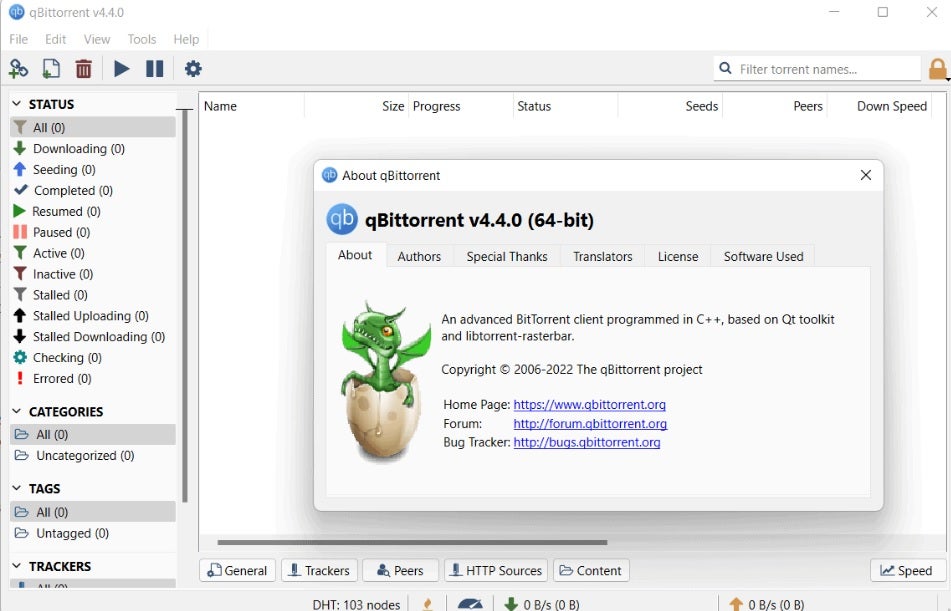
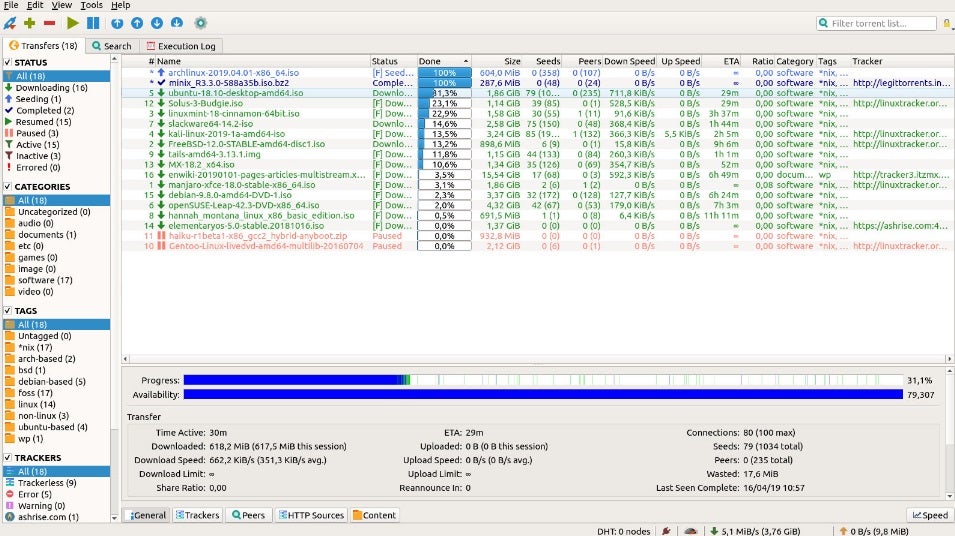
qBittorrent is one of the best clients for downloading torrents for free. This is one of the most complete and secure P2P programs on the market. One of its main advantages is that, unlike many similar programs, qBittorrent has managed to perfectly balance a wide range of tools and functions with the program’s performance. This translates into fast and agile downloads without consuming memory and resources of your PC.
qBittorrent has a clean and simple interface, very similar to that of uTorrent, without annoying ads and very easy to use. It has an internal search engine to download any type of content or file from the Internet safely, as well as a powerful encryption system and the possibility of prioritizing one download over another. In short, one of the best options for all those who want to get started in the world of P2P downloads.
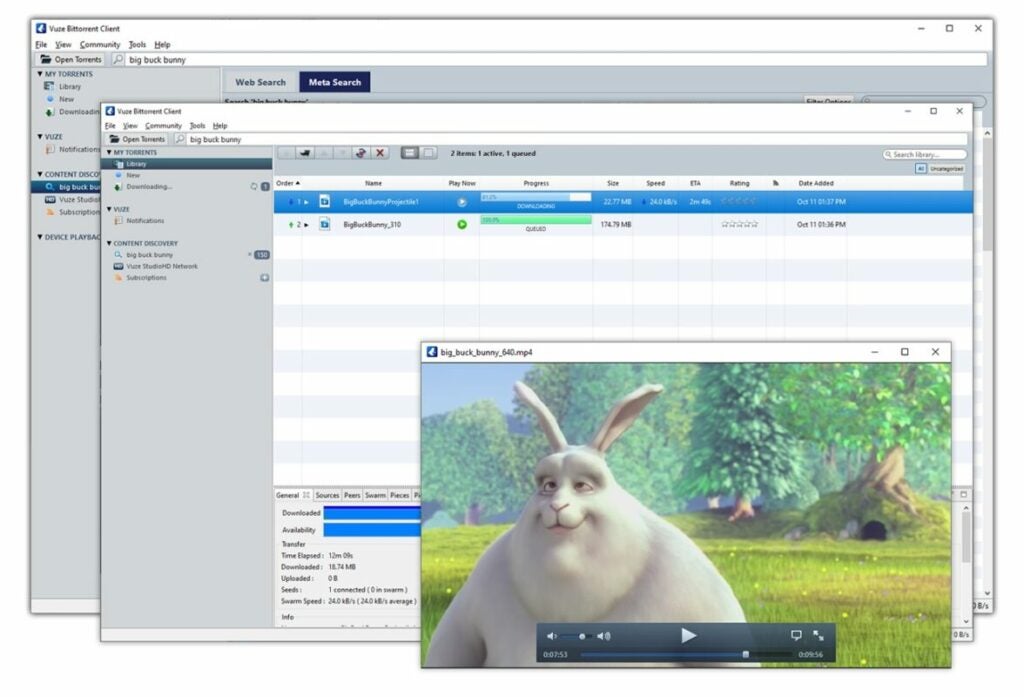
Vuze is an old acquaintance in the P2P world, and even if it doesn’t sound like it, you will surely recognize its previous name: Azureus. Although there is a paid version called Vuze Plus, its free version works perfectly and more than makes it to the list of the best P2P download programs. From Vuze you can download, play multimedia files and even make use of the always useful magnet links. All this intuitively and in just a few clicks.
Vuze’s ease of use is what makes this download client great. Whether you are an expert in P2P networks or you have never heard this term before, you will be able to start downloading as soon as you finish the installation. To configure it you only need to follow the steps that appear on the screen and enjoy all the options of this exceptional software.
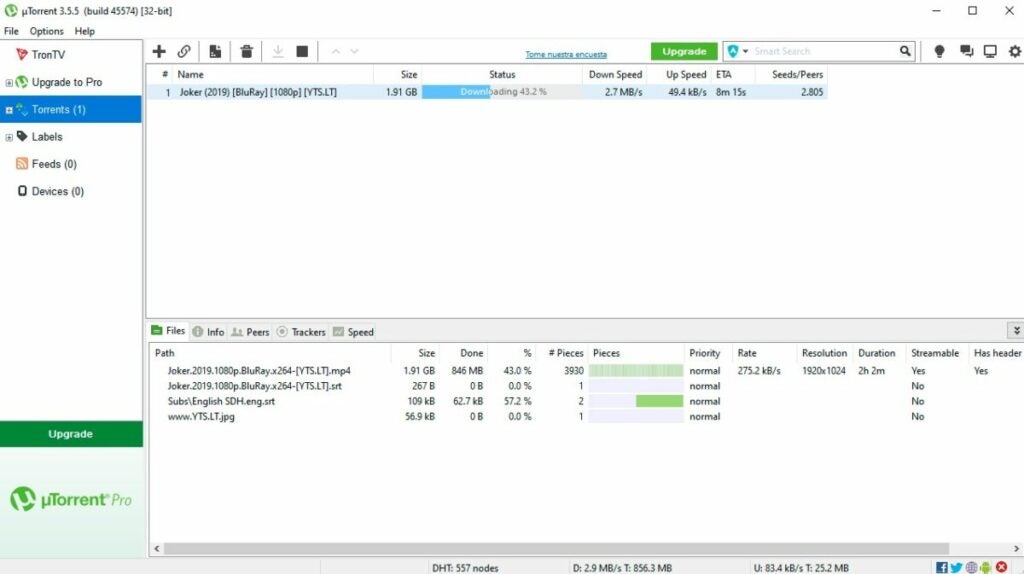
uTorrent, or µTorrent for friends, is one of the most popular P2P programs on the Internet. This BitTorrent client stands out for its power and good results as well as for being very fast and taking up very little space on the hard disk. Its only problem? It incorporates a lot of ads and its installer comes with a lot of bloatware products (don’t forget to mark that you don’t want them during the installation process).
Being such a popular program, uTorrent is loaded with features and improvements that will ensure that all your downloads are completed as soon as possible. Its operation is very simple and intuitive, although if you have any doubts we recommend that you take a look at our uTorrent user guide. In addition, uTorrent also has a web version, so if you don’t want to, you won’t even need to download the client.
Pros:
Very lightweight client
You can schedule downloads
Has web version
Cons:
It has many advertisements
Because of its popularity, it is often targeted by hackers.
As its website states, BitTorrent is considered the most popular P2P client in the world. The application is very similar to uTorrent and rightly so, as both belong to the same company. Its main difference is that BitTorrent incorporates a series of improvements, among which we find a system for sharing files directly from the web as well as adding comments and even writing reviews of the downloads available through the client.
In terms of usability, the BitTorrent client is very simple to configure and start using. However, this does not mean that it is a simple program, as it incorporates a wide range of customization options designed only for experts in P2P networks. It is, therefore, a better option for those looking for a more complex program than uTorrent.
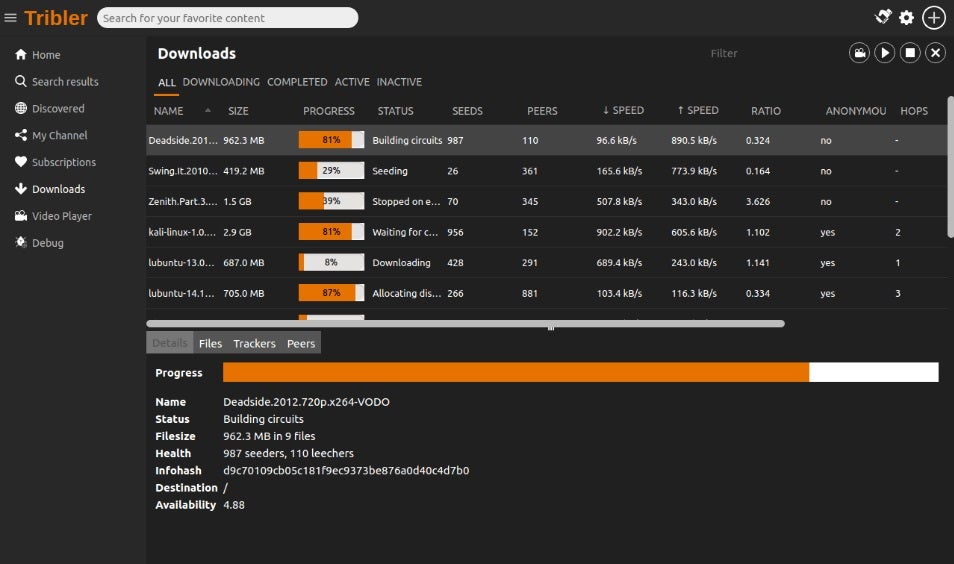
To finish our selection we would like to recommend Tribler, a P2P client that is somewhat less known than the rest, but no less effective. Just like qBittorrent, Tribbler incorporates its own internal search engine, which is really useful for searching for specific files all over the Internet. But this is not the best part, because it is a P2P client designed to protect your anonymity. It’s like having TOR in your program to download torrents!
Undoubtedly, one of the most striking features of Tribler is its interface. It is similar to the classic appearance of a P2P client, offering a modern and intuitive application that is also very easy to use. In short, Tribler is an excellent option for anyone who is looking for a different but effective P2P client that places special emphasis on keeping the user anonymous.
Pros:
Has a torrent search engine
Modern interface
Protects user anonymity
Cons:
Occasionally has a somewhat slow program startup and shutdown.
We hope that our selection of the best free P2P programs has helped you. And remember, if you liked the article do not forget to share it with your friends on social networks.
We tell you the differences between both virtual reality glasses.
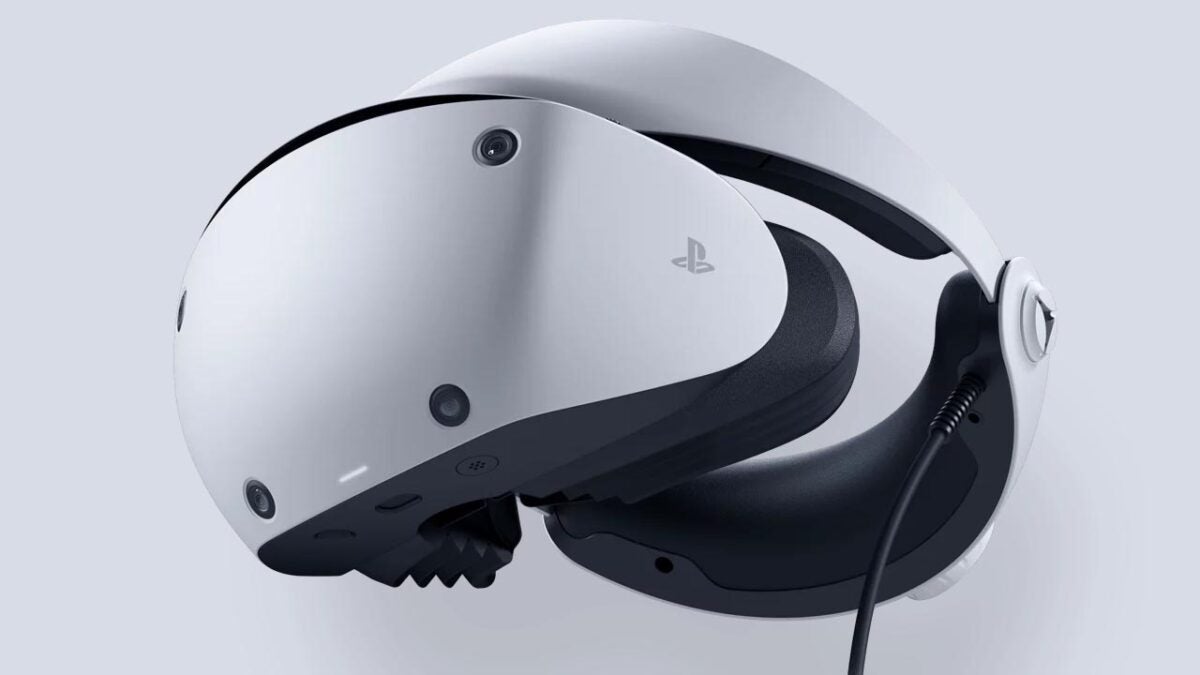
The new virtual reality glasses from Sony are already on the market. After many months of waiting, this new technology really takes shape to enter the universe of virtual reality. If yesterday we wondered how it stood up to comparison with Facebook’s Meta Quest 2, now it is the turn of the PS VR1, i.e. the previous model.
As one can imagine, there is, of course, a change from the previous version to the current one. To say otherwise would be absurd, especially when practically seven years have passed between the launch of the first glasses and these that we now have. However, the question is not so much whether there is change, but rather how big the change is.
To start with, nothing better than an image from The Bit Analyst, a famous account in charge of analyzing software and hardware. On the left, PS VR2; on the right, PS VR1. The screenshot speaks for itself:
Lo que necesitabas conectar para jugar a PS VR1 vs PS VR2. No más cámaras, no mas procesadores externos ni HDMIs, sólo un USB C. Gracias. pic.twitter.com/5CXe2dp4Sa
One of the biggest changes that PS VR2 undergoes is to dispense with an infinite number of cables to play. Before, we needed many elements to be able to play virtual reality; now, instead, we only need one that goes from the helmet to the console. That’s it.
While ideally it would have been wireless like the former Oculus Quest 2, there is no doubt that the ease of use of the PS VR2 is much greater than the PS VR1. And this is appreciated when using a virtual reality glasses.
And the specifications, of course
In addition to this, the biggest change is, of course, in the specifications. The resolution we had in VR1 was 960 x 1080 per eye (1920 x 1080), while in VR2 the jump is incredible up to 2000 x 2040. The detail that this resolution is per eye is very important, as it speaks well of the evolution that players will undergo when enjoying virtual reality with this new hardware. In addition, with 4K HDR images and up to 120 frames per second; in general terms, up to 4 times more resolution than the original.
In addition, the field of view of the VR1 is 100 degrees, while the VR2 goes up to 110 degrees. However, the refresh rate remains unchanged in both, i.e., between 90 and 120 hz.
These are specifications in more global terms, but then there are those additions that give a plus. For example, the eye tracking allows for better emotional response in-game, something that is complemented by the 3D audio of the Tempest 3D AudioTech technology. These are two improvements that may seem trivial, but they complement everything you have with the glasses.
This is also well represented by the haptic functions. The helmet, for example, has intelligent vibration for head movement just when you need it. In turn, the VR2 Sense controllers have haptic feedback, adaptive triggers, tactile sensing and more for greater immersion while playing. In addition, the design of the helmet is more elegant and, above all, comfortable, since the important thing is not to suffer fatigue with the glasses on.
Despite this leap in all areas, there are two negative aspects worth highlighting. The first has to do with the price: VR1 came out at a price of 400 euros, while VR2 is going up to 600. And the second has to do with the games, as the VR2s are not compatible with any VR1 titles. This is a very negative move for all previous owners.
There is no doubt that there is a leap between the previous virtual reality goggles and the current ones. Another aspect is whether you are willing to shell out this money.
Creativity Program is a TikTok program that aims to reward content creators for posting longer videos. Launched in beta, selected content creators who make videos of one minute or longer will receive income in return, which will vary based on metrics.
On its blog, TikTok gives more details on how to participate in this program: “To be eligible for the Creativity Program beta, users must be at least 18 years old, meet minimum follower and video viewing requirements, and have an account in good standing. […] Creators will have access to an updated dashboard to view video eligibility, estimated revenue, and video performance metrics and analytics.”
Exclusive, at least for the time being, to users in the United States, the creation of this new program for content creators represents a drastic change in TikTok’s traditional approach, which, to date, has focused on the creation and consumption of short videos.
In this way, the company could be looking for new ways to monetize other types of content and make room for longer videos, thus being able to compete directly with YouTube.
TikTok also mentions its existing TikTok Creators Fund, which has been active in several countries (including Spain) for a couple of years: “Content creators who are already enrolled in the TikTok Creators Fund can switch to the Creativity Program, and those who are not enrolled can sign up for the new program once it becomes available. Creators currently enrolled in the TikTok Creators Fund can opt to switch to the Creativity Program beta,” TikTok explains.
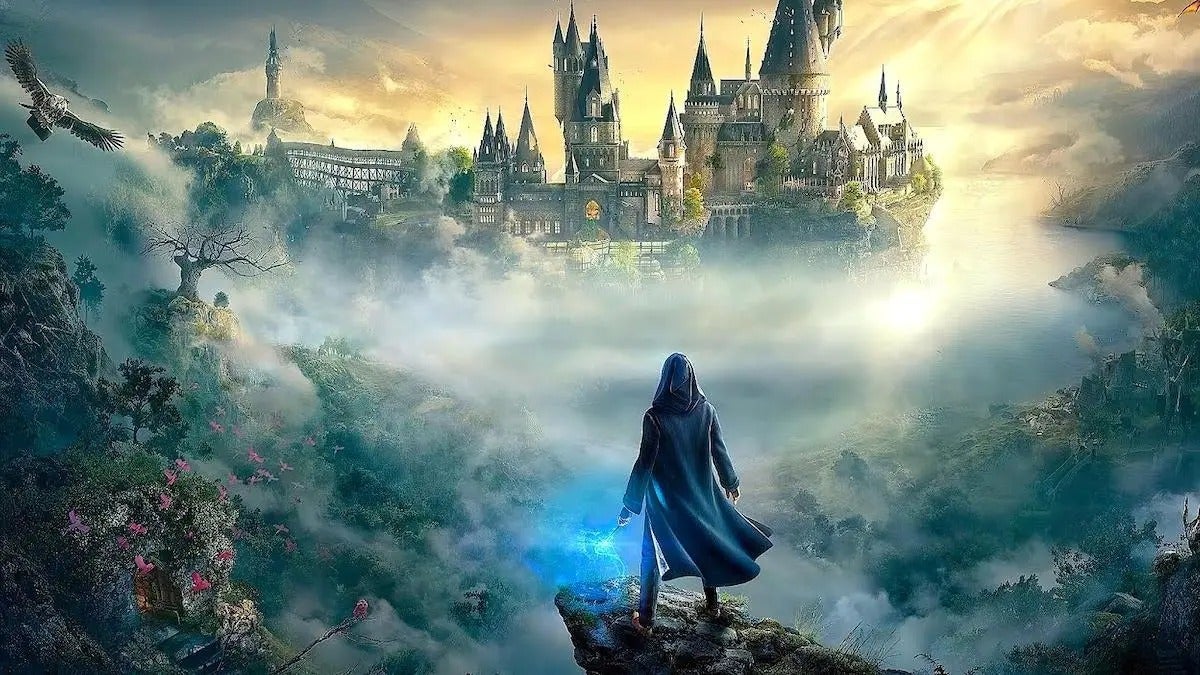
At least that’s what the game’s director himself, Alan Tew, said in a talk that took place at IGN Fan Fest, where he was able to talk about the future of the game: “We’ve been very focused on bringing Hogwarts Legacy to life, so there are no plans for DLC (downloadable content) at the moment“.
The director also spoke about the launch of the game, expressing his surprise after the great reception of the public in recent weeks: “It’s a bit surreal, we’ve been working on this for a long time. But I’m a bit proud. I’m very happy with the team, and this has been a real labor of love for the fans.”
Although Hogwarts Legacy will not be receiving any content expansions in the short term, the company continues to support the game. Recently, Hogwarts Legacy received an update on PC and consoles that fixed a host of bugs and performance issues, including crashes and game save errors.
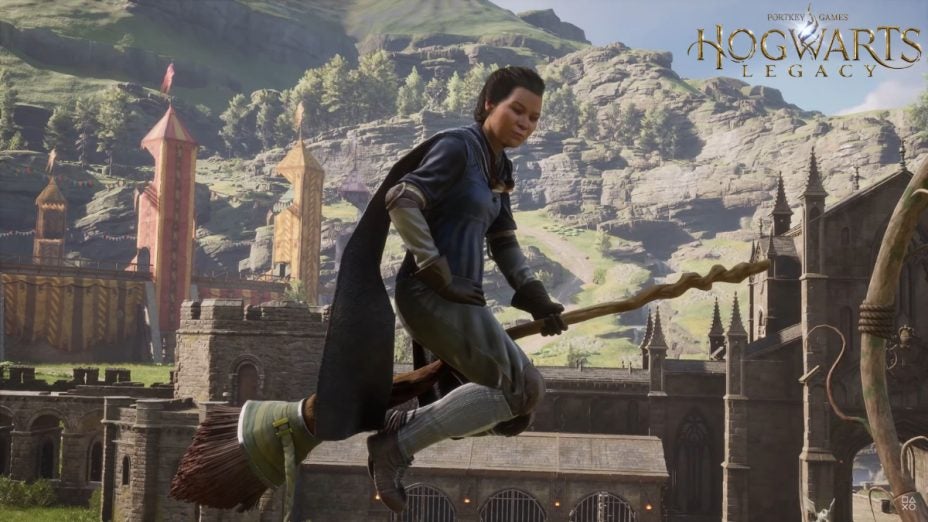
And, yes, as you can imagine, not having expansions in the short term (if there are any eventually) means that, for the time being, we won’t be able to play Quidditch, explore the Chamber of Secrets or travel beyond the boundaries set by the game, which includes such famous locations from the Harry Potter magical universe as Hogwarts itself, Hogsmeade and the Forbidden Forest.
Apple restricts the Beta of iOS 16.4 and iOS 17. There is something that you will no longer be able to do with your future iPhone 15.
The next iPhone software update, iOS 16.4, is already in beta and will soon be released to the general public. This new version brings a major change that will affect iOS 17, the software that will be released alongside iPhone 15.
Until now, if someone wanted to install a beta version of iPhone software, there were two ways to do it: through the official registered developer path, paying a cost of $99 per year, or by installing a configuration profile. The problem was that many non-developer users were downloading and sharing these profiles for free, causing the developer software to be available to everyone.
However, with the release of iOS 16.4, Apple has introduced a new Beta Updates menu, which allows registered developers to download betas directly from the Software Update section. In addition, they have also added an option for all public betas downloads, which arrive slightly later than the developer beta.
The new option to enable betas directly from the software update will only be available to members of the Apple Developer Program, as well as those who register and pay for the program. In future versions of iOS, this new setting will be the way to enable developer betas, and configuration profiles will no longer grant access.
This means that for iOS 17 and other software releases in the future, users will need to be signed in with their Apple ID to get the new software. If they don’t sign in and pay for the developer program, they won’t be able to get it.
Apple had already cracked down on websites that shared configuration profiles. But, with this change, the company is looking to further reduce unauthorized access to developer software. For most users, who are waiting for the software to be generally released, this will not be a problem. However, the idea of hacking the software before release is over.
WhatsApp adds the picture in picture feature in its latest update for iOS, which allows users to open another app while having a video call.
If you use WhasApp regularly, this is of interest to you. The messaging company is launching a picture in picture feature in the latest update of WhatsApp for iOS. This way, WhatsApp users will be able to continue typing in a conversation or open another iPhone app without closing the video call they are making.
The feature is part of WhatsApp version 23.3.77 for iOS, although it was first offered to iOS beta testers released in December. Until now, if an iPhone user switched apps while on a WhatsApp video call, the person they were talking to would stop seeing the video. Starting this week, WhatsApp users on iOS will be able to reply to a message or enter another app without the call being interrupted.
iPhone users who want to use this feature must have devices with the iOS 12 operating system or higher, as well as the latest available version of WhatsApp.
In addition to picture in picture support, WhatsApp has also launched a number of new features for iOS and Android users. From now on, when sending a document we will be able to put a sentence as a “caption”, in the same way that can be done with images and videos.
The new update also allows you to insert longer group descriptions (which can be read by everyone who joins a group), adds a feature that allows you to send 100 images or documents at once, and allows you to create custom avatars that can be used as profile pictures or sent as stickers.