Google previews Android Halo: smart agents could reach the status bar

Android Halo would give software agents their own place in the status bar, with live updates pinned at the top of your screen. Google has only previewed it so far, but reports say it’s slated to arrive later this year.

The idea is simple enough: you wouldn’t have to keep bouncing from app to app to see what an agent is doing. Halo sits there as a persistent, easy-to-glance-at dashboard. If an agent is booking something, checking on a request, or waiting for one last detail from you, it can show progress, ask a follow-up, and then deliver the result, all while making it clear whether it’s still working in the background, needs input, or is done.

Google seems to be treating Halo as part of Android itself, a built-in channel that could push things past the usual one-app-at-a-time model. And it isn’t limited to Google Gemini. Third-party agents are expected to plug into Android Halo too, which would give developers one shared way to surface services across apps.

If you already use assistants in a few different apps, this is one to keep an eye on. Google says Halo will depend on containerized access inside isolated virtual windows for security and privacy, along with AppFunctions API hooks and UI automation for apps that don’t support it directly. That combination could spread fast. It’s also the part that has privacy advocates uneasy.

You can’t download Android Halo yet. It’s coming to Android, it’ll almost certainly draw comparisons to Apple Live Activities, and reports say it could land later this year, possibly alongside Android 17.

Apple Watch drops Force Touch with watchOS 7

Apple has updated the Apple Watch to watchOS 7, and Force Touch is gone. It was originally there to make better use of the watch’s tiny display: press firmly and you’d bring up contextual menus, watch face options, and other hidden controls. Now Apple has switched it off across the system, even on older Apple Watch models that still have the hardware for it.

The iPhone got Haptic Touch when Apple moved on from 3D Touch. The Apple Watch doesn’t get that kind of replacement. A lot of those actions now live in visible menus, settings screens, or longer paths that take a few extra steps.

If you used firm presses regularly, you’ll notice the difference. Things that used to take one quick press can now mean more tapping and more scrolling, even if Apple had already been steering developers away from hidden actions and toward visible controls as Apple Watch screens got bigger.

It also feels like a divisive move, but a very Apple one. One of the Apple Watch’s early defining features disappeared almost overnight.

You can get watchOS 7 through the Watch app on your iPhone, as long as your Apple Watch model is supported.

Apple Hide My Email flaw reportedly remains unfixed a year later

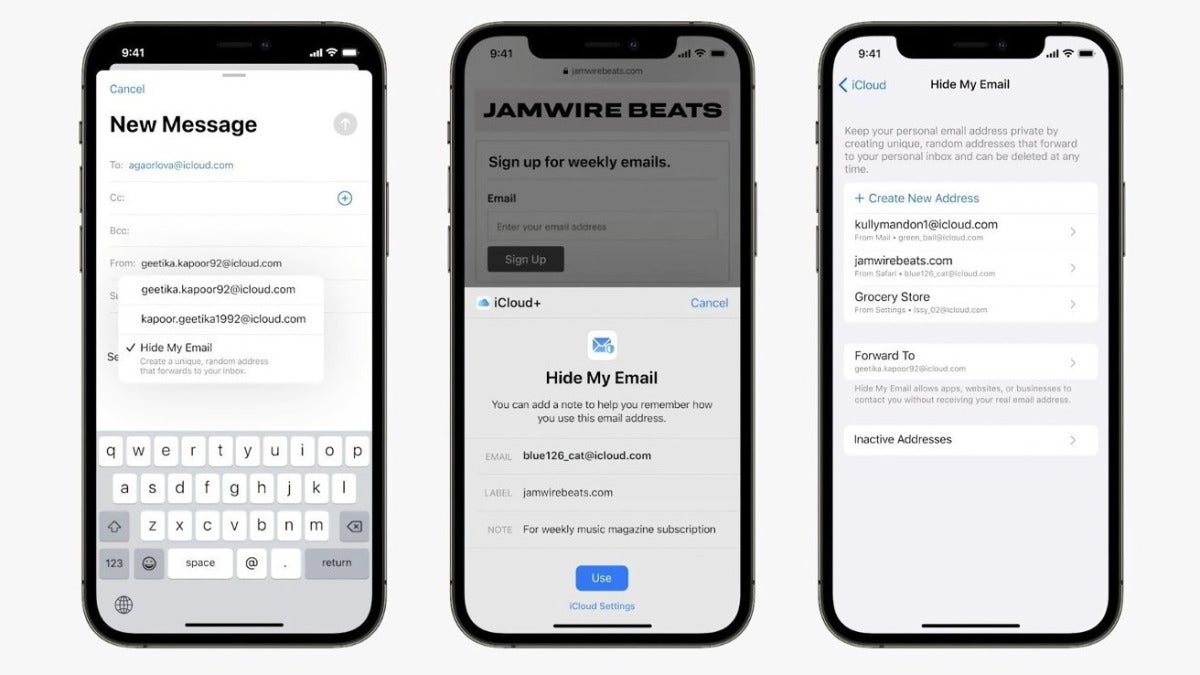
Apple’s Hide My Email, the iCloud+ feature that lets you create email aliases, still appears to have a privacy flaw that could connect an alias back to a real address. Researcher Tyler Murphy reported it in June 2025, and more than a year later, the issue still hasn’t been fixed.

Apple has reportedly acknowledged the flaw. Beyond that, not much is public. The details are being withheld, so it’s still unclear how easy the bug is to exploit, whether it requires any user interaction, or how many people it could affect.

If you use Hide My Email for anything beyond filtering spam, pay attention.

A leaked alias can apparently be tied back to your identity through data brokers and people-search services. That matters a lot if the point is to avoid harassment, stalking, or doxxing.

And this isn’t some edge-case feature. Apple bundles Hide My Email with iCloud+, you can use it for sign-ups, and about 55% of iOS Mail users had it turned on in 2023. It’s useful, sure, but it shouldn’t be mistaken for real anonymity. Apple has also provided account-linked data in response to legal requests.

Hide My Email works through iCloud+ on Apple devices and on the web. New aliases are also expected to shift to @private.icloud.com, a change critics say could make those addresses easier to spot or block, so until Apple patches this, you may want to think twice about how much protection the feature really gives you.

Android 17 tightens lock screen security: guess limit drops to 20

Android 17 tightens up lock-screen security on supported phones by cutting failed passcode attempts down to 20 total. That’s a big drop from the current setup, where an attacker could stretch roughly 1,800 guesses over five years.

The new limits ramp up fast. You get about six wrong tries in the first minute, seven within six minutes, eight within 25 minutes, and around 12 across a full day. Hit 20 total failed attempts, and the device locks for good.

There’s one small exception: if you keep typing the same wrong PIN, Android 17 doesn’t treat every repeat as a separate attempt.

The target here is pretty obvious. Google wants to make brute-force attacks a lot less practical, especially against weak PINs like birthdays or easy patterns with repeated digits.

Android 17 also brings clearer lockout messages that show wait times in minutes, plus a recovery shortcut right on the lock screen. And this sits inside a wider security push from Google: a tougher Mark as lost feature in Find Hub with biometric locking, on-device Live Threat Detection, tighter parental controls, and new rules around local network permissions.

If you’re still using a simple PIN, this is an update you’ll probably want. The trade-off is that the stricter lockouts could be a pain if you’re the one who forgets your code.

These changes arrive as part of Android 17 once the update rolls out to supported Android devices.

PlayStation confirms digital-only games from 2028: new discs will end

Starting in January 2028, PlayStation says all newly released first-party and third-party games on its platforms will be digital only. New disc releases are ending.

PlayStation App Download

Sony ties the decision to the way people already buy games. In fiscal Q4 2025, 85% of full PS4 and PS5 game sales were digital, according to the company. Going all-digital also cuts out the cost of manufacturing discs, printing packaging, shipping stock, and selling through retail, while giving Sony tighter control over pricing and promotions. Once the cutoff arrives, the boxed PlayStation games you see in stores will likely turn into code-in-box products. Grand Theft Auto 6 could be one of the first major examples, if reports about a physical edition with only a download code turn out to be accurate.

If you still buy discs regularly, this matters. A smaller disc market means a weaker used-game business, and it brings back the usual concerns around digital ownership: in a lot of cases, you’re buying a license rather than permanent ownership. Sony’s earlier StudioCanal removals already showed how that can play out. Preservation gets harder too if storefronts shut down, games are delisted, or rights change hands.

The switch will also hit harder in parts of Latin America, Southeast Asia, and Africa, where large downloads can be expensive or unreliable. Same goes if you rely on offline installs, or if you simply prefer collecting and archiving your games.

PlayStation says the policy applies to new PlayStation game releases starting in January 2028.