Those Aaron Sorkin quotes that have been circulating lately, the ones about reshoots, test screenings, and political parallels, were about The Trial of the Chicago 7, Sorkin’s 2020 courtroom drama. They were not about The Social Reckoning, the separately reported Social Network follow-up.
So if you’ve seen the two stories getting blurred together, attach Sorkin’s comments about not directly invoking Donald Trump to The Trial of the Chicago 7. That’s the film about anti-Vietnam War activists put on trial after the 1968 Democratic National Convention in Chicago, a legal and political confrontation over protest, government power, and patriotism. Coverage of The Social Reckoning, meanwhile, has mostly approached it as a possible continuation of The Social Network.
For anyone who follows Sorkin’s work, that’s really the correction here: he spent more than a decade working on the script, but the Trump years and the unrest of 2020 made The Trial of the Chicago 7’s Nixon-era story feel startlingly current, with its focus on policing, state violence, civic dissent, democracy, and national division. At the same time, Sorkin was trying to make something that would outlast a single presidency or one election cycle.
The Trial of the Chicago 7 is streaming on Netflix, and watching it there also makes clear why it became an awards contender. The film was praised for its screenplay, its ensemble, and its sense of urgency. It also drew criticism for sanding down the history, taking dramatic liberties, centering white protest figures, and pushing activists, historians of 1960s protest movements, and international reactions to the edges.
A new report says Star Wars: Rogue Squadron didn’t just get delayed on its way to cancellation. In late 2022, Lucasfilm reportedly reworked it from a movie into a Disney+ series, then canceled that version too. The project was first announced in December 2020 as the studio’s first Star Wars film after The Rise of Skywalker. It was dated for December 22, 2023, with Patty Jenkins attached to a story about a new generation of starfighter pilots. Then it slipped, disappeared from Disney’s release calendar, and was eventually scrapped.
What the report lays out, really, is three separate versions. There was J.D. Dillard and writer Matt Owens’ 2018 pilot film, which drew from the TIE Fighter game and Dillard’s aviator father. Then came the Patty Jenkins feature. And in late 2022, there was a Disney+ version called Ghost Tracker, set during the Mandalorian era, with Rick Famuyiwa and Rayna McClendon lined up as co-showrunners while Jon Favreau and Dave Filoni produced. That one fell apart too.
If you follow Star Wars, one detail here stands out: Ghost Tracker was not the same project as Rangers of the New Republic. That series had reportedly gone dormant by 2021 after Gina Carano’s firing. Had this TV version moved ahead, it would’ve joined The Book of Boba Fett, Ahsoka, and Skeleton Crew in the Mandoverse.
The full report is online, and it also lines up with a familiar Lucasfilm pattern: announce a Star Wars project, rework it, then drop it as Disney gets pickier about what makes it to theaters and what ends up on streaming.
Right now, SAW: Genesis is popping up in rumor roundups as an unconfirmed Saw prequel that would turn the franchise into a 3v1 asymmetrical multiplayer game. Take that for what it is: a rumor. There hasn’t been any official confirmation that SAW: Genesis even exists.
What is confirmed sits on the film side. James Wan’s 2004 Saw kicked off a 10-movie series that now runs through Saw X, built around John Kramer, his apprentices, tangled timelines, and elaborate traps. Saw X, a prequel set between the first two films, arrived in September 2023, was well received, and brought in more than $111 million worldwide on a reported $13 million budget. Lionsgate has also dated Saw XI for September 26, 2025, though it hasn’t released any plot details.
The reports going around say three players called the “Accused,” would solve puzzles, gather supplies, find keys, and try to escape. A fourth player, the “Judge,” would control hidden passages, toxins, traps, and an “Accomplice.” They’re also said to feature procedurally generated maps, which would make each run less predictable.
Those same reports place the story after World War I and add body-part sacrifice along with injuries that stick around, affecting movement, combat, or puzzle-solving. If you follow Saw, this is the kind of rumor to keep an eye on, not something to treat as fact yet. There’s nothing to download right now, and the only official next chapter is still Saw XI in theaters.
Marvel has finally shown some VisionQuest footage and added a few casting details. James Spader is back as Ultron, and Jocasta is set for her first full MCU debut. The Disney+ series follows Paul Bettany’s White Vision after WandaVision, with Vision trying to figure out who he is. It also closes out Marvel’s Disney+ trilogy that started with WandaVision and continued with Agatha All Along. The teaser keeps pointing back to Avengers: Age of Ultron, especially through a mindscape that includes FRIDAY, EDITH, JARVIS, DUM-E, U, and Ultron. From the look of it, this is shaping up to be a more intimate story about memory, identity, and Tony Stark’s legacy.
If you’ve been wanting a real follow-up to Avengers: Age of Ultron, this actually looks like one. The teaser seems to suggest Vision didn’t destroy Ultron in 2015 after all, but trapped part of him inside his own system. Jocasta also looks like she finally pays off Tony Stark’s earlier tease about the system.
In the comics, Ultron created Jocasta as a robotic bride using Janet van Dyne’s brain patterns, before Jocasta went on to become an Avenger. There’s also some unconfirmed speculation that Dr. Helen Cho could appear, since Dr. Helen Cho’s Regeneration Cradle helped create Vision.
Millions of accounts are created online every day. We sign up for stores, entertainment platforms, social networks, banking services, and more.
For most people, this process is so routine that they barely pay attention to it: we enter an email address, set a password, and move on. However, behind that apparent simplicity lies a digital ecosystem where the security of data stored in the cloud is under constant threat.
Data breaches are no longer an exception that affects only high-profile targets, but an everyday reality in which we are all potential victims. Every week, databases belonging to companies of all sizes are breached. When this happens, millions of records containing email addresses, full names, phone numbers and, worse still, passwords, are exposed.
What is most alarming for the average user is not only that a breach happens, but how little visibility there is into the incident. It is very common for a person’s personal information to circulate for months or even years in clandestine forums without them having the slightest knowledge of it. The good news is that checking whether your credentials have been compromised does not require technical knowledge or hours of research, because, thanks to tools like Avast‘s, we can find out whether our data has ended up in someone else’s hands.
The invisible market: what happens when your data is leaked?
To understand the importance of regular checks, it helps to understand the path data follows once it leaves a breached server. When attackers manage to access a database, they rarely use the information immediately to attack a specific user. Instead, they package millions of credentials and put them up for sale or share them on the so-called Dark Web.
On this black market, cybercriminals acquire massive lists of usernames and passwords to launch automated attacks known as credential stuffing. This technique takes advantage of one of the most widespread and dangerous habits on the internet: password reuse.
If you use the same combination of email and password at an online store that suffered a breach and in your main email account or banking service, attackers may be able to access your bank accounts in seconds.
For this reason, spotting early which data has been leaked is not just an exercise in curiosity, it is a fundamental preventive measure to avoid identity theft, unauthorized access to financial accounts, or the hijacking of social media profiles.
How to do a quick diagnosis from your computer
It’s a good idea to check your digital security status. The key is to use specialized tools that continuously monitor Dark Web databases and present the results clearly.
Today there are integrated solutions designed specifically to simplify this task for beginner users. One of the most complete and accessible options for desktop users is Avast One Free, a comprehensive security suite that combines traditional antivirus protection with advanced privacy and data monitoring tools at no cost.
Unlike outdated security solutions that are limited to blocking viruses, modern platforms approach security more broadly, focusing primarily on the user’s digital identity.
Step by step: assess your risk with Avast BreachGuard and Risk Monitor
Within the Avast One security ecosystem, the technology responsible for checking whether your personal data has been exposed is Avast BreachGuard, which includes the Risk Monitor feature.
This tool can help scan Dark Web data sources to help identify whether your accounts have appeared in a known breach.
Running this initial analysis on your desktop or laptop is an extremely simple process consisting of the following steps:
Installing the suite: Download and install Avast One Free on your device. The setup wizard guides you intuitively in just a few clicks.
Accessing the privacy module: Once the application is open, go to the privacy and identity section.
Starting the scan: Enter your primary email address into Risk Monitor. The tool can cross-check your address against billions of leaked records.
Reviewing the report: In less than two minutes, the screen will display a clear picture of the status of your accounts. If your email has not been detected in any breach, the tool can help you to know data hasn’t been found in a breach. If any exposure is detected, the report will specify precisely which website or service the breach occurred on and what type of data was compromised (for example, whether only the password, the physical address, or the phone number was leaked). The biggest benefit of this feature is that it doesn’t just give you a vague alert, but provides clear guidance on what to do next, such as changing the affected password immediately and enabling two-factor authentication on critical services.
Active prevention: stay in control with Hack Alert
The initial scan is an excellent snapshot of the current state of your cybersecurity, but cybersecurity is a dynamic process. A password that is safe today could be leaked tomorrow due to an incident on a platform you use regularly.
To avoid having to run manual searches constantly, Avast One Free integrates the Hack Alert function. This component runs quietly in the background:
24/7 monitoring: Link your email account to Hack Alert and the system can help monitor for newly compromised databases.
Instant notifications: If in the future any password linked to that email shows up in a new major breach, the application can send you a warning.
Fast response: Receiving the alert can help you act before compromised credentials are used elsewhere.
Beyond passwords: reduce your digital footprint with Ads Opt Out
Making sure your passwords have not been leaked is the first step in protecting your online identity, but it is not the only one. Digital privacy is also compromised by the massive tracking carried out by data collection companies (data brokers), which build detailed profiles of your browsing habits, tastes, and personal information.
The greater the amount of data third-party companies store about you, the greater the impact if any of those companies suffers a security breach in the future. Reducing unnecessary data collection is therefore a fundamental preventive strategy.
To address this problem directly, Avast One Free includes the Ads Opt Out feature (opt out of personalized ads and ad tracking). This tool greatly simplifies managing your privacy preferences by allowing you to:
Block trackers: Help limit advertisers’ ability to collect detailed information about your behavior on the web.
Send automatic opt-out requests: It makes it easier to stop the collection of your data by the main advertising networks without having to manually search for privacy settings forms on dozens of different websites.
Limit your exposure: By limiting the amount of personal data circulating through the servers of advertising agencies, you directly reduce the chances that your information will end up exposed in future security incidents.
Essential tips to keep your digital life protected
Using automatic diagnostic tools like those in Avast One Free is the most effective way to keep yourself safe, but combining technology with good digital habits guarantees robust long-term protection. Here are some guidelines that are easy to apply in your day-to-day life:
Use unique and complex passwords: Avoid repeating the same password across multiple sites. If one service suffers a breach, your other accounts will remain completely safe.
Rely on a password manager: Remembering dozens of complex passwords is impossible. A password manager allows you to generate and store random, secure passwords under a single master password.
Enable two-factor authentication (2FA): Whenever possible, add a second verification step (such as an authentication app on your phone) to log in. Even if an attacker gets your leaked password, they’re much less likely to be able to access your account without that second code.
Keep your software updated: Make sure your operating system, browser, and security programs are always up to date with the latest security patches.
Conclusion: digital peace of mind is just a click away
The current cybersecurity landscape shows that data breaches are an inevitable risk of modern digital life. However, this does not mean that you should live with constant worry. The key is not to avoid using technology, but to have the right tools to react quickly and effectively.
Spending two minutes running a scan with free and user-friendly tools like Avast BreachGuard and its Risk Monitor within Avast One Free can help give you greater control over your information. Combined with the continuous protection of Hack Alert and the reduction in tracking offered by Ads Opt Out, this can help you browse with more peace of mind about your identity and personal data. Prevention and knowledge are, today more than ever, your best defense on the web.
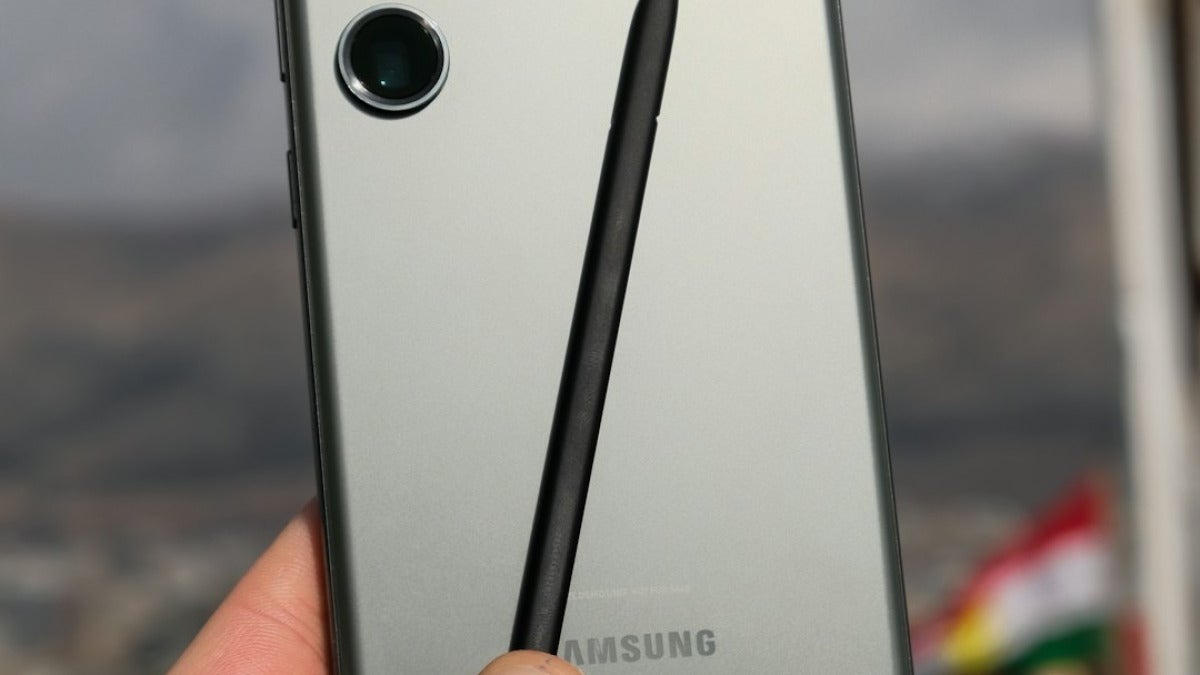
Samsung is rolling out the September 2026 security patch to the Galaxy S24, Galaxy S24+, Galaxy S24 Ultra, and Galaxy S24 FE. The update addresses 90 security vulnerabilities. On the international Galaxy S24, Galaxy S24+, and Galaxy S24 Ultra, it comes in at about 450MB with firmware version S92xBXXSHDZI1. The Galaxy S24 FE gets 438.23MB download and firmware version S721BXXSEDZI1.
If you’re waiting for the stable One UI 9 update, this isn’t that release. So far Samsung has only pushed One UI 9 beta builds for the Galaxy S24 lineup, and it still hasn’t put a date on the final Android 17-based version. Some reports are pointing to early October. There are also people watching this patch closely because it may be part of the prep work for that wider rollout.
If you use a Galaxy S24 every day, this is still an update worth installing even if there aren’t any new features attached to it. Samsung is already sending out the October 2026 patch to some phones, including the Galaxy S26 series, so it’s also possible the stable One UI 9 release lands with a newer security patch folded in.
You can look for it now if you’re in Europe or in several ASEAN markets, though things get murkier outside those regions. North America still doesn’t appear to have a consistent rollout, some users in India aren’t seeing it yet either, and South Korea seems to be absent from this first batch.
Amazon Prime refunds tied to the Federal Trade Commission’s settlement with Amazon get wider on October 1, 2026. That change could bring automatic payments of up to $200 to millions more U.S. subscribers.
The FTC says the expanded settlement covers people affected between June 23, 2019, and June 23, 2025. That includes disputed enrollment screens, failed cancellation attempts, or cases where a subscriber used 11 to 20 Prime benefits over 12 months. Earlier refunds largely cut off at 10 or fewer benefits. A court order also pushed the maximum payment up from $51 to $200, so people who already got $51 could receive as much as $149 more, though not everyone will get the full $200.
If you had a U.S. Prime membership during that stretch, keep an eye on it. You don’t need to file a claim, upload receipts, or fill out an online application.
The money comes out of Amazon’s $2.5 billion settlement with the FTC over alleged Prime dark patterns. The agency says that total includes a $1 billion civil penalty and $1.5 billion set aside for consumer refunds. Amazon didn’t admit wrongdoing as part of the deal. The FTC framed the settlement as a win for consumers, while some consumer advocates saw it as more of a practical agreement than a major precedent.
By September, the FTC said more than $845 million had already been sent out. The settlement also leaves room for another payment round by April 2027 if a February 2027 threshold isn’t met. Refunds will go out automatically to U.S. Prime users through PayPal, Venmo, or mailed check. International members aren’t included, even as Amazon faces broader scrutiny in the U.S. and Europe.
Google has rolled out Android 17 QPR2 Beta 6.1, and one small but welcome change stands out: the HiLight LED on the back of the Pixel 11 Pro can now react to messages.
With this beta, HiLight can glow or blink twice when a text comes in from one of your favorite contacts. Before now, the rear light was mostly tied to calls from favorites, plus a bit of Google Gemini activity, so it often felt like one of those signature Google features that wasn’t doing quite enough.
The new controls are under Settings > System > HiLight > Manage Experiences. You can also switch call and message alerts on or off for each person from their contact page or inside Google Contacts. There is a catch, though. It only works on the Google Pixel 11 Pro , Google Pixel 11 Pro XL, and Google Pixel 11 Pro Fold. The regular Google Pixel 11 doesn’t get it.
If you already use HiLight for favorite contacts, this beta is probably worth installing. It still doesn’t bring back the extra blue, cyan, green, and orange colors that showed up in earlier QPR2 betas, and the rear LED still has some obvious limits, especially if support doesn’t expand beyond Google Messages.
Testers can download the beta now. The stable Android 17 QPR2 release is still expected in December as part of Google’s next Pixel Feature Drop.
The setup on the Steam page is pretty straightforward: you play an astronaut who falls through a null zone on Europa and ends up in the farthest reaches of the Backrooms. From there, reality starts coming apart into uncanny environments, existential dread, and psychological horror.
The listing promises “ultra-realistic” found-footage gameplay, multiple levels and locations, branching paths, multiple endings, and a horror-focused soundtrack. It also says there isn’t a death mechanic, although you’re “not alone.” Content warnings mention blood and scenes of psychological horror.
CosmicArcade also makes clear that this isn’t an official adaptation or tie-in with the Backrooms movie or any other project. The Edge of The Backrooms is an independent interpretation inspired by Kane Pixels’ Backrooms series and The Complex: Expedition. If you’re into liminal horror with a cosmic edge, this already looks worth wishlisting, even if most of the details so far come from the Steam page and outside commentary is still fairly limited.
You can wishlist The Edge of The Backrooms on Steam now, but there’s still no specific release date.
Federal court records show that, just days after former soldier Cameron John Wagenius was sentenced to 70 months in the 2024 Snowflake-linked telecom data theft case, two former US Air Force members were sentenced in a business email compromise scheme tied to Dover Air Force Base. Chijioke Timothy Odimegwu, 25, received 111 months, and Harafat Mogaji, 26, got 78 months for stealing more than $2 million.
Prosecutors say Odimegwu and Mogaji spent close to two years phishing businesses for login credentials, then used compromised inboxes and spoofed email addresses to reroute vendor payments. The scheme hit 15 organizations. Losses topped $1.68 million in Iowa City and $720,000 in Ohio. Investigators also said they collected account information, PINs, and card details, including data from a nonprofit in Pella, Iowa, and bought stolen financial information to make unauthorized transactions.
For anyone who follows business email compromise, this case stands out. The FBI says the crime led to more than $3 billion in losses last year, and this one involved active-duty personnel serving in trusted roles, while the US Department of Defense has reported nearly $11 billion in confirmed fraud from fiscal 2017 through 2024.
Sentencing records say Odimegwu must pay $366,617.59 and Mogaji $995,680.45. Both were taken into custody, both will serve three years of supervised release, and both were sentenced only days after former soldier Cameron John Wagenius received 70 months in the 2024 Snowflake-linked telecom data theft case.