Jurassic Park: Survival is official: a survival-horror return to Isla Nublar

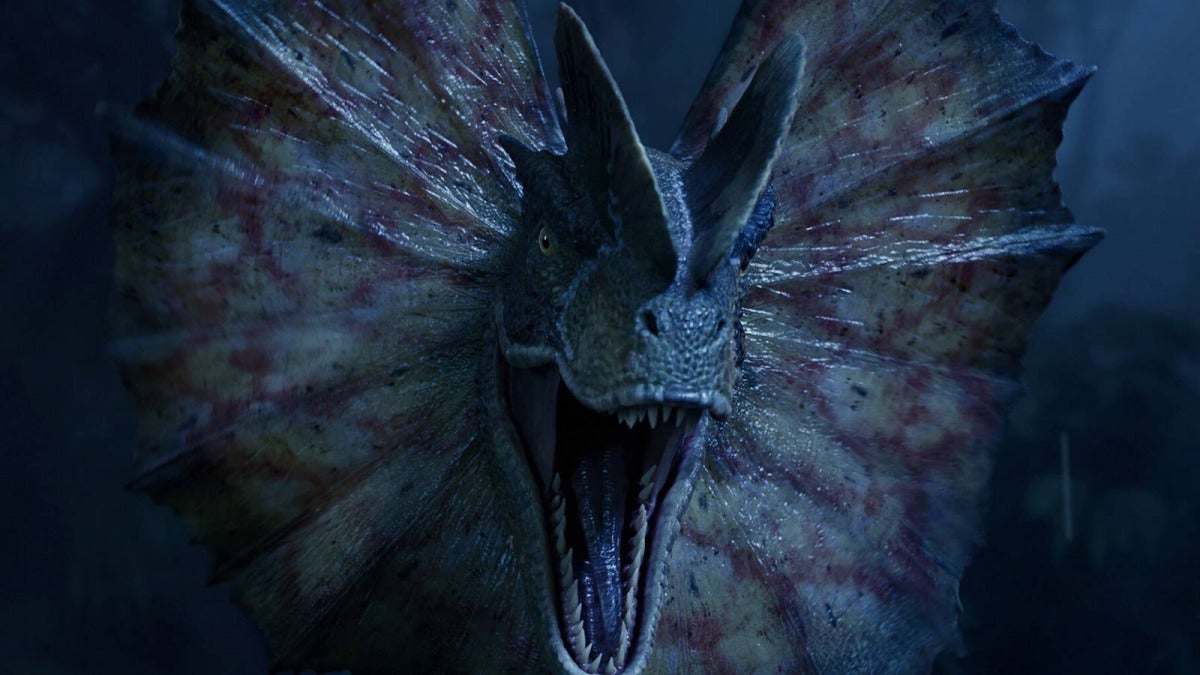
Jurassic Park: Survival was announced today for PC, PlayStation 5, and Xbox Series X/S. From what Saber Interactive showed, the game heads back to Isla Nublar and picks up the day after Steven Spielberg’s 1993 Jurassic Park, leaning much harder into survival horror than either the films or the more recent games.

Jurassic World Evolution Download

You play Dr. Maya Joshi, an InGen scientist who never made it off the island during the evacuation. The game is set in that rarely explored stretch before 1997’s The Lost World: Jurassic Park, as Maya moves through the wrecked park, including the visitor center, the T-Rex paddock, and parts of Isla Nublar the series hasn’t shown before.

Saber is calling Jurassic Park: Survival a single-player first-person action-adventure, but what’s been revealed so far sounds closer to stealth, evasion, and making do with whatever you have than to straight-up combat. You’re prey here, not a dinosaur hunter, which is a pretty clear break from park management games like Jurassic World Evolution 3 and from the more straightforward action-adventure feel the movies usually go for.

If what you want is Jurassic Park that feels scary and tense again, this one looks like it could be worth picking up when it lands, especially now that Universal keeps pushing the series outward with animated projects, Jurassic World: Rebirth, and reports that another sequel is already in early development.

Saber Interactive says Jurassic Park: Survival is currently in development for PC, PlayStation 5, and Xbox Series X/S. There’s still no release date.


Resident Evil opens to a record $60 million: Sony’s reboot sets a franchise-best debut

Resident Evil came out swinging in the US and Canada this weekend, where Sony Pictures’ reboot debuted to $60 million domestically and set a new opening-weekend record for the franchise.

Resident Evil 4 Download

That’s more than double the old high of $26.6 million, set by 2010’s Resident Evil: Afterlife. Worldwide, the film started with $108.3 million, including $48.3 million from international markets, which gives Sony a very solid early shot at turning a profit on a reported $75 million budget, even with a hefty marketing push.

The reboot also blew past the entire domestic run of 2021’s Resident Evil: Welcome to Raccoon City in just one weekend. That film finished with $17 million in the US and roughly $42 million worldwide.

For anyone who’s been waiting for the series to lean back into survival horror, this is the part to watch. Director Zach Cregger just landed the biggest opening of his career after Barbarian and Weapons, and the movie’s focus on tension, dread, and a slower, more deliberate horror tone seems to be connecting. It’s also backed by a reported 95% Certified Fresh score on Rotten Tomatoes and a B+ CinemaScore, both unusually strong marks for Resident Evil and a good early sign that word of mouth could hold up.

Resident Evil is in theaters now. It opened with $5.8 million in the UK and $5.6 million in Mexico, India posted the series’ biggest opening there, and Japan still hasn’t opened yet.

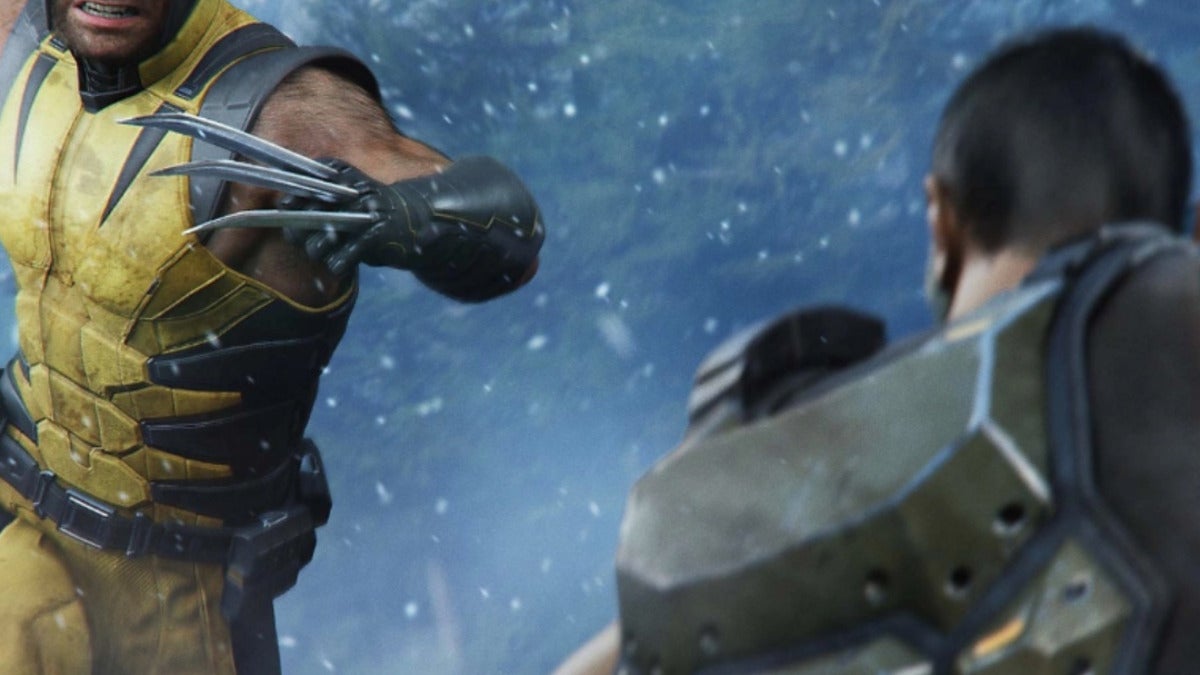
Marvel’s Wolverine gets a hotfix today: scent trails toned down

Insomniac Games pushed out a Marvel’s Wolverine hotfix today, September 19, 2026. It’s version 01.001.005, and the main change is one players had been asking for: the bright blue Scent Trail tracking effect is now less visible. The patch cuts back the trail opacity, softens the related Audio Sense indicators, and fixes several crashes that were hitting a small slice of the player base. What it doesn’t do, at least not yet, is add a full on/off toggle.

That update comes after several days of player complaints, with plenty of people joking that the Scent Trail looked like “fart gas” and arguing that it felt distracting, even a little too eager to guide you, in a game that’s otherwise pretty linear. For anyone who found the effect immersion-breaking, this patch should help. Just don’t expect it to disappear entirely, because Insomniac has only toned it down, not removed it.

The studio says a dedicated toggle could still come later, but for now it’s still looking at wider changes to the senses system. The issue is that the feature connects to other gameplay mechanics, so any bigger adjustment needs to be tested carefully before they flip that switch.

So far, none of this seems to have slowed the game at launch. Early estimates put Marvel’s Wolverine at 1.9 million copies sold and around $130 million (£97 million) in revenue. Those same estimates also say physical sales made up just 22.9% of the total, compared with 35% for Marvel’s Spider-Man 2, and reviews have landed in a more mixed place too. If you’ve got Marvel’s Wolverine, the hotfix is live now.

The secret of the iPhone Duo: why did Apple cancel this accessory at the last minute?

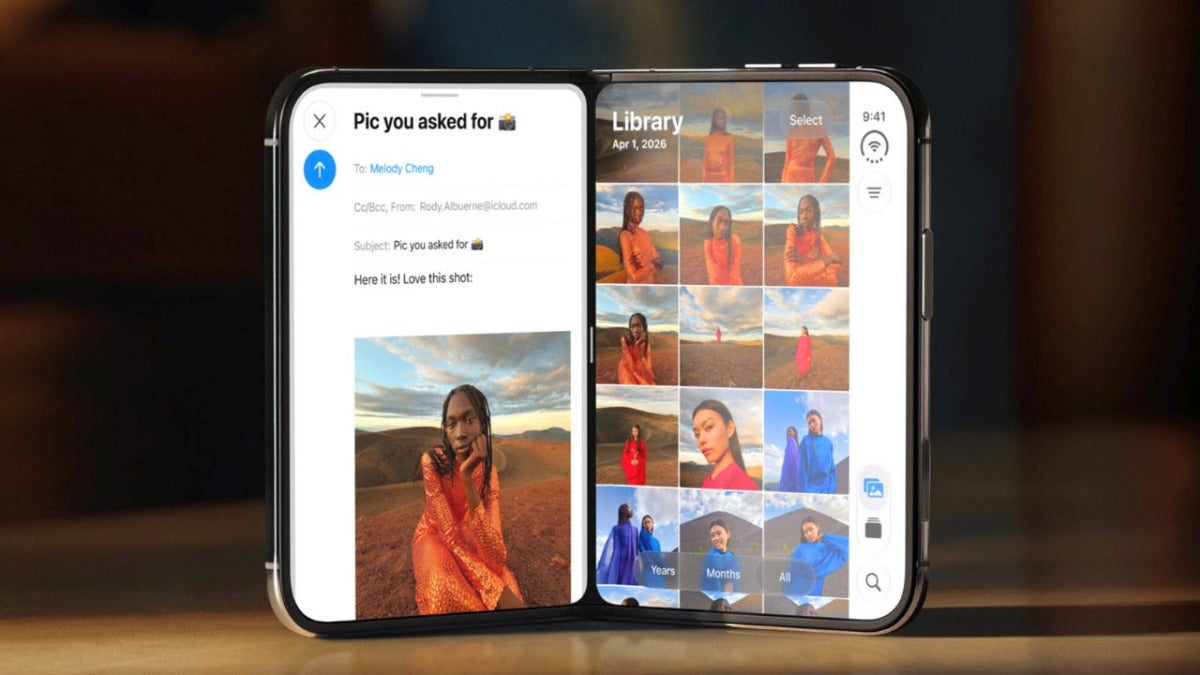
The unveiling of the iPhone Duo left us with a surprise that would have surprised even Steve Jobs himself: Apple’s first foldable iPhone will be compatible with the USB-C Apple Pencil. The original plan, however, went quite a bit further. Apple had prepared a dedicated Apple Pencil for the iPhone Duo, smaller and designed to attach magnetically next to the hinge. What happened to it?

An Apple Pencil created for the iPhone Duo

We’d already heard about this accessory when rumors claimed that Apple was internally testing an Apple Pencil for its foldable iPhone. According to Mark Gurman at Bloomberg, however, the accessory ran into technical difficulties just before entering production and Apple preferred to rely on an already proven solution.

As far as we know, the stylus was shorter to better suit the iPhone Duo and its two screens. The idea was that we could place it on the hinge area to connect it, charge it, and also carry it. Removing it when opening the device, we’d have an iPhone that, when open, would offer the same experience as an iPad mini, something Craig Federighi has already spoken about.

Given the “technical difficulties,” of which we don’t know any details, Apple decided that the best option was to use the current USB-C Apple Pencil, and make it compatible with the inner and outer screens. That’s how it was announced during the presentation although support will still take a few months to arrive. Officially, it’s expected to arrive “later in 2026,” and Gurman adds that it’ll surely be shortly before the end of the year given the amount of testing.

Given that the iPhone Duo wasn’t going to be compatible with the USB-C Apple Pencil, Gurman explains that the work to enable that compatibility is substantial and that it also requires all the testing Apple will want to do to ensure it works properly. So, while we’ll already have the iPhone 18 Pro, to be able to write by hand on our iPhone Duo, we’ll have to wait a little bit longer.

Apple tests iPhone 20 Pro redesign: near bezel-free curved display

Apple is said to be testing early 2027 prototypes for the iPhone 20 Pro and iPhone 20 Pro Max. One leak points to new screen sizes, along with a quad-curved display that nearly wipes out the bezels.

The numbers in that leak are pretty specific. It says the iPhone 20 Pro would use a 6.41-inch display with a 2,686 x 1,236 resolution, while the iPhone 20 Pro Max would go up to 6.96 inches at 2,912 x 1,340. The same source also points to a borderless panel that curves toward all four sides, pushing the front even closer to a full-screen look than the flat-faced iPhones Apple sells now.

Current prototypes may still have a punch-hole cutout. Even so, the broader rumor cycle says Apple is also looking at under-display Face ID and camera hardware. Xiaomi showed off a concept like this back in 2021, and newer TECNO devices have played with similar wraparound screens too, but Apple may be the company that actually turns the idea into something finished enough for the mass market.

If you keep up with iPhone design rumors, this one is worth keeping an eye on. Still, curved screens have their own baggage: accidental touches, more fragile edges, pricier repairs, and a constant headache for cases and screen protectors. Apple could easily pull back and use a softer curve, or lean more on curved glass than a dramatically curved panel.

And no, you can’t buy an iPhone 20 Pro or iPhone 20 Pro Max yet. Both are still unconfirmed 2027 prototypes, no image has leaked so far, the design clearly isn’t final, and problems like edge distortion or display integration could still push the phones back, or kill the project entirely.

China reportedly slows humanoid robot IPOs: scrutiny rises after Unitree debut

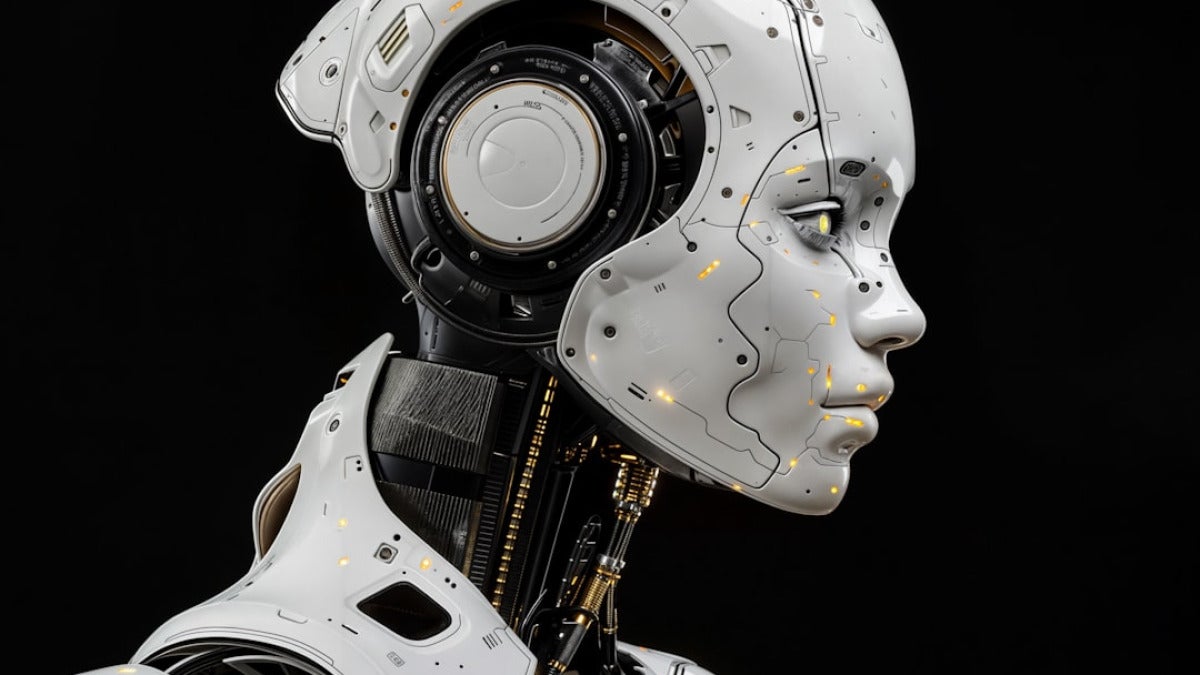
China’s securities regulator, the China Securities Regulatory Commission (CSRC), appears to have tapped the brakes on new humanoid robot listings after Unitree Robotics’ wild debut on Shanghai’s STAR Market on 19 August. The move puts a lot more scrutiny on one of China’s most watched tech sectors.

Multiple reports say the CSRC is relying on unpublished “window guidance.” In practice, that means a company may be told to wait unless it can show recurring revenue, losses that are actually coming down, a believable route to profitability, or some clear technical advantage. Those same reports say Unitree Robotics priced its shares at 150.80 yuan on 19 August, raised 6.1 billion yuan ($904 million) at roughly a $9 billion valuation, then shot up 460% intraday to about 445 billion yuan and a P/E above 1,300 before dropping around 55%.

What’s also getting a closer look is the quality of that revenue. Based on the figures cited in those reports, only 9% of Unitree Robotics’ sales in the first nine months of 2025 came from industrial use, while 73.6% came from research and education. Mech-Mind CEO Shaohua Chen said some revenue across the sector comes from data collection centers, related-party transactions, and other arrangements that won’t hold up for long. Reuters reported that stripping those out could knock some valuations down by 60% to 70%, although that estimate still hasn’t been broadly confirmed.

If you follow Chinese robotics, this looks more like something to keep an eye on than a ban. Reports say at least six IPO candidates, including Deep Robotics, X Square Robot, and AGIBOT, are still in line. And China still leads by the numbers cited in those reports: more than 90% of H1 2026 shipments, about $4.4 billion invested since 2017, a May 2026 push for robot digital IDs, and draft standards released in August 2026 that aim to put 100 key rules in place by 2028.

Windows 11 in 2026: tips to make your PC faster and more organized

By mid-2026, Windows 11 is the default version of Windows for most people. It’s running on an estimated 69.9% of PCs, while Windows 10 has dropped to 28.2%, after mainstream Windows 10 support ended in October 2025. At this point, what matters isn’t dark mode, wallpapers, or pinned apps. It’s the Windows 11 tools that make everyday work a little less annoying.

Microsoft PowerToys Download

Snap Layouts lets you arrange windows quickly. Snap Groups can bring back a full workspace across apps like a browser, Microsoft Teams, and a spreadsheet. Virtual desktops also feel a lot more useful once you actually rename them, give each one a different wallpaper, and switch between them with Win + Ctrl + D or Win + Ctrl + left/right.

If you want more control, Microsoft PowerToys is still one of the best free extras you can add. FancyZones gives you custom window layouts. PowerToys Run, on Alt + Space, is great for launching things fast. Text Extractor, on Win + Shift + T, pulls text from images, receipts, presentations, and locked PDFs.

If your day involves constant hopping between tabs, documents, chats, and creative apps, these are the Windows 11 tools to install first. They’ll save you more time than any cosmetic tweak ever will.

Windows 11 now feels stable and mature, but it can still seem slow for familiar reasons: too many startup apps, default settings that aren’t always helpful, higher idle RAM use at around 2–3GB instead of the 1–2GB common on Windows 10, and older PCs still running on hard drives. Microsoft says its 2026 Project K2 Low Latency Profile improves app launches by up to 40% and speeds up some interface actions by up to 70%, though older hardware can still hold the whole experience back.

Windows 11 and Microsoft PowerToys are available from Microsoft.

Doctor Sleep and The Shining: Stephen King’s better duo than IT

Doctor Sleep, Mike Flanagan’s 2019 follow-up to The Shining, now looks like the stronger Stephen King sequel. Put next to Stanley Kubrick’s 1980 film, it makes for a fuller, more satisfying two-movie franchise than Andy Muschietti’s hugely successful IT films.

Flanagan had to do two things at once: keep Danny Torrance’s story going and find a way to connect Stephen King’s novel Doctor Sleep to Kubrick’s divisive 1980 take on The Shining. You can feel that balancing act paying off. The sequel reaches past nostalgia and gets into trauma, addiction, recovery, and sobriety. Critics responded well, and Stephen King said the movie made up for some of what had frustrated him about Kubrick’s adaptation.

That doesn’t take anything away from 2017’s IT: Chapter One, which really was a major horror event. Muschietti shifted King’s It into the 1980s, turned Bill Skarsgard’s Pennywise into a darker screen presence, and saw the film earn $704 million worldwide on a $35 million budget.

Where things slipped was 2019’s IT Chapter Two. Even with $473 million at the worldwide box office, Muschietti’s sequel and its adult Losers’ Club never matched the chemistry of the younger cast, and the movie ends up feeling baggier, less cohesive, and less emotionally satisfying.

On box office alone, IT is still the bigger brand. Doctor Sleep made just over $72 million worldwide against a reported $45 million to $55 million budget. Even so, it still drew generally positive reviews and picked up the same B+ CinemaScore as IT: Chapter One and IT Chapter Two.

If you’re judging these adaptations by which story actually lands its ending, The Shining and Doctor Sleep are the pair to back. Welcome to Derry is still on the way to HBO Max with Andy Muschietti as executive producer, and Mike Flanagan still stands as one of Stephen King’s key screen interpreters, even without another Doctor Sleep sequel.