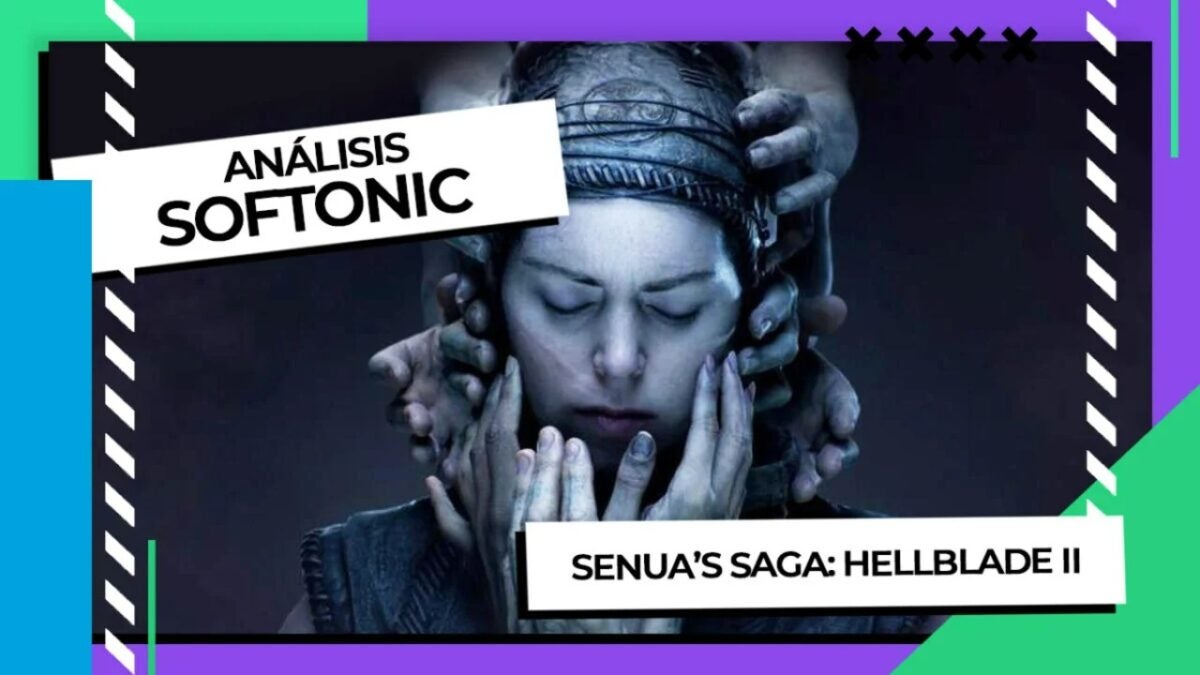
It’s not easy to launch such an anticipated and desired game like Hellblade 2 when spirits are running high due to massive layoffs and closures of highly successful studios. Microsoft has been acquiring studios for years only to shut them down now. Or at least that’s the impression fans of the brand and the industry in general have.
That’s why this highly anticipated release has been somewhat overshadowed. The premiere of Senua’s Saga: Hellblade 2 was supposed to be a celebration of auteur video games, those small independent projects that end up becoming big adventures with a large budget. Now the feeling is that if Hellblade 2 doesn’t deliver, Ninja Theory will be just another studio that closes its doors.

When Microsoft acquired Ninja Theory in 2018 (for about 117 million euros), they did so with the idea of continuing Senua’s story, with a second game that would be bigger and better than the first one.
And Microsoft has believed in the vision and work of Ninja Theory, that’s why they have showcased a trailer of the game at every brand conference and event from 2020 until today. On May 21, 2024, it was released (day 1 on Game Pass) and we have already been able to finish it. So let’s go with the analysis.
A game that remains unique: very niche and not for everyone
The Xbox series, very mature and very serious, has become a game that symbolizes two things: it represents mental health and looking absolutely incredible. In regards to these two very different vocations, Hellblade 2 achieves it.
At first, one feels so annoyed by the chatter of the voices (made in binaural sound to make it sound as if they were planted somewhere in your head) that it is normal to want to eliminate them from the game settings. But you can’t, the voices are as much a part of the game as Senua herself… in the end, those voices are also part of Senua.
But that’s what it’s all about, isn’t it? These specters embedded in Senua’s consciousness like a pair of bloodthirsty ticks will never go away. They will comment on everything you do, all the time. I still think that the rawness of the game in this aspect, going beyond discomfort and reaching annoyance, is what keeps the title from being anything more than a niche game with no potential for sales and/or players.
But the story it tells… is not as good as the first game’s. There are equally heartbreaking themes – revenge gives way to a melancholic and introspective story about pain and the meaning of motherhood, essentially – but it never lands with the same solidity as Ninja Theory’s unexpected first game.
Is this because we are treading rocky and uncomfortable ground again, or because it fails to try anything new and feels like a mere continuation? It’s hard to say, but despite its short seven-hour duration, Hellblade 2 gives the impression of not deserving all the time it lasts.
My feeling is that this game could have been a DLC for the first game. As a sequel, it lacks ideas.
Technically incredible, a perfect performance and a revolutionary sound
Melina Juergens, the actress who became Senua for these games, delivers an astonishing performance, perhaps a milestone in the industry as a whole, and the technical craftsmen at Ninja Theory have worked their magic to bring her to life in this game.
There were moments when I wasn’t sure if the studio was doing an “Alan Wake” and introducing real images into the game; that’s how incredible the visual effects are. The details on Juergens’ face, the torchlight gently hitting the fabric over his shoulders, the tears running down his face… it’s amazing. That’s why, I suppose, my Nvidia RTX 3080 graphics card can only run the game on High with DLSS enabled if I want to reach an average of 60 FPS.
The sound is equally impressive. The sound rivals that of The Last of Us Part II in terms of space, immersion, and binaural mastery. Anyone with Game Pass and decent headphones should play this game to see what can be done with game audio.
But poor gameplay and not very fun
Unfortunately, Hellblade 2 is not a fun game. The puzzles seem to get in the way of the storytelling and never make you feel smart or accomplished. They feel like filler clues, designed to create pauses between the ones you really want to hear. The combat is rock, paper, scissors, if we’re good at the game… if not, it can be said that it is one of the weakest combat systems we have tried in years.
Sometimes, the game changes things up and offers a different action encounter or tests your synchronization by making you run from one rock to another with a stopwatch. But… that’s it. I understand that the objective of this game is the narrative, but Ninja Theory could have been more creative.
It becomes monotonous until the end, and the gut punches of a story that appropriately affects end up being weaker and damp. And it’s a shame, because some of those moments are -seriously- quite special.
Although Hellblade 2 is capable of leaving you speechless and giving you goosebumps, too often the whole project ends up looking like an expensive tech demo.
Staying away from the controller during many of its most impactful moments, and not giving you enough to play with when you have control, diminishes the potential of this visual and auditory masterpiece enough to make the overall experience feel like it is constantly trying to find a foothold.
The potential was enormous, there are ideas and merits to play it already in Game Pass, but the final result has not convinced me as a video game.
