{
"de-DE": "",
"en-US": "Patrick Devaney is a news reporter for Softonic, keeping readers up to date on everything affecting their favorite apps and programs. His beat includes social media apps and sites like Facebook, Instagram, Reddit, Twitter, YouTube, and Snapchat. Patrick also covers antivirus and security issues, web browsers, the full Google suite of apps and programs, and operating systems like Windows, iOS, and Android.",
"es-ES": "",
"fr-FR": "",
"it-IT": "",
"ja-JP": "",
"nl-NL": "",
"pl-PL": "",
"pt-BR": "",
"social": {
"email": "patrick.devaney@softonic.com",
"facebook": "",
"twitter": "https://twitter.com/PatrickDevaney_",
"linkedin": "https://www.linkedin.com/in/patrickdevaney84/",
"web": "https://helpfulchef.com/"
}
}
If you’re a fan of ChatGPT, the popular conversational AI tool, you may have noticed that it doesn’t come with its own API. This can be a problem if you want to integrate ChatGPT with other applications or services and means that while we all might have had a lot of fun playing around with ChatGPT, apart from a few niche ideas, users have been struggling to integrate it into their businesses.
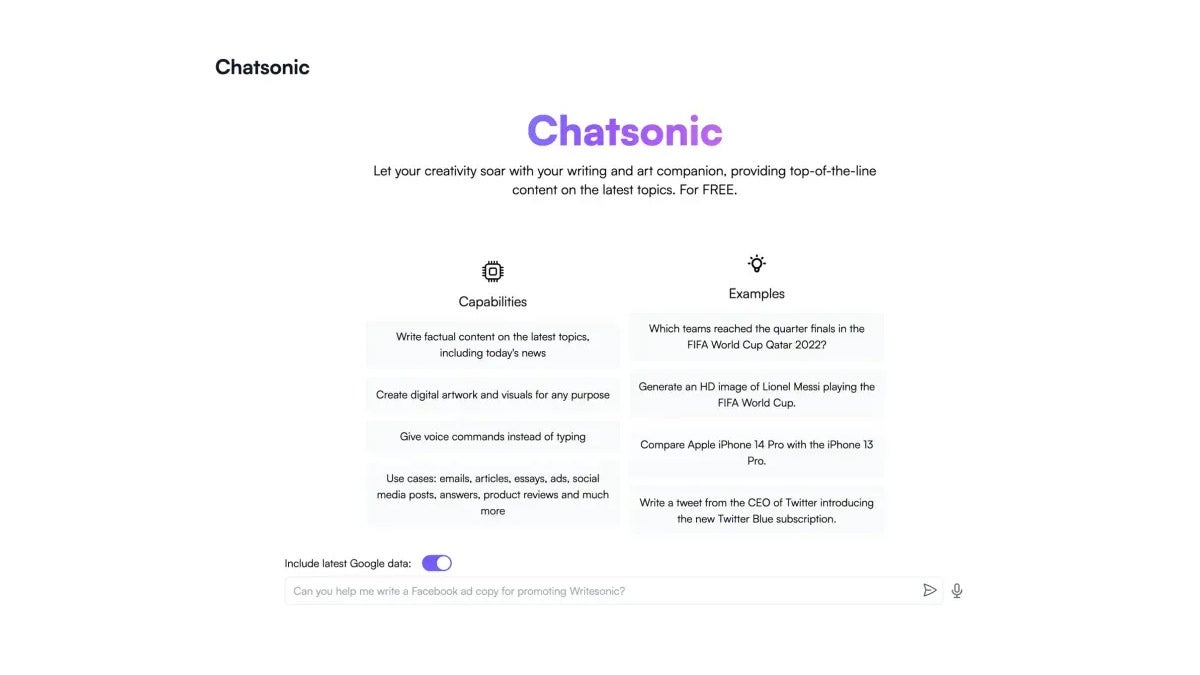
Now, depending on what you want it for, there is the possibility that you could use OpenAI’s API access to the GPT-3 large language model upon which ChatGPT is based. However, ChatGPT and GPT-3 are not the same thing and if you are looking for something a bit more chatbotty than AI wordsmith, there may be a more suitable solution for your needs. Step forward, ChatSonic, which enables the easy integration of ChatGPT into third-party apps and services.
One of the key features of ChatSonic’s API, which also puts it at an advantage over ChatGPT is its integration with Google’s knowledge graph. The knowledge graph is the tool Google uses to populate snippets of information in Google search results. This integration means ChatSonic can stay up to date with all the latest information on the internet rather than being limited to information from 2021 and before.
ChatSonic also allows for the creation of digital artwork and images using AI. This opens up a whole new world of possibilities for designers and artists, who can use ChatGPT to generate unique and original visual content to go along with the chatbot conversations they are incorporating into their products.
WriteSonic, the team behind the ChatSonic API tool also claims that it enables longer and more natural conversations than users will get with ChatGPT. This stems from ChatSonic’s ability to remember past comments and answer follow-up questions, making it an ideal tool for customer service, where the ability to have a continuous conversation with a customer is crucial.
Building on this functionality, the WriteSonic team have also developed the ability to create customized avatars to go with the ChatSonic API. These avatars can then become the face of your online company or service.
In conclusion, ChatGPT may not come with its own API, but ChatSonic’s API offers a range of powerful features that make it easy to integrate ChatGPT into any project. From its integration with Google’s knowledge graph to its ability to generate digital artwork and enable natural, continuous conversations, ChatSonic’s API offers interesting possibilities to anyone looking to incorporate ChatGPT-like functionalities into their digital business.
Even though AI has been creeping into more and more of our daily lives for a while now, it feels like 2022 has been the year when it has really broken through into the public’s consciousness. Interestingly, it is not scarily inaccurate and equally dystopian biometric facial recognition, or that public governance is increasingly being delegated to automated decision-making systems that struggle to understand who most of us are that has done it. Rather, everybody is talking about AI because of the creative flourishes it has shown this year, as major generative protocols such as DALL-E 2, Stable Diffusion, and most recently ChatGPT have come into the public domain.
These powerful AI engines combined with the almost infinite creativity of the internet have come together to create some truly breathtaking works of art and literature, as well as all sorts of unique creative and useful endeavors, piquing everybody’s interest. It is in this context then, that we are peering into 2023 to see what we can expect from AI. Behind us, we have a year of impressive commercial AI applications overlaid onto a complicated mix of broader and more insidious applications that are starting to have real sway over how the world around us is run and what our place is in it. Let’s take a look.
AI vs Search Engines?
One of the big things that has come out of the rapid rise of ChatGPT, is its ability to offer rich and impressive responses to queries and prompts that look a lot like search terms you’d type into Google. In fact, the New York Times recently said we are going through a code red moment for search and developers have even built Chrome plugins that will automatically overlay ChatGPT responses onto the Google Search results page every time you search for something. It looks then as though 2023 will be a battleground year between traditional search engines and AI generative chat machines.
It is key here, however, to point out that as impressive as these AI tools have been this year and as good their responses can look, there have been a lot of examples of the responses given being nothing more than fancy-looking nonsense. They are not fact and therefore, not something that can be relied upon in the same way a traditional search engine can be, which is exactly what OpenAI’s CEO Sam Altman recently said himself. This, however, doesn’t mean that there won’t be a battle, as the likes of Altman will be aware that this lack of factual reliability in answers given by their tools is one of the major current drawbacks and will, therefore, be working to address the issue. How much progress they make next year will be very interesting to see.
With everybody getting so excited about ChatGPT it is easy to forget that it is actually a reworking of the Generative Pre-trained Transformer 3 (GPT-3) protocol, which launched back in June 2020. GPT-3, however, was only released to researchers and other noted professionals rather than the general public. This meant that while news of its capabilities was breaking through into the public consciousness, it was nothing like we’ve seen over the last few weeks.
This might be different, however, when those same researchers and noted professionals get their hands on GPT-4 which is heavily rumored to be launching early next year. Little is known about what we can expect from GPT-4 but it is almost certain that more people will be paying attention this time around, following the massive fame achieved by ChatGPT.
Text-to-video AI to grab some headlines
We’ve already seen a text-to-video AI protocol in 2022, thanks to Meta’s impressive Make-A-Video tool. The tool converts short descriptions into short GIFs, with users able to choose between three video styles: surreal, realistic, and stylized. Make-A-Video uses a layer of unsupervised learning to understand motion and apply it to traditional text-to-image generation, addressing the challenge of generating video from text rather than static images.
However, professors at Stanford University’s Human-Centered Artificial Intelligence have highlighted generative video as one of their most expected AI developments for 2023. Associate professor of computer science, Percy Liang said:
“We may be getting to a point next year where we won’t be able to distinguish whether a human or computer generated a video. Up to today, if you watch a video, you expect it to be real, but we’re seeing that hard-line start to evaporate.”
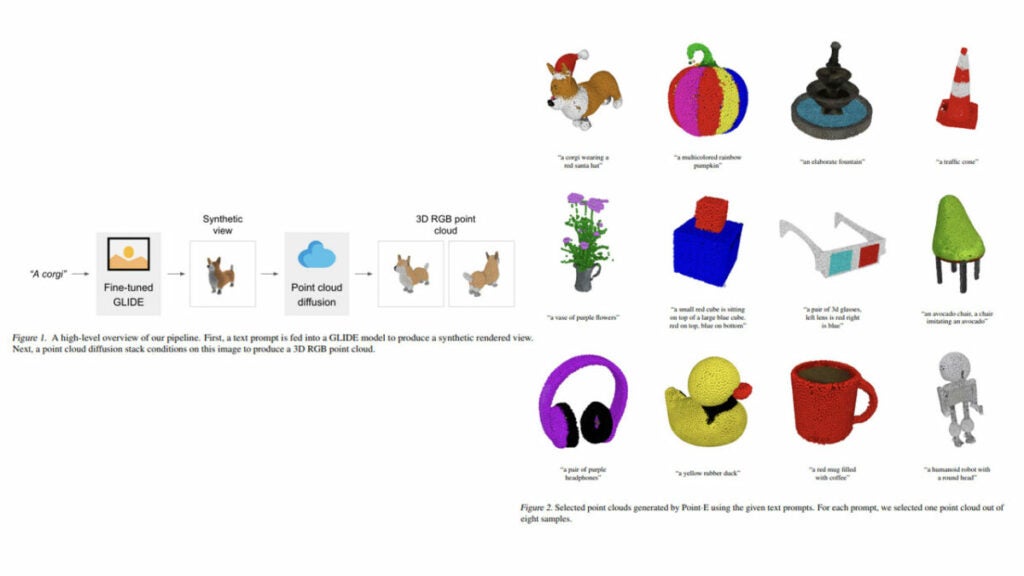
Furthermore, with OpenAI also having recently unveiled POINT-E, which can create 3D models from text prompts, we may even see AI-generated items turning up in video games as well as being used as background props in movies.
Troublesome implementations of unsafe AI products
Sticking with the Stanford professors for a moment, another one of the things they expect to see in AI in 2023 relates to the buzz that currently surrounds the subject. With so much interest currently swirling around the topic, it is highly likely that many developers may rush their products to market in order to capitalize on the hype.
This is a big deal because AI is shaping up to be a truly transformational technology. Even if a lot of the buzz that has been whipped up by ChatGPT in recent weeks often sounds like hyperbole, it is an early iteration of a product that has been put out into the wild so that the developers can learn about how it works and what potential problems may be. It is going to get better and it will transform many aspects of our modern life. This means, that if people are rushing out products without fully testing them or considering the effects they will have on society, things could get messy really quickly.
More talk of regulation
Governments and lawmakers stepping in to regulate the use of AI to ensure it is used safely is something that has been on the cards for a while now. The EU AI Act is the most prominent example of this, which is currently being debated by the European Union. If passed, the Act will be the first horizontal law to regulate all uses of AI, categorizing applications into three risk levels. The first category includes applications that pose an unacceptable risk, such as government social scoring, which would be banned. The second category includes high-risk applications, such as CV-scanning tools, which would be subject to legal requirements. The third category includes applications that are not explicitly banned or listed as high-risk, which would largely be unregulated. The EU AI Act will likely come into force in 2023 or 2024, and even if that does happen there will then be a 24-36 month grace period before the main requirements come into force.
In the United States, the White House Office of Science and Technology Policy has released a Blueprint for an AI Bill of Rights, which outlines five principles to guide the design, use, and deployment of automated systems in the age of AI. These principles include ensuring that AI systems are fair, transparent, and accountable; protecting privacy and civil liberties; promoting access to the benefits of AI; encouraging collaboration and innovation; and ensuring that AI systems are sustainable and safe. However, this blueprint is not binding legislation and is more of an educational tool to raise awareness about AI issues. This means it is something to build on rather than something to rely on.
In addition to the EU AI Act and the AI Bill of Rights, there are a number of other national regulations being developed in countries such as Canada, China, the UK, and Brazil. These laws may address issues related to human rights and protecting citizens from potential AI-based abuses. However, it remains to be seen how effective these laws will be in practice. Additionally, there is a concern that the development of AI laws and regulations may not keep pace with the rapid advancement of the technology, leaving gaps in the legal framework. Overall, it is clear that the development and implementation of laws and regulations to govern AI is a complex and ongoing process that will go well into 2023 and beyond.
We first spotted WhatsApp message reactions in the WhatsApp beta back at the beginning of March, and since then WhatsApp has begun rolling the feature out to users. It now looks like WhatsApp is continuing to develop the feature as a more advanced version of it has been spotted in the latest beta version of the app.
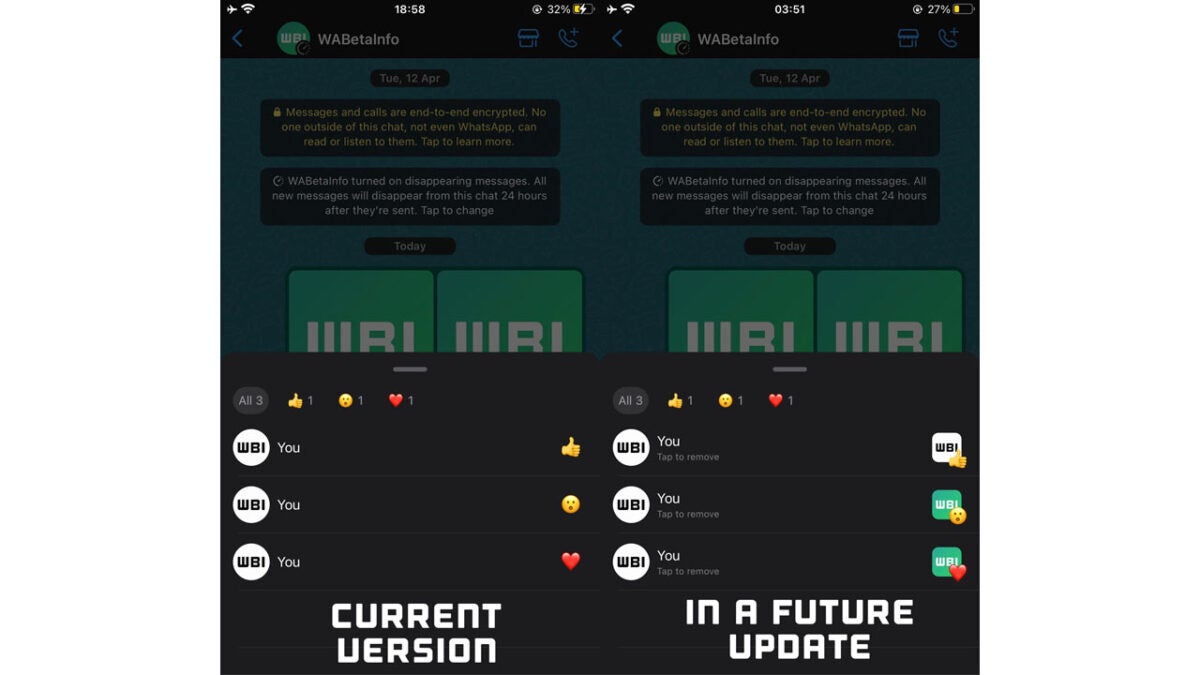
The current version of the WhatsApp message reaction feature allows you to select a message you have received on the app and then select an emoji from a small, predefined list to react to it. This opening version of the feature does bring a new capability to the app, but it is limited in a number of ways.
One of the limits of the current version of the feature relates to reacting to photos and images. When somebody sends several media files at once, WhatsApp will automatically group photos and videos together into albums. At the moment, when you react to these images other members of the chat won’t be able to see the different reactions you have made to each individual item. They will be able to see the reactions, but they won’t be able to see which media items they are reacting to. In its current form, you can only see reactions on a per-image or video basis if you open them and go through them one by one.
This new update fixes that. The update adds richer information to the automatically created albums, including individual reactions to individual items in the album. This might not be the most exciting update, but it is good to know that WhatsApp is continuing to develop the feature. You may also be excited to know that WhatsApp is also working on an update to the feature that will allow you to react with any emoji rather than just the small, predefined list of only six emojis.
As is always the case with these WhatsApp beta developments, we can’t offer you an update on when we can expect these features to roll out to all users. We will, however, keep you informed of all WhatsApp news and developments as soon as we get it, so when we do know the dates for release, so will you. In the meantime, why not check out our 5 favorite features coming to WhatsApp this year.
These five sites have all the best space wallpapers you can download for free. Check them out now.
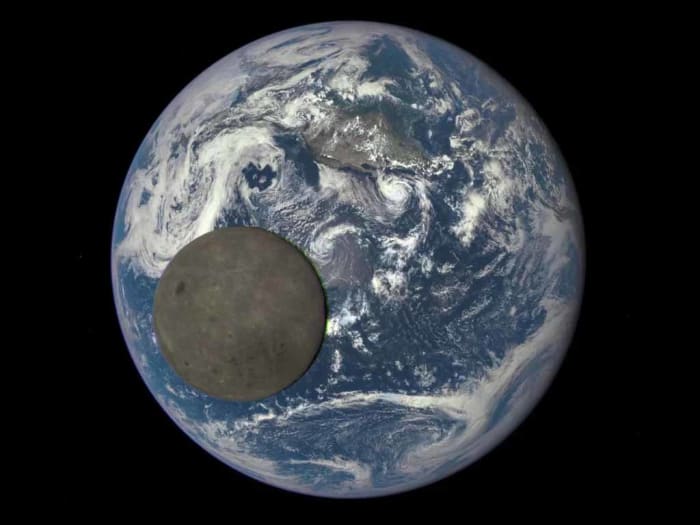
This week at Softonic HQ we’re concentrating on bringing you fantastic wallpapers for your Windows PC or Apple Mac, and also all the best places to find them. If you’re looking for cool desktop backgrounds including scenes and images from your favorite video games, the biggest sporting events around the world, the latest movies, and hip minimalist pictures we have you covered. Today though, we’re covering wallpapers and backgrounds from space. We don’t mean they’ve come from space; we mean desktop wallpapers of all things space related. We’ve got to say, some of these are incredible!
With these Space wallpapers we’re going to do things a little differently. Rather than highlighting particular images we like such as famous nebulas, supernovas, black holes, spiral galaxies, and planets like Saturn and Jupiter; we’re going to concentrate on where to find them all. Let’s go.
As you’ve probably guessed from the name of this website, it doesn’t specialize in space-related matters. Clearly, what Wallpaper Access specializes in are wallpapers and backgrounds. That doesn’t mean though, that the space images you find here won’t be special. On the contrary, Wallpaper Access is a great place to go find a huge collection of ultra-high-resolution space images that you can use as the background on your PC or Mac. In particular, the 4K Space Wallpapers collection is fantastic, with 69 breathtaking scenes both of outer space and views from outer space looking back to earth.
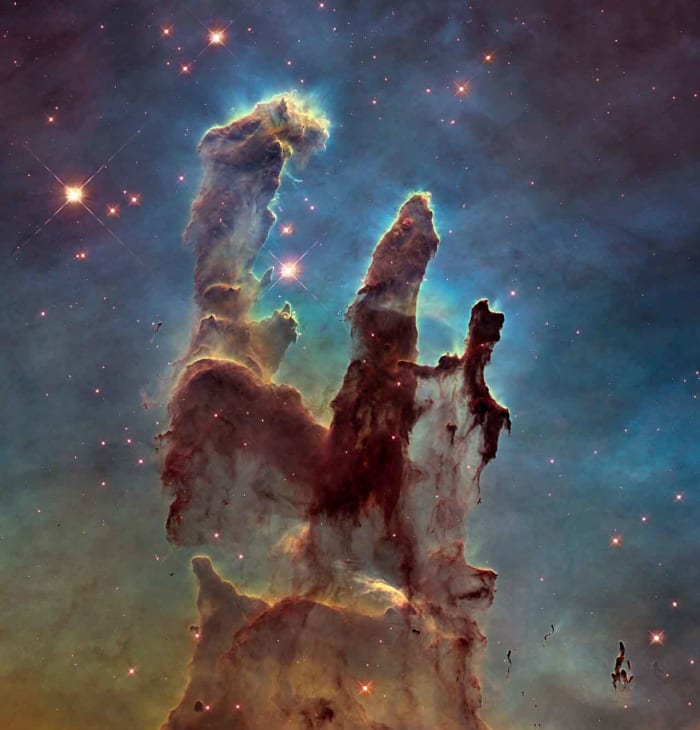
The Hubble Telescope is one of the most iconic human machines ever built. Thanks to its earth orbiting platform, the Hubble has been able to capture some of the most incredible scenes of space the human race has ever laid eyes on. If you have a particular image of outer space stuck in your mind, chances are it was taken by the Hubble. By going to straight to the source of those space images here, you’ll be able to get your hands on space images with ridiculously epic titles like A rose made of galaxies, The pillars of creation, and Galactic wreckage. What’s also great about the Hubble website is that it gives you free access to the full size original image meaning you won’t have to compromise on quality, if you don’t want to, and you’ll also get interesting explanations about all the images written by teams that captured them. If you’re looking for HD space wallpapers of the Milky Way, Orion’s Belt, our Solar System and beyond; this is the place to start your search.
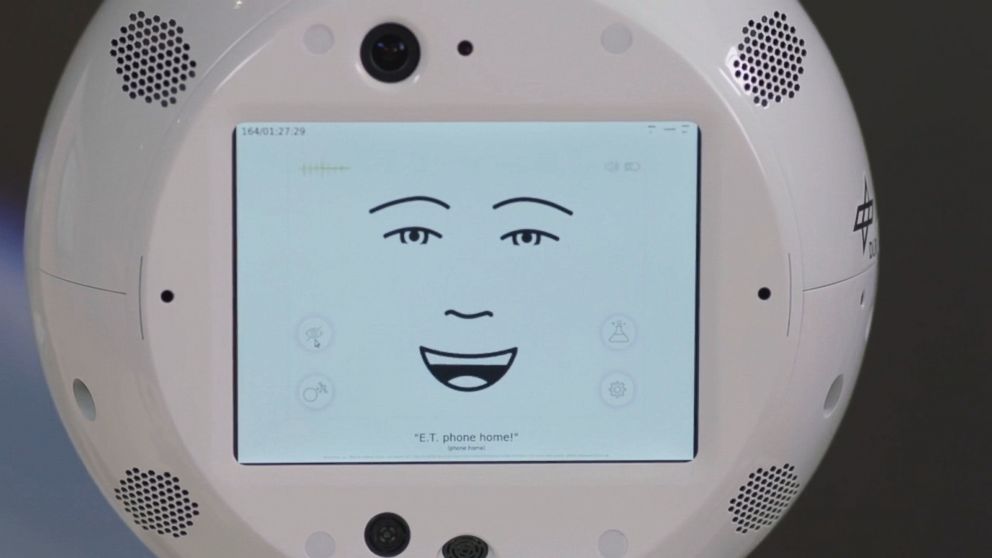
AI robot revolts on the International Space Station
Unsplash might just be the coolest stock photography library on the internet. It has thousands, if not millions of fantastic images, which have all been uploaded by the artist or photographer behind them. What’s even better about Unsplash is that all the images are available for free. As you’d expect from such a site, Unsplash has a fantastic section on space images that has many great space scenes and vistas that would be perfect as your wallpaper.
Space.com describes itself as, “the premier source of space exploration, innovation, and astronomy news, chronicling (and celebrating) humanity’s ongoing expansion across the final frontier.” Sounds cool, doesn’t it! As you’d rightly imagine, all that makes space.com the perfect place to find some truly awe-inspiring space-related backgrounds. Also, just like with at the Hubble website you’ll not just get the images to use as your background, you’ll also learn about what is going in the images and how they were taken. If you’re looking for something a little deeper than merely an image that looks cool, this is the place to go.
Our final source of amazing space-related wallpapers is NASA. As you’d expect from the most famous space agency on the planet, NASA has a huge library of space images. These include photos captured by telescopes on earth and in orbit, photos of cool equipment such as radio telescopes, mission mockup images like those of the famous Curiosity Rover, historic mission photos, and much much more. If you want backgrounds with space shuttles and International Space Station missions, this is the site you’re looking for.
NASA’s heartbreaking final words to the Mars rover Opportunity
Out of all the sites we’ve brought you today, the NASA website is our favorite because on top of offering you some fantastic images that will make great backgrounds, being a fantastic place to learn about space, and doing all of that for free; many of the images on the NASA site will make you feel emotional as you’ll recognize them. You might know who the person is in the image, what the shot is of, or even just feel an emotional attachment for the robot you’re looking at. NASA is a huge part of our global culture these days and that really gives the desktop wallpapers you’ll find here a lot more weight.
Wrapping up
We’ve shown you five great places to source all the best space wallpapers available on the web. If you’re a big space fan, you’ll definitely find the wallpaper you’re looking for on one of the five sites above. In fact, you’ll find a lot more than just backgrounds on three of the sites meaning it all depends just how deep you want to go. You might log on to the Hubble or NASA websites simply looking for a new background for your PC and emerge hours later having ended up researching anything from the composition of moon rocks to the age of the oldest and youngest galaxies. That’s just it with space though, the possibilities are endless.
This guide will teach you everything you need to know to become Tik Tok famous.
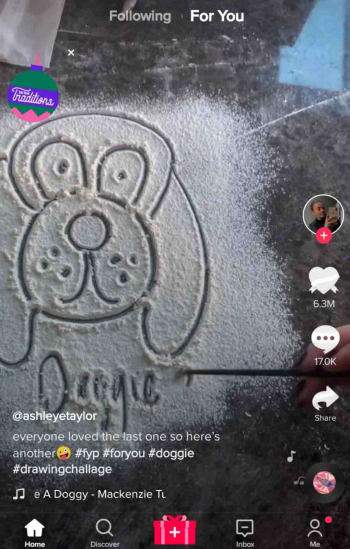
Tik Tok, is like a goldmine for good content. You open the app at your peril because it is easy to lose hours or even days to the homemade short videos Tik Tok users and influencers are posting in their hundreds of millions. The simple reason for this is that a lot of the videos are just really good. They’re well-made and it is clear that the people behind them have lots of talent. Accordingly, the Tik Tok app has made many TikTokers into stars.
If you’ve just downloaded Tik Tok and you too want to become a star, you should know that it is a crowded marketplace. With so many videos being shared via Tik Tok every day, it can be hard to break through. That’s why today, we’re here to offer you some sagely advice on your journey to become a Tik Tok celebrity. We’re going to tell you how to become Tik Tok famous.
We’ll open with a caveat; this isn’t going to be easy. This is going to take hard work both on the quality of your Tik Tok videos and your promotional skills. Basically, not only are you going to have to create videos that are entertaining, you’re going to have to optimize your Tik Tok account and other social media accounts to make sure your videos get as much exposure as is humanly possible. Don’t worry though, you can do it. This is how to…
#1 Take your time. High-quality content is key.
You need to take your time and put in lots of effort when making your Tik Tok videos. If you were to look at Instagram posts or Snapchats for example, you could be forgiven for thinking that the user had just pulled out their phone and captured a moment. This is not the case around 99% of the time. They’ve likely spent a lot of time setting up their scene, writing out their caption, and pre-selecting their filters and stickers. This prep time is a lot more obvious on Tik Tok where dance routines have been practiced, videos have been edited, multiple shots have been recorded etc. Don’t think you’re going to be able to just capture that Tik Tok moment in an instant. Your most important work will be done off camera. Failing to prepare is preparing to fail.
#2 Find your niche
You need to find your niche because it will help you stand out from the crowd but also because it will help you build an identity. You’ll need both, if you’re to become famous. Tik Tok offers a lot of possibilities for you to stand out like making lip-syncing videos with a particular type of song, duets, performing onscreen in a certain way, sticking to a particular type of comedy etc. If you’re looking to establish yourself as a new TikTok star, the best way is specialize in one type of content and then nail it consistently to build a name for yourself and a loyal following and fanbase.
#3 Create and publish content consistently
To build a following of Tik Tok fans you’re going to have to regularly publish videos. There is no shortcut here. The more videos you make the more people are likely to see them and the higher the chance they’ll then check out your profile and view your other videos. OK, not every video needs to be a well-produced masterpiece, but they should all fit into your niche and all be entertaining in one way or another. Think of your videos as like a snowball rolling down a hill. Every time you make a new one the snowball gets it bigger, making it easier for people to see. The more Tik Tok followers you get, the more Tik Tok will think your content is worth pushing to other users.
Promote your content
#1 Build a themed profile that fits your niche
Your promotion strategy needs to be built around an identity. Everything you do from your videos to your profile name should all be consistent with your personal brand. Your profile should create an instant desire for people to follow you. On your profile, you want a catchy name and a clear and unique description that instantly gives people an idea about what they’ll get if they follow you.
You should look to cross-promote your videos on YouTube, Instagram, and Twitter. You can use your personal accounts to share your content with your friends and family or you can set up dedicated accounts for building new followings there too. For new accounts try to build on your brand and if using your personal accounts, always share your Tik Tok profile. Remember the more followers you get on Tik Tok, the more promotion your videos will get by the app itself.
#3 Tag your videos
Hashtags have become an important part of most social networks. Hashtags allow you to reach out beyond your current network of followers by targeting certain content themes. You should keep an eye out for popular hashtags relating to your niche, trending hashtags at any given moment, and rarer hashtags that aren’t so widely used but describe your videos well. You can also create your own hashtags to help your videos stand out further.
#4 Interact with other Tik Tok users
You can comment on other Tik Tok users’ videos. This could attract the user who uploaded it or other users who are also commenting. If you like a popular video or it is related to your niche, it is the perfect place to start interacting with users as they clearly have similar interests. Give your comments some thought, however, and always stick to your personal brand. Don’t be mean, unless your niche is being grumpy. You also need to make sure you engage with comments you get on your own videos too. Another key interaction is following other users and liking their videos. Look for people in and around your niche with decent followings already. If you can interact with them enough, you might break through to their followers too.
VPNs have become an essential part of our security and privacy setups in recent years. With more and more online scams surfacing all the time, encrypting our online traffic offers us a way to add an extra layer of safety to prevent prying eyes from seeing something of ours that they shouldn’t. This may be why Microsoft is working on adding a new VPN icon to go in the Windows 11 system tray.
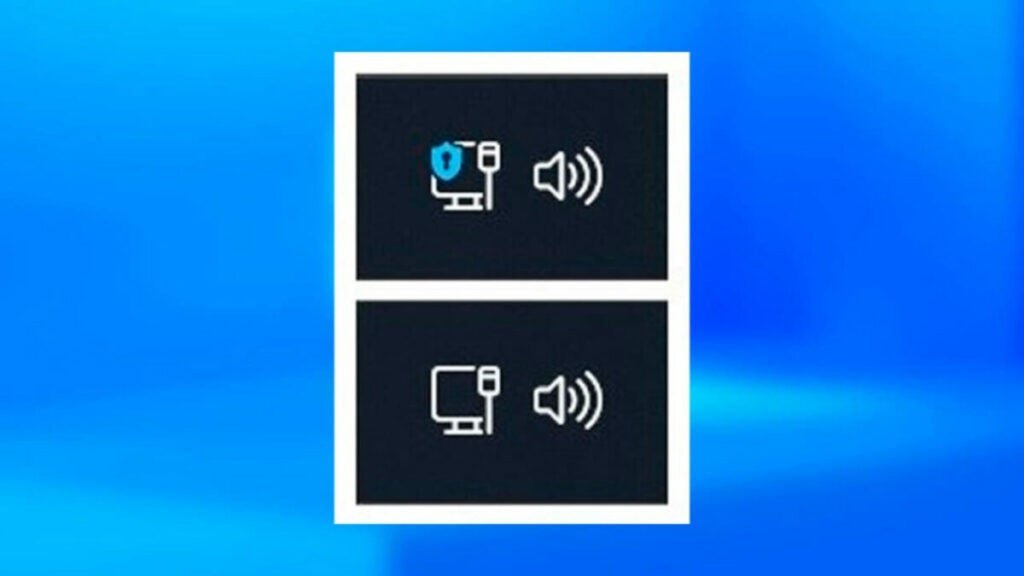
The new VPN icon for Windows 11 has been spotted in the latest Windows Insider build version 25247. Although the feature is still in an early stage of development it looks like it will allow you to see whether or not your computer is connected to a VPN or not.
However, it does look like there is still a lot of work for Microsoft to do on the feature before it gets a wider rollout. As you can see in the images below, the current version of the icon seems to indicate that the VPN indicator is somehow only connected to a wired connection rather than Wi-Fi, which is much more common these days. Another shortcoming of the feature in its current state is that it doesn’t seem to recognize third-party VPN apps such as NordVPN or Express VPN.
VPNs of course offer a variety of advantages for users on top of merely securing your internet traffic. For example, they offer a way for users to access geo-restricted content that might not be available in their area. This means many users have been using VPNs to watch the FIFA World Cup in Qatar.
Another neat hidden change in 25247, a minor one – when you are connected using a VPN, there will soon be a small 'shield' overlay on the network icon to indicate that. (also, it respects your accent color!)
With this feature still in such a rough state and VPNs becoming more and more prevalent in today’s modern internet use, it is likely that we will have to wait a while before we see this privacy-focused feature added to the Windows 11 system tray.
Microsoft Teams is the powerful communication and chat program that comes bundled in with the Microsoft 365 productivity suite. Although having a multi-functional suite of products that can cover pretty much all of your productivity needs from word processing to database building, offering all products as a single offering can actually harm smaller, independent developers who are looking to provide a single app to take care of a single aspect of your daily work. This is why EU regulators are investigating Microsoft Teams for antitrust issues. Let’s take a look at what it means for you.
Back in 2020, Slack, the instant messaging app designed to facilitate communication between workers and teammates, filed a complaint to the European Commission that accused Microsoft of illegal and anti-competitive behavior.
The complaint specifically related to Microsoft Teams and focused on the fact Microsoft forcefully installs Teams onto Microsoft 365 machines without offering a way to remove it or even informing customers about the cost that is associated with the program. A key aspect of the complaint relates to the fact that the move effectively removes the option for users to choose Slack as the messaging solution, with claims that it addresses a broader philosophical issue relating to tech company business practices:
“But this is much bigger than Slack versus Microsoft – this is a proxy for two very different philosophies for the future of digital ecosystems, gateways versus gatekeepers (…). Slack offers an open, flexible approach that compounds the threat to Microsoft because it is a gateway to innovative, best-in-class technology that competes with the rest of Microsoft’s stack and gives customers the freedom to build solutions that meet their needs. We want to be the 2% of your software budget that makes the other 98% more valuable; they want 100% of your budget every time.”
It seems that the European Commission feels that the Slack complaint is at least worth examining as it has already laid the groundwork for a detailed investigation. The investigation looks likely to investigate Microsoft’s interoperability and bundling of products and could also seek to define remedies, according to a report by Reuters. Theoretically, the move could mean that Microsoft may have to unbundle Microsoft Teams from the Microsoft 365 productivity suite and sell it separately.
AI and automation have long been causing ripples in the world of work as machines and machine learning algorithms become more efficient at doing many of the tasks we do for a living. This year we have also seen how even creative tasks are within the capabilities of AI with impressive artworks regularly being created by protocols like DALL-E and Stable Diffusion and even AI copywriting programs like Lex and Jasper becoming increasingly popular. A new report by The Harris Poll, however, indicates that while we may be worried that robots are going to take our jobs, we are also secretly hoping that they will do them for us.
The Harris Poll report found that 72% of Americans would happily delegate mundane tasks to AI algorithms so that they could have more time to grow and focus on more rewarding tasks such as managing teams and projects. Surveys have also found that workers, particularly among the Gen Z generation, would prefer to delegate these tasks to AIs so that they could spend more time with friends and family and enjoy a healthier work/life balance.
The findings of this report are striking as they cut right through the arguments that have caused so much fear among workers relating to robots taking their jobs. Instead of robots taking our jobs, they should be doing them for us and taking much of the emotional and mental strain that goes with them, which of course they won’t feel.
It is good to see workers asserting their feelings in this way as ultimately, nobody is going to give workers anything for nothing as the world moves toward offering fully automated services. In a world that already sees algorithms managing human workforces as if they are robots, as is done in Amazon warehouses for example, there is no reason at all to expect a fair settlement in an automated world. It will only be through well-organized unity and solidarity that the workers of tomorrow will have machines doing their jobs for them rather taking them from them, which is why it is good to see that 72% of American workers agree on this issue.
As well as the constant stream of privacy related WhatsApp updates over recent months, Mark Zuckerberg himself actually took to the internet to announce a big privacy push on the world’s most popular messaging app. Unfortunately, however, it looks as though things haven’t been going too well in that regard as a dataset containing the phone numbers of almost 500 million WhatsApp users has just gone up for sale on a well-known hacker forum. Let’s take a look at what has gone on and help you find out if your phone number is up for sale.
According to a report by Cybernews, on November 16th an unknown posted that they have a database of 487 million WhatsApp users’ phone numbers for sale. With WhatsApp having around 2 billion users, that puts the figure at just under 25% of all WhatsApp users.
The ad also claims that the numbers come from a spread across 84 different countries with 32 million of the stolen phone numbers coming from the US alone. Egypt is the country with the most numbers on the illicit database with a total of over 44 million WhatsApp numbers on the list. Other prominent countries include Italy with 35 million, France with just under 20 million, the UK with 11.5million, Spain just under 11 million, and Saudi Arabia with over 32 million.
There is no word yet on just how this massive database has fallen into illicit hands with some security analysts saying they could have been scraped from public databases. Until Meta, WhatsApp’s parent company, confirms what has gone on, however, it will be difficult to say for certain what has occurred. This incident clearly indicates just how messy our online privacy situation is and how helpless we are in the face of such massive data breaches.
If the unknown malicious actor trying is able to sell the database, these numbers could be used to target the victims with spam and phishing attacks, marketing, or even impersonation of the victim as a way to gain the trust of further third-party victims.
At this stage there isn’t too much we can do about this breach to protect ourselves personally as the heavy lifting here will fall to Meta. If, however, you want to do what you can, you should go to WhatsApp’s Settings menu, hit Privacy, and then restrict all of the settings you see to Contacts Only. This way, any stranger who has your phone number won’t be able to see things like when you were last online, your profile information, or your profile photo. For more WhatsApp tips check out our guide to WhatsApp’s security features.
Twitter is seemingly doing a great job of moderating hate speech, if Elon Musk may say so himself. Well, that is exactly what has happened with the billionaire owner of Twitter tweeting that the social network has cut hate speech impressions by a full third from the levels they were at before they spiked upon news of his takeover going through. What exactly does hate speech impressions mean, though, and how does it tie in with Elon Musk’s stated mission of securing free speech on Twitter? Let’s take a look.
Musk tweeted out on Thursday that hate speech impressions on Twitter are down considerably marking an achievement he is clearly happy about. Lowering impressions means that tweets with hate speech in them are being seen by fewer users.
You may have picked up from the explanation above that lowering impressions does not necessarily mean that hate speech moderation has improved and that more tweets filled with hate speech are being pulled down by Twitter’s moderation teams. Rather, it seems that Twitter is trying to scale back the reach of those tweets so that they show up on fewer users’ feeds, therefore reducing the number of impressions they receive.
Hate speech impressions down by 1/3 from pre-spike levels. Congrats to Twitter team! pic.twitter.com/5BWaQoIlip
This methodology seems to have been backed up in a report by The Independent, which quotes Musk’s commitment to a “freedom of speech, but not freedom of reach” policy. This means that Musk is hoping to turn Twitter into a place where people are free to say whatever they want, but where the most heinous of things won’t be heard by many people. If Musk can pull this off it will mark an interesting twist on the freedom of speech debate and could go either way, with people still complaining about their freedom of speech being violated because people aren’t forced to listen to what they have to say.
Interestingly, this is similar to something that we saw in our recent look at Mastodon, which has seen many Twitter users set up new accounts in the wake of Musk’s takeover of the network. Mastodon is a federated social network made up of independent servers. This means that theoretically, somebody could set up a server for posting hate speech but that nobody would have to see or hear it. The question is whether Musk’s proposed algorithmic attempts to limit the reach of hate speech on a user-friendly platform will be better than a cordoned off hate speech section on a platform that can be tricky to use. Of course, all of this doesn’t discuss the point of whether hate speech should be protected by the right to free speech, but that it is a topic for another day.